Pregnancy is one of the most beautiful — and most confusing — phases of a woman’s life, especially when it comes to food. Every elder in a Pakistani household seems to have an opinion: “Do khao, ab do jaanain hain” (eat for two), “Andey se bacho” (avoid eggs), “Garam cheezain na khao” (avoid hot foods). But what does your body actually need, month by month?
This complete pregnancy diet chart breaks down exactly what to eat in each month of pregnancy, using familiar desi foods — roti, dal, doodh, dahi, anda, seasonal fruits, and dry fruits. No expensive imported superfoods required. Just smart, balanced eating built around the Pakistani kitchen.
A gentle but important note: Every pregnancy is different. This guide is for general information only. Always consult your doctor or a qualified nutritionist for personal advice, especially if you have gestational diabetes, high blood pressure, thyroid issues, or any other medical condition.
Why Your Diet Needs Change Every Month
Your baby grows from a tiny cluster of cells into a fully formed newborn in just nine months. Each stage of this journey has different nutritional demands:
- First trimester (months 1–3): The baby’s brain, spinal cord, and organs form. Folic acid is the star nutrient here.
- Second trimester (months 4–6): Bones, muscles, and tissues grow rapidly. Calcium, protein, and iron take center stage.
- Third trimester (months 7–9): The brain develops fast and the baby gains weight. DHA, iron, and extra calories matter most.
Eating the same way throughout pregnancy misses these shifting needs. A month-by-month plan helps you give your baby the right building blocks at the right time.
Month 1–3: The First Trimester — Building the Foundation
Month 1: Focus on Folic Acid
In the first month, you may not even know you’re pregnant — but the neural tube (which becomes the brain and spinal cord) is already forming. Folic acid is critical to prevent neural tube defects.
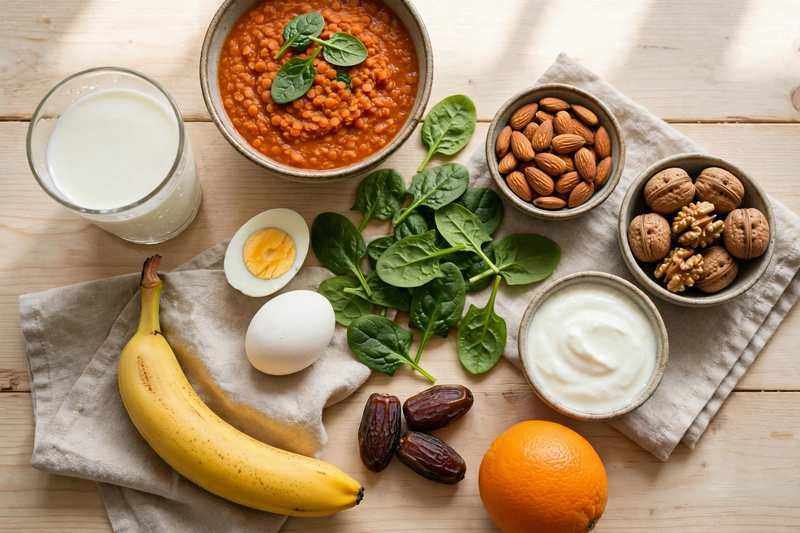
Desi foods rich in folate: palak (spinach), methi (fenugreek leaves), dal masoor (red lentils), chana (chickpeas), and oranges. A simple palak-dal with roti covers a good portion of your daily needs. Most doctors also prescribe a folic acid supplement — take it as advised; food alone usually isn’t enough.
Dealing with nausea: Morning sickness often peaks around weeks 6–8. Eat small, frequent meals. Keep dry toast, crackers, or roasted chana by your bedside and eat a little before getting up. Adrak (ginger) chai or ginger water can calm nausea. Avoid strong-smelling fried foods like pakoras when queasy.
Month 2: Protein for Early Growth
The baby’s tiny heart starts beating and facial features form. Protein supports this rapid cell growth. Aim for roughly 60 grams of protein daily.
Desi protein sources: 1 boiled anda (egg) gives ~6g protein. One cup of doodh (milk) gives ~8g. Add dal, lobia (black-eyed peas), dahi (yogurt), and a handful of badam (almonds) through the day. A breakfast of 2 anda paratha or besan cheela with dahi is a protein powerhouse — see our high-protein Pakistani breakfast ideas for more morning options.
Month 3: Iron Starts Mattering
Your blood volume begins increasing to supply the baby, and iron prevents anemia — a very common problem among Pakistani pregnant women. Pair iron-rich foods with vitamin C for better absorption.
Iron + vitamin C combos: Palak gosht with a squeeze of lemon. Dal with a side of kachumber salad (tomatoes are rich in vitamin C). Kaleji (liver) once a week is an excellent iron source, but eat it in moderation and ensure it’s fully cooked. Avoid drinking chai with meals — the tannins in tea block iron absorption. Wait at least an hour after eating.
Month 4–6: The Second Trimester — Growth Spurt
Most women feel their energy return in the second trimester. Appetite improves, and the baby’s bones and muscles grow fast. This is the time to eat well and build your nutrient stores.
Month 4: Calcium for Bones
The baby’s skeleton is hardening from cartilage into bone. You need about 1,000 mg of calcium daily. If you don’t get enough, your body pulls calcium from your own bones.
Desi calcium sources: 2 glasses of doodh daily (~600 mg), one cup of dahi (~300 mg), plus paneer, til (sesame seeds), and ragi if available. A glass of warm doodh with haldi (turmeric) at night is both traditional and nutritious. If you’re lactose intolerant, talk to your doctor about calcium supplements.
Month 5: Fiber Against Constipation
Constipation is extremely common now as hormones slow digestion and the growing uterus presses on the intestines. Fiber and water are your best friends.
High-fiber desi foods: Whole wheat roti instead of white naan, chana chaat, fruits with skin (apples, pears, guava — amarood is a fiber champion), sabzi like bhindi and tori. Drink 8–10 glasses of water daily. Soaked figs (anjeer) or prunes at night work gently. For fruit inspiration, read about nutrient-rich fruits and their health benefits.
Month 6: DHA for Brain Development
The baby’s brain is developing rapidly, and DHA (an omega-3 fatty acid) is essential building material. The best desi sources are fish like rohu, surmai (kingfish), and pomfret — eat fish 2 times a week.
Vegetarian DHA options: Akhrot (walnuts), alsi ke beej (flaxseeds), and chia seeds. Grind flaxseeds fresh and sprinkle a spoon over dahi or porridge — whole seeds pass through undigested. Avoid high-mercury fish like shark or swordfish, and limit tuna.
Month 7–9: The Third Trimester — Finishing Strong
Month 7: Extra Calories, Smartly
You now need roughly 300–450 extra calories per day — but “eating for two” doesn’t mean doubling your portions. That only leads to excessive weight gain and gestational diabetes risk.
Smart calorie additions: A handful of mixed dry fruits (badam, akhrot, kishmish, khajoor), one extra roti with dal, or a bowl of doodh-dalia (milk porridge). Khajoor (dates) are excellent — rich in iron, fiber, and natural energy. Some studies even suggest dates in late pregnancy may support easier labor.
Month 8: Iron Peak and Energy Foods
Your blood volume has nearly doubled, and the baby is stockpiling iron for the first months after birth. Anemia now can cause fatigue and complications during delivery.
Iron-rich meal ideas: Kaleji curry with lemon, palak paneer, chana masala, or bajra (pearl millet) roti with gur (jaggery). Continue avoiding tea with meals. If your doctor prescribed iron tablets, take them with orange juice or lemon water — never with doodh, as calcium blocks iron absorption.
Month 9: Light, Frequent Meals
The baby is big and pressing on your stomach, so large meals cause heartburn and discomfort. Switch to 5–6 small meals a day.
Comfort foods for month 9: Khichdi, dalia, yogurt rice, soups (yakhni is wonderful), and soft fruits like bananas and papaya (ripe papaya in moderation is fine; avoid raw/green papaya). Panjiri — the traditional mix of whole wheat, ghee, dry fruits, and gond — is a beloved postpartum and late-pregnancy food in Punjab, giving dense energy in small portions. Keep dinner light and early to reduce nighttime heartburn.
Sample Daily Desi Meal Plan for Pregnancy
Here’s a practical template you can adapt through all three trimesters (adjust portions as your doctor advises):
| Meal | What to Eat | Key Nutrients |
|---|---|---|
| Early morning | 4–5 soaked badam + 2 akhrot + 1 glass warm water | Healthy fats, vitamin E |
| Breakfast | 2 besan cheela or 1 anda paratha + 1 cup dahi + 1 fruit | Protein, calcium, fiber |
| Mid-morning | 1 glass doodh or a banana + 2 khajoor | Calcium, iron, energy |
| Lunch | 2 whole wheat roti + 1 bowl dal + 1 bowl sabzi + salad + lemon | Protein, iron, folate, vitamin C |
| Evening | Roasted chana or fruit chaat + coconut water or lassi | Fiber, hydration |
| Dinner | 1–2 roti + chicken/fish curry or palak paneer + dahi | Protein, calcium, DHA |
| Bedtime | 1 glass warm doodh with haldi | Calcium, better sleep |
Foods to Avoid During Pregnancy
Some foods carry infection or toxicity risks for the baby. Be careful with:
- Raw or undercooked meat, eggs, and fish — risk of salmonella and toxoplasmosis. Always eat fully cooked kebabs, anda, and fish.
- Unpasteurized doodh and soft cheeses — risk of listeria. Use packed, pasteurized milk.
- Raw papaya and excess pineapple — raw papaya contains latex that may trigger contractions.
- Too much caffeine — limit chai/coffee to 1–2 cups daily (under 200 mg caffeine).
- Street food with questionable hygiene — gol gappay and chaat from dirty stalls can cause infections. Make them at home instead.
- Alcohol — no safe amount during pregnancy.
- High-mercury fish — avoid shark, swordfish, and king mackerel; limit tuna.
Hydration: The Forgotten Nutrient
Water needs rise during pregnancy — aim for 8–12 glasses daily. Dehydration can cause headaches, constipation, and even preterm contractions. Beyond plain water, try:
- Nimbu pani (lemon water) with a pinch of salt
- Coconut water — natural electrolytes
- Lassi or chaas (buttermilk)
- Fresh juices like orange or pomegranate — a glass of fresh beetroot, cucumber and orange juice is a nutrient-rich option
Keep a water bottle with you at all times — out of sight really is out of mind.
Healthy Weight Gain During Pregnancy
How much weight you should gain depends on your pre-pregnancy BMI:
- Underweight (BMI < 18.5): 12.5–18 kg
- Normal weight (BMI 18.5–24.9): 11.5–16 kg
- Overweight (BMI 25–29.9): 7–11.5 kg
- Obese (BMI ≥ 30): 5–9 kg
Myths vs Facts in Pakistani Households
Myth: “Garam” foods like eggs, mutton, and dry fruits cause miscarriage.
Fact: No scientific evidence supports this. Eggs, meat, and dry fruits are excellent nutrition — just eat them cooked and in reasonable portions.
Myth: Drinking saffron (kesar) doodh makes the baby fair.
Fact: Skin color is genetic. Saffron in small amounts is safe, but it doesn’t change complexion. Learn more about what saffron actually does in our article on saffron supplements for mood and sleep.
Myth: You must eat ghee in the 9th month for an easy delivery.
Fact: A little ghee is fine, but excessive ghee just adds unnecessary weight. Easy delivery depends on the baby’s position, your fitness, and medical care — not ghee.
Myth: Papaya always causes miscarriage.
Fact: Ripe papaya in moderate amounts is generally considered safe; it’s raw/unripe papaya that should be avoided.
Myth: Sleeping on your back harms the baby.
Fact: In late pregnancy, sleeping on your left side is recommended for better blood flow — but briefly lying on your back won’t harm the baby.
Final Thoughts
A healthy pregnancy diet doesn’t require exotic foods or a big budget. The Pakistani kitchen already has everything a mother-to-be needs: dal for protein and folate, doodh and dahi for calcium, palak for iron, seasonal fruits for vitamins, and dry fruits for healthy fats. Eat a variety of foods, stay hydrated, take your prescribed supplements, and tune out the myths.
Remember — this guide is a starting point, not medical advice. Book regular checkups, follow your doctor’s guidance, and enjoy this special journey. Khush rahain, sehatmand rahain!
Frequently Asked Questions
Q: Can I drink chai during pregnancy?
A: Yes, 1–2 cups a day is fine. Just don’t drink it with meals, as it reduces iron absorption. Wait at least an hour after eating.
Q: Are dry fruits safe in the first trimester?
A: Yes, in moderation — a small handful daily. Badam, akhrot, kishmish, and khajoor provide healthy fats, iron, and energy. Avoid overeating as they’re calorie-dense.
Q: Which dal is best during pregnancy?
A: Masoor dal (red lentils) is excellent — rich in folate, iron, and protein, and easy to digest. Moong dal is the gentlest on the stomach if you have digestion issues.
Q: Can I eat fish during pregnancy in Pakistan?
A: Yes — fish like rohu, surmai, and pomfret are great sources of DHA and protein. Eat fully cooked fish twice a week and avoid high-mercury varieties.
Q: What should I eat if I have gestational diabetes?
A: This needs a doctor-supervised plan, but generally: whole grains over refined, controlled portions of roti/rice, plenty of vegetables and protein, and no sugary drinks or mithai. Your doctor may refer you to a nutritionist for a personalized chart.