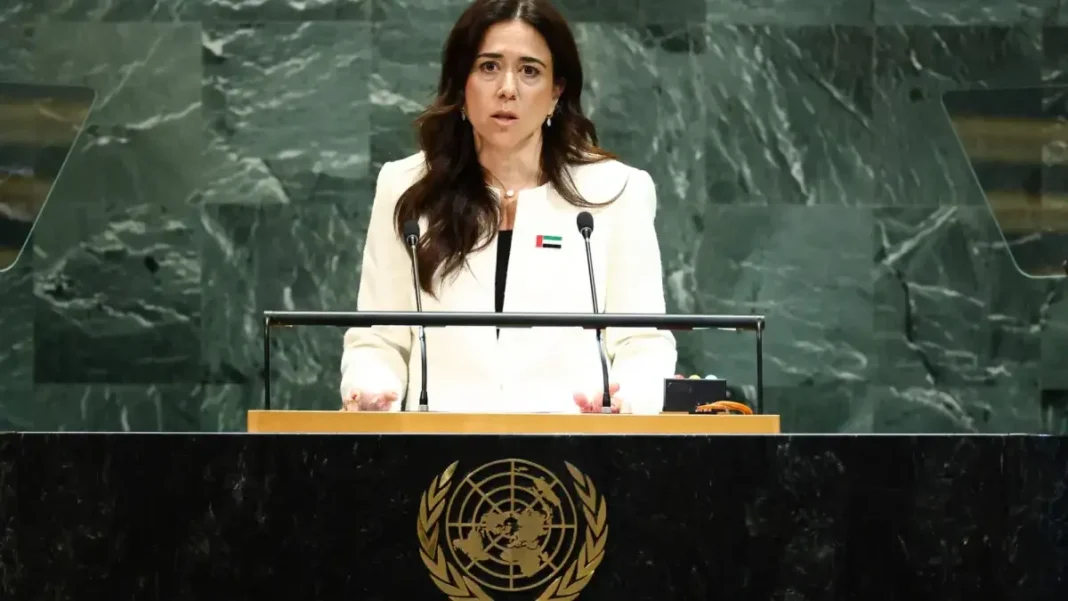
UAE Diplomat Lana Nusseibeh Emerges as Frontrunner for UN Top Job
Lana Nusseibeh, an Emirati diplomat with Palestinian roots, has emerged as a late frontrunner in the race to become the next United Nations secretary-general. The Lana Nusseibeh UN bid rests on a reformist platform and a promise to work for peace, and it has already drawn backing from Gulf states.
Nusseibeh received her official nomination on Wednesday, October 21, 2026. Since then, she has gained support across the Gulf, while also facing scrutiny over her country’s normalisation of ties with Israel and over Abu Dhabi’s alleged role in Sudan’s war, claims the UAE denies.
If she succeeds, she would become the first woman and the second Arab to lead the United Nations, in what would be a major diplomatic success for the United Arab Emirates.
Lana Nusseibeh UN bid: a long diplomatic record
Nusseibeh, 48, served as the UAE’s permanent representative to the United Nations from 2013 to 2024, the first woman to hold the post. She later served as a state minister at the foreign ministry and as envoy to the UN and the European Union, stepping down from those roles to campaign for the top UN job.
Her supporters point to a long record in multilateral talks. Nickolay Mladenov, the high representative for Gaza under a US-backed Board of Peace, said Nusseibeh “does not give up when the room gets difficult”.
Palestinian roots and the Abraham Accords question
Nusseibeh comes from a prominent Palestinian family of statesmen, uprooted by the creation of Israel in 1948. Her family traditionally held the keys to the Church of the Holy Sepulchre in the walled Old City of Jerusalem.
Her grandfather was defence minister in Jordan in the 1950s and one of the first Palestinians to be in contact with the Israelis. Her father, Zaki Nusseibeh, was an adviser and interpreter to the UAE’s late founding president, Sheikh Zayed.
Her record also draws criticism. She has defended the Abraham Accords, under which the UAE normalised ties with Israel in 2020, drawing criticism from pro-Palestinian activists and commentators on social media.
The Sudan file and the road to the vote
The sharpest scrutiny concerns Sudan. The UAE is accused of backing the paramilitary Rapid Support Forces in Sudan’s war against the army, a war that began in April 2023 and which the United Nations has described as one of the world’s worst humanitarian crises. The UAE denies the accusations.
“The UAE has already stated time and again that all of these are media allegations, and we have already made it clear that we deny all of them, and we do not send any arms or finance the RSF,” Abdulla said. “There is no candidate that is short of criticism. We’ll just have to deal with it, especially the Sudan file,” he added.
By tradition, the UN’s top job rotates between regions, which would put a Latin American candidate in line this time. But US ambassador to the UN Mike Waltz recently said the focus should be on picking the “best candidate” instead of the region or gender.
The voting maths is tight. In the latest informal straw poll last week, every contender received an effective veto. Five of the 15 Security Council members hold veto power, and all seven candidates received at least two vetoes in that poll.
Why this race matters for Pakistan and the region
For Pakistan, the contest matters because the next secretary-general will shape how the UN handles the crises closest to this region, from Gaza and Sudan to the wider Middle East. Pakistan has worked closely with the UN on several fronts, including civil nuclear cooperation, and it has repeatedly condemned attacks on civilians, including the recent church attack in Jordan.
The current secretary-general, Antonio Guterres, leaves office at the end of 2026, so member states must settle on a successor soon. Nusseibeh will face questions from General Assembly members as part of the process, and her answers on Sudan, Gaza, and UN reform will be watched closely.
Frequently asked questions
Who is Lana Nusseibeh?
An Emirati diplomat, 48, who served as the UAE’s permanent representative to the UN from 2013 to 2024 and was nominated for UN secretary-general on October 21, 2026.
Would she be the first woman UN secretary-general?
Yes. No woman has led the United Nations in its 80-year history, and Nusseibeh would also be only the second Arab to hold the post.
What criticism has her candidacy faced?
Scrutiny over the UAE’s normalisation of ties with Israel under the 2020 Abraham Accords, and over alleged UAE backing for Sudan’s Rapid Support Forces, which Abu Dhabi denies.