Henri Kagan and Kenso Soai win 2026 Nobel Prize in Chemistry for mirror-molecule breakthrough
Henri Kagan and Kenso Soai win 2026 Nobel Prize in Chemistry for mirror-molecule breakthrough
STOCKHOLM: French chemist Henri Kagan and Japanese scientist Kenso Soai have won the 2026 Nobel Prize in Chemistry for cracking a century-old puzzle about mirror-image molecules, discoveries that changed how modern medicines are designed and manufactured. The Nobel Chemistry Prize 2026 was announced by the Royal Swedish Academy of Sciences on Wednesday.
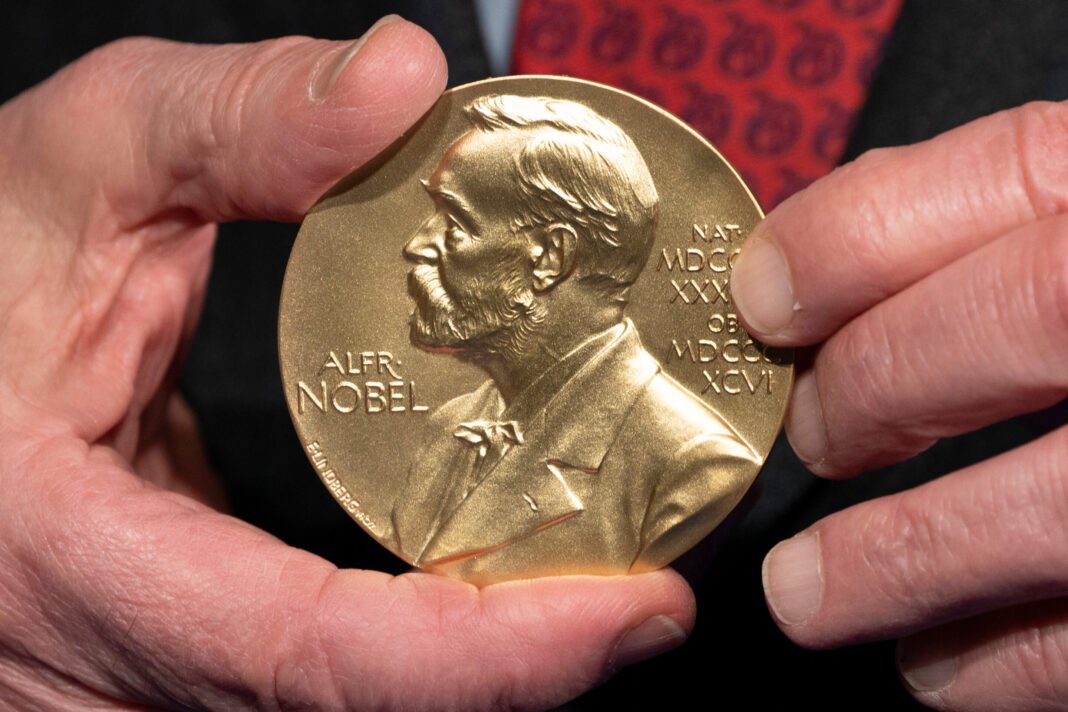
The two laureates will share prize money of 12 million Swedish kronor, about $1.2 million, along with the Nobel medal and diploma.
Nobel Chemistry Prize 2026 rewards work on a riddle of nature
Many molecules essential to life exist in two forms that are mirror images of each other, like a left hand and a right hand. Yet living organisms almost always use only one version, a phenomenon called homochirality that has puzzled chemists for more than a century.
Kagan and Soai showed how chemical reactions can be steered to favour one of these mirror images over the other. “Thanks to Henri Kagan and Kenso Soai, we now know how homochirality can emerge,” the Academy said. Their findings, it added, have been decisive for chemists who design reactions to manufacture pharmaceuticals.
The distinction matters because the two mirror forms of a drug can behave very differently in the body. One version may heal while the other does nothing or causes harm. In the 1960s, the sedative thalidomide caused severe birth defects linked to one of its mirror forms. Producing only the desired version, in high purity, made medicines safer.
A 95-year-old laureate and a phone call during shopping
Kagan, 95, teaches at Université Paris-Sud in Orsay, France, and is among the oldest Nobel laureates. Soai, 76, is based at the Tokyo University of Science.
Soai was out shopping when the Academy’s call reached him. “This is the most exciting day in my life, I am very glad to share this prize with professor Henri Kagan,” he said by telephone. The committee had more trouble reaching Kagan.
Kagan took the first decisive step in 1986, when he developed a new method of controlling chemical reactions that made it possible to produce far more of one mirror-image form than chemists had previously thought possible. The breakthrough proved especially important for pharmaceuticals, flavours, fragrances and new materials.
Soai carried the research further. In 1995 he described a publication outlining the first chemical reaction with the potential to be homochiral, and in 2003 he presented a reaction in which only one of the two possible mirror images emerged, the achievement now known as the Soai reaction. It demonstrated that homochirality could arise through chemistry itself rather than being unique to living organisms.
Kagan narrowly missed the chemistry prize in 2001, when it went to three others in the same field, prompting a complaint from France’s research minister at the time. President Emmanuel Macron congratulated both laureates on Wednesday.
Nobel week continues with literature and peace prizes
The chemistry award is the third of Nobel week. Monday’s medicine prize went to Karl Deisseroth, Peter Hegemann and Georg Nagel for optogenetics, a technique for studying the brain with light. Tuesday’s physics prize went to Francis Halzen for the IceCube Neutrino Observatory and the discovery of high-energy neutrinos from deep space.
Related: Francis Halzen wins 2026 Nobel Prize in Physics for neutrino discovery
The literature prize is announced on Thursday, the peace prize on Friday and the economics prize on Monday.
Frequently asked questions
Who won the 2026 Nobel Prize in Chemistry?
Henri B. Kagan of France and Kenso Soai of Japan won it jointly for “the discovery of non-linear effects and autocatalysis in asymmetric organic synthesis.”
Why do mirror-image molecules matter for medicines?
The two mirror forms of a drug can act very differently in the body. One may treat illness while the other does nothing or causes harm. Their methods let chemists produce only the desired form in high purity.
How much is the Nobel Prize worth in 2026?
The chemistry laureates share 12 million Swedish kronor, roughly $1.2 million, along with the Nobel medal and diploma.