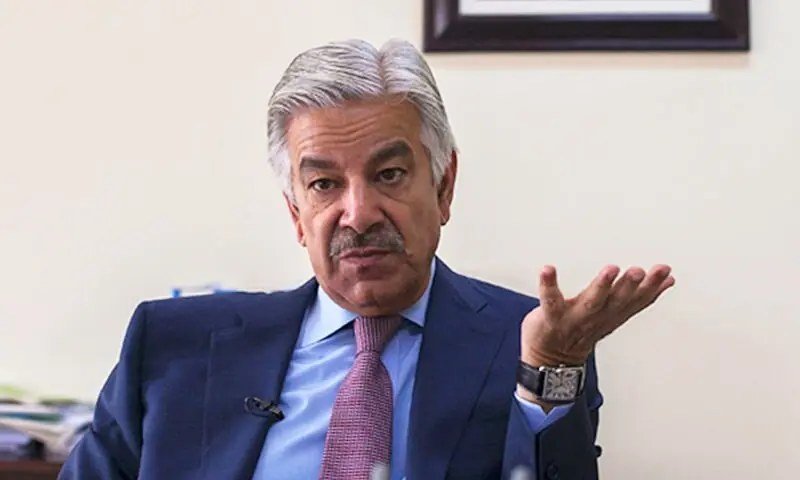
Indian cinema has lost one of its most powerful voices. Bollywood veteran Nana Patekar died on Thursday, October 8, 2026, aged 75, after suffering a cardiac arrest at his home in Goa. He was found unconscious early in the morning and rushed to Manipal Hospital in Dona Paula, where doctors tried to revive him with CPR for nearly 45 minutes. He was declared dead at around 5:20 am.
His son, Malhar Patekar, confirmed the death. A medico-legal case has been registered and a post-mortem examination will be conducted, hospital officials said. Patekar is survived by his wife, from whom he was separated, and his son.
What makes his final hours especially heartbreaking is what happened just before. Nearly three hours before he died, at around 2:30 am, Patekar texted a friend saying he was not feeling well. It was the middle of the night, and the message went unanswered. He then called the friend, who rushed to his house around 4 am and found him sweating and losing consciousness. The caretaker was sent to Manipal Hospital nearby to fetch the ambulance, and Patekar was shifted to the hospital between 4:20 and 4:30 am. Despite the emergency team’s best efforts, including almost an hour of continuous cardiac massage, he could not be saved.
A Shock for Fans and Colleagues
The news spread quickly on Thursday morning, and tributes poured in from across the film industry and beyond. Actor Akshay Kumar, who starred alongside Patekar in several films, said: “He was one of those rare actors who never needed to do too much to make you sit up and watch. That voice, that intensity, that honesty in every performance… he was completely his own.”
Singer Usha Uthup called him “one of the finest actors the world has produced” and “a man with a golden heart,” recalling how much fun they had together while shooting a music video. Goa Chief Minister Pramod Sawant mourned the loss of “a good friend,” while Maharashtra Chief Minister Devendra Fadnavis said Patekar was as “grand on screen as he was in spirit” and praised his work for farmers and drought-hit communities in Maharashtra — a cause Patekar had championed since 2015.
For fans, the grief is not just about losing an actor. Nana Patekar was a cultural phenomenon — the man whose voice, anger and honesty defined a certain kind of Bollywood hero. He did not look like a conventional film star and never tried to. He rose from painting posters and studying at the JJ School of Art in Mumbai to become one of the most respected actors of his generation, refusing to be impressed by the glamour of the industry.
Industry colleagues described a man who did not suffer fools gladly, spoke his mind without filters, and stayed away from the film industry’s social circuit. He never built a PR machine, never chased awards, and often said awards did not impress him. What he did invest in was people: since 2015, he worked closely with farmers in drought-hit regions of Maharashtra, raising funds and awareness for rural communities through his foundation, and he chose to live and work among them rather than in Mumbai’s celebrity circles. He split his time between a farmhouse in Pune and his home in Goa, living simply.
An Actor Who Refused to Be Ordinary
Born Vishwanath Patekar on January 1, 1951, in Maharashtra, he began his career doing theatre in Marathi. His film debut came in 1978 with Gaman. His breakthrough years arrived in the late 1980s and early 1990s: Mira Nair’s Oscar-nominated Salaam Bombay! gave him international recognition, and his terrifying turn as the gangster Anna Seth in Vidhu Vinod Chopra’s Parinda (1989) won him the National Film Award for Best Supporting Actor. During the filming of Parinda’s climax, he suffered burns that reportedly took six months to heal.
Through the 1990s, Patekar became the face of intense, angry, righteous cinema — Angaar, Tirangaa, Krantiveer (1994), Agni Sakshi (1996), Yeshwant (1997), Ghulam-E-Mustafa (1997). His performances were marked by trademark aggression and forceful dialogue delivery, and he won three National Film Awards in total, along with the Padma Shri, one of India’s highest civilian honours.
Later, he showed a completely different side: the encounter specialist Sadhu Agashe in Ab Tak Chhappan (2004), the comic gangster Uday Shetty in Welcome (2007) — a role that became a meme staple for a new generation — and Marathi cinema’s Natsamrat (2016), where his Shakespearean monologue in Marathi won new acclaim. He shared the screen with Amitabh Bachchan and Shah Rukh Khan, excelled in both serious and comic roles, and spent his later years working among farmers in Maharashtra and splitting time between a farmhouse in Pune and his home in Goa.
But above all, Nana Patekar will be remembered for his dialogues. Lines delivered in that unmistakable gravelly voice have lived on for decades, quoted by fans, recycled as memes, and recited back to him by schoolchildren — as happened in a recent video where he hesitated, then performed his famous Krantiveer speech for a group of kids, leaving them spellbound.
Five Dialogues That Will Live Forever
Here are five of the lines that made Nana Patekar a legend — five moments where the words, the voice and the actor became one.
1. “Aa gaye meri maut ka tamasha dekhne?” — Krantiveer (1994)
In the climax of Krantiveer, Patekar’s Pratap Tilak is about to be hanged. Facing the crowd that has gathered, he delivers a searing speech that turns the spectacle back on the people watching it. “Aa gaye meri maut ka tamasha dekhne?” — “So you have all come to watch the spectacle of my death?” — is not just a line; it is an accusation against a society that watches injustice happen and does nothing.
The scene captured everything Patekar stood for on screen: the righteous rage, the refusal to beg, the willingness to shame the powerful. Krantiveer became one of the defining films of 1990s Bollywood, and this speech — delivered with trembling fury — is the moment most fans remember first. It is fitting, and a little eerie, that the most-quoted line of his career should be about death. The film also gave fans another unforgettable line in the same scene — his defiant “sau mein se assi beimaan, phir bhi mera desh mahaan” — an angry love letter to a corrupt country he refused to give up on.
2. “Hum sab system ka hissa hain, system decide karta hai, apun follow karta hai.” — Ab Tak Chhappan (2004)
As Inspector Sadhu Agashe in Shimit Amin’s gritty crime drama Ab Tak Chhappan, Patekar played an encounter specialist — a police officer who eliminates criminals outside the conventional judicial process. “We are all part of the system; the system decides, I follow” is the film’s central idea compressed into a single sentence.
What made this line iconic was its quiet resignation. Unlike the screaming fury of Krantiveer, Agashe speaks it with calm certainty, and that restraint makes it more chilling. The character knows he is both the enforcer and the prisoner of the same machinery. Patekar’s performance here showed a maturity of a different kind — the anger had turned inward, and the result was one of the most respected cop performances in Indian cinema.
3. “Dhande mein koi kisika bhai nahi, koi kisika beta nahi.” — Parinda (1989)
Before Krantiveer made him a star of angry populist cinema, Patekar was already terrifying audiences as Anna Seth in Parinda. “Dhanda hai par dharam hai mera… aur dharam se bada koi dhanda nahi hota” was one of Anna’s defining statements — “In business, no one is anyone’s brother, no one is anyone’s son.”
The line captured the cold logic of the underworld: loyalty means nothing when profit is at stake. Patekar’s Anna Seth was menacing without needing to shout — a stillness that made him scarier than any loud villain. The role won him his first National Film Award for Best Supporting Actor and established him as an actor who could dominate a scene simply by standing in it. Watch the film today and the performance has not aged a day; Anna Seth remains one of the most believable gangsters ever put on the Indian screen.
4. “Bhagwan ka diya hua sab kuch hai — daulat hai, shohrat hai, izzat hai.” — Welcome (2007)
Nobody expected Nana Patekar, the angry man of Bollywood, to become one of its funniest comic actors. But as Uday Shetty in Anees Bazmee’s Welcome, he was a revelation. “Bhagwan ka diya hua sab kuch hai — daulat hai, shohrat hai, izzat hai” — “By God’s grace, I have everything — wealth, fame, respect” — is delivered with dead seriousness by a gangster desperate to find a suitable groom for his sister, which is exactly why it became so funny.
Uday Shetty’s exasperated catchphrase “Control Uday, control” and his frustrated vegetable-selling sequence (“Aalu le lo, kanda le lo”) turned into some of Bollywood’s most-shared memes. A whole generation that never watched Krantiveer knows Patekar as Uday Shetty. That he could make audiences laugh as hard as he once made them tremble is perhaps the best proof of his range. In later years, without ever trying to be an internet star, Patekar became one — his Welcome one-liners, his viral Agni Sakshi scene, even scenes from lesser-known films started circulating online as Gen Z discovered him.
5. “Come on, party is over, go to sleep now!” — Agni Sakshi (1996)
In Agni Sakshi, Patekar played Vishwanath, a controlling husband whose obsession with his wife turns frightening. In one eerie scene, he berates a group of people playing loud music late at night — and the English line “Come on, party is over, go to sleep now!” became one of the most imitated moments of his career.
What makes this line special is how it blends menace with a strange, almost comic deadpan. The journalist who wrote his obituary in the Free Press Journal chose exactly this dialogue to sum up a 40-year association with the actor: “Come on, party is over, go to sleep now! Thank you, good night!” It was Vishwanath at his most unsettling — and Patekar at his most effortless.
The Legacy Lives On
Nana Patekar’s career spanned nearly five decades across Hindi and Marathi cinema, theatre and filmmaking. He won three National Film Awards and the Padma Shri. He played gangsters and cops, patriots and villains, comic buffoons and tragic fathers. He helped drought-hit farmers in Maharashtra and lived among them. He split his final years between a farmhouse in Pune and his home in Goa, far from the film industry’s glitter.
But legacies are not measured in awards. They are measured in what people remember — and people will remember the voice. The voice that roared against corruption in Krantiveer, that whispered about the system in Ab Tak Chhappan, that froze the blood in Parinda, that made millions laugh in Welcome, and that said, one unforgettable night in Agni Sakshi: “Come on, party is over, go to sleep now.”
He was, as Akshay Kumar said, completely his own — an actor no one could imitate and no one could replace. Our thoughts are with his family, friends and the millions of fans who grew up on his dialogues.
Rest in peace, Nana Patekar. The tamasha is over, but the dialogues will never die.