Pakistan, Turkiye Expand Defence Ties in Drones, E-Warfare
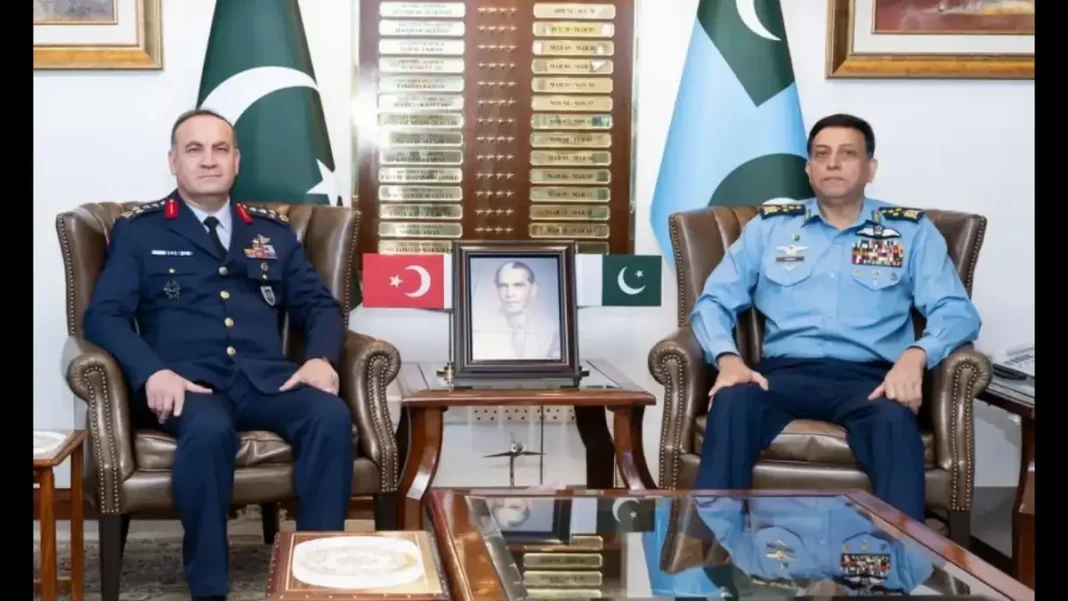
Pakistan Turkiye defence cooperation moved forward on Wednesday, 18 November 2026, as the air chiefs of the two countries agreed to deepen work on drones, electronic warfare and aerospace technology. Air Chief Marshal Zaheer Ahmed Baber Sidhu met Turkish Air Force Commander General Rafet Dalkiran at Air Headquarters, Islamabad.
The Pakistan Air Force said the talks covered unmanned and autonomous systems, electronic warfare, advanced aerospace technologies and indigenous research, development and production. The meeting followed defence cooperation talks at GHQ, where General Dalkiran had called on Chief of Defence Forces and Army Chief Field Marshal Asim Munir a day earlier.
Drones and electronic warfare top the Pakistan Turkiye defence cooperation agenda
The two air chiefs identified what the PAF called substantial opportunities to expand cooperation in unmanned and autonomous systems, electronic warfare and advanced aerospace technology. They also discussed joint work on research, development and production inside both countries, rather than simple purchases of ready-made systems.
Air Chief Marshal Sidhu told his guest the partnership rests on shared history, common values and mutual trust, and had grown into a robust strategic relationship with room to expand in defence and aerospace.
He also briefed General Dalkiran on the PAF’s shift towards a technologically advanced, multi-domain air force built on modernisation, local innovation and next-generation concepts.
Training, exercises and pilot support
Air Chief Marshal Sidhu assured the Turkish Air Force of the PAF’s full support in pilot training, professional development and capacity building, and the two sides agreed on regular professional exchanges, joint training programmes and combined exercises.
The PAF said the exchanges and exercises would raise interoperability and build closer teamwork between the two services.
General Dalkiran praised the PAF’s professional standing, operational skill and combat experience. He also welcomed its modernisation drive, growing local aerospace capacity and push for technological self-reliance under Air Chief Marshal Sidhu.
He expressed an earnest desire to draw on the PAF’s combat record and operational experience. A guard of honour welcomed him on arrival at Air Headquarters.
A partnership built through pacts
The Islamabad talks fit a wider pattern. Pakistan and Turkiye signed the Makkah Defence Pact with Saudi Arabia in August 2026, and Pakistan will host a summit of the Makkah Defence Alliance in November. In October, the two countries also joined Qatar and Indonesia in the multilateral Badr defence cooperation pact.
Pakistan and Turkiye are also members of the Regional Four group with Saudi Arabia and Egypt, which took shape in March 2026 and has met several times since then.
Air Chief Marshal Sidhu visited Turkiye in May 2026, when the two air forces reaffirmed their growing strategic convergence in defence, aerospace innovation and emerging technologies, and discussed joint exercises, training and unmanned aerial systems. He has pressed the same agenda elsewhere, including in defence talks with Uzbekistan.
What happens next
The PAF statement described the visit as a sign of the growing strategic depth of Pakistan-Turkiye relations and a shared resolve to build a more integrated, technology-driven defence partnership. No new deal was announced in the statement, and neither side gave a date for the next round of talks.
The focus now falls on turning the agreed areas into working programmes, and joint exercises, training exchanges and shared research will test whether the talks lead to joint production and shared systems. The push for home-grown capacity runs through the wider armed forces, and Field Marshal Munir has stressed home-grown defence in recent visits to military formations.
The talks matter because they shape what Pakistan’s air force can build and fly in the years ahead, and Turkiye has become one of its closest partners in drones, electronic warfare and local production.
Frequently asked questions
Who met in Islamabad on 18 November 2026?
Air Chief Marshal Zaheer Ahmed Baber Sidhu met Turkish Air Force Commander General Rafet Dalkiran at Air Headquarters, Islamabad.
What did the two air chiefs discuss?
They discussed unmanned and autonomous systems, electronic warfare, advanced aerospace technologies and indigenous research, development and production, along with training and joint exercises.
What support did Pakistan offer the Turkish Air Force?
Air Chief Marshal Sidhu assured the Turkish Air Force of the PAF’s full support in pilot training, professional development and capacity building.
Did General Dalkiran meet anyone else in Pakistan?
Yes. A day earlier, he called on Chief of Defence Forces and Chief of the Army Staff Field Marshal Asim Munir at General Headquarters in Rawalpindi to discuss mutual interest, regional security and defence cooperation.
Which defence pacts link Pakistan and Turkiye?
They signed the Makkah Defence Pact with Saudi Arabia in August 2026 and joined Qatar and Indonesia in the Badr defence cooperation pact in October 2026. They are also members of the Regional Four group with Saudi Arabia and Egypt.