

“Pakistani Punjab” is how the world distinguishes Pakistan’s eastern province from the Indian state across the border that shares its name. This guide is about the Pakistani side: the province’s identity, what sets it apart from Indian Punjab, and the land, people and culture that make it Pakistan’s beating heart.
Quick answer: Pakistani Punjab is Pakistan’s eastern province (capital Lahore, 127.7 million people) — the larger, more populous half of the historic Punjab region, divided from Indian Punjab by the 1947 Partition. It is Pakistan’s agricultural and economic core, and its cultural identity is Punjabi, Muslim and Sufi.
In this guide: What “Pakistani Punjab” means · The 1947 divide · Identity: language, faith, food · The land · FAQs
What “Pakistani Punjab” Means
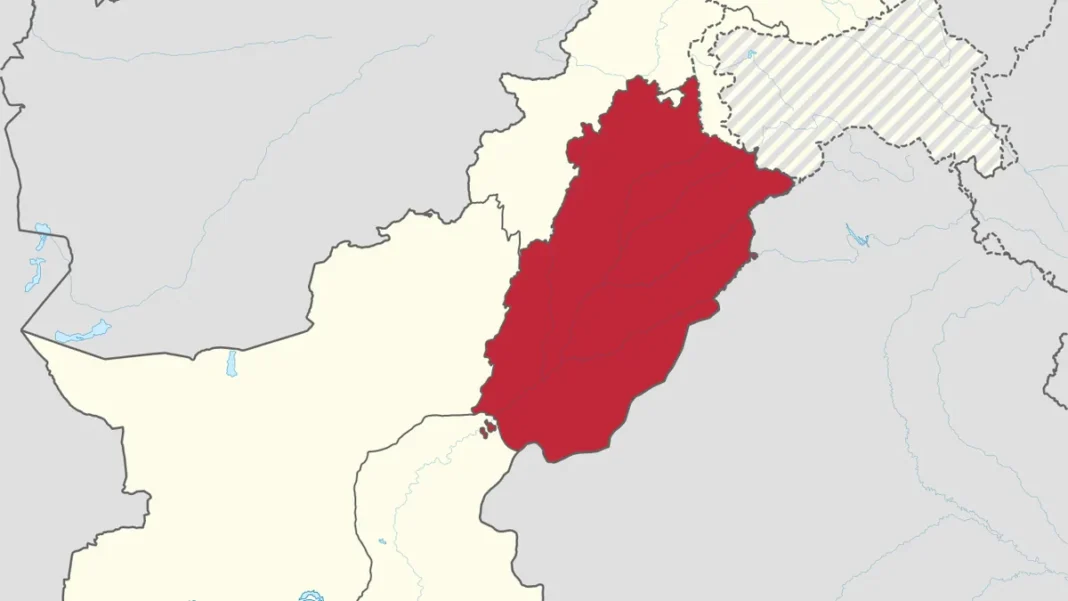
The Punjab region is transnational — it spans eastern Pakistan and northwestern India. “Pakistani Punjab” is the Pakistani portion: the province of Punjab with its capital at Lahore, covering 205,344 km² and home to 127.7 million people (2023 census). It is by far the larger share — Indian Punjab (capital Chandigarh) covers about 50,362 km² with under 28 million people.
The distinction matters because the two Punjabs, though sharing a language and cuisine, have diverged sharply since 1947: different scripts (Shahmukhi in Pakistan, Gurmukhi in India), different majority faiths, and different political worlds. Punjab, Pakistan: the complete provincial guide →
The 1947 Divide
Before 1947, Punjab was one British province. The Radcliffe Line split it between Pakistan and India in August 1947, triggering the largest mass migration in human history — millions of Muslims moving west, millions of Sikhs and Hindus moving east — amid horrific communal violence. Lahore, the old capital, went to Pakistan; Amritsar, the Sikh holy city, to India.
The division’s scars shaped Pakistani Punjab’s identity: a province built substantially by refugees (muhajirs) from East Punjab, whose integration defined its early politics. The shared cultural memory — of a united Punjab — still surfaces in Punjabi literature, music and cross-border nostalgia, even as the border itself remains one of the world’s most militarised.
Identity: Language, Faith and Food
Pakistani Punjab’s identity rests on three pillars. Language: Punjabi, written in the Perso-Arabic Shahmukhi script, is the mother tongue — the language of Sufi poets Bulleh Shah and Waris Shah, whose verses are quoted across the province. Faith: overwhelmingly Muslim, with a deep Sufi tradition centred on the great shrines — Data Darbar in Lahore, the Multan shrines, Baba Farid in Pakpattan. Food: the province’s cuisine — nihari, paye, saag, lassi, Multani sohan halwa — is Pakistan’s culinary signature.
The province also carries Pakistan’s political identity: with 183 National Assembly seats, whoever wins Punjab usually wins Pakistan. Its chief minister — currently Maryam Nawaz — is conventionally the country’s second most powerful elected office. See the current chief ministers and why Punjab is the most populated province.
The Land: Five Rivers, One Plain
Pakistani Punjab holds three of the five rivers substantially — the Jhelum, Chenab and Ravi flow through it (the Beas and Sutlej largely define the border or flow in India). The canal network drawn from them waters the central plains, making the province Pakistan’s granary: roughly 68% of the country’s food-grain production. From the Potohar Plateau in the north to the Cholistan Desert in the south, it is a province defined by water — and by what water makes possible.
Frequently Asked Questions
What is Pakistani Punjab?
Pakistan’s eastern province (capital Lahore) — the larger, more populous half of the historic Punjab region, with 127.7 million people and an area of 205,344 km².
What is the difference between Pakistani and Indian Punjab?
Pakistani Punjab is larger (127.7M people vs ~28M), Muslim-majority, uses the Shahmukhi script and has Lahore as capital; Indian Punjab is Sikh-majority, uses Gurmukhi and has Chandigarh as capital. They were one province until the 1947 Partition.
What language do they speak in Pakistani Punjab?
Punjabi (Shahmukhi script) is the mother tongue; Saraiki in the south, Pothohari in the north; Urdu is the lingua franca.
Why is Lahore called the heart of Pakistan?
As Punjab’s capital and Pakistan’s cultural capital — home to the Badshahi Mosque, Lahore Fort, the food streets and much of the country’s media and fashion industries — Lahore is where Pakistan’s culture concentrates.