Senate Population Resolution Warns of 390m by 2050
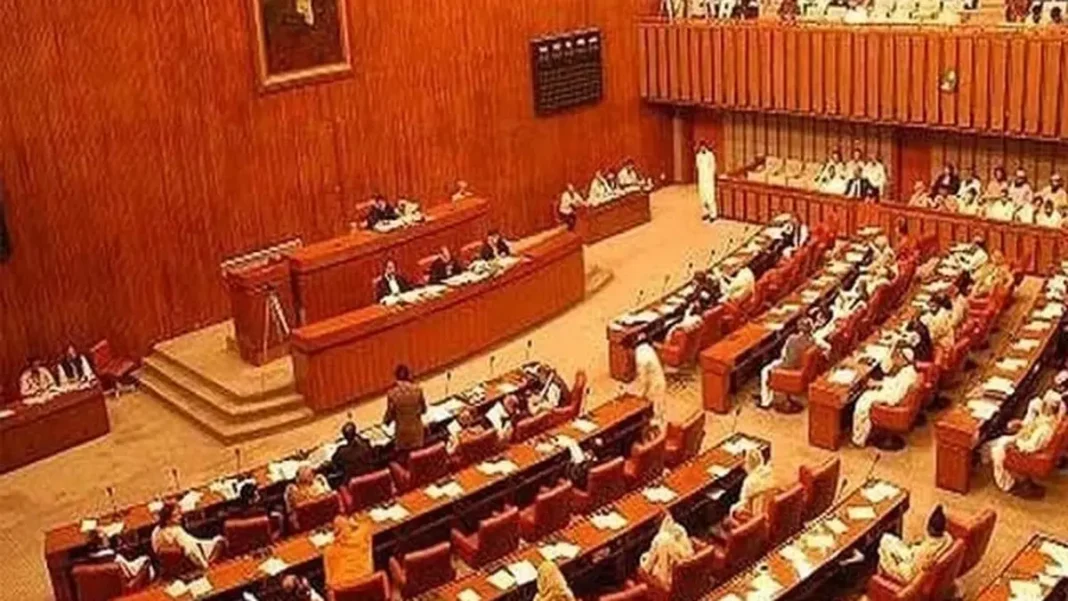
The Senate has adopted a resolution urging urgent measures to address Pakistan’s rapidly growing population. The resolution, moved on Thursday, October 29, warns that the country’s population could reach 390 million by 2050 if growth is not slowed.
Pakistan Peoples Party Vice-President Senator Sherry Rehman moved the resolution during a session chaired by presiding officer Shahadat Awan. She called for a coordinated national strategy to slow population growth, stressing the need to improve family planning, women’s reproductive health, child nutrition and access to education.
The Senate population resolution does not itself change any law. A resolution of this kind urges the government to act and records the House’s view. Its force lies in the pressure it creates for a strategy, funding and delivery, not in any new legal rule. That distinction matters, because the problems it names, from health services to schooling, will only change when programmes on the ground change with them.
Senate population resolution: why 390 million matters
A population of 390 million by 2050 would reshape every public service in Pakistan. More children would need classrooms, teachers and textbooks. More families would need clean water, housing, jobs and health care. More young people would enter the workforce each year, in an economy that already struggles to create enough formal jobs.
The resolution links population growth directly to those services. Family planning and women’s reproductive health affect how many children families choose to have and how safely mothers can bear them. Child nutrition affects whether those children grow up healthy enough to learn and work. Education affects whether a larger population becomes a larger workforce or a larger burden on public services.
Pakistan’s recent poverty figures show why that link is urgent. Feature Pakistan reported that the national poverty rate stood at 28.9 percent, a reminder that growth in numbers without growth in incomes leaves more people sharing the same limited resources. A population strategy that ignores poverty, schooling and health together is unlikely to work, because families make decisions about family size in the context of income, security and services they can actually reach.
Human rights cases: 41,428 reported in five years
During question hour in the same Senate session, the Ministry of Human Rights presented figures showing that 41,428 cases of human rights violations were reported across the country between 2021 and 2026. Punjab recorded the highest number, at 14,498 cases, followed by Sindh with 10,705, Khyber Pakhtunkhwa with 9,919, Balochistan with 3,680 and Islamabad with 2,626.
The ministry also reported that 8,758 cases of human rights violations were recorded in 2025 alone. The provincial breakdown adds up to the national total, which gives the figures internal consistency, although reported cases are not the same as all violations that occurred. Many cases go unreported, and reporting levels also reflect how easy it is for victims to reach the authorities in each province.
The two items in one session tell a joined-up story. A country planning for a much larger population must also protect the rights of the people already here. Family planning, in particular, only works as a rights-based service when women can reach clinics, receive honest information and make free choices. A strategy built on targets without rights risks failing the very families it claims to help.
What happens next
The resolution now stands as the Senate’s formal call for a coordinated national strategy. The government must decide whether to answer it with a costed plan, covering family planning services, reproductive health, nutrition and education, or to let it remain a statement of concern. Senators, health experts and provincial governments will watch for that response, because population policy in Pakistan is delivered mainly by the provinces, while the Senate can set direction and demand accountability.
The next markers to watch are practical. Will family planning services expand in districts where access is weakest? Will reproductive health funding rise in the next budget? Will child nutrition programmes reach the children most at risk? And will the government publish progress against the 390 million warning, so the public can judge whether growth is slowing?