Shenzhou-24 Launch Drill Clears Way for Pakistan Astronaut
China has completed the Shenzhou-24 launch drill, the final rehearsal for the spacecraft that will carry Pakistan’s first astronaut into space, Pakistan’s space agency said on Sunday.
The Space and Upper Atmosphere Research Commission (SUPARCO) said all three crew members completed the required pre-flight procedures during the joint exercise at the Jiuquan Satellite Launch Center in northwest China. The mission will make the Pakistani astronaut the first foreign national to visit China’s Tiangong space station.
“The everlasting Pakistan-China friendship is now transcending the limits of the Earth and reaching the vastness of space,” SUPARCO said in its statement.
The rehearsal was the last full-systems test before the flight, which Pakistani officials expect within days. It brings the two countries a step closer to their first joint human spaceflight mission, under an agreement signed in February 2025 to train Pakistani astronauts for the Chinese space station.
What the Shenzhou-24 launch drill covered
The joint pre-flight exercise tested the full launch sequence, with the three astronauts carrying out their assigned operations at the launch centre. Zhu Lu, an official at the China Astronaut Research and Training Center, said the crew had demonstrated determination and performed all operations accurately during the drill.
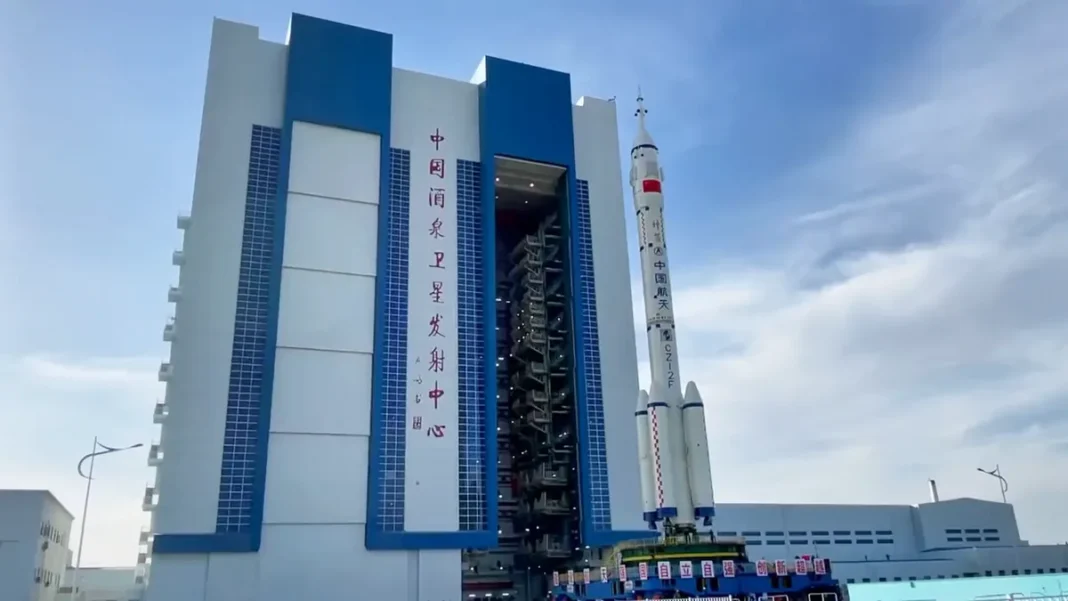
The Shenzhou-24 spacecraft and its Long March-2F rocket were moved to the launch area on November 17 for final preparations. Chinese authorities have yet to announce a confirmed launch date, although Planning Minister Ahsan Iqbal said in October that Pakistan expected the flight on November 25.
The selected astronaut is expected to spend about a week aboard Tiangong, conducting scientific experiments, before returning to Earth aboard the Shenzhou-23 spacecraft, which carried the previous crew to the station in May.
Two pilots, one seat
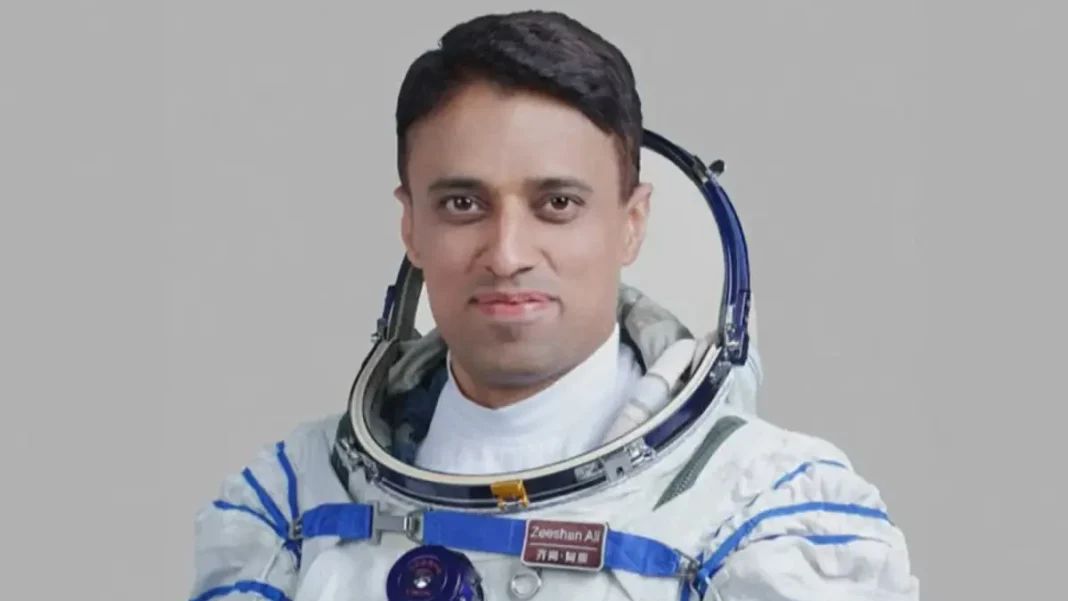
Pakistan has shortlisted two pilots for the mission: Muhammad Zeeshan Ali of the Pakistan Air Force and Khurram Daud of the Pakistan Navy. One will travel to Tiangong as a payload specialist, while the other will serve as backup.
The two men have spent months training at the China Astronaut Research and Training Centre in Beijing, alongside Chinese taikonauts. They were named in April 2026 after a selection process run by SUPARCO, and the final choice between them will be made before the flight.
Planning Minister Ahsan Iqbal has arrived in Beijing for the departure ceremony as the final pick nears. He will travel to the space mission centre on Monday to meet the two astronauts, and he has called the flight a historic moment for the entire nation.
A payload specialist works with the scientific equipment and experiments carried aboard a spacecraft. The role focuses on the mission’s research tasks rather than piloting the spacecraft, and the agency has not yet published the list of experiments the Pakistani astronaut will carry out.
Why the mission matters for Pakistan
The flight will be the first joint spaceflight involving Chinese and foreign astronauts in the history of China’s crewed space programme. It will also be the first time a foreign astronaut visits Tiangong, which was completed in 2022 and has operated since 2021.
For Pakistan, the mission is the most visible step yet in a space partnership that has grown steadily. China has launched Pakistani satellites in the past, and the two sides plan to send a Pakistani-built rover aboard China’s Chang’e-8 lunar mission around 2028.
The original announcement that a Pakistani astronaut would fly aboard Shenzhou-24 came on November 7, when the China Manned Space Agency confirmed the plan. The successful drill now turns that announcement into a flight that is ready to go.
SUPARCO is the agency behind Pakistan’s side of the mission, and it also tracks air quality, recently warning that Punjab’s air would worsen over three days. Its chairman, Yusuf Khan, called the completion of the astronauts’ training an important and memorable day in the history of Pakistan’s space programme.
The flight also comes as space agencies mark new milestones around the world, including Voyager 1 passing one light-day from Earth after 49 years in space.
What happens next
The final selection of the astronaut is expected before the flight, with the departure ceremony under way in Beijing. If the November 25 date holds, Pakistan’s first astronaut will be in orbit within days, carrying out experiments aboard Tiangong for about a week before the return journey on Shenzhou-23.
China has said it wants to expand international participation in its space programme as it works toward landing astronauts on the Moon by 2030. For Pakistan, the week ahead will show whether its first astronaut takes his place in that programme on schedule.
Frequently asked questions
What is the Shenzhou-24 launch drill?
It was the final full-systems rehearsal for the Shenzhou-24 spacecraft at the Jiuquan Satellite Launch Center, in which all three crew members completed their pre-flight procedures. China completed the drill on Sunday, November 22, according to SUPARCO.
Who is Pakistan’s first astronaut?
The final pick has not been named yet. Two pilots have been shortlisted: Muhammad Zeeshan Ali of the Pakistan Air Force and Khurram Daud of the Pakistan Navy. One will fly as a payload specialist, and the other will serve as backup.
When will the Pakistan first astronaut fly?
Pakistani officials, including Planning Minister Ahsan Iqbal, have pointed to November 25, 2026. Chinese authorities have not yet announced a confirmed launch date.
How long will the astronaut stay in space?
The selected astronaut is expected to spend about a week aboard the Tiangong space station, conducting scientific experiments, before returning to Earth aboard the Shenzhou-23 spacecraft.
Why is the Shenzhou-24 mission historic?
It will be the first time a foreign astronaut visits China’s Tiangong space station, and the first joint spaceflight involving Chinese and foreign astronauts in the history of China’s crewed space programme.