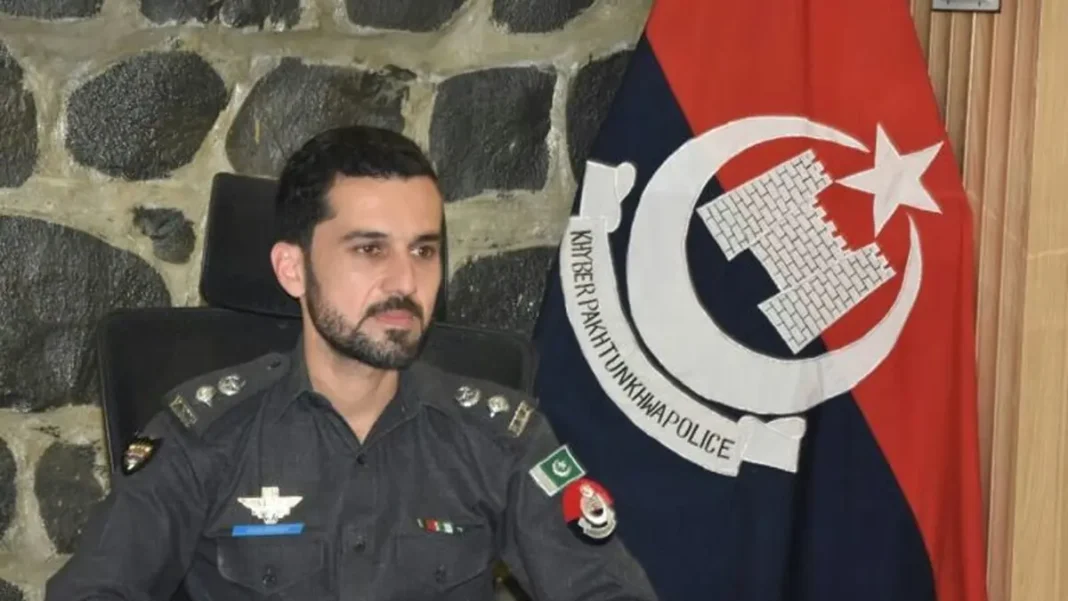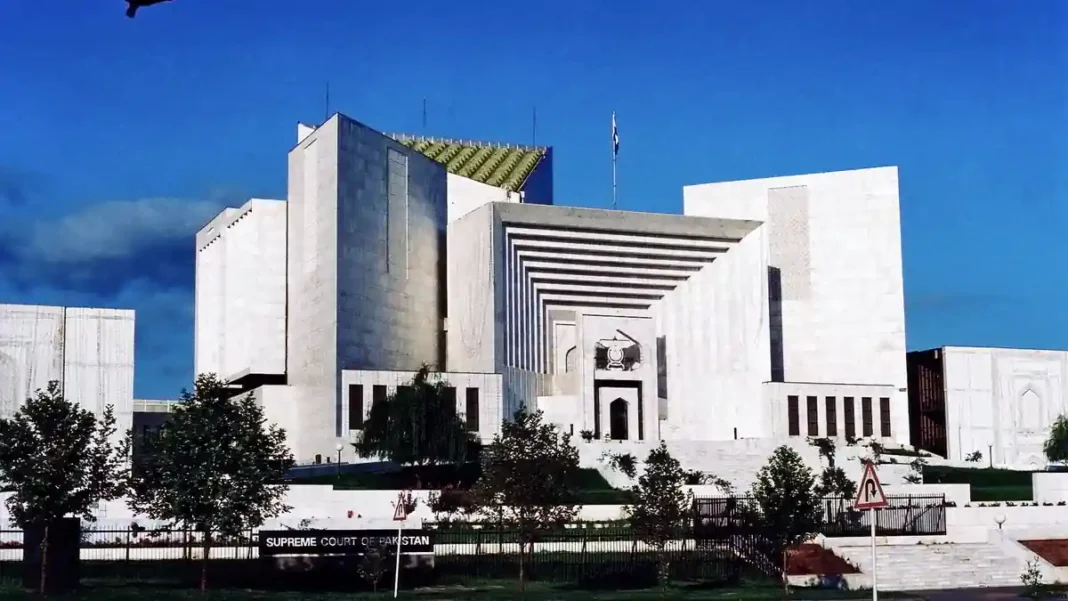
The Supreme Court acquittal of two brothers in a blasphemy case has set aside their death sentences, after medical boards found that both men suffered from a mental illness that raised doubts about their culpability. Liaqat Ali and Umar Draz have spent around 20 years behind bars.
A three-judge bench headed by Chief Justice Yahya Afridi, with Justices Shakeel Ahmad and Ishtiaq Ibrahim, heard appeals against the Lahore High Court’s Sept 17, 2015 decision upholding the convictions. Justice Ishtiaq Ibrahim authored the main judgement.
A sessions judge in Jhang convicted the brothers on March 27, 2006, sentencing both to death with a fine of Rs500,000 each and five years’ rigorous imprisonment in default. The high court dismissed their appeals and upheld the convictions.
The case and the medical evidence
According to the complaint, Umar Draz had begun making statements that led to a marital dispute with his wife, which ended in divorce on March 13, 2006. During the return of his former wife’s dowry articles, a written document authored by Liaqat Ali was recovered.
Before the Supreme Court, their counsel argued only the plea of mental unsoundness: the appellants lacked the requisite mens rea, or guilty mind, at the time of the alleged offence.
The court examined three psychiatric assessments. A three-member board at DHQ Hospital, Faisalabad, found both men mentally sound in 2007. But an eight-member Board of Certification diagnosed bipolar affective disorder with psychotic symptoms in 2023. A nine-member board in September 2025 found bipolar disorder in a current manic episode, a chronic illness with absent insight and an inability to understand their acts.
The court observed that the unanimous opinions of specialised boards of senior psychiatry professors carried greater weight than the earlier assessment by a board with only one psychiatrist. Three board members appeared before the bench on July 6 and explained the illness. It also noted that bipolar disorder was episodic and genetic, and that both brothers had the same diagnosis.
Benefit of doubt
“The appellants have spent around 20 years behind bars. In the light of the opinion of medical board which raises doubts regarding the culpability of the appellants, the benefit of doubt cannot be withheld from the appellants,” the judgement said.
The court also expected the executive director of the Punjab Institute of Mental Health, Lahore, to ensure that their medical treatment was not discontinued.
In his concurring note, Justice Ahmad agreed with the acquittal but cautioned that a psychiatric diagnosis alone did not satisfy Section 84 of the Pakistan Penal Code. He distinguished medical insanity from legal insanity: the key question was whether, at the time of the offence, the accused was incapable of knowing the nature of the act or that it was wrong or contrary to law.
He argued that legal accountability had to be balanced with humanity, and that true justice included mercy when the law recognised a person’s lack of mental capacity. The note said the medical reports, with the surrounding circumstances, created reasonable doubt.
Supreme Court acquittal ends a long road
The case moved through three levels of the courts over two decades: the trial court convicted the brothers in 2006, the high court upheld the death sentences in 2015, and the Supreme Court has now set both aside.
The case turns on Section 84 of the Pakistan Penal Code, which protects a person who, by reason of unsoundness of mind, is incapable of knowing the nature of the act or that it was wrong or contrary to law. Justice Ahmad’s distinction between a medical diagnosis and legal insanity is the point on which such cases often turn. A diagnosis proves an illness. The court must still decide whether the illness left the accused unable to understand the act at the time it was committed. The Council of Islamic Ideology has also weighed in on blasphemy sentences and related laws.
Pakistan’s courts have dealt with blasphemy cases on similar lines before. A Lahore court delivered its verdict in a 2022 blasphemy case in October, and a Peshawar court ruled in another blasphemy case the same month. Medical evidence now features often in the court’s work, including matters touching on the health of high-profile prisoners.
Frequently asked questions
Who were acquitted by the Supreme Court?
Brothers Liaqat Ali and Umar Draz, sentenced to death by a Jhang sessions court in 2006.
Why did the court acquit them?
Medical boards found both men suffered from bipolar disorder, which raised doubts about their culpability.
What did the medical boards find?
A 2023 board diagnosed bipolar affective disorder with psychotic symptoms, and a September 2025 board found a current manic episode with absent insight.
What is Section 84 of the Pakistan Penal Code?
It protects a person who, by reason of unsoundness of mind, is incapable of knowing the nature of the act or that it was wrong or contrary to law.