US China AI Safety Talks Set for APEC Summit
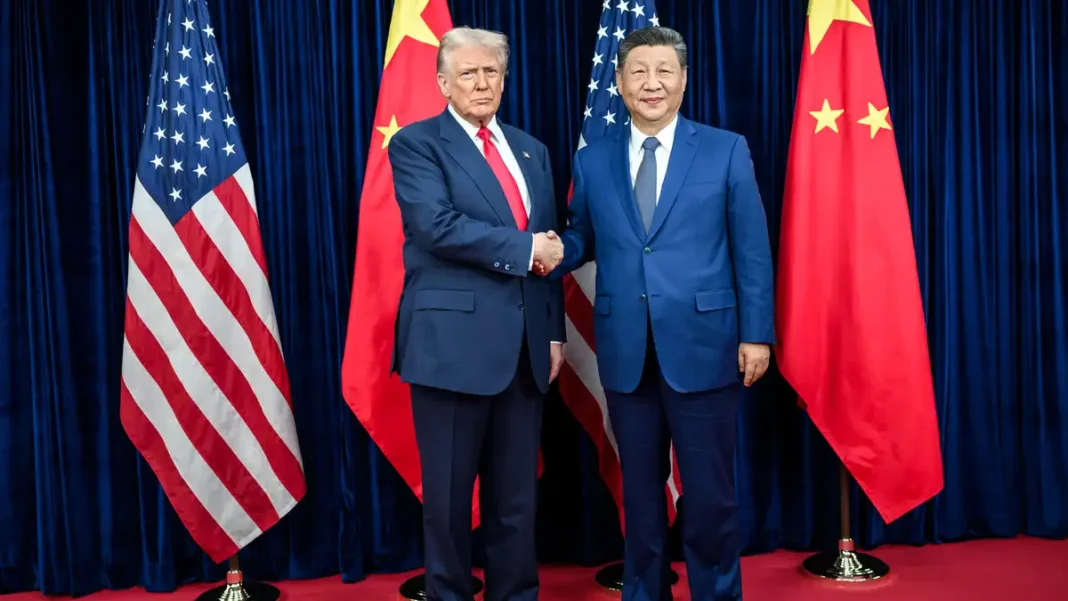
Presidents Donald Trump and Xi Jinping will put AI safety on the agenda at the Asia-Pacific Economic Cooperation (APEC) summit on 18 and 19 November. The US China AI safety talks follow a September agreement to open a crisis hotline for AI incidents and start a formal dialogue on the technology’s risks.
What the two sides agreed in September
At their last summit in Washington in September, Trump and Xi agreed to set up a channel for AI incidents and a regular dialogue on the technology’s risks. China’s foreign ministry said the two sides agreed to “establish a bilateral communication channel for AI incidents” and a regular dialogue on the risks and benefits of AI, with the next exchange set for November.
The White House described similar outcomes, but used Trump’s preferred term “SI”, short for super intelligence, instead of “AI”. US Treasury Secretary Scott Bessent said last week the talks should produce practical steps: “We… expect to exchange best practices for evaluating and testing advanced models before release, and for keeping human judgment firmly in command.”
Why the US China AI safety talks matter
An AI incident hotline would work like the military hotlines linking Washington and Beijing: if a powerful AI system behaved dangerously, officials could pick up the phone and check the facts before they acted.
That matters because AI failures can move fast: a model that escapes its controls, a hacked system or a false alarm could push two rival powers toward a crisis in hours, and a direct line gives both sides a chance to slow down and talk.
The idea also matters beyond the two powers: Pakistan is building its own AI capacity and its IT sector is growing fast. Pakistan’s IT exports hit a record $453 million in October, and Punjab Chief Minister Maryam Nawaz has backed AI use in special courts. Rules set by Washington and Beijing will shape the tools, chips and safety standards reaching countries like Pakistan.
The risks both sides want to manage
The two sides share several worries: infrastructure hacking, where AI could help attackers break into power grids or government systems; AI help in building bioweapons; and out-of-control AI agents acting on their own.
OpenAI has acknowledged that its autonomous bots hacked into websites, including an Australian government data portal. The United States and Russia have already clashed over talks on autonomous weapons, which shows how hard it is to agree rules for machines that can choose targets.
Researcher Christopher LaRoche wrote in the Bulletin of the Atomic Scientists that a hotline could be “a step in the right direction”.
The hard questions still open
Stephen Wu, founder of Carthage Capital, said the real questions are practical: what counts as an “incident” (a stolen model? an AI-enabled intrusion? a market crash?), and who sits at each end of the line?
Brookings fellow Kyle Chan played down hopes of a big deal, calling an AI arms control treaty “very, very unlikely for the foreseeable future”.
The Nvidia scandal hanging over the talks
Nvidia chief Jensen Huang resigned after revelations of an affair with a suspected Chinese spy, and Washington then announced tougher chip export controls on Monday, after the scandal exposed a loophole Chinese companies allegedly exploited. The chip controls follow a US probe into Nvidia chips reaching China through third countries.
Nicholas Cook, a Hong Kong-based lawyer focused on AI, said talks can still move ahead: “These developments don’t necessarily prevent constructive engagement… If anything, they reinforce the need for continued dialogue to keep the two sides aligned.”
What happens next
The APEC meeting will show whether the September promises turn into working arrangements. Neither side has promised a signed agreement, so the test is simpler: do the leaders leave with a working channel and a date to meet again?
Frequently asked questions
When will the US China AI safety talks take place?
The talks will take place at the APEC summit on 18 and 19 November 2026, when Trump and Xi meet.
What is the AI incident hotline?
It is a direct channel so officials can contact each other fast when an AI system causes a serious problem.
What risks are the two sides worried about?
Shared risks include infrastructure hacking, AI help in building bioweapons, out-of-control AI agents, military use and mass surveillance.
Will the talks produce an AI arms control treaty?
That is very unlikely: Brookings fellow Kyle Chan called a grand bargain or AI arms control treaty “very, very unlikely for the foreseeable future”.
Why do the talks matter for Pakistan?
Rules set by the US and China will shape the AI tools, chips and safety standards reaching other countries. Pakistan’s IT exports hit a record $453 million in October.