Unresolved Kashmir, Water Disputes Risk More Dangerous Pak-India Conflict: Ex-CJCSC
ISLAMABAD: Failure to resolve the underlying disputes between Pakistan and India will lead to more dangerous confrontations in the future, a former chairman of the Joint Chiefs of Staff Committee warned on Wednesday. His remarks add a sober military voice to the debate over how the two nuclear-armed neighbours manage the recurring Pak-India conflict.
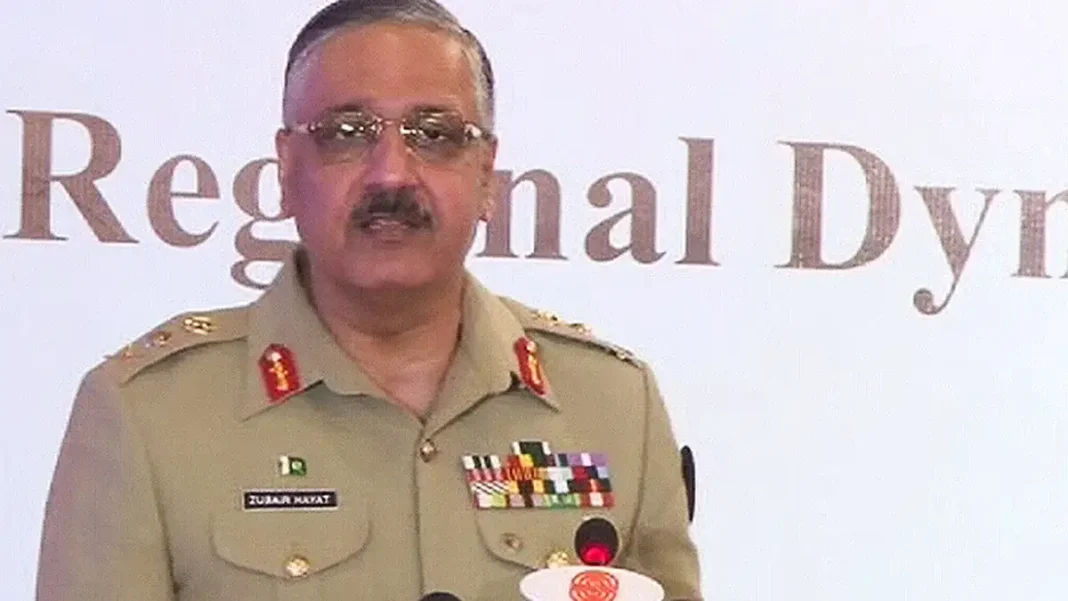
“Terminating a crisis without addressing its root causes only sets the stage for the next, more dangerous conflict,” retired General Zubair Mahmood Hayat said. He was speaking at the concluding session of the second Islamabad Non-Proliferation Conference, organised by the Strategic Vision Institute.
Kashmir and water at the heart of Pak-India conflict
Gen Hayat said the core issue of Jammu and Kashmir could not be wished away or reduced to an administrative matter. He stressed that water could not be turned from a shared necessity into an instrument of power and pressure, calling for the restoration of the Indus Waters Treaty.
His comments come as the treaty remains suspended by India, a step Pakistan has called an act of war. Information Minister Attaullah Tarar had earlier warned that the suspension threatened regional stability, as reported here.
The former CJCSC warned that repeated crises between the nuclear-armed neighbours could grow more dangerous if unresolved disputes, shrinking restraint and the absence of sustained political dialogue continued to weaken regional security.
Lessons from the May 2025 conflict
Referring to the May 2025 conflict, Gen Hayat said Pakistan had shown its military capability and political control through a calibrated response. He said the response denied India a unilateral fait accompli without sliding into an unlimited war.
But he cautioned against drawing comfort from that outcome. “The larger lesson is not that conflict between two nuclear-armed neighbours can be made routine; it is that there is no tested and certified safe space for war,” he said.
He warned that future crises would play out under different leaders, with emerging technologies and shorter decision-making timelines, all of which raise the risk of miscalculation. South Asia, he said, lacked an inclusive regional security framework, effective crisis-management tools and steady political dialogue.
“The region lives between deterrence that prevents the worst and disputes that repeatedly regenerate danger,” he said.
Warning on miscalculation and Operation Sindoor
Gen Hayat warned that unverified claims could trigger a conflict before facts were established. He said a future clash could arise from an accident rather than a deliberate state decision, and he cited the continuing Operation Sindoor in this context.
His warning lands at a time when Pakistan is widening its defence partnerships across the region. Islamabad recently signed the Badr defence cooperation pact with Qatar, Turkiye and Indonesia in Doha, as reported here. Pakistan’s military leadership has also engaged Iran on mediation efforts, with CDF Asim Munir meeting Iranian leaders in Tehran, as covered earlier.
What happens next
Gen Hayat’s message was aimed at policymakers on both sides: crisis management without dispute resolution only buys time. With the Indus Waters Treaty still suspended and no sustained dialogue in place, the structural drivers of the next crisis remain untouched.
Whether his warning shifts the conversation in New Delhi is an open question. In Islamabad, it is likely to be cited by those who argue that water and Kashmir must sit at the centre of any future engagement with India.
*Source: Dawn*
Who is Gen Zubair Mahmood Hayat?
He is a retired four-star general who served as chairman of the Joint Chiefs of Staff Committee, Pakistan’s top military coordination post. He made the remarks at the Islamabad Non-Proliferation Conference organised by the Strategic Vision Institute.
What did he say about the Indus Waters Treaty?
He said water could not be converted from a shared necessity into an instrument of power and pressure, and stressed the need for the treaty’s restoration. India suspended the treaty, a move Pakistan has strongly opposed.
Why does he say future conflict could be more dangerous?
He pointed to different leaders, emerging military technologies and shorter decision-making timelines in future crises, which he said would raise the risk of miscalculation between the two nuclear-armed states.