14 Countries Back ICJ Rohingya Genocide Ruling
Fourteen countries acknowledged on Monday that Myanmar committed genocide against its Rohingya minority, endorsing the ICJ Rohingya genocide ruling as Britain formally recognised the genocide and announced sanctions on five senior military figures.
The foreign ministers of Australia, Belgium, Canada, Cyprus, the Czech Republic, Estonia, Iceland, Latvia, Luxembourg, New Zealand, Portugal, Spain, The Gambia and the United Kingdom said in a joint statement that Myanmar had “violated its obligations under the Genocide Convention”.
“We underscore that the Court’s judgment is binding upon Myanmar and call on Myanmar to comply fully with its obligations under international law, including the Court’s decision,” the ministers said.
UK sanctions and new funding
Britain went further than the joint statement. The UK said it “formally recognises” genocide against the Rohingya and announced sanctions on five senior military figures, including asset freezes and travel bans.
London also said it intends to introduce legislation targeting the export and supply of aviation fuel to Myanmar. The fuel powers the military’s aircraft.
“The horrific violence and persecution inflicted on the Rohingya cannot go unanswered,” Foreign Secretary Ed Miliband said.
The UK is providing an additional £5 million to support Rohingya and other communities in Rakhine state, where about 350,000 people need help. A further £3 million will go towards accountability and justice for survivors of human rights abuses across Myanmar, The Daily Star reported.
The ICJ Rohingya genocide ruling: a first for the court
The joint statement follows the International Court of Justice ruling of 19 November, when the court found Myanmar responsible for genocide against the Rohingya during the military crackdown in 2017. Feature Pakistan reported at the time that the verdict was the first in the court’s 80-year history in which it found a state had committed genocide.
The case was brought by The Gambia in 2019. It accused Myanmar of breaching the Genocide Convention through the campaign of killings, sexual violence and forced displacement that drove hundreds of thousands of Rohingya from Rakhine state into Bangladesh.
Myanmar’s government called the ruling unfair and a “great disappointment”. Shortly after the verdict, Britain announced it would expel Myanmar’s defence attache.
What acknowledgment means, and what happens next
Acknowledgment is not the same as enforcement. The court’s judgment is binding, but the court has no police force of its own. Compliance depends on pressure from states and, ultimately, the United Nations Security Council.
That is where the 14 countries’ statement matters. By putting their names to the judgment, they add political weight to a ruling Myanmar has already rejected. Sanctions and the aviation fuel legislation give Britain tools it can use on its own, without waiting for the Security Council.
The 14 countries also underlined the importance of creating conditions for the voluntary, safe, dignified and sustainable return of refugees to their homes in Myanmar.
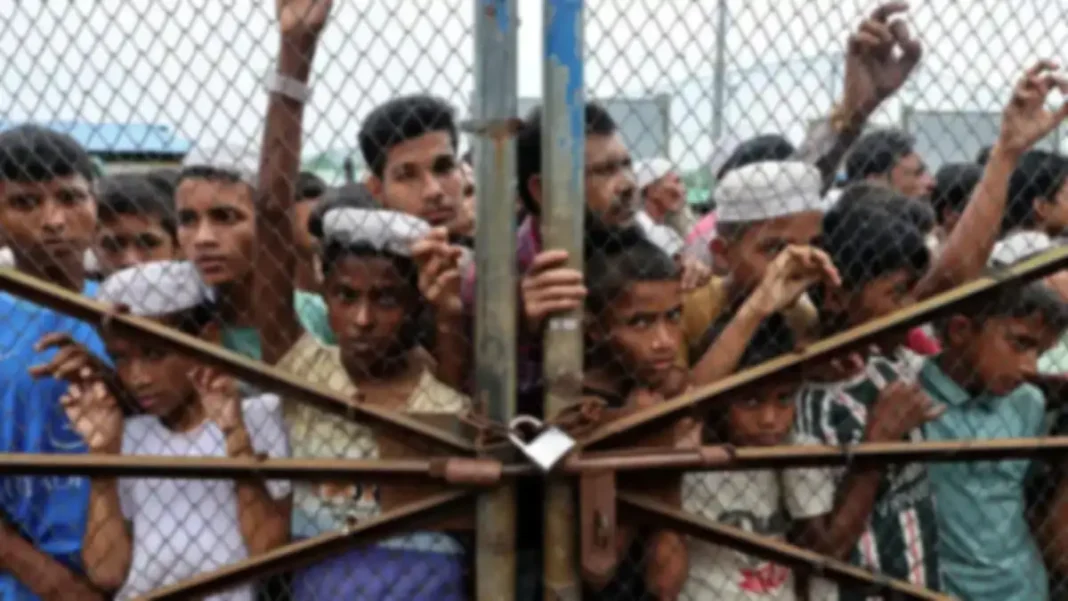
For the Rohingya, the practical test is whether the ruling changes life in Rakhine state and in the refugee camps of Cox’s Bazar, in Bangladesh, where hundreds of thousands of people have lived since fleeing the 2017 crackdown. The new British funding is aimed at those communities, but aid cannot substitute for a safe return home.
Why the ruling reaches beyond Myanmar
The verdict is already shaping other cases. Feature Pakistan reported that legal experts say the Myanmar ruling may bolster the genocide case against Israel at the same court, because it sets out how the judges weigh evidence of intent.
The ruling was also the first time the court had found a state guilty of genocide, a point Feature Pakistan noted before the verdict when the judgment date was announced.
The violence in Rakhine has not stopped. Feature Pakistan reported that Myanmar’s military bombed a market in Rakhine state, killing at least 33 people. That attack underlines why the 14 countries paired their statement with sanctions rather than words alone.
Bangladesh, which hosts the camps at Cox’s Bazar, is watching the response closely. Its government has pressed for the refugees’ return for years, and Feature Pakistan reported on the shifting politics in Dhaka as the crisis drags on.
Frequently asked questions
What did the 14 countries acknowledge?
They acknowledged the International Court of Justice ruling that Myanmar committed genocide against its Rohingya minority during the 2017 crackdown, and said Myanmar had violated its obligations under the Genocide Convention.
Which countries signed the joint statement?
Australia, Belgium, Canada, Cyprus, the Czech Republic, Estonia, Iceland, Latvia, Luxembourg, New Zealand, Portugal, Spain, The Gambia and the United Kingdom.
What sanctions did the UK announce?
The UK announced asset freezes and travel bans on five senior Myanmar military figures, and said it intends to introduce legislation targeting the export and supply of aviation fuel to Myanmar.
What did the ICJ rule on 19 November?
The court ruled that Myanmar committed genocide against the Rohingya minority during the 2017 crackdown in Rakhine state. It was the first time in the court’s 80-year history that it found a state had committed genocide. The case was brought by The Gambia in 2019.
What funding did the UK promise?
The UK promised an additional £5 million for Rohingya and other communities in Rakhine state, where about 350,000 people need help, plus a further £3 million for accountability and justice for survivors of human rights abuses across Myanmar.