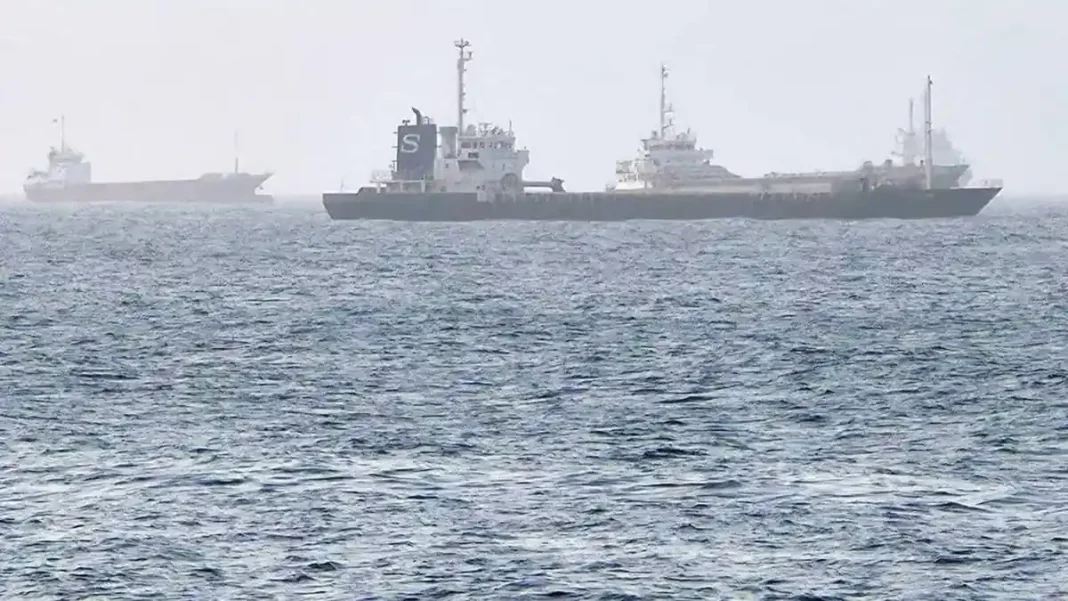
Oil Shipping Costs Hit $254,000 a Day Amid Hormuz Attacks
- Suggested slug: oil-shipping-costs-254000-hormuz-october-2026
- Category: Business
- Focus keyphrase: oil shipping costs Hormuz
- SEO title: Oil Shipping Costs Hit $254,000 a Day Amid Hormuz Attacks
- Meta description: Oil tanker freight rates have surged to $254,000 a day as Hormuz attacks intensify, raising costs for fuel-importing countries like Pakistan.
- Tags: oil shipping, Strait of Hormuz, tanker freight rates, crude oil, Pakistan fuel prices, Brent crude, Middle East, energy costs
- Original element: own data point — Pakistan’s current pump prices for October 24 to 26, diesel Rs393.66 and petrol Rs377.71, linked to Feature Pakistan’s Hormuz supertanker coverage
- Sources: ProPakistani (https://propakistani.pk/2026/10/24/oil-shipping-costs-explode-to-254000-a-day-amid-escalating-war/)
- Date: Saturday, 2026-10-24
Oil tanker freight rates have surged to record levels amid the ongoing war, with daily charges reaching $254,050, according to data from Topline Securities based on Bloomberg figures.
The rise is sharp by any measure. Freight rates stayed mostly between $20,000 and $50,000 a day through much of 2022 to 2025, according to the chart cited in the report. They have now climbed to more than five times the top of that range.
Data from Galbraith’s time charter equivalent figures for an 80,000-deadweight-ton Aframax tanker on the Middle East Gulf to Far East route showed rates peaking even higher, at $280,000 a day. Current rates stand at around $254,000 a day, reflecting a steep increase in the cost of moving oil by sea.
Attacks drive the surge
The surge comes as attacks on commercial shipping around the Strait of Hormuz intensify. Reuters reported on October 23 that 28 confirmed and reported attacks had occurred in the strait and surrounding waterways during October, making it the worst month on record, according to data compiled by the Washington Institute for Near East Policy.
The Strait of Hormuz is one of the world’s most important oil routes. A large share of seaborne crude passes through its narrow waters, so any threat to shipping there pushes up insurance costs, forces rerouting and raises freight rates. Shipowners charge more when the risk of damage or delay rises, and those charges flow into the price of every barrel that reaches a buyer.
What it means for Pakistan
Pakistan imports the bulk of its petroleum products by sea, so higher shipping costs reach Pakistani consumers through the fuel pricing system. The country now revises fuel prices daily, which means global volatility shows up at the pump quickly.
For October 24 to 26, diesel costs Rs393.66 a litre after a rise of Rs1.91, while petrol stays unchanged at Rs377.71 a litre. Those are the prices Pakistani motorists, transporters and farmers are paying while tanker rates sit at record levels.
Feature Pakistan has previously reported on a supertanker that caught fire after hitting a mine in Hormuz, and on the warning from Finance Minister Muhammad Aurangzeb that attacks on Gulf energy infrastructure were worrying for Pakistan’s economic outlook. The new freight figures put a number on that warning. The cost is no longer only the price of crude. It is also the price of moving crude through a dangerous strait.
Diesel matters most for the wider economy. Trucks, buses, tractors and generators run on diesel, so a rise in diesel costs feeds into food prices, transport fares and the cost of running a business. Petrol affects private motorists directly, but diesel moves the goods that everyone buys.
Why freight rates matter more than crude alone
Public debate about fuel prices usually focuses on the price of a barrel of Brent crude. Freight is the second charge, and in a normal market it is small enough to ignore. When freight jumps from $50,000 a day to $254,000 a day, it stops being a footnote.
A tanker carrying hundreds of thousands of barrels still spreads that daily charge across a large cargo, but the increase adds dollars to the landed cost of each barrel. When that increase arrives at the same time as rising crude prices, the two effects reinforce each other.
The market will watch two things next. The first is whether attacks in and around Hormuz continue at the October pace. The second is whether insurers and owners keep pricing the route at wartime levels, or whether a pause in attacks brings rates down quickly. Freight rates can fall as fast as they rise when risk recedes, but while the threat remains, importers pay the higher charge.