The GB subsidised wheat seeds scheme will supply certified wheat seed to farmers at a 50 per cent subsidy, in a push to raise local production in a region that still imports most of its wheat. The project will cost Rs140 million, and an online portal has been opened for farmers to register.
GB Agriculture, Livestock and Fisheries Secretary Usman Ahmed told Dawn that the government had taken another step towards making the region self-sufficient in agriculture and improving the welfare of local farmers. The scheme runs under the Chief Minister’s Vision for Agriculture, on the special directives of Chief Minister Amjad Hussain.
Under the initiative, high-quality certified wheat seed will be procured from Punjab and distributed to farmers in all districts of Gilgit-Baltistan. Ahmed said the agriculture department had launched the online portal so farmers could obtain subsidised seed through a convenient and transparent process.
How GB subsidised wheat seeds will reach farmers
Farmers who cannot use the online portal can still register by contacting the office of the deputy director of agriculture or the agriculture officer in their district, Ahmed said. That offline route matters in a mountain region where internet access and digital literacy vary widely between valleys.
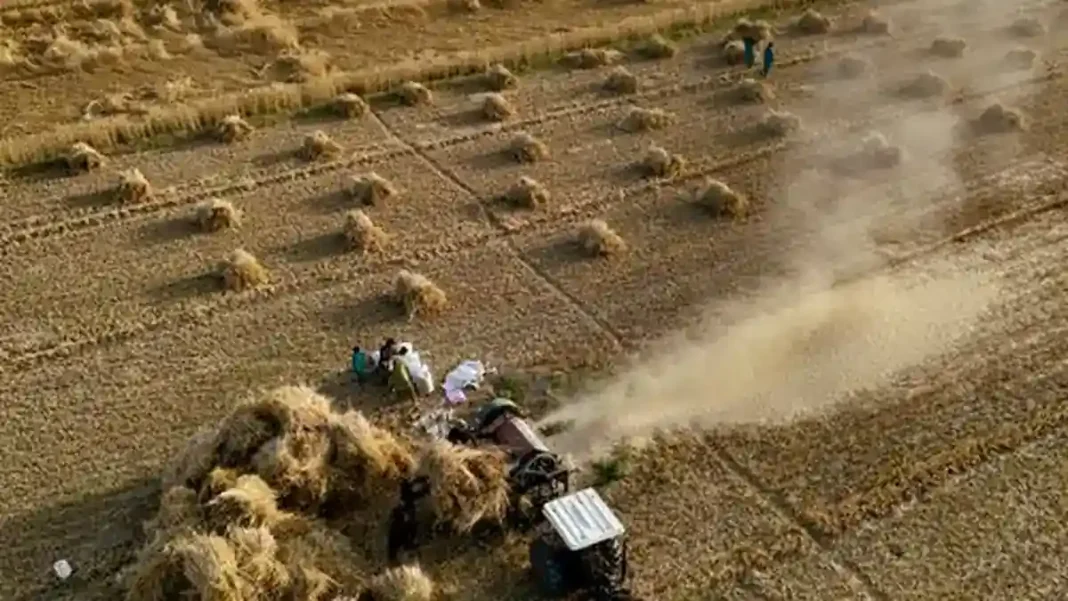
The seed will go to farmers across the region, rather than to a single district. The department has not yet published district-wise allocations, so farmers will learn their entitlement when they register. The scheme is timed for the rabi sowing season, when wheat goes into the ground in October and November and is harvested in spring.
Certified seed matters because it carries a known variety, a tested germination rate and freedom from seed-borne disease. The Punjab Agriculture Department advises farmers to use certified seed with a germination rate of at least 85 per cent, and to increase the quantity sown if germination falls below that level. For Gilgit-Baltistan, where the growing season is short and the margin for a failed crop is small, that quality guarantee is the core of the scheme.
Why Gilgit-Baltistan still imports most of its wheat
The subsidy scheme lands in a region with a long dependence on wheat brought in from the lowlands. A socioeconomic baseline report from 2022 put local wheat production at about 35,000 tonnes against imports of about 150,000 tonnes, leaving local production at roughly 19 per cent of supply. The same research noted that the Ghizer area was once known as a food basket for Gilgit, supplying wheat across the region, before shifting towards cash crops and bought-in grain.
Cultivable land is the binding constraint. Gilgit-Baltistan spans more than 72,000 square kilometres, but less than three per cent of that land can be cultivated, and only a small share of even that area is presently farmed. Rugged terrain, a short growing season and patchy irrigation all limit what farmers can grow, which is why subsidised wheat from Punjab has long been part of the region’s food system.
The new scheme tries to change one side of that equation. Instead of subsidising only the wheat that arrives in bags, the government will subsidise the seed that lets farmers grow more of it themselves. If the certified seed performs, the region keeps more of the value of each harvest at home, and its exposure to transport disruption on the long road from the lowlands falls.
What the scheme does not yet answer
Three questions will decide whether the scheme works in practice. The first is timing: seed must reach farmers before the sowing window closes, since late sowing cuts yields. The second is variety: seed bred for Punjab’s plains may not suit Gilgit-Baltistan’s altitude and cold, so the department’s choice of varieties will matter as much as the subsidy. The third is follow-through: farmers need advice and inputs after sowing, not only a bag of seed at the start.
The national picture adds urgency. Reporting on the 2026-27 rabi season put certified wheat seed supply at about 612,000 tonnes against a requirement of about 1.19 million tonnes, covering only about half of national need. In that context, a scheme that guarantees Gilgit-Baltistan farmers a share of certified seed, at half price, is a concrete gain, even if it does not end the region’s dependence on imported wheat in one season.