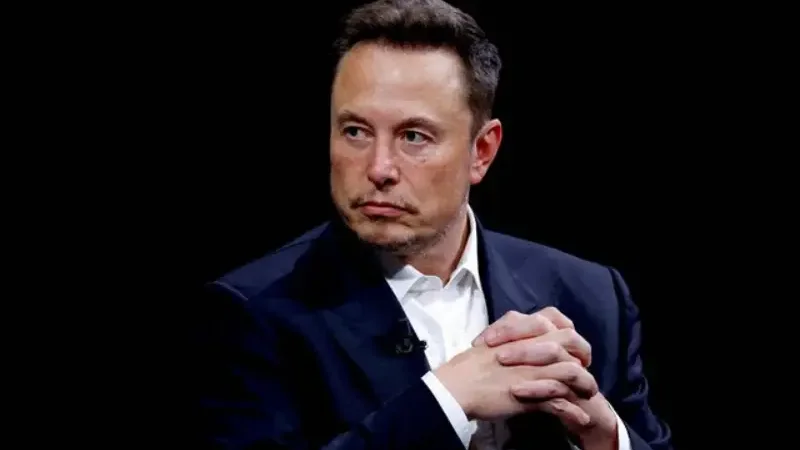
The Musk Starlink Ukraine row began when Elon Musk accused Ukraine of violating Starlink’s terms of service by using the satellite network for drone strikes to kill people, amid tensions between Washington and Kyiv over disruptions to the SpaceX-made system, which is crucial to Ukrainian military operations.
In a post on X, Musk wrote that Ukraine’s military had violated Starlink’s terms of service and used it for offensive drone strikes to kill people. He added that the loophole had been closed last week. In another post, he wrote that Starlink’s terms had remained consistent as a civilian system, not a means of killing, and that violation of those terms would result in the end of service.
The Musk Starlink Ukraine row matters because the system is not a minor piece of equipment for Kyiv. Musk himself said Starlink was critical to Ukraine’s defence, because it was the only system that could not be jammed or blown up. Were Starlink to be turned off, he said, the Ukrainian front line would collapse.
What Musk claimed, and what remains his claim alone
Musk’s accusation rests on his own posts, and the Dawn report presents it as his claim, not as an independently confirmed finding. That distinction matters, because the dispute turns on how a civilian satellite network is used in war, and on who decides whether a use crosses the line.
Musk’s position, as stated in his posts, is that Starlink is a civilian system. Its terms, in his telling, have not changed. Using it for offensive drone strikes to kill people therefore breaches those terms, and a breach carries a clear consequence: the end of service. The warning is blunt, and it is aimed at Kyiv as much as at any other user of the network.
Ukraine has not, in the Dawn report, issued a response to the specific accusation. What the report does record is the fighting that continued on both sides while the row played out. Two people were killed and 13 others wounded as Ukraine unleashed a drone barrage on the Russian border city of Belgorod, Russian authorities said. Acting Belgorod regional governor Alexander Shuvaev said there had been 154 Ukrainian attacks across the region, with Belgorod city hit particularly hard overnight. On the Ukrainian side, President Volodymyr Zelensky said Russian strikes killed four people in the Dnipro region.
Those casualty figures are attributed to the respective authorities, not verified independently in the report. They show the scale of the drone war in which Starlink’s role is now disputed, but they do not by themselves prove or disprove Musk’s claim about how the network was used.
The wider context of the Musk Starlink Ukraine dispute
The row did not arrive without warning signs. Starlink service in Ukraine had been disrupted for a week before returning to normal, according to Dawn’s own reporting of the episode. That week of throttling, followed by a return to normal service, forms the immediate background to Musk’s accusation: a system Kyiv depends on was already unstable before its owner publicly accused its military of breaching its terms.
Kremlin aide Yuri Ushakov said Europe should be included in peace talks, because its position could be crucial, and that the United States had been unable to pressure Kyiv into agreeing to a peace deal.
For Ukraine, the practical question is what happens if access is restricted. Musk’s own warning answers it: he has said the front line would collapse without Starlink, because no other system offers the same resistance to jamming and destruction. That dependence gives the system’s owner unusual sway over a war effort, and it is that sway, rather than the wording of the terms, that makes the dispute significant.
For other users of satellite networks, the row sets a precedent worth watching. If a provider can define a military use as a breach of civilian terms and threaten the end of service, then every armed force that relies on a commercial network faces the same risk.