Four Killed in Gaza Strikes as Tents Hit
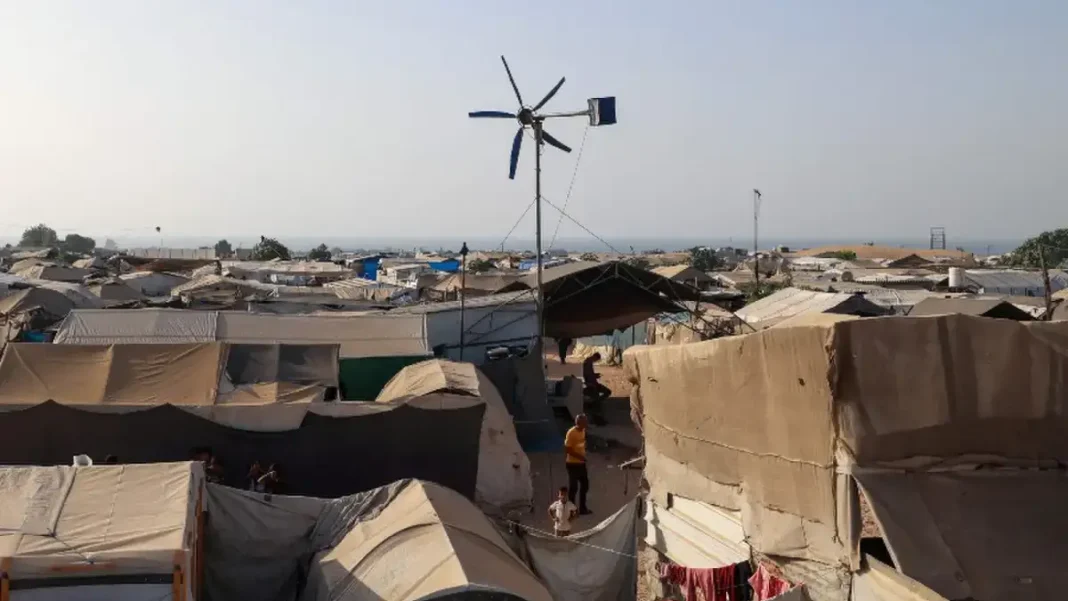
Four people were killed in Gaza strikes on Tuesday, including a teenage girl and a member of the Hamas security service, according to health and security officials in the territory. The deaths came as strikes hit tents sheltering displaced people, a pattern that puts families living in temporary shelters at direct risk.
Nasser Hospital in southern Gaza said three people were dead on arrival, and several others were wounded, after a strike hit a tent west of Khan Yunis. The tent was sheltering displaced people, the hospital said. In a separate incident, a girl was killed when an Israeli drone struck a tent in a park in Gaza City.
Who was killed in the Gaza strikes
The Hamas interior ministry said Mohammed Shalouf, a member of its internal security service, was killed in an airstrike in Al-Mawasi, west of Khan Yunis. Israel’s military said it had struck military operatives in the area, but it gave no further details about the target or the operation.
Gaza’s civil defence spokesman, Mahmoud Bassal, said the girl killed in Gaza City died when a drone struck a tent in a park. Al-Shifa Hospital in Gaza City identified her as Rimas al-Madhoun, aged 17, and pronounced her dead on arrival.
Why the Gaza strikes strain the ceasefire
Israel agreed to a ceasefire in October 2025, brokered by the United States. Since then, Israel has advanced further into Gaza, according to the reporting of the day. Each new round of deadly strikes tests that agreement, and each one raises the same question for families in the territory: whether the ceasefire still offers any protection in practice.
For displaced families, the question is sharper still. Tents offer no defence against a strike, and they are where many families have lived since their homes were destroyed or left behind. When a tent is hit, the people inside have nowhere safer to move to within the same area.
The strain is not limited to Gaza. The same day brought a separate development in the occupied West Bank, where a group of senior Israeli former military officials helped Palestinian farmers harvest olives. The gesture was a protest against settler violence during the olive harvest, and it points to a wider climate of violence that the ceasefire has not stopped.
Former generals join olive harvest in West Bank
Former Major General Eyal Ben-Reuven was among the former officers who worked alongside Palestinian farmers on Tuesday. He said the settler attacks reminded him of stories his parents told about the suffering of Jewish people, and he compared the attacks to pogroms.
Ben-Reuven said he began organising the group several months ago, after settler violence increased. The group now numbers around 30 senior military officials, including six generals.
Nimr Nazzal, who owns land near the village of Qusra, said he could not reach his olives without the former officers, because of settler attacks. He added that many of the attacks had the support of the Israeli military. The military has said it condemns violence and operates to maintain security in the West Bank.
The Israeli rights group Yesh Din has reported 180 physical attacks on Palestinian olive harvesters over the 35 days since the harvest season began. It recorded the Israeli military as present in more than 23 per cent of the settler violence cases it documented. Palestinians say that when they call the military, it either responds late or comes to the aid of the settlers. The military denies that claim.
What happens next
No further detail was given about the military operations behind Tuesday’s strikes, and no response from the ceasefire mediators was reported in the day’s coverage. The next test will be whether the coming days bring a pause in strikes on civilian shelters, or a further round of deaths that deepens doubt about the agreement.
Gaza has seen earlier deadly strikes since the ceasefire took hold, as reported in Gaza Strikes Strain Ceasefire as Eight Killed. The wider diplomatic picture has also shifted, with Washington signalling a change in military funding, covered in Trump Says US Will End $4bn Israel Funding. Both threads will shape how the next phase of the ceasefire is judged.
Frequently asked questions
How many people were killed in the Gaza strikes?
At least four people were killed, according to Gaza health and security officials. Three were dead on arrival at Nasser Hospital after a strike west of Khan Yunis, and a teenage girl was killed in a separate strike in Gaza City.
Who were the victims?
The victims included Mohammed Shalouf, a member of the Hamas internal security service, killed in Al-Mawasi, and Rimas al-Madhoun, aged 17, killed when a drone struck a tent in a park in Gaza City. The other two victims were among those brought dead to Nasser Hospital.
What did Israel’s military say about the strikes?
Israel’s military said it had struck military operatives in the Al-Mawasi area, but it gave no further details about the target or the operation.
Is there still a ceasefire in Gaza?
A ceasefire brokered by the United States was agreed in October 2025. Israel has since advanced further into Gaza, and deadly strikes have continued, which has put the agreement under strain.
What happened in the West Bank on the same day?
A group of around 30 senior Israeli former military officials, including six generals, helped Palestinian farmers harvest olives near Qusra, in solidarity against settler violence. The rights group Yesh Din has reported 180 physical attacks on olive harvesters over 35 days of the harvest season.