Balochistan Journalists Observe Black Day
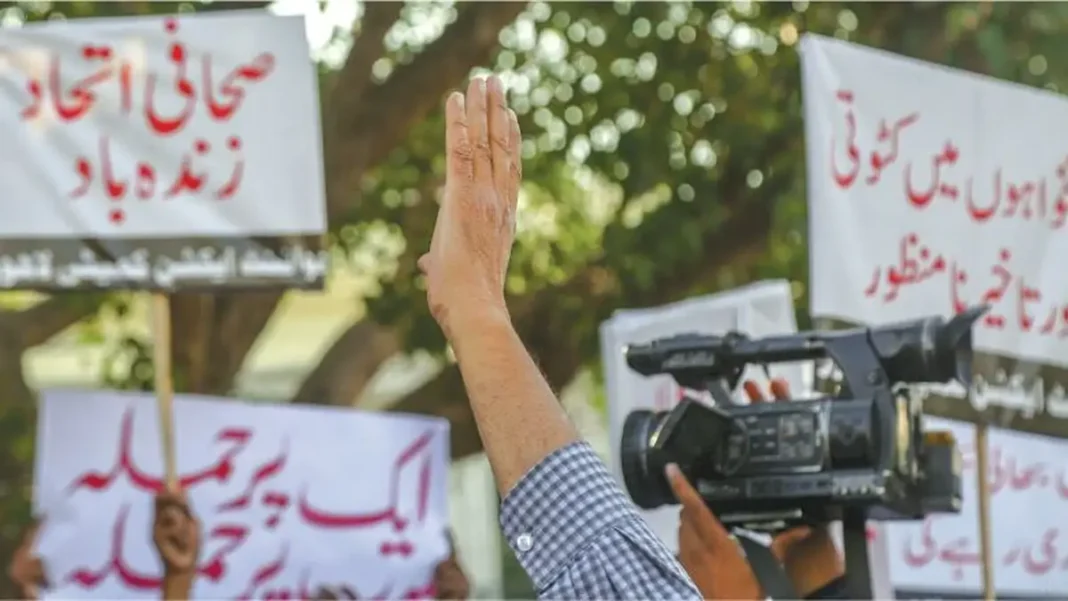
Balochistan journalists observed a Black Day on Tuesday, hoisting black flags at press clubs across the province and wearing black armbands in protest. The action was called by the Pakistan Federal Union of Journalists (PFUJ), and it combined remembrance with a present-day complaint about jobs, pay and the shrinking space for provincial newsrooms.
Journalists staged demonstrations to highlight growing challenges for the media industry. Black flags were hoisted at all press clubs in the province, and journalists wore black armbands as a visible sign of protest. In Quetta, the Balochistan Union of Journalists (BUJ) organised a protest outside the Quetta Press Club, where a black flag was hoisted and a sit-in was held.
A large number of journalists, lawyers and civil society representatives attended the Quetta sit-in, giving the protest a wider base than the press alone.
Why Balochistan journalists chose Black Day
The PFUJ call linked the protest to November 3, 2007, the date of the emergency imposed that year, which journalists remember as a turning point for press freedom in Pakistan. Marking that date is a way of saying that the threats of that period have not gone away, even though their form has changed.
The present-day complaints are specific. Journalists protested against the forced dismissal of journalists and media workers, the closure of media bureau offices in Balochistan, and the non-payment and delayed payment of their salaries. Each of those points hits provincial journalists hard. A bureau closure removes the local office that covers a district. A dismissal removes the reporter who knows that district. Unpaid salaries leave working journalists without income while they keep reporting.
In Balochistan, those pressures fall on a press that already works in difficult conditions, covering a large province with long distances, security risks and limited resources. When a bureau closes, the gap is not easily filled from another city. When salaries go unpaid, the journalists affected often have few other employers in the same town to turn to.
What the protest signals for press freedom
A Black Day is a symbolic protest, not a strike, and its power lies in visibility. Black flags at every press club in a province are hard to miss, and a sit-in outside the Quetta Press Club, attended by lawyers and civil society members, carries the message beyond the media itself.
The protest also sits within a wider rights debate in Pakistan. Questions about human rights and freedom of expression have already put trade preferences under discussion, as reported in Committee Warns GSP+ Access at Risk. The journalists’ protest gives that debate a concrete provincial example: reporters who say they are losing jobs, offices and pay.
Balochistan’s news agenda is often set by security and development stories, including operations covered in 17 Terrorists Killed in Balochistan IBOs. Those stories depend on local reporters being present, paid and able to work. A protest about bureau closures and unpaid salaries is therefore also a protest about whether the province’s own stories will keep being told.
What happens next
No response from media owners or the provincial government was reported in the day’s coverage of the protest. The PFUJ call has been answered with a day of action, and the next step will be whether the specific complaints, dismissals, bureau closures and salary delays, are addressed in talks or remain as grievances for a further protest.
For now, the black flags have come down, but the issues behind them remain open. The test now is whether that public case leads to any change in how provincial newsrooms are staffed, funded and kept open.
Frequently asked questions
What is the Black Day observed by Balochistan journalists?
It was a day of protest called by the Pakistan Federal Union of Journalists, marked by black flags at press clubs, black armbands and demonstrations, including a sit-in outside the Quetta Press Club.
Why was November 3 remembered?
The protest was held to remember the November 3, 2007 emergency, which journalists recall as a turning point for press freedom in Pakistan. The date links past restrictions on the media with present-day grievances.
What are Balochistan journalists protesting about?
They protested against the forced dismissal of journalists and media workers, the closure of media bureau offices in Balochistan, and the non-payment and delayed payment of salaries.
Who organised the protest in Quetta?
The Balochistan Union of Journalists organised the protest outside the Quetta Press Club, where a black flag was hoisted and a sit-in was held. Journalists, lawyers and civil society representatives attended.
Was there any official response?
No response from media owners or the provincial government was reported in the day’s coverage. The next step depends on whether the complaints over dismissals, closures and salaries are taken up in talks.