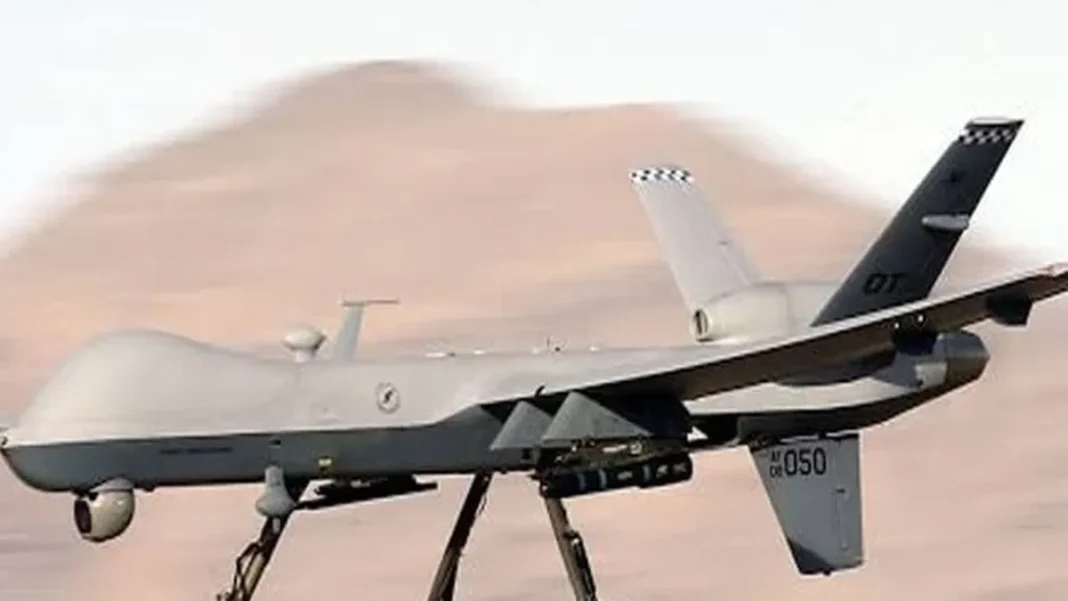
Pentagon Drone Surge Sends 25,000 Systems to Middle East
The Pentagon drone surge has put more than 25,000 unmanned systems and counter-drone capabilities in the hands of United States forces in the Middle East this year, following a $782 million investment. The announcement came on Wednesday, as the war between the United States, Israel and Iran entered its ninth month.
The deliveries went to US Central Command, known as CENTCOM, which runs American military operations across the Middle East. The Pentagon described the flow of equipment as a massive surge, and said deliveries would continue.
What the Pentagon drone surge includes
The deliveries include more than 1,300 one-way attack drones, over 100 unmanned surface and underwater vessels, and more than 24,000 counter-drone systems built to protect US troops from hostile drone attacks.
One-way attack drones are designed to fly into a target and destroy it. The counter-drone systems include sensors, jammers and interceptors that detect incoming drones and bring them down before they reach their targets.
“Under Secretary (Pete) Hegseth’s direction, we are moving at the speed of modern combat to equip our forces with decisive, affordable mass,” said Owen West, chief executive of Project Agincourt and the unmanned systems office. Hegseth is the US Secretary of War, the title the Trump administration uses for the defence secretary.
The Pentagon said the effort reflects a shift towards faster defence buying and mass production of cheap unmanned systems. The aim is to give commanders more capability while cutting reliance on costly traditional weapons, such as manned aircraft and large missile systems.
A shift to cheaper, mass-produced systems
The drone push is part of Project Agincourt, launched in September 2026 to prepare the US military for a future in which autonomous systems fight alongside human troops. It also supports plans for an Autonomous Warfare Command, a proposed four-star command expected to become operational by October 1, 2027. The Pentagon said it would keep delivering systems to CENTCOM while expanding deployment to US forces in the Indo-Pacific, Europe and across the Joint Force.
The department said it has invested more than $6 billion in unmanned systems over the past year.
Why the surge matters for the region
The timing is tied to the war with Iran, which began on February 28, 2026, when the United States and Israel launched a wave of strikes that killed Iran’s supreme leader, Ayatollah Ali Khamenei, and sparked a wider Middle East war. Drones have been a daily feature of that war, used by Iran, by Yemen’s Houthis and by the United States and its allies.
The Houthis have kept up attacks on Saudi Arabia through the autumn, and recently denied targeting the Madina region after the Saudi-led coalition said it had intercepted a missile heading that way. Drone and missile fire has become a regular threat to Gulf states, which is why the Pentagon is sending so many counter-drone systems to the region.
For Pakistan, the build-up matters because the United States is its most important security partner outside the region, and the two countries have been deepening cooperation on security and trade. Pakistan and the United Kingdom have also just held counter-terrorism talks that flagged the Afghan threat.
Second, the war has reshaped politics far beyond the Middle East. American voters punished President Donald Trump’s Republican Party in this week’s midterm elections, in part over the cost of the war, and the Democrats now hold both houses of Congress. In a first, the New York mayor and a US senator are both Muslim. A UK court is also hearing an appeal against the ban on Palestine Action.
The Pentagon gave no breakdown of where the systems have been deployed, or how many have been used in combat. What it did say is that the flow will not stop while the war lasts. The Express Tribune reported the announcement.
Frequently asked questions
How many drone systems has the Pentagon sent to the Middle East?
More than 25,000 unmanned systems and counter-drone capabilities have been delivered to US Central Command during 2026.
What do the deliveries include?
More than 1,300 one-way attack drones, over 100 unmanned surface and underwater vessels, and more than 24,000 counter-drone systems.
How much did the surge cost?
The deliveries followed a $782 million investment, part of more than $6 billion the Pentagon has spent on unmanned systems over the past year.
What is Project Agincourt?
A programme launched in September 2026 to prepare the US military for autonomous warfare, including a planned Autonomous Warfare Command expected to become operational by October 1, 2027.
Why is the Pentagon sending so many drones now?
They come during the eight-month war with Iran, and the Pentagon says it will keep supplying systems while the conflict lasts.