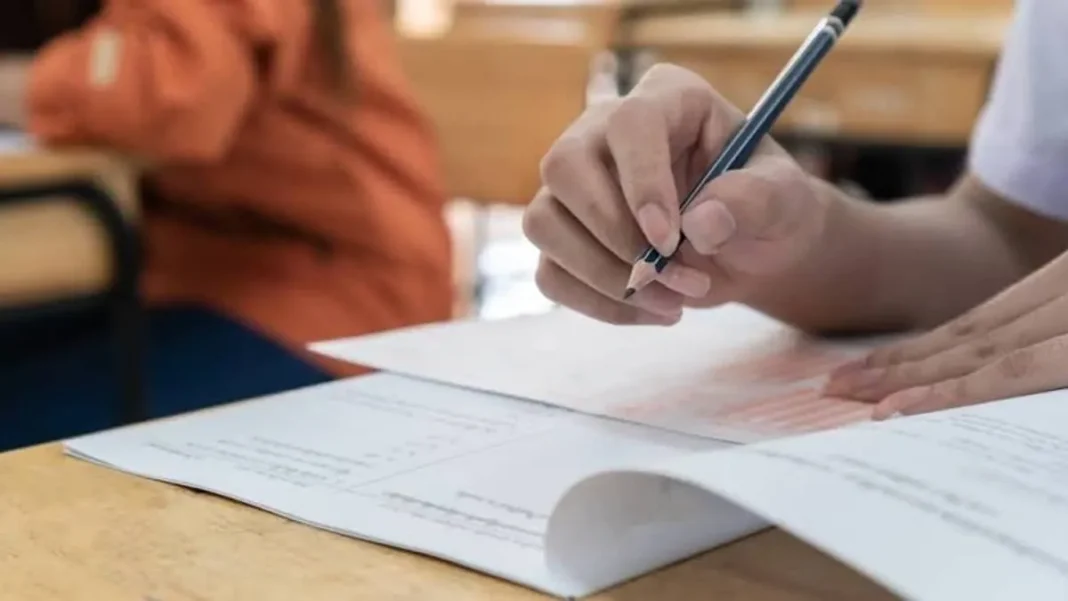
Punjab has set the format for the Punjab Class 8 exam, with pupils to sit papers in four major subjects on e-sheets and online screen marking to check the results.
Education Minister Rana Sikandar Hayat shared the details in a statement on the assessment arrangements for pupils in Grades 5 and 8. Grade 8 pupils will follow the same format used last time, with examinations in four major subjects.
The papers will be held on e-sheets, while online screen marking will be used to keep the checking process transparent. The minister said the arrangements would follow a fair and transparent process.
Grade 5 pupils will not sit a conventional examination this year. Instead, they will go through a holistic assessment, which the minister said would also follow a fair and transparent process.
Grade 5 board exams deferred
The decision means Punjab has deferred the formal Grade 5 board examinations for this year. The Punjab Education, Curriculum, Training and Assessment Authority, known as PECTAA, will hold an assessment for fifth-graders instead.
A regular Grade 5 examination will follow next year, as part of a phased system aimed at easing exam pressure on younger pupils. The change was announced alongside the Grade 8 arrangements.
The Grade 8 examinations, by contrast, will continue under the existing procedure. The minister confirmed that the four-subject format stays in place, with the technology used last time retained for both the papers and the marking.
The Punjab Class 8 exam that returned after six years
The Grade 8 examination is still a recent return to Punjab’s schools. PECTAA revived the province-wide Grade 8 public examination in March 2026 after a six-year gap, and the exercise has since become the model for how the province runs large-scale assessments.
Nearly one million pupils sat the revived examination, which ran from March 9 to March 12 across 5,714 centres. Around 26,000 invigilators supervised the papers, and the results were announced on April 9.
The revival brought a technology-driven system with it. For the first time, objective and subjective components were marked entirely online through a centralised e-marking system, supported by AI-assisted checks. Each answer script carried only a secure QR code, so markers could not see the identity of the candidate.
Four different versions of the question paper were generated from a secure digital item bank, so that no two adjacent pupils received the same paper. A live digital monitoring dashboard gave central control rooms real-time updates on attendance, staff presence and the delivery of papers at centres across the province.
Alongside the Grade 8 examination, the authority ran school-based assessments across Punjab from March 9, covering around 6.8 million pupils.
What the format means for pupils
The four-subject structure keeps the examination focused. Pupils face papers in the core subjects rather than a full slate of board papers, which reduces the burden on children who are still in middle school.
The e-sheet system also changes how papers are handled. Answers are written on special sheets that are scanned and marked on screen, which cuts out the manual handling of bundles of scripts and makes it harder for papers to be tampered with or lost.
Online marking adds a second layer of protection. Because markers see only a QR code and not a name, the system removes the chance of bias for or against any pupil. Subject specialists check the work, with automated checks and expert moderation behind them.
A wider shift in Punjab’s exams
The Grade 8 arrangements sit inside a broader reform of examinations in Punjab. The province’s nine educational boards have approved a move to digital marking for matriculation and intermediate examinations, with answer sheets scanned and evaluated on computer screens instead of by hand.
Biometric attendance is also being introduced for board examinations, starting with registration for Classes 9 and 11. The aim, in each case, is the same: to cut errors, stop cheating and make results more trustworthy.
For parents, the key dates are still to come. The minister’s statement set out the format, but the examination schedule and the timetable for the Grade 5 assessment have yet to be announced. Families should watch for the formal date sheet from PECTAA.
Punjab’s schools have already seen one related change this year, with a smart syllabus for Classes 9 to 12 announced for the province. Higher education is changing too, with six universities renamed and Pakistani universities climbing the QS Asia rankings. The assessment reforms now extend that shift in how pupils are taught and tested, and the results will be watched closely by teachers and parents alike.
Frequently asked questions
How many subjects will the Grade 8 exam cover?
Grade 8 pupils will sit examinations in four major subjects, following the same format used last time.
What are e-sheets and screen marking?
Pupils write on special e-sheets, which are scanned and marked on computer screens. Markers see only a QR code, not the pupil’s name, which keeps the checking anonymous and transparent.
Will Grade 5 pupils sit a board exam this year?
No. Grade 5 board examinations have been deferred this year. PECTAA will hold a holistic assessment instead, and a regular examination will follow next year.
When was the Grade 8 public exam revived?
PECTAA revived the province-wide Grade 8 public examination in March 2026 after a six-year gap. Nearly one million pupils sat the papers across 5,714 centres.