JI, Govt Agree Outline of Petroleum Levy Relief Plan
Jamaat-i-Islami (JI) and the federal government agreed on Tuesday on the basic outlines of a proposed agreement on petroleum levy relief, Dawn reported, after a tenth round of talks in Islamabad. JI Vice Emir Liaqat Baloch said the talks had reached the stage of final decisions. A meeting between Prime Minister Shehbaz Sharif and JI chief Hafiz Naeemur Rehman is now expected to settle it.
JI wants the levy abolished; the government says it cannot give up the revenue.
Petroleum levy relief: what the talks produced
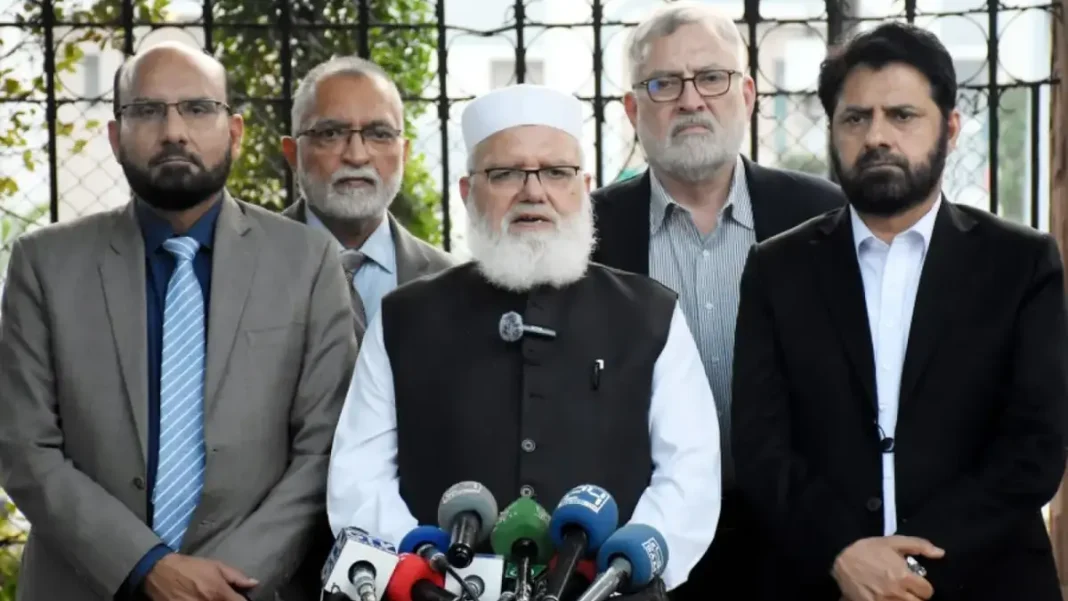
Baloch spoke to reporters after the talks at the Ministry of Foreign Affairs, with members of the JI negotiating committee. He said the two sides had discussed two key points: relief for consumers, and the measures needed to deliver it. The party said the two sides also worked on drafting the agreement, with a final decision expected after a possible meeting between the prime minister and Rehman.
JI demands immediate price cuts and a phase-out plan
In Tuesday’s talks, JI demanded immediate and visible cuts in petroleum prices, abolition of the levy, and a phase-out mechanism, with relief extended to vehicles up to 1,000cc and the agriculture sector, including tractors.
Baloch said the government had acknowledged that abolishing the levy was justified and could bring substantial relief, and promised a course of action on abolition while explaining its financial constraints.
Why the levy is hard to abolish
The levy is one of the government’s largest revenue sources. Feature Pakistan reported that it collected Rs220 billion in July and August, the first two months of the current fiscal year, and is aiming for Rs1.676 trillion over the full year, about 7 per cent more than last year’s Rs1.567 trillion.
The International Monetary Fund has called for the fuel support scheme to be phased out promptly, citing its high cost and broad targeting. Baloch said the government must negotiate with the Fund so relief could continue. The government acknowledged the difficulties caused by the regional conflict, and both sides agreed to expand and continue the existing relief package.
Baloch criticised the government’s spending priorities, saying it was unwilling to curb lavish expenditure while the Federal Board of Revenue had missed its tax targets. Ordinary citizens were bearing the burden of its shortcomings, he said.
Long march still on the table
JI warned it would resume its postponed march to Islamabad by mid-November if no relief is announced. Baloch said the party’s next step depended on the government’s response, and that JI would not talk indefinitely: it would walk away once the talks stopped serving any purpose.
The party says its protest has already helped prevent further price increases. Baloch said the rulers must cut spending and provide relief step by step.
How the talks reached this point
JI has demanded the levy be abolished for over two months, as fuel prices have risen sharply since Middle East conflicts flared in March. In early September, when the party had planned a nationwide strike, the two sides agreed to form committees to recommend ways to reduce it.
On September 20, JI launched a protest march towards Islamabad, warning it could turn into a movement to oust the government if the levy was not abolished. Two days later, the JI chief postponed the march at the prime minister’s request. When the two leaders met about a month later, they agreed to form a joint committee on expanding the fuel relief scheme and a phased levy cut in the next budget. On November 3, they held candid discussions on relief for low-income citizens, with JI presenting six proposals, including abolishing the levy, a relief package, lower public transport costs, and relief for vehicles above 800cc and agriculture.
The petroleum levy brought in Rs220 billion in two months. Petrol prices have been cut in recent revisions. The Centre spent over Rs5 trillion on devolved subjects, a Senate panel was told. The cabinet has also discussed Middle East peace and fuel supplies.
Frequently asked questions
What did JI and the government agree on Tuesday?
The basic outlines of a proposed agreement on petroleum levy relief, after ten rounds of talks in Islamabad.
When will a final decision be taken?
After a possible meeting between PM Shehbaz Sharif and JI chief Hafiz Naeemur Rehman.
What relief has JI proposed?
Abolishing the levy, immediate and visible cuts in petrol prices, and relief for vehicles up to 1,000cc and agriculture.
Why is the levy hard to abolish?
It raised Rs220 billion in July and August alone, and the government targets Rs1.676 trillion from it this year. The IMF has urged the fuel support scheme to be phased out promptly.
Will JI still march on Islamabad?
It will resume its postponed march by mid-November if no relief is announced.