US UN Rights Review Skipped for Second Time in Geneva
The US UN rights review in Geneva ended in a boycott on Tuesday, as Washington refused to take part in the United Nations examination of its human rights record for a second time. The council postponed the review until January.
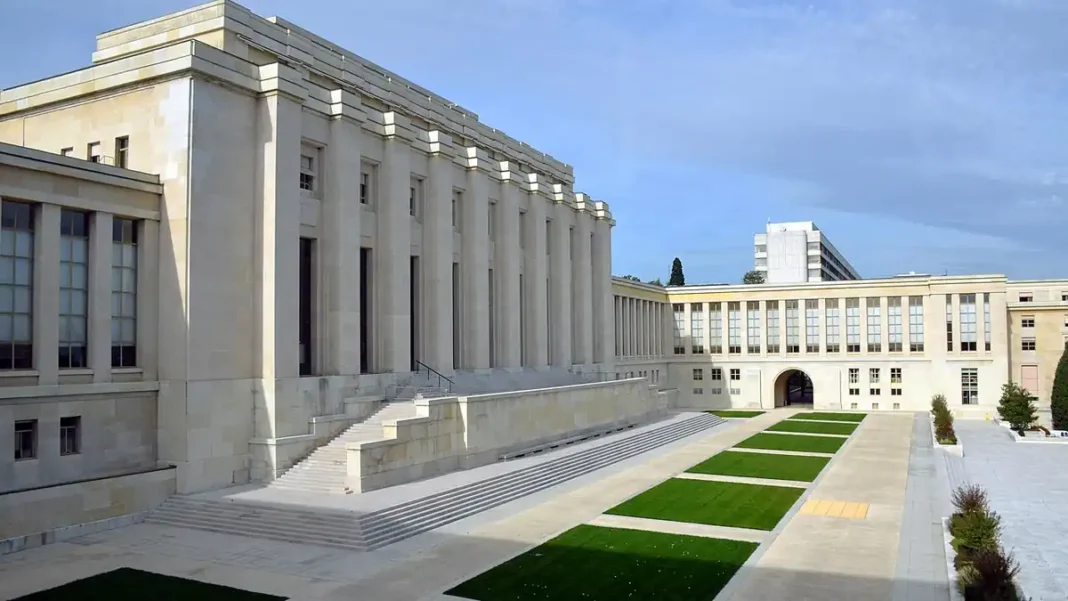
US seats were left empty at the world body’s European headquarters in Geneva for the Universal Periodic Review (UPR), which all 193 UN member states undergo every four to five years. As the review was set to begin, UN Human Rights Council president Sidharto Reza Suryodipuro of Indonesia looked at the empty seats behind the US nameplate and said that “the delegation of the United States is not present in the room”.
It was the second time Washington has failed to show for the review. The Trump administration withdrew from the rights council in February 2025, shortly after returning to power, and had already boycotted the UPR process last November. The council postponed the US review for a year in the hope Washington would return. It did not.
An unprecedented boycott
Washington’s complete non-compliance with the process is unprecedented. Before the United States, only Israel had previously boycotted its UPR, in early 2013, although it underwent a delayed review later that year. Some countries have sought postponements since the UPR process began in 2008, while Nicaragua partly boycotted the process, but only after its latest review had already taken place.
The US State Department said this week that the administration considers the council an “irredeemable body” that “makes a mockery of human rights”, suggesting it would not take part in any of its mechanisms, including the UPR.
Several diplomats spoke up on Tuesday about the value of the review.
Cuban ambassador Rodolfo Benitez Verson voiced outrage at Washington’s absence. “The United States is the only country in the history of the Human Rights Council which has refused to take part in the UPR cycle without even presenting its national report,” he told the council, accusing Washington of double standards and hypocrisy.
Voices from outside the chamber
Despite the boycott, rights advocates, civil society organisations and US elected officials gathered in Geneva this week to keep a spotlight on alleged US rights abuses.
Among them was Noor Abdalla, wife of Mahmoud Khalil, the prominent pro-Palestinian protest leader and green card holder whom the Trump administration sought to deport last year.
“Accountability is important,” she told reporters. “When the most powerful government in the world is not held accountable, they think that they can do whatever they want to do… We saw that with my husband’s case.”
Her presence underlined the point the boycott’s critics keep making: the review is not only about governments judging each other, but about giving victims and their families a hearing on the world stage.
What the US UN rights review means
The UPR is the one human rights process that covers every UN member state without exception. Each country presents a national report, faces questions from other states and receives recommendations. The system works because participation is universal. A permanent member of the Security Council refusing to take part, twice, weakens that claim.
The snub also fits a wider pattern in US foreign policy under the current administration. US tankers have left RAF Mildenhall as Britain says its bases are safe, and Donald Trump has nominated Natalie Baker as US ambassador to Pakistan, signs of a government reshaping its alliances and its posture towards global institutions at the same time. Elsewhere in Europe, the Netherlands has ended permanent asylum residence permits, another sign of hardening attitudes towards international rights norms.
The council has postponed the review until January rather than complete it without American input. UNICEF has already said Israel is blocking repairs to a Gaza water basin, a reminder that the council’s work touches crises far beyond Geneva, and that its authority rests on the willingness of states to show up.
What happens next
The council voted to postpone the US review until January, in the hope that Washington returns. The question is whether the boycott becomes a lasting precedent. If the world’s most powerful country can skip its human rights review without consequence, other states may ask why they should bother to attend theirs.
Frequently asked questions
What is the Universal Periodic Review?
It is a UN Human Rights Council process in which all 193 member states have their human rights records reviewed every four to five years.
Why did the US skip its UN rights review?
The Trump administration withdrew from the Human Rights Council in February 2025, calling the council an “irredeemable body”.
Has any other country boycotted its review?
Israel boycotted its UPR in early 2013 but underwent a delayed review later that year. Nicaragua partly boycotted after its latest review had taken place.
What did the council president say about the empty US seats?
Council president Sidharto Reza Suryodipuro said: “The delegation of the United States is not present in the room.”