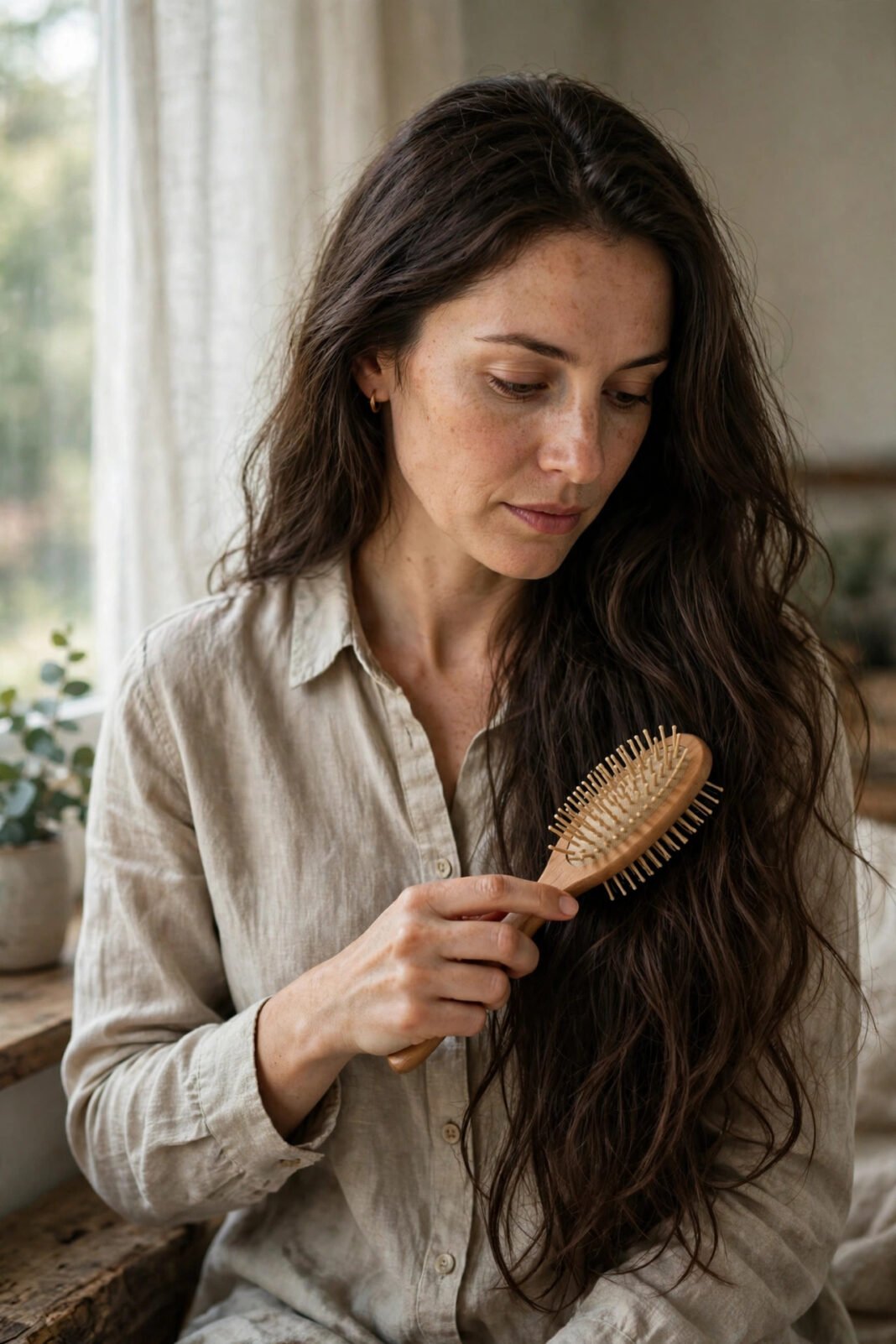
You brush your hair in the morning, and the brush comes away full. Later, you notice more strands in the shower drain and on your pillow. If this sounds familiar, you are not alone. Hair fall in women often rises in autumn, and the sudden change can feel alarming. However, a seasonal increase is usually normal. The real question is how to tell harmless shedding from a sign that your body needs attention.
This guide explains the difference in plain words. It covers how much shedding is normal and why autumn brings more of it. It also explains how low iron can play a part. Finally, it shows the warning signs that deserve a doctor’s visit, and offers gentle steps you can take at home.
How Much Hair Fall Is Normal?
Losing hair every day is part of a healthy cycle. The NHS says it is normal to lose between 50 and 100 hairs a day, often without noticing. In fact, most women shed this much all year round. The number sounds high, but it is a small share of the hair on your head. So a few strands on your brush do not mean something is wrong.
The number that matters is the change from your own normal. If you usually lose a little hair and suddenly lose much more, take note. Also, watch how long the extra shedding lasts. A short rise that settles within weeks is very different from heavy shedding that goes on for months. As a result, your own pattern tells you more than any single count.
The Hair Growth Cycle in Simple Words
Every hair on your head follows its own cycle. Most hairs are in a growth phase called anagen, which lasts for years. At any time, about 85 out of 100 hairs are growing. The rest are in a resting phase called telogen, which lasts a few months. When a resting hair falls out, a new hair grows in its place.
This cycle is why shedding never truly stops. A healthy head of hair is always losing old strands and growing new ones. However, the cycle can shift with the seasons. When many hairs enter the resting phase at the same time, the shedding that follows becomes much more visible. That shift is at the heart of autumn hair fall.
Why Hair Fall in Women Rises in Autumn
Autumn shedding has a real biological basis. A study that tracked hair samples from more than 800 women over six years found that the share of resting hairs peaks in summer. Because a resting hair stays in place for about two to three months, those summer hairs are released in September and October. So the autumn shed is really a delayed echo of summer.
Sunlight may also play a part. Researchers believe that strong summer sun can push more follicles into their resting phase. In addition, summer habits such as swimming, heat styling, and tight hairstyles can weaken hair strands. By autumn, the hair is both shedding more and breaking more easily. As a result, the change can look dramatic, even when the cycle is normal.
Seasonal Shedding vs Telogen Effluvium
Seasonal shedding is the mild, short version of a wider process. The extra hair fall is spread evenly across the scalp. Your hair density stays much the same, and there are no bald patches. Most women notice it between September and December, and it usually settles on its own by late autumn or early winter.
Telogen effluvium is the medical name for heavier, more noticeable shedding. It often follows a trigger such as a high fever, childbirth, surgery, sudden weight loss, or intense stress. The shedding usually starts two to four months after the trigger, so the cause can feel hard to trace. In most cases, it slows down over six to nine months once the trigger has passed. However, if the trigger continues, the shedding can last longer.
How Iron Deficiency Causes Hair Fall in Women
Iron helps your body make haemoglobin, the protein in red blood cells that carries oxygen around the body. Hair follicles need that oxygen to grow, because they are among the busiest tissues in the body. When iron runs low, the body sends what it has to vital organs first. Hair growth drops down the priority list, and more follicles slip into their resting phase early.
This is why low iron can cause diffuse shedding across the whole scalp. It rarely causes bald patches. Instead, the hair thins gradually, and the ponytail feels lighter over time. Many women are low in iron without knowing it. In fact, hair shedding is sometimes the first sign they notice. Heavy periods are one of the most common causes of low iron in women, so the two problems often arrive together.
Signs That Low Iron May Be Behind Your Shedding
Hair fall alone does not prove low iron. However, a cluster of signs can point in that direction. The NHS lists tiredness, lack of energy, shortness of breath, and pale skin among the common signs of iron deficiency. Headaches and noticeable heartbeats can also appear. Less common signs include brittle nails, a sore tongue, and restless legs.
Ask yourself whether the shedding came with any of these changes. Did your energy drop at the same time? Do you feel breathless on stairs that never troubled you before? If several signs arrived together, a blood test can check your iron levels. Only a test can confirm low iron, so guessing does not help. Also, thyroid problems can change your hair in similar ways, so read our guide to the early signs of thyroid problems if you notice other changes too.
Iron-Rich Foods That Support Healthy Hair
A varied, balanced diet is the simplest way to support healthy iron levels. The NHS lists red meat, fortified breakfast cereals, and beans and pulses such as lentils, chickpeas, and kidney beans as good sources. Green vegetables such as spinach and broccoli help too. Nuts, seeds, and dried fruit such as apricots, raisins, and prunes also add iron to your meals.
What you eat with iron-rich foods matters as well. Vitamin C helps the body absorb iron, so try adding fresh fruit or vegetables to the same meal. For example, peppers or tomatoes with a lentil dish can help. A glass of fresh orange juice with breakfast cereal works in the same way. On the other hand, tea can reduce iron absorption, so it is best not to drink it with iron-rich meals.
Hair Fall in Women: When to See a Doctor
Most autumn shedding needs no medical care. However, some patterns deserve a prompt visit. See a doctor if you notice bald patches, a widening parting, or shedding that stays heavy for months. Also seek advice if your scalp feels sore, itchy, or looks different. If hair fall is affecting your confidence or mood, that is reason enough to ask for help.
A doctor can often tell a lot just by looking at your hair and asking about recent changes. They may also suggest a blood test to check your iron and thyroid levels. Before the visit, note when the shedding started and whether anything changed in your life around that time. A regular women health check is also a good moment to raise hair changes, because small signs can add up to a clearer picture.
Gentle Habits That Ease Hair Fall in Women
You cannot stop seasonal shedding, and you do not need to. However, gentle habits can protect the hair you have. Avoid pulling your hair into very tight styles, and give heated tools a rest when you can. Use a wide-tooth comb on wet hair, because wet strands break more easily. Wash with lukewarm water rather than very hot water, and be gentle when you towel-dry.
Stress also matters, because intense stress can trigger shedding months later. So look after your sleep, move your body gently, and make time for rest. Eat regular, balanced meals rather than skipping food on busy days. Finally, remember that hair grows slowly, so give any change several months before you judge it. Patience is part of the process.
The Bottom Line
Autumn hair fall is common, and it is usually your hair cycle following the seasons. The share of resting hairs rises in summer, and those hairs are released in autumn. So a fuller brush in October does not mean your hair is failing. It means your body is following a rhythm that has been there all along.
Still, listen to your body. If the shedding is heavy, lasts for months, or comes with tiredness and other changes, ask a doctor to check your iron levels. A simple blood test can bring clear answers. What change have you noticed most in your hair this autumn? Will you keep a short note of it this week, so you can describe the pattern clearly if you need advice?
This article is for general information only. It is not medical advice.