Your period was manageable in July. Then October arrives, and the same cycle feels much harder. The cramps bite deeper, the mood swings hit faster, and the tiredness lingers longer. If this pattern sounds familiar, you are not imagining it. Period pain seasonal changes are real, and autumn brings several factors that can make both cramps and PMS worse.
This guide explains why the colder, darker months can change how your period feels. It covers what cold does to your muscles, how less daylight affects your mood, and why moving less makes pain worse. It also offers practical steps that genuinely help. Finally, it shows the warning signs that deserve a doctor’s visit.
Period Pain Seasonal Changes: What Is Happening?
Your cycle does not change with the seasons, but the conditions around it do. The days get shorter, the air gets colder, and your daily habits shift without you noticing. You move less, sleep differently, and spend more time indoors. Each of these small changes can add to how period pain feels.
Research has found that women who work in cold conditions report more painful periods than women who do not. The link is not fully settled, but the pattern is clear enough that many women notice it in their own lives. So if your autumn periods feel worse, trust what your body is telling you. The season is not causing your cramps, but it can shape how they feel.
Why Cramps Hurt in the First Place
To understand the seasonal link, it helps to know what causes cramps. As the womb lining breaks down at the start of a period, it releases chemicals called prostaglandins. These chemicals tell the womb muscle to contract, and those contractions push out the lining. Stronger contractions mean more pain.
Women with painful periods tend to have higher prostaglandin levels than women with milder ones. The pain usually peaks in the first day or two of bleeding, when prostaglandin release is at its highest. It then eases as levels fall. In other words, cramps are a normal part of the cycle, but the amount of pain varies a lot from woman to woman.
How Cold Weather Tightens Everything Up
When your body feels cold, it narrows the blood vessels near the skin to keep warmth around your core. This is a useful survival response, but it also raises baseline muscle tension. Tight muscles are less flexible and more sensitive, so cramps can feel sharper and deeper in cold weather.
Cold can also change how you hold your body. You hunch your shoulders, tense your belly, and curl up to stay warm. These small postures add tension to the very muscles that are already cramping. As a result, the same contractions can feel worse on a cold day than on a warm one. Keeping warm is therefore a simple and practical step, not just a comfort.
Period Pain Seasonal Changes and Vitamin D
Vitamin D levels fall in the darker months, because your skin makes less of it with weaker sunlight. Some research links low vitamin D with stronger cramps and worse PMS, although the picture is not fully settled. Vitamin D plays a part in muscle function and in calming inflammation, so a seasonal dip may leave your body less able to ease cramps on its own.
Less daylight also affects the brain chemicals that shape your mood. Serotonin, which helps lift mood, drops when daylight fades. Melatonin, which controls sleep, runs longer into the morning. When mood is low and sleep is disturbed, pain feels harder to bear. So the darker months can worsen PMS and cramps through mood as well as through the body.
Less Movement, More Pain
Autumn quietly cuts your daily movement. Darker evenings, colder mornings, and wet weather all make it easier to stay inside. Short walks become shorter, and outdoor plans get cancelled. This matters, because gentle movement is one of the best-supported ways to ease menstrual pain.
Movement improves blood flow to the pelvic area and helps the muscles relax. It also lifts mood and eases the tension that makes cramps worse. When movement drops, all of these benefits fade at once. So a short walk on a cold day is not just exercise. It is one of the most practical things you can do for period pain.
The shorter days also change when you move. In summer, evening walks feel easy and natural. In autumn, dark evenings push exercise earlier or cancel it altogether. If evenings no longer work, try moving in the morning instead. A short walk in daylight helps twice over: it moves your body and lifts your mood at the same time.
PMS, Mood, and Shorter Days
PMS is the name for the symptoms many women feel in the weeks before a period. The most common ones include mood swings, feeling irritable or anxious, tiredness, trouble sleeping, and bloating. Autumn can sharpen all of them, because the season already pulls mood and energy down.
The overlap is easy to miss. You may blame PMS for low mood that is really a mix of PMS and shorter days. Or you may blame the season for irritability that follows your cycle. Tracking both your cycle and your mood can help you see the pattern. Once you see it, you can plan for the harder days instead of being caught out by them.
Period Pain Seasonal Changes: Practical Ways to Feel Better
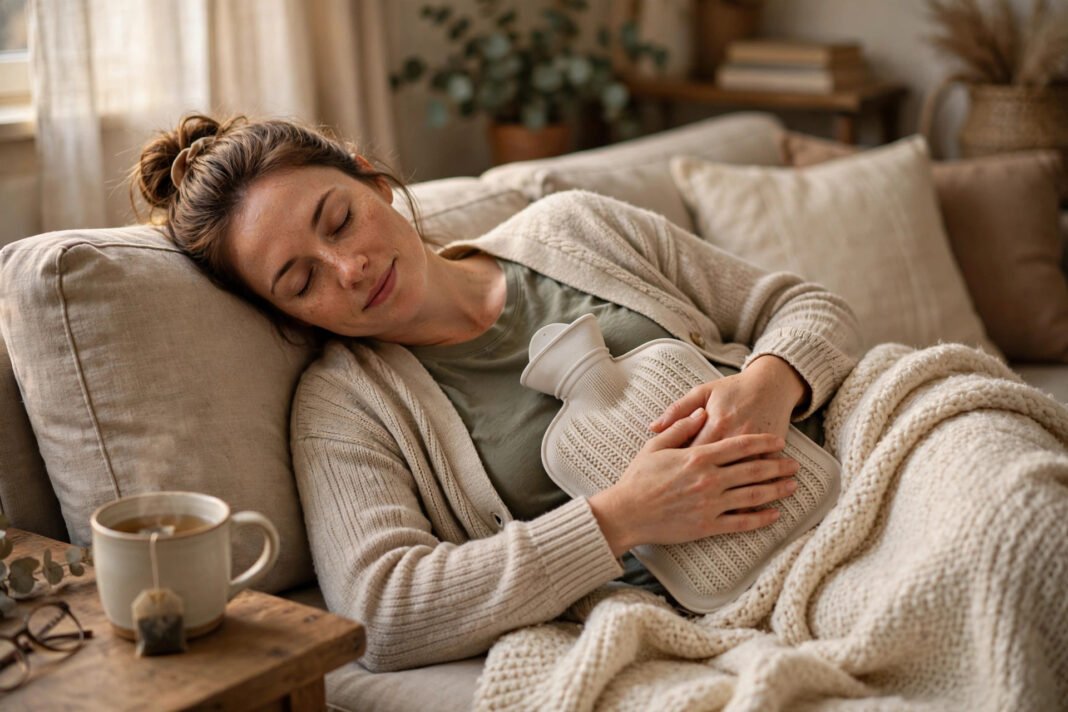
Heat is one of the simplest forms of relief. A warm water bottle or heating pad on your lower belly helps the womb muscle relax. A warm bath works in the same way and calms the whole body. Keep warm through the day too, with layers that protect your core from the cold.
Gentle movement also helps, even when you feel like staying still. A short walk, light stretching, or slow yoga can ease cramps by improving blood flow. Rest matters as well, so do not feel guilty about slowing down on hard days. Drink enough water through the day, because dehydration can make cramping worse. If you use over-the-counter pain relief, ask a pharmacist for guidance if you are unsure what suits you.
Tracking Your Cycle Through the Seasons
A simple diary can turn a vague feeling into a clear pattern. Note the first day of each period, how strong the pain felt, and what the weather was like. Also note your sleep, mood, and how much you moved that day. After two or three cycles, you will start to see what makes your harder months harder.
This record is useful for you, and it is also useful for a doctor. Instead of saying “my periods feel worse in autumn,” you can show the pattern in your own words. That makes the conversation clearer and more useful. If you feel cramps but your period does not arrive, that is a different pattern. Our guide to cramps but no period explains what it can mean.
Your diary can also reveal what helps. Perhaps heat eased your cramps last month, or a morning walk lifted your mood. When you see what worked, you can repeat it with confidence. Over time, your notes become a personal guide to your own cycle. That knowledge is worth more than any general advice, because it comes from your own body.
Period Pain Seasonal Changes: When to See a Doctor
Most seasonal changes in period pain are uncomfortable rather than dangerous. However, some signs deserve medical advice. See a doctor if pain stops your usual activities, or if your periods become more painful, heavier, or irregular. Also seek advice for pain during sex, pain when passing urine, fever, or very heavy bleeding.
Very heavy bleeding means changing protection every one to two hours or passing large clots. Missed periods for three months in a row also deserve a visit. If PMS affects your daily life and self-help has not eased it, talk to a doctor too. Seek urgent care for sudden, severe tummy pain with dizziness or fainting, especially if you could be pregnant.
The Bottom Line
Autumn does not cause period pain, but it can make it feel worse. Cold tightens muscles, shorter days lower mood, and less movement removes one of your best tools against cramps. The good news is that most of these factors are within your reach. Warmth, gentle movement, rest, and a simple diary can all help.
Still, do not suffer in silence. If pain is severe, worsening, or disrupting your life, a doctor can help you find the cause. Your period pain is real, and it deserves to be taken seriously. What will you try first this autumn — more warmth, more movement, or a simple cycle diary?
This article is for general information only. It is not medical advice.