


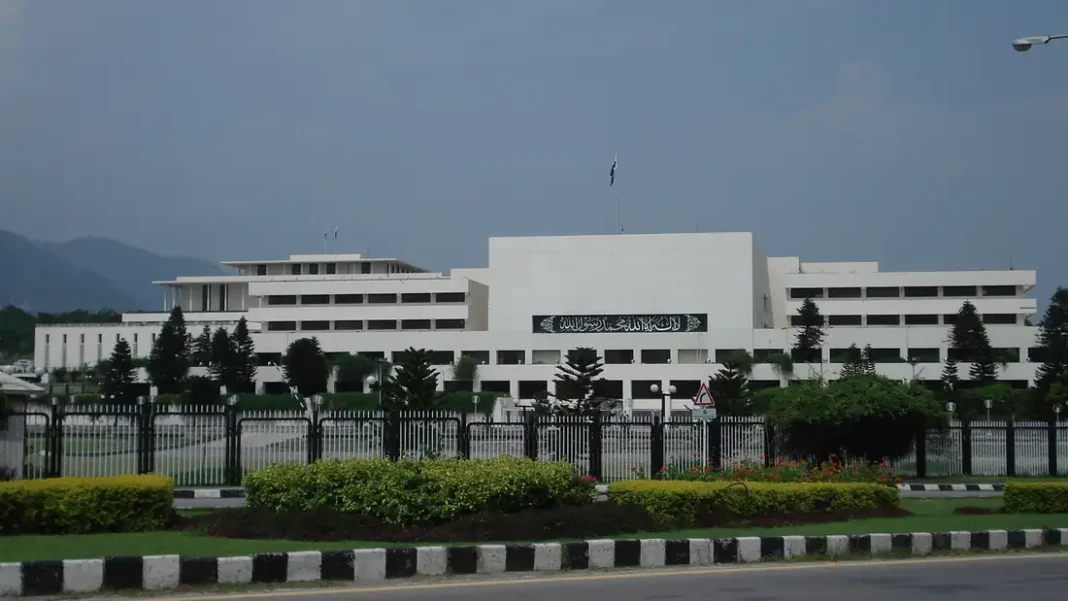
The Federal Finance Minister of Pakistan heads the Ministry of Finance — the ministry that writes the budget, sets tax policy and manages the national debt. The “federal” distinguishes the office from the four provincial finance ministers. The current holder is Muhammad Aurangzeb (since March 2024). This page explains the office: its powers, structure and place in government.
Quick answer: The Federal Finance Minister of Pakistan is Senator Muhammad Aurangzeb (in office since 11 March 2024). The office controls the federal budget, taxation and the FBR, public debt management, and IMF/World Bank relations. It is distinct from provincial finance ministers, who handle provincial budgets under the NFC Award.
In this guide
The office
First among ministries. The finance minister is conventionally the cabinet’s second most powerful figure after the prime minister — the budget is the government’s single most important annual act, and every ministry’s plans live or die by finance’s allocations. The minister presents the budget each June, defends it in the National Assembly, and owns the IMF relationship that has underwritten Pakistan’s external stability for decades.
The current minister, Muhammad Aurangzeb, is profiled in full at his profile page — the ex-JPMorgan banker and HBL CEO serving as a technocrat in Shehbaz Sharif’s cabinet.
The ministry’s structure
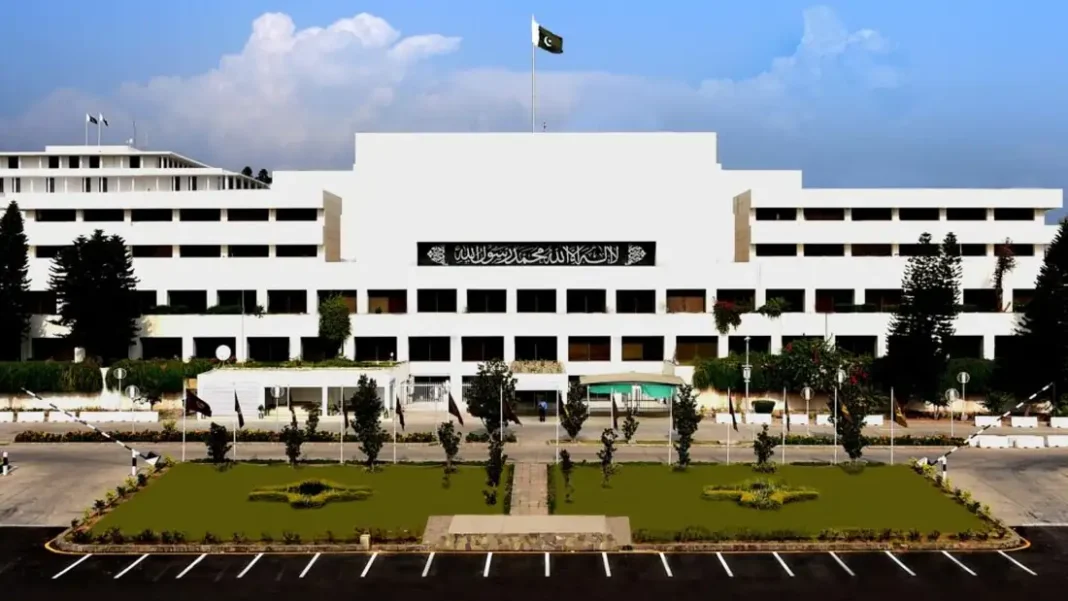
Finance plus Revenue. Since the 2024 bifurcation, the ministry comprises the Finance Division (budget, debt, economic policy) and the Revenue Division (tax policy, FBR oversight). The Economic Affairs Division — foreign aid and loan coordination — now sits with Ahad Cheema as a separate ministry. Key attached bodies: the Federal Board of Revenue (tax collection), the Auditor General, the Controller General of Accounts, and the Debt Policy Coordination Office.
The ministry works in tandem with the State Bank of Pakistan (monetary policy, technically autonomous) and the Planning Commission (development spending). Understanding the plumbing matters: when the finance minister announces a revenue target, it is the FBR that must collect it — and the gap between announcement and collection is where Pakistani budgets usually fail.
Federal vs provincial finance ministers
Two tiers. Each province has its own finance minister handling the provincial budget — funded largely by transfers under the National Finance Commission (NFC) Award, which divides the divisible pool between the federation and provinces (the 7th NFC Award, 2010, gave provinces 57.5%). The federal finance minister negotiates the NFC, controls federal taxation (income tax, customs, federal excise), and manages the debt the provinces do not carry.
The current provincial finance ministers change with provincial cabinets; the federal office is the one that moves markets and the IMF. For the federal cabinet context, see the ministers list.
Holders and history
45 holders and counting. From Malik Ghulam Muhammad (1947–51) to Muhammad Aurangzeb, the office has seen bankers (Shaukat Aziz, Shaukat Tarin, Aurangzeb), party stalwarts (Ishaq Dar’s four stints), economists (Mahbub ul Haq, Sartaj Aziz) and caretakers (Shamshad Akhtar). Average tenure is short — the portfolio’s political exposure guarantees it.
The Urdu title is wazir-e-khazana — see the Urdu page. Whoever holds it in future, the job description will not change: find revenue, manage debt, placate the IMF, survive the politics. The ministers guide tracks the current cabinet.
Who is the federal finance minister of Pakistan?
Senator Muhammad Aurangzeb — in office since 11 March 2024, holding the Finance and Revenue portfolios.
What is the difference between federal and provincial finance ministers?
The federal minister handles the national budget, federal taxes, debt and the IMF; provincial ministers handle provincial budgets funded mainly by NFC transfers.
Which ministry does the finance minister control?
The Ministry of Finance: the Finance Division (budget, debt, policy) and the Revenue Division (tax policy, FBR). The Economic Affairs Division is a separate ministry under Ahad Cheema.
.)