Quick Facts
- Location: Najigram area, near Barikot, Swat District, Khyber Pakhtunkhwa — on terraced, forested hillsides divided by a stream, about 25 kilometres south of Mingora.
- Famous For: A 2,000-year-old Kushan-era Buddhist monastic complex — one of the largest Buddhist sites of its kind in Pakistan, with four main stupas, votive stupas, chapels and monastic cells.
- Nearest City: Barikot (the ancient Bazira), about 6 kilometres away on the Barikot-Buner road; Mingora is roughly 25 kilometres to the north.
- Accessibility: Paved road up to Najigram village, then a walk on foot to the ruins. The site is unguarded, so visiting with a local guide is strongly recommended.
- Known Landmarks: Stupa A (the largest, with a Corinthian-decorated base), Stupa B (rare painted Buddha reliefs), the two-tower vihara, barrel-vaulted monastic cells, and the nearby shrine of Mashoom Shaheed.
- Best For: History and archaeology lovers, photographers, Buddhist religious tourism, and travellers who enjoy quiet, off-the-beaten-path walks.
Why Visit Abba Sahib Cheena, Najigram
Few places in Pakistan let you stand inside two thousand years of history the way Abba Sahib Cheena does. Meanwhile, this sprawling Buddhist complex near Najigram in Swat dates back to the Kushan period, roughly the first to third century CE. The Swat valley was one of the great centres of the Gandhara civilisation. The ruins are spread over terraced slopes on both sides of a mountain stream, with stupas, chapels and monks’ cells laid out in a planned ceremonial and residential arrangement.
Because it sits away from the main towns, the site has survived far better than many others — scholars have called it one of the best-preserved Buddhist complexes in Swat.
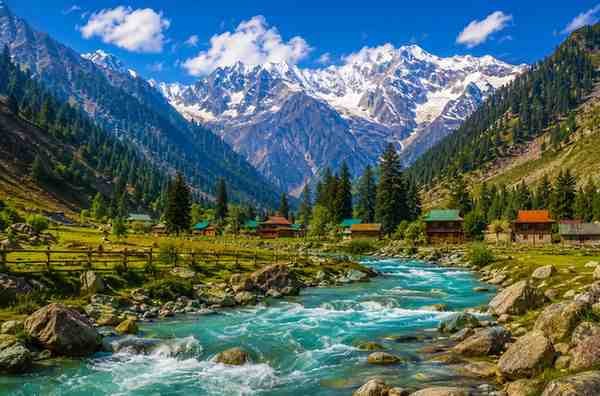
What makes a visit special is the combination of history and setting. Also, a stream descending from Mount Sur-Ghar runs into the Mandara nullah below the ruins, pine-covered slopes rise on both sides. In fact, the silence of the valley makes it easy to imagine the monks who lived, prayed and meditated here eighteen centuries ago. In addition, stupa A is the largest of the three principal stupas and carries Corinthian-style decoration on its base. A reminder that Gandharan art blended Greek, Roman and Indian traditions.
Stupa B holds something genuinely rare: painted reliefs of the Buddha, a fragile art form that has survived the centuries in only a handful of places.
A Story of Rediscovery
The site also carries the story of its rediscovery. Italian archaeologists first worked here in the 1930s, returned in 1955. Pakistani archaeologists resumed excavation in December 2020, calling it the biggest Buddhist site of its kind found in the region. Walking the terraces, you are visiting a place whose importance was recorded in international archaeological journals published from Rome — and one that is still being excavated and understood today.
For travellers already visiting Swat, Abba Sahib Cheena is an easy and deeply rewarding half-day addition. Also, it pairs naturally with the nearby Tokar-dara stupa and the town of Barikot, ancient Bazira, and gives you a side of Swat that most visitors never see: not just mountains and rivers. In fact, the spiritual heritage that made this valley a crossroads of the ancient world.
History of Abba Sahib Cheena, Najigram
The story of Abba Sahib Cheena begins with the Gandhara civilisation and the valley of Swat, known in ancient times as Uddiyana. Swat was an important province of Persia during the reign of King Darius I (522–486 BC) for about two centuries, until Alexander the Great conquered it in 327 BC. The Mauryan dynasty recaptured the region in 305 BC, and rule passed through Parthian hands before the western Hellenistic influence arrived with the Indo-Greeks around 180 BC. The Kushans took control of Gandhara in the first century AD and founded an empire stretching across present-day Pakistan, parts of Iran, the Kabul valley, northern India and parts of Kashmir.
Buddhism flourished in Swat when the Kushan king Kanishka (127–150 AD) converted to the faith. From this valley, Buddhism travelled eastward to China, Japan and beyond. Swat served as one of the most significant centres of Gandhara since the first century BC. Of similarities with the Gumbat Balo Kale site.. As a result, the monastic complex at Abba Sahib Cheena belongs to this golden age of Buddhist culture — archaeologists date it to the first to third century CE, with some analysis placing it in the late phase of the Kushan Empire
Italian Missions and Pakistani Digs
The modern rediscovery of the site is a story of Italian and Pakistani archaeology. Excavation was first started here in the 1930s by Italian experts. The work was soon abandoned for lack of resources. In 1955, another Italian mission visited and declared the site very important and large in size. The archaeologist Dr Luca Olivieri, director of the Italian Mission in Pakistan, has noted that the Abbasahib-Cheena site was first properly discovered and recorded by scholars E. Barger and P. Wright in 1938, and called it undoubtedly the best-preserved Buddhist complex in Swat.
Its importance was written up in scores of historical journals, including the East and West journal published from Rome.
In December 2020, Pakistani archaeologists resumed work after a long gap. The initial excavation covered 94 kanals.. Still, Archaeologist Dr Ashraf told the press that the complex is huge by every measure, stretching over an area of four to six kilometres, The team uncovered four stupas in one area along with a huge hall, dwelling units, a monastery, chapels with Buddhist statues, a stupa with two minarets or towers (a vihara), and clay utensils that had never been fired in an oven.
The site continues to be studied, and much of it still lies unexcavated beneath cultivated fields owned by local landlords — a fact that makes responsible, respectful visiting all the more important.
Top Things to Do in Abba Sahib Cheena, Najigram
Explore Stupa A, the Largest Stupa
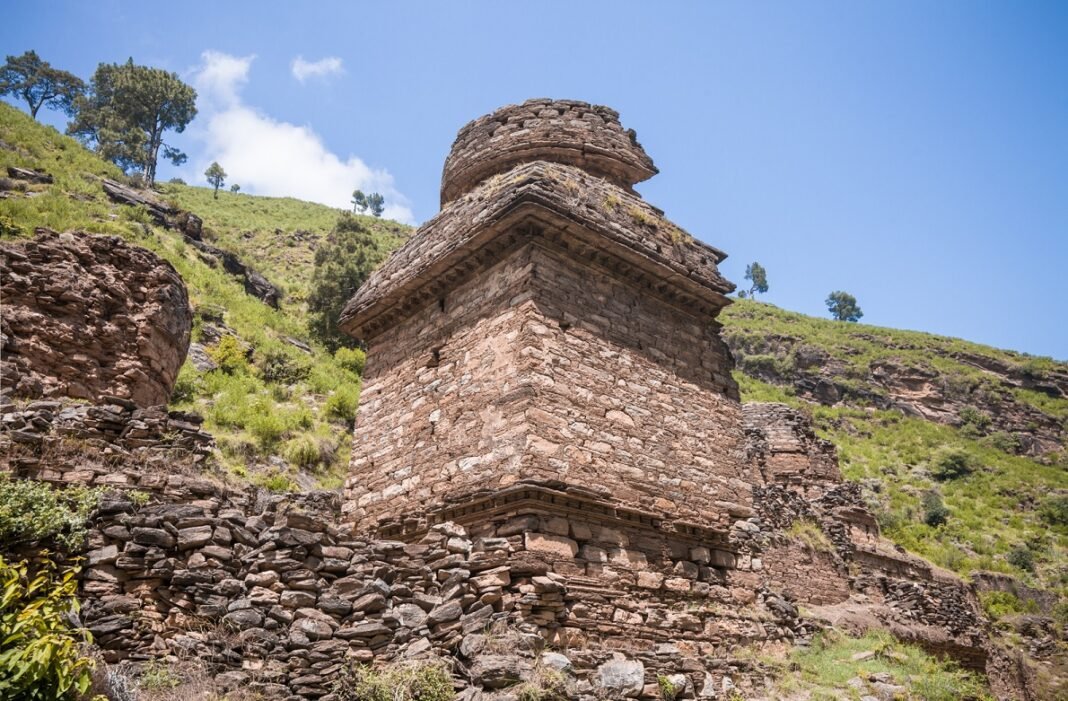
Stupa A dominates the complex. Its base carries Corinthian-style decoration, a signature of Gandharan art’s fusion of classical and South Asian styles. The dome above shows the damage of centuries — including scars left by old treasure hunters. Walk around its base slowly and look for the carved details that have survived. The stupa sits on the terraced slopes with the valley dropping away below. It is also one of the best vantage points for photographs of the whole complex.
Admire the Painted Reliefs of Stupa B
Stupa B is the artistic treasure of Abba Sahib Cheena. Also, it holds rare painted reliefs of the Buddha — fragile colour work from nearly two thousand years ago. In fact, Painted Buddhist sculpture is exceptionally uncommon. This is why archaeologists consider this stupa one of the site’s most important features. Look closely, keep a respectful distance, and never touch the surfaces. This art has survived the centuries and deserves to survive many more.
Walk the Monastic Terraces and Cells
Beyond the stupas, the complex includes viharas (monasteries), barrel-vaulted cells, triangular niches, chapels and residential quarters spread across terraces on both sides of the stream. Also, a likely connecting bridge once linked the two sides, showing how carefully the whole settlement was planned. In fact, wandering the terraces gives you a real sense of daily monastic life — where the monks slept, studied and meditated — in a layout that was both ceremonial and practical.
See the Two-Tower Vihara
One of the most unusual features uncovered here is a vihara built as a stupa with two minarets or towers. Archaeologists have called this structure unique among the Buddhist sites of Swat. It stands as a reminder that Gandharan builders were not following a single template. Also, each community adapted its sacred architecture to its own needs and ideas.
Combine the Visit with the Tokar-dara Stupa
About five kilometres south of Barikot, and roughly one kilometre from the modern village of Najigram, stands the Tokar-dara stupa — another Buddhist site from the first to third centuries, complete with a monastery, assembly hall, cave, aqueduct and residential settlement. It is an easy addition to the same trip and helps complete the picture of how densely this valley was settled by Buddhist communities.
Photograph the Najigram Valley
The setting itself is worth the trip. The water stream from Mount Sur-Ghar, the narrowing valley, the steep slopes with scattered pines and the Mandara nullah below make for atmospheric photographs, especially in the soft light of early morning or late afternoon. The remoteness that protected the ruins also gives the valley a quiet, almost timeless feel.
Famous Places In and Around Abba Sahib Cheena, Najigram
- Tokar-dara Stupa — a first-to-third-century Buddhist complex near Najigram with monastery, assembly hall and aqueduct.
- Barikot — the ancient city of Bazira, about 6 km away, with its own rich archaeological landscape.
- Swat Museum — on the Mingora-Saidu Sharif road, with a superb collection of Gandharan statues and artefacts.
- Saidu Sharif — the former capital of the Swat princely state, worth a stop for its colonial-era buildings.
- Mingora — Swat’s main city and market town, about 25 km north, and the base for most visits.
- Malam Jabba — Swat’s famous ski resort and summer hill station, an easy day trip from Mingora (see our Malam Jabba travel guide).
- Shrine of Mashoom Shaheed — the local landmark you pass on the road to the archaeological site.
How to Reach Abba Sahib Cheena, Najigram
The site lies about 25 kilometres south of Mingora. From Mingora, drive south towards Barikot, then take the Barikot-Buner road for roughly 6 kilometres. Also, just off the Najigram village road, past the shrine of Mashoom Shaheed, a right turn leads toward the stream valley and the ruins. From the end of the vehicle track, the archaeological terraces are reached on foot — wear proper walking shoes, as the paths are uneven and can be muddy after rain.
From Islamabad: roughly 270 km via the M1 motorway and the Swat Expressway, then the N-45/N-95 into Mingora — about 4 to 5 hours of driving. This is the most common route for visitors.
From Lahore: roughly 450 km via the M2, M1 and Swat Expressway — about 7 to 8 hours. Many travellers break the journey in Islamabad or Peshawar.
From Karachi: the practical route is to fly to Islamabad (about 2 hours) and drive onward to Swat. The overland drive from Karachi is very long and best avoided unless you are touring multiple regions.
Nearest airports: Saidu Sharif has an airport with limited flight schedules. Also, most visitors fly into Islamabad International Airport and continue by road. In fact, regular bus and coaster services run between Islamabad, Peshawar and Mingora.
Road conditions and transport: The Swat Expressway and the main valley road to Mingora and Barikot are paved and in good condition. The final stretch near Najigram is narrower but motorable; the walk to the ruins is the only unavoidable foot section. A private car or a hired local driver is the most comfortable option, since public transport does not reach the site itself. Travel is easiest in the dry months. After monsoon rains (July–August) or winter wet spells, check local conditions before setting out.
Route Details
- Islamabad → Swat Expressway: Take the M1 from Islamabad, then join the Swat Expressway (M-16) at the Kernal Sher Khan interchange and follow it to the Chakdara exit.
- Chakdara → Mingora: Continue on the N-45 through Chakdara and Kanju into Mingora (about 25 km from Chakdara is the Barikot turn, which you will pass on the way to Mingora — plan accordingly).
- Mingora → Barikot: Drive about 25 km south on the main valley road to Barikot, the ancient Bazira.
- Barikot → Najigram: Follow the Barikot-Buner road for about 6 km, then turn right off the Najigram village road near the shrine of Mashoom Shaheed and continue toward the stream valley.
- On foot: Park at the end of the track and walk up to the archaeological terraces with your guide. Carry water and allow at least two to three hours for the site itself.
Where to Stay in Abba Sahib Cheena, Najigram
There are no hotels or guesthouses at the archaeological site itself. Also, it is a protected heritage landscape on a forested hillside. In fact, Plan Abba Sahib Cheena as a day trip and stay in the towns nearby. Mingora and Saidu Sharif, about 25 km to the north, have the widest choice: mid-range hotels and comfortable guesthouses cluster around the main roads and the Mingora bypass, with options ranging from simple, clean rooms for budget travellers to well-appointed family hotels with hot water, heating in winter and on-site restaurants.
Barikot, just 6 km from the site, has smaller and simpler guesthouses that work well if you want an early start and a quieter night. Facilities are basic — expect a bed, a bathroom and simple home-style food rather than luxury amenities — but the hospitality is genuine.
For the most comfortable stay, choose Mingora or Saidu Sharif, where you will also find banks, pharmacies and markets for supplies. Book ahead during the peak summer season (June–August) and around public holidays, when Swat fills up quickly. Camping at the ruins is not advisable: the site is unguarded, the land is privately owned and under cultivation in places, and leaving the area undisturbed helps protect the archaeology.
Where to Eat: Local Foods of Abba Sahib Cheena, Najigram
Swat’s food is classic Pashtun cuisine — hearty, flavourful and built around meat, rice, lentils and fresh bread. Also, In Mingora, Saidu Sharif and Barikot you will find the full range: chapli kebab, mutton and chicken karahi, palao, daal, and seasonal vegetable dishes. A local favourite is lobyay, a slow-cooked kidney-bean curry, often eaten with rice or naan. Meals are generally budget-friendly, and the roadside dhabas along the Barikot road serve filling plates that keep travellers going all day.
Swat is famous for its fruit — peaches, apricots, plums and persimmons in season — so buy fresh fruit from the bazaars when you can. Trout is a Swati speciality, though it is found more reliably in the upper valley (Kalam, Bahrain) than around Barikot. Green tea (qehwa) is the standard drink, served everywhere and ideal after a walk in the hills.
There are no restaurants at the archaeological site, so eat before you go or carry snacks and plenty of drinking water. In the villages, small tea shops serve chai and simple snacks, and accepting a cup of tea is part of the local culture of hospitality.
Weather in Abba Sahib Cheena, Najigram
The site sits in the lower Swat valley. Its weather closely follows Mingora’s: warm summers, cool winters, and two rainy periods — one in late winter and early spring, and one during the July–August monsoon. The hillside around the ruins is a little cooler and breezier than the valley floor. The terraces offer almost no shade, so sun protection matters in summer. Winter nights can drop near freezing, and March is one of the wettest months, which can make the footpaths muddy.
| Season | Temperature Range | Conditions |
|---|---|---|
| Winter (Dec–Feb) | 2–13°C | Cold, especially at night; occasional frost; rare light snowfall at valley level. Clear, crisp days are good for walking. |
| Spring (Mar–May) | 8–30°C | Mild and green; March is the wettest pre-monsoon month, so paths can be muddy. April and May are ideal for visits. |
| Summer (Jun–Aug) | 20–37°C | Hot, with June the hottest month; July and August bring heavy monsoon rain (over 130 mm a month), making hillside paths slippery. |
| Autumn (Sep–Nov) | 7–28°C | Pleasant and increasingly dry; clear skies and comfortable walking weather. One of the best seasons to visit. |
Language and Culture of Abba Sahib Cheena, Najigram
Pashto is the language of Swat, spoken by the Yousafzai Pashtuns who make up most of the valley’s population. Also, urdu is widely understood in the towns and by younger people. In fact, you will usually find someone who can help in basic English around Mingora. A few words of Pashto — a greeting like “starray mashay” (hello) — go a long way and are always appreciated.
Swat is culturally conservative, and visitors should dress modestly — covering shoulders and knees is a good rule for both men and women. Always ask before photographing people, and accept that some may politely decline. The archaeological site is a place of religious significance for Buddhists, so treat the stupas and chapels with the same respect you would give any place of worship: do not climb on the ruins, do not remove stones or artefacts. It do not touch painted surfaces.
Hospitality is central to Pashtun culture. Also, villagers near the site may offer tea or directions; receiving such offers graciously is part of the experience. Hiring a local guide not only helps you find the ruins and understand them — it also puts money directly into the community that lives around this heritage.
Shopping in Abba Sahib Cheena, Najigram
There are no souvenir shops at the ruins, so do your shopping in the towns. Also, Mingora’s main bazaar is the valley’s commercial heart: handwoven Swati shawls, embroidered caps and waistcoats, gemstones, dried fruit, honey and traditional sweets are all on offer. The weaving villages around Swat are known for their woollen shawls and blankets, which make genuinely local, useful souvenirs.
Barikot has smaller shops selling everyday goods and a few handicraft items. Also, the fruit sellers along the valley road are worth a stop in season. Prices are generally reasonable, and polite bargaining is normal in the bazaars. Buy any supplies — water, snacks, sunblock — in Mingora or Barikot before heading to the site.
Travel Tips for Abba Sahib Cheena, Najigram
Packing Essentials
Bring sturdy walking shoes with good grip, a hat and sunscreen, at least two litres of water per person, and snacks. There are no shops at the site. A light rain jacket is wise in spring and the monsoon season, and warm layers are essential from November to February. Carry a small first-aid kit and a fully charged phone. A power bank is useful since you may be out for several hours.
Safety Tips
Swat is a popular and generally safe tourist destination. The usual mountain sense applies: do not wander off the paths alone, go with a local guide, and return to the road well before dark. The ruins are old and fragile — never climb on stupas or walls, and keep children close. Drink only bottled or treated water, and let your hotel know your plans for the day.
Money & Connectivity
ATMs and banks are available in Mingora and Barikot but not at the site, so carry enough cash for the day — guides, transport, food and small purchases are all cash transactions. Mobile signals from the main networks generally work in the valley, though coverage can be patchy on the hillside itself. Download offline maps before you leave Mingora.
Best Time to Visit Abba Sahib Cheena, Najigram
Spring (April–May): The Best Season
April and May offer the finest conditions: mild temperatures, green terraces, clear air and manageable crowds. Also, the rains of March have passed, the paths are dry, and the valley is at its most beautiful. If you can choose one window, choose this one.
Autumn (September–November): Excellent
Late September through November is the second-best season. Also, the monsoon has ended, skies are clear, temperatures are comfortable, and the hillside paths are dry and safe. October light is particularly good for photography.
Winter (December–February): Quiet but Cold
Winter brings crisp, clear days and very few visitors. Daytime temperatures are fine for walking, but nights are cold and morning frost is common. Pack warm layers and plan a shorter visit centred on midday.
Summer (June–August): Hot and Wet
June is hot, and July–August bring the monsoon, with heavy rain that turns the hillside paths muddy and slippery. If you visit in summer, go early in the morning, carry rain gear. It be ready to change plans if the weather turns. This is the least comfortable season for the site.
Final Thoughts
Abba Sahib Cheena is not a polished tourist attraction, and that is precisely its charm. It is a genuine archaeological landscape — unguarded, partly unexcavated, and still yielding its secrets to the archaeologists who returned in 2020. Standing among stupas that were already ancient when the first mosques rose in the valley, you feel the depth of Swat’s history in a way no museum can quite deliver.
Visit with a guide, walk gently, and leave nothing behind but footprints. Places like this survive because travellers treat them with respect — and because the communities around them see value in their protection. A few hours at Abba Sahib Cheena will change how you see Swat: not just as a valley of rivers and orchards, but as one of the great spiritual crossroads of the ancient world. For more ideas on exploring the region, browse our Explore Pakistan guides.
FAQs
Where is Abba Sahib Cheena located?
Abba Sahib Cheena is a Buddhist archaeological site near Najigram village, about 6 km from Barikot on the Barikot-Buner road and roughly 25 km south of Mingora in Swat District, Khyber Pakhtunkhwa.
What is the best time to visit Abba Sahib Cheena?
April–May and late September–November offer the best weather — mild temperatures, dry paths and clear skies. Avoid the July–August monsoon, when hillside paths get muddy.
How do I reach Abba Sahib Cheena from Islamabad?
Drive about 270 km via the M1 and Swat Expressway to Mingora (4–5 hours), continue 25 km south to Barikot, then 6 km on the Barikot-Buner road to Najigram. The final stretch to the ruins is on foot with a local guide.
Is Abba Sahib Cheena safe for families?
Yes, with normal precautions. Also, the site involves an uphill walk on uneven paths. It suits families with older children better than toddlers. Go with a guide, carry water, and return before dark.
How old is the Abba Sahib Cheena complex?
About 2,000 years old. Meanwhile, Archaeologists date it to the Kushan period, roughly the first to third century CE. For example, Buddhism flourished in Swat under kings like Kanishka.
Where can I stay near Abba Sahib Cheena?
Stay in Mingora or Saidu Sharif (about 25 km north), which have the widest range of hotels and guesthouses, or in simpler guesthouses in Barikot (about 6 km away). Also, there is no accommodation at the site.
What should I eat when visiting?
Try Swat’s Pashtun cuisine in Mingora or Barikot — chapli kebab, mutton karahi, palao, bean curry (lobyay) and fresh seasonal fruit. There are no restaurants at the ruins, so eat beforehand or carry snacks.
Do I need a guide to visit Abba Sahib Cheena?
A guide is strongly recommended. Also, the site is unguarded and spread over terraced hillsides. In fact, a local guide will help you find the stupas, explain the ruins and keep you on safe paths.