Quick Facts
- Location: Beside Derawar Fort in the Cholistan Desert (locally called Rohi), Bahawalpur District, Punjab — about 100 km south of Bahawalpur city.
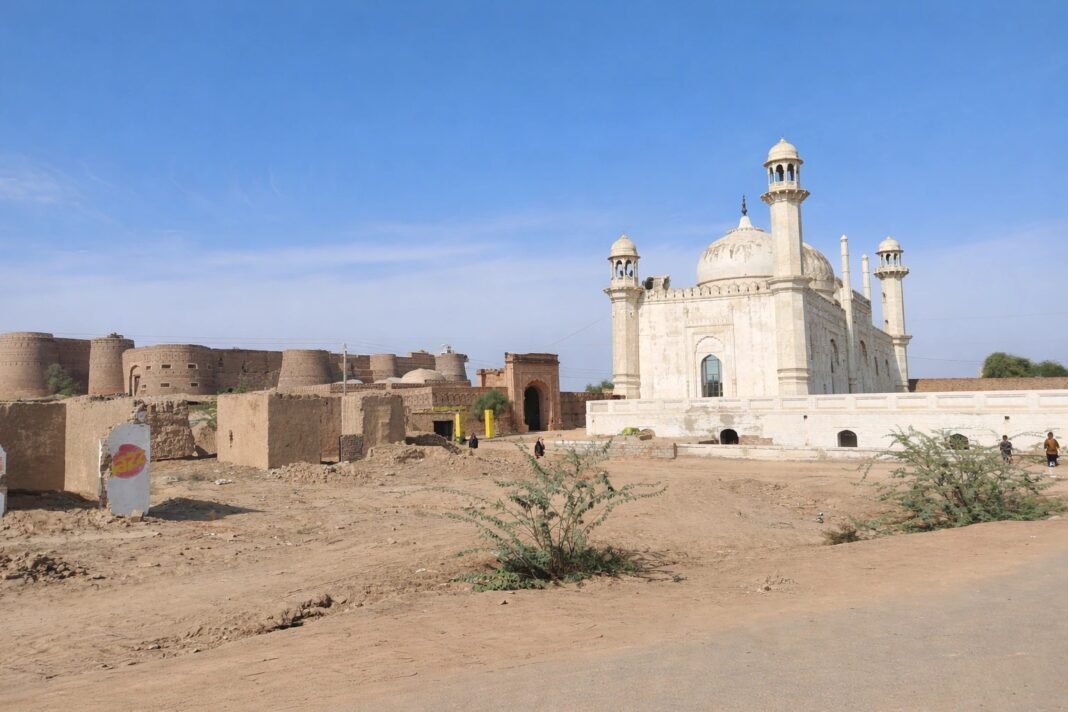
- Famous For: A gleaming white-marble mosque built in 1844 by the Nawab of Bahawalpur — a smaller replica of the Moti Masjid (Pearl Mosque) of the Red Fort, Delhi.
- Nearest City: Bahawalpur (roughly a two-hour drive); the town of Ahmadpur East lies on the route.
- Accessibility: Paved road to Derawar via Ahmadpur East; the final desert stretch is motorable in a normal car in dry weather. An active place of worship — dress modestly and time visits around prayer times.
- Known Landmarks: Three white-marble domes, four minarets visible for kilometres across the desert, a large prayer hall, a spacious courtyard, and the towering 40-bastion Derawar Fort next door.
- Best For: Architecture and history lovers, photographers, religious visitors, and desert adventurers combining the trip with the Cholistan Jeep Rally.
Why Visit Abbasi Mosque, Derawar
Rising out of the golden sands of Cholistan like a pearl dropped in the desert, the Abbasi Mosque is one of the most beautiful surprises in Pakistani architecture. Built entirely of white marble in 1844, it stands in sharp, serene contrast to the great mud-brick mass of Derawar Fort beside it. Travellers consistently describe it the same way: a pearl in the wilderness. The effect is real and immediate — after a long drive through flat desert scrub, the mosque’s domes and four minarets appear on the horizon long before you reach them, glowing against the blue sky.
The mosque is also a living place of worship, not a museum. Unlike the fort, which shows its age, the mosque has been carefully maintained by the people of Derawar and remains in daily use. Visitors can step inside the large prayer hall, admire the mihrab and mimbar, and experience the calm of the big courtyard, which together can hold around a thousand worshippers. Because it is still prayed in, there is a quiet dignity to the place that ruins alone cannot offer.
Architecture lovers come for the Delhi connection. The mosque is an exact small-scale replica of Shah Jahan’s Moti Masjid in the Red Fort, Delhi — the same vocabulary of white marble, domes and slender minarets, translated to the edge of the Thar’s western reaches by the Abbasi Nawabs of Bahawalpur. It is one of the finest examples of how the princely state of Bahawalpur expressed its identity in stone.
Finally, the mosque is the perfect anchor for a Cholistan trip. It pairs naturally with Derawar Fort’s forty bastions, with desert sunsets, with the annual Cholistan Desert Jeep Rally held each February, and with the wider heritage of Bahawalpur — Noor Mahal, Lal Sohanra National Park and the ancient town of Uch Sharif. Come in winter, when the desert air is crisp and the light is soft, and you will understand why travellers call this one of Punjab’s great day trips.
History of Abbasi Mosque, Derawar
The Abbasi Mosque belongs to the story of the princely state of Bahawalpur, ruled by the Abbasi dynasty from the eighteenth century until the state’s accession to Pakistan in 1947. In 1844, the Nawab of Bahawalpur commissioned a mosque beside the family’s great desert stronghold, Qila Derawar. Built of white marble with three domes and four minarets, it was deliberately modelled on the Moti Masjid — the Pearl Mosque — built by the Mughal emperor Shah Jahan inside the Red Fort at Delhi. The choice was a statement: the Abbasi Nawabs, who traced their lineage to the Abbasid caliphs, were placing their own pearl of Mughal-inspired architecture at the edge of the Cholistan Desert.
The mosque’s neighbour gives it context. Derawar Fort was originally built in the ninth century by the Hindu Rajput Bhati dynasty and was captured and rebuilt by Nawab Sadeq Muhammad Khan I of Bahawalpur in 1733. The fort became the dynasty’s desert stronghold: a near-perfect square with a perimeter of about 1,500 metres, walls rising 30 metres, and forty massive circular bastions — ten on each side — climbing up to 40 metres, each decorated with geometric and floral patterns carved into the brickwork. Four gates face the cardinal directions, and the main gate on the north carries a large arched entrance with a balcony above it.
Inside the fort, the Abbasi rulers built a royal palace (Nawab Sadeq Muhammad Khan Abbasi V, the last ruling Nawab, was born in the fort in 1904), a haveli built in 1785, courtyards that hosted musical performances and poetry recitals, and — in the south-east corner — a prison notorious for its harsh conditions. The mosque, by contrast, was always a place of peace: one large hall, a big courtyard, and room for up to a thousand worshippers including the courtyard.
After 1947, the fort gradually fell into disrepair while the mosque was kept in good shape by the local community — a contrast every visitor notices. In recent years the government has begun repair work on the fort, whose front elevation and entrance area have been restored by the archaeology department, and the area around both monuments is tastefully illuminated during events like the annual jeep rally. The mosque continues to serve the faithful of Derawar, and its minarets — like the fort’s bastions — remain visible from a long distance across the desert, just as travellers have reported for generations.
Top Things to Do in Abbasi Mosque, Derawar
Admire the White-Marble Architecture
Take time to study the mosque up close: the three domes, the four slender minarets, the carved marble details and the peaceful symmetry of the courtyard. As a replica of Delhi’s Moti Masjid, it rewards visitors who look for the Mughal vocabulary in its proportions — the same elegance, scaled to the desert. Early morning and late afternoon light make the marble glow, and the contrast with the fort’s mud-brick walls is at its most dramatic then.
Step Inside the Prayer Hall
The mosque is an active place of worship, so visitors are welcome outside prayer times. Inside the large hall you can see the mihrab (the niche indicating the direction of Mecca) and the mimbar (the pulpit), both executed in the same fine marble as the exterior. Remember this is a working mosque: dress modestly, remove your shoes, keep your voice low, and ask before taking photographs of worshippers.
Explore Derawar Fort’s Bastions
No visit is complete without walking the perimeter of Derawar Fort. The forty bastions — each up to 40 metres high and decorated with carved geometric and floral patterns — are among the most photographed structures in Pakistan. Note that the fort’s interior has limited access and parts are in fragile condition; respect any barriers and the ongoing restoration work. Even from outside, the scale of the 1,500-metre perimeter is unforgettable.
Watch the Desert Sunset
The flat Cholistan landscape around Derawar produces spectacular sunsets. As the sun drops, the fort’s bastions turn deep red and gold while the white mosque catches the last light — photographers plan entire trips around this hour. Bring a tripod if you have one, and stay for the blue hour when the monuments are sometimes illuminated.
Visit During the Cholistan Desert Jeep Rally
If your dates align with February, the annual Cholistan Desert Jeep Rally transforms the area: qualifying rounds at Dilwash Stadium near the fort, races across 220–500 km of desert track, a cultural night with folk music, camel races, a food street and fireworks. The mosque and fort, illuminated at night, form the rally’s most iconic backdrop.
Explore the Surrounding Desert Heritage
The Cholistan region is rich in archaeology. Ganweriwala, a vast but still unexcavated city of the Indus Valley Civilisation, lies in this desert — a reminder that these sands have been inhabited for millennia. Local guides can also point out desert wildlife and the traditional life of Cholistan’s nomadic communities.
Famous Places In and Around Abbasi Mosque, Derawar
- Derawar Fort — the 9th-century, 40-bastion desert fortress standing beside the mosque.
- Lal Sohanra National Park — one of South Asia’s largest national parks, east of Bahawalpur, with desert and wetland wildlife.
- Noor Mahal — the Italian-style palace of the Nawabs in Bahawalpur city, built in the 1870s.
- Uch Sharif — the ancient town of saints’ shrines, a few hours south, with centuries-old blue-tiled tombs.
- Ahmadpur East — the historic town on the route to Derawar, with its own Abbasi-era buildings.
- Ganweriwala — the unexcavated Indus Valley city deep in Cholistan, known to archaeologists worldwide.
How to Reach Abbasi Mosque, Derawar
The mosque stands beside Derawar Fort, roughly 100 km south of Bahawalpur city — about a two-hour drive through Ahmadpur East and into the Cholistan Desert. The road is paved as far as the fort area; the final desert stretch is motorable in an ordinary car in dry weather, though a high-clearance vehicle is more comfortable. Most visitors base themselves in Bahawalpur and visit Derawar as a day trip, leaving early to make the most of the light.
From Lahore: roughly 360 km to Bahawalpur (about 5–6 hours by road), then onward to Derawar. Many travellers do the whole trip in one long day, but an overnight in Bahawalpur is more relaxed.
From Islamabad: roughly 680–700 km to Bahawalpur (9–10 hours). This is best done as a two-day journey with a night stop, or combined with a flight to Bahawalpur or Multan.
From Karachi: roughly 850 km via Hyderabad and Sukkur (12–13 hours by road). Flying to Bahawalpur and driving the last stretch is far more practical for most visitors.
Nearest airports: Bahawalpur Airport receives domestic flights; Multan International Airport, a few hours away by road, has wider connections. From either airport, hire a car or join a tour to Derawar.
Road conditions and transport: Winter (November–February) offers the best driving conditions — dry, firm roads and pleasant temperatures. Summer driving is punishing, with desert temperatures crossing 45°C; carry extra water and fuel, and travel early in the day. During the February jeep rally, roads are busy and accommodation fills up, so book ahead. Private cars, hired 4x4s and organised tours from Bahawalpur are the standard options; public transport does not reach the fort.
Route Details
- Bahawalpur → Ahmadpur East: Leave Bahawalpur city heading south on the main road toward Ahmadpur East (about 50 km), a historic Abbasi town worth a brief stop.
- Ahmadpur East → Derawar: Continue south into the Cholistan Desert on the paved road toward Qila Derawar. The landscape opens into classic desert scrub.
- Arrival: The fort’s bastions appear first on the horizon; the white domes and minarets of the Abbasi Mosque come into view beside them. Park in the designated area and walk to the mosque.
- Timing: Aim to arrive by mid-morning for the mosque and fort, stay for sunset photography, and drive back to Bahawalpur the same evening — or camp/stay nearby during rally season with an organised group.
Where to Stay in Abbasi Mosque, Derawar
There is no hotel at the mosque or fort — Derawar is a desert archaeological site. Nearly all visitors stay in Bahawalpur city, which has the full range: comfortable mid-range hotels and well-known guesthouses in the city centre and near the main roads, plus simpler budget lodges. Bahawalpur’s hotels are accustomed to tourists heading to Derawar and can arrange transport.
For a more adventurous option, several Bahawalpur-based tour operators organise desert camping near Derawar, especially during the February jeep rally — tents, meals and bonfires under some of the clearest night skies in Punjab. Book these through reputable operators and confirm what is included (water, food, transport) before you go.
If you are driving through, Ahmadpur East has basic guesthouses for a night stop. Whatever you choose, book well ahead for February (rally season) and for the winter months, when Derawar sees its highest visitor numbers.
Where to Eat: Local Foods of Abbasi Mosque, Derawar
The food of Bahawalpur and Cholistan is hearty South Punjabi and Saraiki cuisine. In Bahawalpur city you will find sajji, mutton and chicken karahi, daal, fresh tandoori naan, and lassi made thick the local way. Cholistan’s desert communities traditionally rely on millet (bajra) breads, pulses and dairy — including camel milk, which you may be offered in the desert villages. Meals in Bahawalpur are generally budget-friendly, from roadside dhabas to comfortable family restaurants.
Carry your own food and plenty of water for the Derawar trip itself: there are only small tea shops near the fort, and nothing close to a restaurant. During the jeep rally, a food street is set up near the venue with local dishes, grilled meats and sweets — one of the highlights of the event. Dates and dried fruit from Bahawalpur’s bazaars make good travel snacks for the desert drive.
Weather in Abbasi Mosque, Derawar
Cholistan is a true desert climate: research on the region records a mean annual temperature of about 27.5°C, with mean summer temperatures around 35.5°C and winter means near 18°C. June days routinely exceed 45°C and can cross 50°C, while winter nights can fall to around 7°C — so the daily and seasonal swings are extreme. Annual rainfall is only 100–200 mm, falling mostly in the July–September monsoon and in winter and spring showers. For visitors, the message is simple: winter is glorious, summer is brutal.
| Season | Temperature Range | Conditions |
|---|---|---|
| Winter (Nov–Feb) | 7–25°C | Pleasant, dry days and cold desert nights. The best season for Derawar — and rally season in February. |
| Spring (Mar–Apr) | 19–39°C | Warming fast; March is still comfortable, April turns hot. Occasional dust storms. |
| Summer (May–Jun) | 30–46°C+ | Extreme heat; June days can exceed 45°C. Avoid midday outdoor visits; travel only if necessary. |
| Monsoon/Autumn (Jul–Oct) | 29–41°C | Humid with occasional monsoon showers (July–August); September–October remain hot but gradually ease. |
Language and Culture of Abbasi Mosque, Derawar
Saraiki is the mother tongue of Bahawalpur and Cholistan, with Punjabi and Urdu widely spoken and understood. In Bahawalpur city you will have no trouble communicating in Urdu; in the desert villages, a local guide helps bridge the gap. English is understood in hotels and by tour operators.
The Abbasi Mosque is an active mosque in a conservative region — modest dress is essential (cover shoulders, arms and legs; women should carry a headscarf), shoes come off at the entrance, and visits should be planned around the five daily prayers. Photography of the building is generally fine, but always ask before photographing worshippers or local families.
Cholistan has a distinct desert culture: nomadic and semi-nomadic communities, camel herding, vibrant embroidery and folk music. If you are invited for tea by locals near Derawar, accept graciously — hospitality to travellers is a point of pride here. During the jeep rally, the cultural nights showcase this heritage through camel dances, crafts exhibitions and folk performances.
Shopping in Abbasi Mosque, Derawar
There are no shops at the mosque itself, but Bahawalpur’s bazaars are worth exploring. Look for Cholistani handicrafts: camel-skin products, hand-embroidered textiles and shawls, traditional khussa shoes, and colourful camel decorations. Bahawalpur is also known for its cotton and khaddar cloth. Dates, dried fruit and local sweets from the city markets make good edible souvenirs.
During the February jeep rally, craft stalls are set up near the Derawar venue selling Cholistani embroidery and souvenirs directly from artisan families — often the best place to buy, since your money goes straight to the makers. Bargaining is normal in the bazaars; start politely and keep it friendly.
Local Events and Festivals
The Cholistan Desert Jeep Rally, held every February, is the region’s flagship event and one of Pakistan’s biggest motorsport spectacles. The 21st edition took place from February 11 to 15, 2026, across Bahawalpur, Bahawalnagar and Rahim Yar Khan districts. The programme typically includes an opening ceremony in Bahawalpur, vehicle inspection and a drivers’ conference, a qualifying round at Dilwash Stadium near Derawar Fort, competitive rounds for men and women drivers, a stock-category race, a dirt-bike race, and a cultural night with folk music, camel races, a food street and fireworks — with the illuminated fort and mosque as the backdrop. Over a hundred drivers, including women racers, take part, covering desert tracks of 220 to 500 km.
If you plan to visit during the rally, book accommodation in Bahawalpur well in advance and expect crowds at Derawar. The Punjab Tourism Development Corporation announces exact dates each year, usually a few weeks beforehand, so check before finalising travel plans. For more ideas on exploring the region, see our Explore Pakistan guides and our Malam Jabba travel guide for a very different side of the country.
Travel Tips for Abbasi Mosque, Derawar
Packing Essentials
Sun protection is non-negotiable: a wide-brimmed hat, high-SPF sunscreen, sunglasses and a scarf or shawl for dust. Carry far more water than you think you need — at least three litres per person for a day trip — plus snacks, since food options near the fort are minimal. In winter, pack a warm jacket for the surprisingly cold desert nights and early mornings. A power bank, basic first-aid kit and a flashlight round out the kit.
Safety Tips
The desert is unforgiving: never wander away from the group or the road, keep your vehicle’s fuel tank topped up, and share your plans with your hotel. Summer visits demand serious heat precautions — travel early morning, rest at midday, and watch for signs of heat exhaustion. The fort’s old structures are fragile; do not climb bastions or enter restricted areas. As ever in Pakistan, keep valuables discreet and carry identification.
Money & Connectivity
Bring all the cash you need from Bahawalpur — there are no ATMs or banks at Derawar, and every transaction in the desert is cash. Mobile coverage from the main networks reaches the fort area but can be unreliable deeper in the desert; download offline maps before leaving Bahawalpur. Fuel up fully in Ahmadpur East or Bahawalpur.
Best Time to Visit Abbasi Mosque, Derawar
Winter (November–February): The Best Season
This is Derawar season. Daytime temperatures of 20–25°C, cool nights, clear desert air and soft golden light make winter ideal for the mosque, the fort and photography. February adds the excitement of the Cholistan Desert Jeep Rally — book early, as this is the busiest time.
Spring (March–April): Good, Warming Up
March is still pleasant, though temperatures climb quickly through April. Early spring works well for visitors who want fewer crowds, but plan outdoor time for mornings and late afternoons.
Summer (May–August): Avoid
With daytime highs of 43–46°C and peaks above 50°C in June, summer is genuinely dangerous for desert sightseeing. If you must travel then, limit the Derawar visit to a brief early-morning stop and spend midday hours indoors in Bahawalpur.
Autumn (September–October): Warm but Improving
Temperatures ease from their summer peak but remain hot (mid-30s and above). Late October starts to become comfortable again, and the desert is quiet — good for travellers who prefer solitude and can handle the warmth.
Final Thoughts
The Abbasi Mosque is proof that the desert keeps its treasures for those willing to make the journey. A white-marble jewel modelled on a Mughal masterpiece, standing beside one of the great fortresses of South Asia, prayed in daily for nearly two centuries — it compresses the whole story of Bahawalpur’s Abbasi heritage into a single unforgettable view. Pair it with the forty bastions of Derawar Fort and a Cholistan sunset, and you have one of Punjab’s finest day trips.
Time your visit for winter, respect the mosque as the living place of worship it is, and consider staying for the February jeep rally at least once — when engines roar across the sands and the illuminated fort glows against the night sky, you will see why this corner of the desert draws travellers back again and again.
FAQs
Where is the Abbasi Mosque located?
The Abbasi Mosque stands beside Derawar Fort in the Cholistan Desert, Bahawalpur District, Punjab — roughly 100 km (about two hours by road) south of Bahawalpur city via Ahmadpur East.
When was the Abbasi Mosque built?
The mosque was built in 1844, commissioned by the Nawab of Bahawalpur. It is a smaller replica of the Moti Masjid (Pearl Mosque) in the Red Fort, Delhi.
What is the best time to visit Abbasi Mosque, Derawar?
November to February, when desert temperatures are pleasant (7–25°C). February is rally season, with the annual Cholistan Desert Jeep Rally held near Derawar Fort.
How do I reach Derawar from Lahore or Islamabad?
Travel to Bahawalpur first — roughly 360 km (5–6 hours) from Lahore or 680–700 km (9–10 hours) from Islamabad — then drive about two hours south via Ahmadpur East to Derawar Fort and the mosque.
Is the Abbasi Mosque still used for prayers?
Yes. Unlike the neighbouring fort, the mosque has been well maintained by the people of Derawar and remains an active place of worship. Visit outside prayer times and dress modestly.
Can families visit Abbasi Mosque and Derawar Fort?
Yes — it is an excellent family day trip from Bahawalpur in winter. Bring sun protection, plenty of water and snacks, and keep children away from the fort’s fragile old structures.
Where can I stay near Derawar?
Stay in Bahawalpur city, which has hotels and guesthouses for all budgets, or join an organised desert camping trip near Derawar (popular during the February rally). There is no accommodation at the site itself.
What should I eat on a Derawar trip?
Eat in Bahawalpur before you go — sajji, karahi, daal and lassi are local staples. Carry food and water for the desert, as only small tea shops operate near the fort (a food street is set up during the jeep rally).