Quick Facts
- Location: Neelum Valley, Azad Jammu and Kashmir, Pakistan
- Altitude: Around 8,379 feet (2,554 meters) above sea level
- Famous For: Alpine meadows, wooden huts, pine forests, and panoramic views of the Neelum Valley
- Nearest City: Muzaffarabad, the capital of Azad Jammu and Kashmir
- Accessibility: Road up to Kel (4×4 jeep from Sharda), then a cable car (doli) across the Neelum River followed by a 30 to 45 minute hike; no vehicle can reach the village itself
- Known Landmarks: Arang Kel Meadows, the chairlift station at Kel, the old wooden mosque, and viewpoints facing the snowy peaks of the valley
- Best For: Adventure travelers, trekkers, honeymooners, nature photographers, and families with older children who can manage a short hike
Why Visit Arang Kel
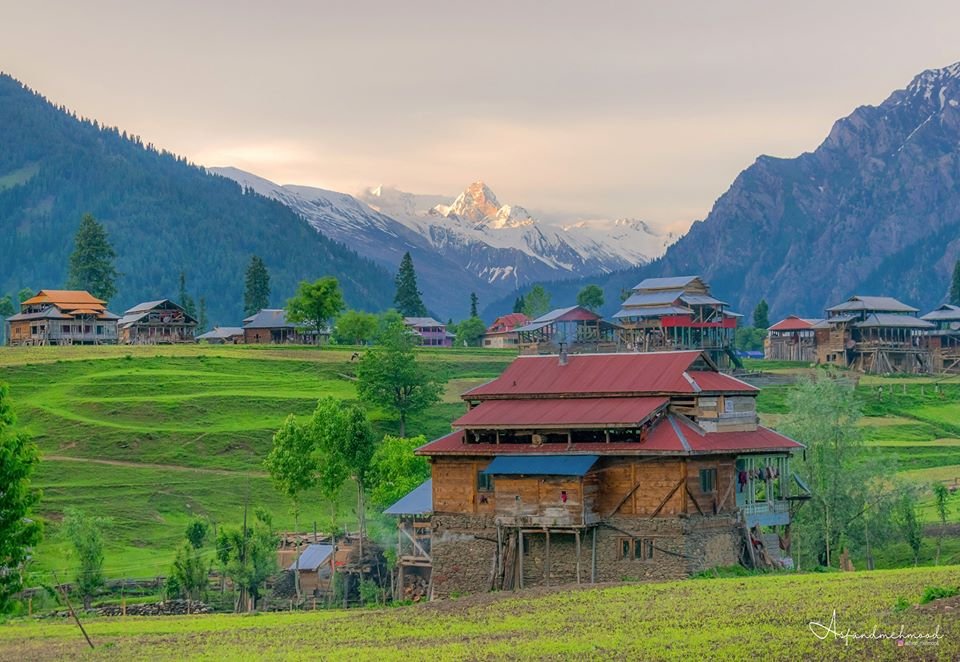
Arang Kel is often called the pearl of the Neelum Valley, and the nickname is earned. This small hillside village sits on a ridge above the town of Kel, wrapped in dense pine forest and wide green meadows, with the Neelum River cutting through the valley thousands of feet below. From its viewpoints you look across a chain of snow-covered peaks that seem to float above the clouds on a clear morning, and at sunset the whole village glows gold against the dark green forest behind it.
Part of the magic of an Arang Kel travel guide has to be the journey itself. There is no road to the village, so every visitor must cross the Neelum River by cable car and then climb the mountain on foot. That effort keeps the crowds in check and gives the place a calm, far-from-everything feeling that is rare even in northern Pakistan. Cars, horns, and traffic simply do not exist up here; the sounds of the village are cowbells, rushing water, and wind through the pines.
The village is also one of the most photogenic spots in all of Azad Kashmir. The traditional wooden houses of Arang Kel, with their carved balconies and sloped roofs, look like they belong in a storybook, and the meadows below them change color through the season from bright spring green to deep summer emerald and then to the gold and red of autumn. Trekkers use it as a base for deeper routes into the upper Neelum Valley, while casual travelers come for one or two nights of mountain air, star-filled skies, and slow mornings with Kashmiri chai.
If you are planning a trip to the north and wondering whether the effort is worth it, the answer is yes. An Arang Kel trip combines adventure (the doli ride and the forest trek), culture (a living Kashmiri mountain village), and pure scenery in a way few other destinations manage. It suits couples looking for a quiet escape, photographers chasing mountain light, and anyone who wants to experience the Neelum Valley beyond the usual roadside stops. For more mountain destinations, see the Explore Pakistan section and the Malam Jabba travel guide.
History of Arang Kel
Arang Kel is a natural destination rather than an ancient monument, so it has no recorded foundation date the way a fort or temple does. Its history is the history of the Neelum Valley and the Kashmiri mountain communities that have lived there for centuries. For most of its existence, Arang Kel was simply a summer settlement of shepherds and farmers from Kel, who brought their cattle and goats up the mountain in the warm months to graze the high meadows. The village’s name and its wooden architecture belong to the Pahari-speaking culture of the upper valley, a tradition of timber houses that goes back generations.
The wider Neelum Valley has a deeper recorded past. The valley was part of the ancient region of Kashmir and lay on routes connecting Kashmir with the high valleys of the north. Nearby Sharda, about 19 kilometers down the valley from Kel, was home to the Sharada Peeth, one of the most important Hindu temples and seats of learning in South Asia. According to historical sources, the temple complex at Sharda dates back to at least the 6th century and drew scholars and pilgrims from across the subcontinent. The ruins are still visible there today and are a standard stop for travelers heading toward Kel and Arang Kel.
Through the 20th century, the upper Neelum Valley stayed isolated because there were no proper roads. The British-era administration and later the government of Pakistan built the valley road gradually upstream, and Kel remained the last settlement reachable by vehicle. Arang Kel itself only became known to outside travelers in the 1990s and 2000s, when domestic tourism in Azad Kashmir began to grow and word spread about the cable car crossing and the stunning viewpoint village above Kel.
The 2005 earthquake, which devastated parts of Azad Kashmir including Muzaffarabad, affected the Neelum Valley too, and several villages along the road were damaged. Kel and Arang Kel were rebuilt afterward, with many families reconstructing their wooden homes in the traditional style. Since then, Arang Kel has grown steadily as a tourist destination. Guesthouses run by local families have multiplied, the chairlift (doli) service was organized to carry tourists across the river, and small shops, tea stalls, and even a zip line have appeared. The village still keeps its farming and herding way of life, but tourism is now a major part of its economy, and the local community has invested in making visitors feel welcome.
Top Things to Do in Arang Kel
Hike the Forest Trail from the Chairlift to the Village
The classic Arang Kel experience starts the moment you step out of the doli. The trail climbs through thick pine and deodar forest, with sunlight filtering through the trees and the sound of the Neelum River fading behind you. It takes most hikers 30 to 45 minutes at a comfortable pace, and the path is well used and easy to follow. Fit travelers can do it faster, while those who like to stop and photograph everything should budget a full hour. The final stretch opens into the village itself, with wooden houses appearing among the trees like something out of a fairy tale.
Walk the Arang Kel Meadows
Below and around the village lie broad green meadows that are perfect for a slow walk. In summer the grass is dotted with wildflowers, grazing horses, and small streams, and the view across the valley to the opposite peaks is unforgettable. Many visitors simply spread a mat, sit down, and watch the clouds move across the mountains. Early morning is the best time, when mist hangs in the valley and the peaks catch the first light.
Visit the Village and Talk to the Locals
Arang Kel is a living village, not a resort. Wander its lanes and you will see farmers drying corn, women weaving or spinning, children walking to school, and old men sitting in the sun. The people are known for their hospitality, and a friendly greeting often leads to an invitation for tea. The small wooden mosque in the center of the village is a quiet, beautiful spot, and the traditional timber architecture itself is worth studying for anyone interested in Kashmiri building styles.
Try the Zip Line and Horse Riding
Local operators have set up a zip line that runs across part of the meadows, giving riders a rush of wind and a bird’s-eye view of the valley. It is a short, fun ride rather than an extreme sport, and it is popular with young travelers. Horse riding is also available, with local handlers offering guided rides along the meadow trails and to nearby viewpoints. Agree on the route and price before you mount up.
Watch Sunrise and Sunset from the Viewpoints
Arang Kel faces roughly east across the Neelum Valley, which means both sunrise and sunset are spectacular. At dawn, the sun rises behind the peaks on the far side of the valley and lights up the mist below. In the evening, the light turns the village houses golden and the western sky blazes orange. The best viewing spots are the edges of the meadows and the small hillocks just above the village. Photographers should keep their cameras ready for at least an hour on either side of sunrise and sunset.
Camp Under the Stars
Because there is almost no light pollution, the night sky above Arang Kel is extraordinary. On a clear night you can see the Milky Way stretch across the sky, and shooting stars are common. Many travelers bring their own tents and camp in the meadows, while some guesthouses can arrange camping spots with basic facilities. Even if you sleep in a guesthouse, step outside late at night and look up; it is one of the finest free sights in Pakistan.
Famous Places In and Around Arang Kel
- Kel: The last town on the valley road, at 6,879 feet, with a bazaar, rest houses, and the chairlift station that serves Arang Kel.
- Sharda: A historic town 19 kilometers from Kel, famous for the 6th-century Sharada Peeth temple ruins and its peaceful riverside setting.
- Taobat: The last station of the Neelum Valley, around 39 kilometers beyond Kel, a quiet village of wooden houses and meadows near the border.
- Dudhnial: A town between Sharda and Kel with shops, restaurants, and rest houses, a convenient break on the drive up.
- Keran: A riverside town on the Neelum with views across the river to the mountains of Indian-administered Kashmir.
- Shounter Valley: A side valley near Kel known for alpine lakes, trout streams, and hiking routes into Gilgit-Baltistan.
How to Reach Arang Kel
Reaching Arang Kel takes planning because it is one of the most remote tourist spots in Azad Kashmir. The standard route starts from Islamabad and follows the Neelum Valley road through Muzaffarabad, Athmuqam, Sharda, and Kel, and then finishes with the cable car and hike. Most travelers need at least three days from Islamabad: one day to drive to Sharda or Kel, a second day to hike up and explore Arang Kel, and a third day to return.
From Islamabad: The distance from Islamabad to Muzaffarabad is around 135 kilometers, and the drive usually takes about 3 hours on the Murree Expressway route. From Muzaffarabad, the Neelum Valley road follows the river upstream through Pattika, Athmuqam, Keran, and Sharda to Kel. The Muzaffarabad-to-Kel drive takes roughly 7 hours in a 4×4 jeep, longer in a regular car, and the full journey from Islamabad to Kel typically takes 11 to 12 hours with stops. Most people break the trip with an overnight stay in Sharda.
From Lahore: Travelers from Lahore first drive to Islamabad, a distance of about 380 kilometers that takes 4 to 5 hours on the motorway. From there, follow the Islamabad route described above. Because of the long total travel time, Lahore visitors should plan at least four days for the trip: Lahore to Sharda on day one, Sharda to Arang Kel on day two, exploring on day three, and the return on day four.
From Karachi: There is no practical road route from Karachi to Arang Kel in one go; the drive would take well over 24 hours. The sensible option is to fly to Islamabad (about 2 hours) and then follow the road route from there, or take the train or bus to Rawalpindi or Islamabad and continue by road. Budget a full day for Karachi to Islamabad before starting the valley journey.
Nearest airport: The nearest major airport is Islamabad International Airport. There is no airport in the Neelum Valley, and Muzaffarabad’s small airstrip does not handle regular commercial flights, so all air travelers start from Islamabad.
Road conditions by season: The valley road is open and in decent condition from May to October, when jeeps and vans run freely to Kel. During winter (December to February), heavy snow can close the road beyond Sharda, and the chairlift to Arang Kel may not operate. Always check local conditions before traveling in late autumn or early spring, and hire a 4×4 from Sharda to Kel if the weather looks uncertain.
Route Details
- Islamabad to Muzaffarabad: Drive the Murree Expressway (N-75) toward Murree, then take the Muzaffarabad road. About 135 kilometers, roughly 3 hours.
- Muzaffarabad to Athmuqam: Continue on the Neelum Valley road along the river, passing Dhani Waterfall and Kutton. Scenic stops are plentiful.
- Athmuqam to Sharda: Keep following the river through Keran and Dudhnial to Sharda, the historic town with the Sharada Peeth ruins. Overnight stop recommended.
- Sharda to Kel: Hire a 4×4 jeep for the 19-kilometer rough stretch to Kel. About 45 minutes to 1 hour.
- Kel to the chairlift: Walk or drive a short distance to the doli (cable car) station on the banks of the Neelum River.
- Cross the river: Ride the cable car (doli) across the Neelum River to the base of the mountain. The ride takes a few minutes and offers thrilling views.
- Hike to Arang Kel: Follow the well-marked forest trail uphill for 30 to 45 minutes until you reach the village. There is no shortcut and no vehicle; everyone walks.
Where to Stay in Arang Kel
Accommodation in Arang Kel is simple, family-run, and part of the charm. There are no big hotels and no luxury resorts. Instead, local families run guesthouses and wooden huts that offer basic rooms with beds, blankets, and hot water (ask in advance), plus home-cooked meals. These guesthouses are the heart of the village’s tourism, and staying with a local family gives you the best window into mountain life. Book ahead during the peak summer months of June and July, when rooms fill up fast, especially on weekends.
Mid-range guesthouses in the village offer rooms with attached bathrooms, electricity (sometimes limited to solar or generator hours), and balconies with mountain views. Standards are basic by city standards but clean and comfortable, and the hospitality is genuinely warm. Some properties organize bonfires in the evening and can arrange packed lunches for day hikes. Your jeep driver or tour operator can usually arrange a booking through local contacts.
Budget travelers and adventure groups often choose camping. The meadows around the village have flat, soft spots perfect for tents, and some guesthouses let campers use their washrooms for a small fee. Bring a warm sleeping bag even in summer, because nights at 8,379 feet are cold. The nearest town for more conventional hotels is Kel, which has several small hotels and rest houses, and Sharda has a wider range of options including the AJK Tourism Department’s tourist rest houses. For travelers who want the full experience, one night in a village guesthouse and one night camping is an ideal combination.
Where to Eat: Local Foods of Arang Kel
Food in Arang Kel is simple mountain cooking, prepared by the families who run the guesthouses. Expect fresh, home-style Pakistani and Kashmiri dishes: chicken and mutton curries, dal, mixed vegetables, fresh roti and rice, and plenty of hot chai. Breakfast is usually parathas with omelets and tea, and many guesthouses offer packed lunches of bread, eggs, and fruit for hikers. Meals are eaten together in a communal style, which is a lovely way to meet other travelers.
The local specialties reflect Kashmiri mountain cuisine. Try the saag (mustard greens) in winter, rajma (red kidney beans), and maash (white lentils), all cooked slowly over wood fire. Desi ghee is used generously, and the taste is richer than city food. Fresh trout is sometimes available in the valley towns like Sharda and Kel, caught from the Neelum River’s tributaries. In Arang Kel itself, ask your host what is fresh that day; the menu depends on what is in season.
There are small tea shops and dhabas in the village serving chai, biscuits, pakoras, and noodles, and a few stalls sell snacks and soft drinks. Prices are higher than in the plains because everything is carried up the mountain, so expect to pay a premium. A simple meal at a guesthouse is budget-friendly by city standards, but bring extra cash: there are no ATMs in Arang Kel or Kel, and mobile banking may not work. Carry snacks for the hike up, and if you have dietary needs, tell your host in advance so they can prepare accordingly.
Weather in Arang Kel
Arang Kel sits at nearly 8,400 feet, so its weather is classic high-mountain: pleasant summers, colorful autumns, and cold, snowy winters. The best time to visit Arang Kel is from May to September, when temperatures range from about 15 to 25 degrees Celsius in the day, the meadows are green, and all routes are open. Even in summer, nights are cool and you will need a warm jacket after sunset. The monsoon rains of July and August can make the road to Kel slippery and the forest trail muddy, so pack rain gear if you travel then.
| Season | Temperature Range | Conditions |
|---|---|---|
| Winter (Dec-Feb) | Below -5°C at night, near freezing by day | Heavy snowfall blankets the village; the road and chairlift often close; only experienced winter travelers should attempt it |
| Spring (Mar-May) | 5°C to 18°C | Snow melts, meadows turn green, wildflowers bloom; May is the start of the tourist season |
| Summer (Jun-Aug) | 15°C to 25°C | Peak season; lush green meadows, clear views, occasional monsoon rain; carry rain gear |
| Autumn (Sep-Nov) | 8°C to 20°C | Golden and red foliage, fewer crowds, crisp clear air; November brings the first snow |
Language and Culture of Arang Kel
The people of Arang Kel and the surrounding upper Neelum Valley are Pahari-speaking Kashmiris, and their culture is a blend of Kashmiri mountain traditions and Islamic customs. Pahari is the everyday language, while Urdu is widely understood because of tourism, and many young people speak some English. The community is close-knit and deeply religious; there are mosques in both Kel and Arang Kel, and the call to prayer structures the rhythm of the day.
Daily life in the village still revolves around farming and livestock. Families grow corn, potatoes, and vegetables on terraced fields, keep cows and goats, and collect firewood and medicinal herbs from the forest. The traditional wooden architecture is a point of pride: houses are built from deodar timber with carved windows and balconies, designed to withstand heavy snow. Visitors are expected to respect local customs. Dress modestly, especially women, who should cover their arms and legs and carry a headscarf for mosque visits. Ask before photographing people, particularly women and children.
Hospitality is a core value here. Guests are treated with genuine warmth, and it is common to be offered tea or a meal. Accepting such invitations graciously is polite; bringing a small gift like sweets or fruit for the host family is appreciated but not required. Keep noise down at night, do not litter in the meadows or forest, and remember that alcohol is neither sold nor welcome in the village. Learning a few Urdu greetings like “Assalam-o-Alaikum” and “Shukriya” (thank you) goes a long way.
Shopping in Arang Kel
Shopping in Arang Kel is limited to small village stalls and the bazaar in Kel. You will find basic souvenirs like Kashmiri shawls, woolen caps and socks, wooden handicrafts, and locally collected honey and walnuts. Prices are higher than in Muzaffarabad because of the transport cost up the mountain, so bargain politely. The best buys are the small, authentic items: hand-knitted woolens made by village women and pine-resin products sold by local shops.
For a wider selection, shop in Kel before hiking up. The Kel bazaar has handicraft shops, dry fruit sellers, and stalls selling Kashmiri embroidery, pashmina-style shawls, and gemstone jewelry. Sharda’s bazaar is another good stop on the way. Dry fruits, especially walnuts, almonds, and apricots, are a specialty of the valley and make excellent gifts. There are no shopping malls anywhere in the upper Neelum Valley; this is village-level shopping at its most authentic, and that is part of the experience.
Travel Tips for Arang Kel
Packing Essentials
Pack light but smart, because you will carry everything up the mountain on your back. Essentials include sturdy hiking shoes with good grip, a warm jacket and a fleece (even in summer), rain gear, a daypack with water and snacks, sunscreen and sunglasses, a first-aid kit, a flashlight or headlamp, and a power bank since electricity can be unreliable. If you plan to camp, bring a four-season sleeping bag and a tent that can handle wind and cold.
Safety Tips
Arang Kel is safe for tourists, and the local community is welcoming, but the mountain environment demands respect. The forest trail is steep in places and can be slippery after rain; take your time and wear proper shoes. Do not hike after dark. The cable car is operated by locals and is generally reliable, but if you are afraid of heights, know that the ride is short. Altitude is not extreme at 8,379 feet, but visitors coming straight from the plains may feel breathless on the climb; rest when you need to and drink water. Travel with a companion or a guide rather than alone, and register your plans with your guesthouse host.
Money & Connectivity
There are no ATMs in Arang Kel or Kel, so carry enough cash for your entire stay, including meals, the jeep, the chairlift, and souvenirs. Mobile signals are weak; the SCO network works sometimes in Kel and occasionally in Arang Kel, but other networks have little to no coverage. Treat the trip as a digital detox and tell family in advance that you may be unreachable. Wi-Fi is not available in the village, and charging points may be limited to a few hours a day from solar or generator power.
Best Time to Visit Arang Kel
Summer (May to September): Peak Season
This is the best time to visit Arang Kel. The weather is pleasant, with daytime temperatures between 15 and 25 degrees Celsius, the meadows are at their greenest, and all routes, including the chairlift, are running. June and July are the busiest months, so book guesthouses in advance. August brings monsoon showers that make everything even greener but can complicate the road and trail.
Autumn (September to October): The Quiet Season
September and early October are a hidden gem of a season in Arang Kel. The crowds thin out, the forest turns gold and red, and the air is crisp and clear, giving the best long-distance views of the year. Nights are colder, so pack extra layers, but for photographers and peace-seekers, autumn is arguably the finest time to visit.
Winter (November to March): For Snow Lovers Only
Winter in Arang Kel is severe, with temperatures dropping below minus 5 degrees Celsius and heavy snow burying the village. The road to Kel and the chairlift may close, and most guesthouses shut down. Only well-equipped winter travelers should attempt a visit, and even then, check conditions with locals in Kel first. That said, those who make it describe a silent, white wonderland unlike anything else.
Final Thoughts
Arang Kel is one of those rare places that rewards every bit of effort it takes to reach. The cable car ride across the Neelum River, the climb through the pine forest, and the first sight of the village’s wooden houses against the high peaks form a journey that stays with you long after you return home. Whether you come for the trekking, the photography, the culture, or simply to breathe clean mountain air, the village gives you something real: a living Kashmiri community in one of the most beautiful corners of Pakistan.
Plan your Arang Kel travel guide itinerary with care: give yourself enough days, carry cash, pack for mountain weather, and respect the village and its people. Do that, and Arang Kel will give you back memories of misty mornings, star-filled nights, and the kind of quiet that is increasingly hard to find. It is, without question, one of the finest destinations in the Neelum Valley and a must-visit for anyone exploring Azad Kashmir.
FAQs
Where is Arang Kel located?
Arang Kel is a village in the Neelum Valley of Azad Jammu and Kashmir, Pakistan, sitting on a hilltop above the town of Kel at an altitude of about 8,379 feet (2,554 meters).
What is the best time to visit Arang Kel?
The best time to visit is from May to September, when the weather is pleasant (15 to 25 degrees Celsius), the meadows are green, and the chairlift and hiking trail are fully open. September to October is great for autumn colors and fewer crowds.
How do I reach Arang Kel?
Drive from Islamabad to Kel via Muzaffarabad, Athmuqam, and Sharda (about 11 to 12 hours total), then cross the Neelum River by cable car (doli) and hike 30 to 45 minutes uphill to the village. No road reaches Arang Kel itself.
Is Arang Kel safe for tourists?
Yes, Arang Kel is safe for tourists. The local community is welcoming, and thousands of domestic and foreign visitors go every year. Take normal mountain precautions: proper shoes, daylight hiking, and a guide if you are inexperienced.
Is Arang Kel suitable for families?
It suits families with older children and teenagers who can manage the hike. The trail is steep and the cable car ride may frighten very small children or elderly travelers with mobility issues.
Where can I stay in Arang Kel?
The village has family-run guesthouses and wooden huts offering basic rooms and home-cooked meals, and camping in the meadows is popular. Book ahead in peak season (June to July). There are no luxury hotels.
What food is available in Arang Kel?
Guesthouses serve home-style Kashmiri and Pakistani food: chicken and mutton curries, dal, vegetables, roti, rice, parathas, and chai. Small tea shops sell snacks and pakoras. Carry extra cash, as there are no ATMs.
Do mobile phones work in Arang Kel?
Coverage is very limited. The SCO network sometimes works in Kel and occasionally in Arang Kel, but other networks have little or no signal. Plan for a digital detox and inform family before you go.