Quick Facts
- Location: Phase 1, Hayatabad, on Habib Jalib Road, Peshawar, Khyber Pakhtunkhwa
- Altitude: Around 350 metres above sea level (Peshawar valley floor)
- Famous For: One of the largest public gardens in Hayatabad, its mini zoo and aviary, a long walking and jogging track, shaded lawns and family picnic spots
- Nearest City: Peshawar (the park sits inside the city, in the planned Hayatabad township)
- Accessibility: Easy road access from all parts of Peshawar by car, rickshaw or public bus; Bacha Khan International Airport is the nearest airport
- Known Landmarks: Mini zoo and aviary, children’s playground, walking track, flower beds, Tatara Park nearby
- Best For: Families with children, morning walkers and joggers, picnickers, school groups, and anyone looking for a calm green break inside Peshawar
Why Visit Bagh-e-Naran, Peshawar
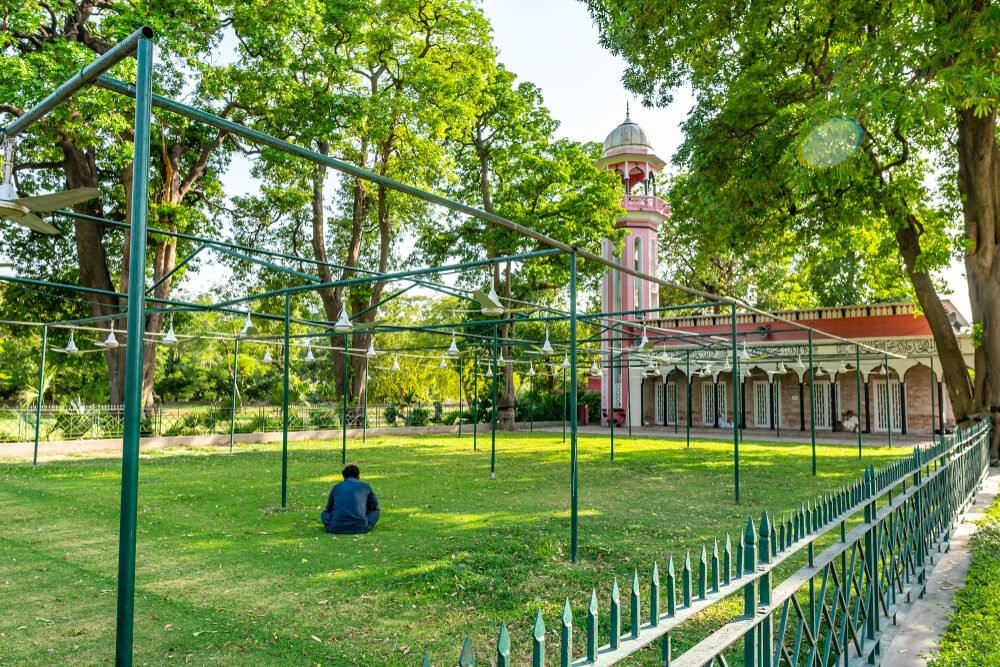
Peshawar is an intense city. The bazaars are loud, the traffic is constant, and in summer the heat settles over the valley like a weight. Bagh-e-Naran is where the city comes to breathe. Spread across Phase 1 and Phase 2 of Hayatabad, it is one of the largest public parks in this part of Peshawar, and it draws thousands of visitors every week — families with picnic baskets, retirees on their morning walk, children racing toward the swings, and young couples finding a quiet bench under the trees.
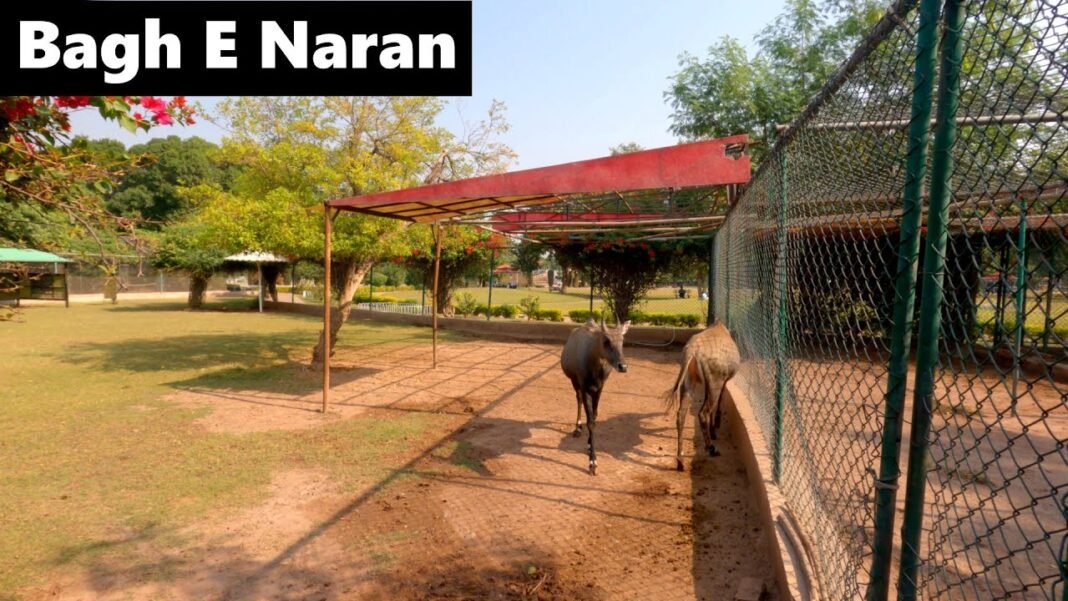
The park’s biggest draw for families is the mini zoo. It is not a full-scale zoological garden, and you should not expect one, but children love it: monkeys, nilgai (Asian antelope), deer, zebras and an aviary full of peacocks and other birds give young visitors plenty to point at. For the adults, the real pleasure is simpler — roughly a kilometre of walking and jogging track circling the whole park, shaded seating areas, seasonal flower beds and wide lawns that stay green even when the rest of the city looks dusty.
Bagh-e-Naran is also one of the most practical sightseeing stops in a Peshawar itinerary. It sits on Habib Jalib Road in Hayatabad, minutes from Tatara Park and an easy ride from the university area, the airport road and the cantonment. You can spend a full relaxed morning here and still have the afternoon for the Peshawar Museum or Qissa Khwani Bazaar. There is easy parking, a small per-person entry fee, and the park stays open from morning to late evening every day of the week.
Finally, the park is getting better every year. In December 2022 the Khyber Pakhtunkhwa government announced a Rs 535 million extension of Bagh-e-Naran, adding jogging and cycling tracks, an open-air gym and new play areas, and in early 2023 the Peshawar Development Authority was ordered to upgrade visitor facilities, benches, washrooms and plantation across the garden. If you want to understand where ordinary Peshawaris actually spend their weekends, this bagh-e-naran peshawar travel guide starts in the right place.
History of Bagh-e-Naran, Peshawar
The honest history of Bagh-e-Naran is the history of modern Peshawar rather than of emperors. Local tradition fondly links the name — which translates roughly as “Garden Valley” — to the Mughal garden culture that once flourished around Peshawar, and some local accounts describe it as an old pleasure garden. But the documented record places the park firmly in the modern era: it is a planned public garden of the Hayatabad township, developed and maintained by the Peshawar Development Authority (PDA), the same body that manages the rest of Hayatabad’s public spaces.
Hayatabad itself is the context that matters. Built as a planned residential township on Peshawar’s western edge from the late 20th century onward, Hayatabad was designed with wide roads, sector markets and — unusually for Pakistani cities of its generation — generous green space. Bagh-e-Naran, spanning Phases 1 and 2 of the township near Tatara Park, became the township’s flagship garden: the place where a new middle-class suburb got its shared lawn, its walking track and its children’s playground.
The park’s recent history is one of steady public investment. On 15 December 2022, the Khyber Pakhtunkhwa government announced the extension of Bagh-e-Naran at an estimated cost of Rs 535 million, with plans for dedicated jogging and cycling tracks, an open-air gym and an upgraded playground. In January 2023, Special Assistant to the Chief Minister Kamran Bangash paid a surprise visit to the park, where the Director General of the PDA and the Deputy Director of PDA Horticulture briefed him on the garden’s condition. Noting that Bagh Naran is frequented by both Pakistani and Afghan visitors, he ordered an international-standard visitor facility point, the swift opening of the walking track to the public, and the installation of benches, chairs, washrooms and additional plants wherever space allowed.
That is the real story of Bagh-e-Naran: not a relic of a vanished empire, but a living public institution of today’s Peshawar — maintained, expanded and argued over by the city it serves. For travelers interested in the older layers of the city, the historic Wazir Bagh and the monuments of the old walled city lie a short drive away; Bagh-e-Naran shows you the Peshawar of the present.
Top Things to Do in Bagh-e-Naran, Peshawar
Visit the Mini Zoo and Aviary
The mini zoo is the park’s signature attraction for families. Monkeys, nilgai (Nile cows), deer and zebras are kept in enclosures, and the aviary holds peacocks, parrots and other birds whose noise carries pleasantly across the lawns. Go in with the right expectations: this is a modest municipal collection, not a safari park, and the animals are the supporting act to a day outdoors rather than the main event. Children under ten, however, rarely share that reservation — the deer and the peacocks reliably steal the show. Mornings are the best time, when the animals are active and the light is kind for photographs.
Walk or Jog the Park Track
A roughly one-kilometre walking and jogging track circles the whole park, and it is one of the most-used fitness loops in Hayatabad. Early mornings bring serious walkers and joggers; evenings bring families out for a stroll after the heat breaks. The track is flat and easy, suitable for all ages, and benches placed along it give you somewhere to rest in the shade. If you are staying in Hayatabad for a few days, this is your readymade morning routine.
Picnic on the Lawns
The wide, well-kept lawns are the park’s social heart, especially on weekends. Bring a picnic blanket, a football or a cricket bat, and food from home — many visitors consider the on-site food options average at best, so a home-packed picnic is the local wisdom. Sundays are reserved for families, which makes Sunday the calmest and most comfortable day for a family outing, though also the busiest. Shady trees ring the lawns, so even at midday you can usually find a cool patch of grass.
Let the Children Loose in the Play Area
A dedicated children’s play area with swings, slides and open ground sits within the park, and it is the first stop for most young visitors. The flat open spaces around it double as impromptu cricket and football pitches in the cooler months. If you are traveling with children, plan at least half your visit around this corner of the park.
Photograph the Seasonal Flower Beds
The PDA’s horticulture wing plants seasonal flower beds across the park, and in spring the colour is genuinely impressive — marigolds, petunias and roses in long formal rows. Photographers should come in the soft light of early morning, when the beds are empty of crowds and the dew is still on the petals.
Famous Places In and Around Bagh-e-Naran, Peshawar
- Tatara Park — the neighbouring park in Hayatabad, an easy combined visit on the same day.
- Shahi Bagh — one of Peshawar’s oldest public gardens, closer to the city centre.
- Peshawar Museum — the region’s great Gandharan art collection, about half an hour away by road.
- Islamia College University — the iconic colonial-era building, a landmark of Peshawar’s educational history.
- Qissa Khwani Bazaar — the legendary “Street of Storytellers” in the old walled city, for food and shopping after the park.
- Bala Hisar Fort — the ancient fort overlooking the city; exterior views only for most visitors.
- Jamrud Fort and the Khyber Pass gateway — the historic western gate of Peshawar, reachable by road toward the Khyber district.
How to Reach Bagh-e-Naran, Peshawar
Reaching Bagh-e-Naran is straightforward because it sits inside Peshawar itself. The park’s address is Habib Jalib Road, Phase 1, Hayatabad, in the western part of the city. If you are coming from another city, your first step is simply to get to Peshawar, and from there the park is a short local ride away.
From Islamabad: The drive is around 180 km via the M-1 motorway and takes roughly 2.5 to 3 hours in normal traffic. Take the Peshawar exit, follow the ring road or University Road west toward Hayatabad, and enter Phase 1 via Habib Jalib Road. Daewoo and other bus services run constantly between Islamabad and Peshawar; from the Peshawar bus terminal, a rickshaw or ride-hailing car will get you to the park in about 30 to 40 minutes depending on traffic.
From Lahore: The journey is around 530 km via the M-2 and M-1 motorways, roughly 6 to 7 hours by car or luxury bus. Most travelers break the trip in Islamabad or drive straight through. There is no need to enter the old city at all — Hayatabad is on Peshawar’s western side, so approach via the ring road to avoid the congested centre.
From Karachi: The road distance is around 1,500 km, far too long for a comfortable drive, so flying is the practical choice. Bacha Khan International Airport (Peshawar) receives regular domestic flights, and the airport is only about 20 to 30 minutes from Hayatabad by car. Trains also connect Karachi with Peshawar Junction for those who prefer rail.
Local transport: Within Peshawar, the easiest option is a rickshaw or a ride-hailing car — tell the driver “Bagh-e-Naran, Habib Jalib Road, Hayatabad” and expect roughly a 30 to 40 minute ride from the Saddar area. Public buses heading toward Hayatabad (routes such as 1A and 1B) pass near the park; the ride takes 45 minutes to an hour and costs very little. If you are already in Hayatabad, the park is walkable from nearby phases in 20 to 30 minutes.
Route Details
Step 1: Arrive in Peshawar by motorway (M-1 from Islamabad, M-1/M-2 from Lahore), by air at Bacha Khan International Airport, or by rail at Peshawar Junction.
Step 2: Head west toward Hayatabad via University Road or the Peshawar ring road — signposts for Hayatabad are frequent.
Step 3: Enter Hayatabad Phase 1 and follow Habib Jalib Road; the park’s boundary and main gate are on this road, close to Tatara Park.
Step 4: Park in the on-site parking area (a separate parking charge applies), pay the small per-person entry fee at the gate, and walk in.
Where to Stay in Bagh-e-Naran, Peshawar
Bagh-e-Naran is a day-visit park, so you stay in Peshawar rather than at the park itself. Hayatabad is one of the most convenient bases: the township has a good stock of mid-range hotels and guest houses, many within a ten-minute drive of the park’s gate, and the area is considered one of the calmer, better-planned parts of the city. Guest houses in the Hayatabad phases suit families who want a quiet night and easy access to the park for an early morning walk.
For more choice, look along University Road and toward the cantonment, where mid-range and upper-mid-range hotels cluster. These put you within easy reach of both the park and the old city’s sights. Budget travelers will find economy hotels and lodges around Saddar and the railway station area, though the surroundings are busier and noisier. Luxury international-standard hotels are limited in Peshawar compared with Lahore or Islamabad, but a few well-regarded options exist near the cantonment and airport road. Wherever you stay, book ahead on public holidays and Eid weekends, when Peshawar’s hotels fill with visiting families. For broader trip planning, see our Explore Pakistan section.
Where to Eat: Local Foods of Bagh-e-Naran, Peshawar
The honest advice first: eat before you come, or pack a picnic. Visitor reviews consistently rate the park’s own food outlets as average, while Peshawar outside the gates is one of Pakistan’s great food cities. The park is ideal for a home-packed picnic on the lawns, which is exactly what most local families do.
When you are ready for the real thing, head out into Peshawar. The city’s signature dishes are famous across Pakistan: chapli kebab, the flat minced-meat kebab laced with pomegranate seeds and spices; Namak Mandi karahi, lamb or mutton cooked with minimal spices so the meat speaks for itself; Kabuli pulao, fragrant rice with carrots, raisins and tender meat; and seekh kebabs grilled over open flame. Namak Mandi, the old city’s food street near the park’s side of town, is the classic destination for an evening karahi.
For snacks and sweets, try Peshawari kulfi and falooda from the old city’s dessert shops, and fresh sugarcane juice in season. Qissa Khwani Bazaar has historic tea houses where you can drink doodh patti (milky tea) and watch the bazaar go by. A full meal at a local kebab house or karahi restaurant is budget-friendly by big-city standards; even a generous dinner for a family at a well-known food street spot costs far less than the equivalent in Islamabad or Lahore.
Weather in Bagh-e-Naran, Peshawar
Peshawar sits on a low valley floor at around 350 metres, which means it gets properly hot in summer and pleasantly cool in winter — the park is usable year-round, but your experience changes completely with the season. Summer afternoons can be fierce, so morning and evening visits are the rule from May to August; winter days are mild and sunny, perfect for a long picnic. Approximate seasonal conditions are:
| Season | Temperature Range | Conditions |
|---|---|---|
| Winter (Dec–Feb) | 4–18°C | Cool, often sunny days; chilly mornings and evenings; occasional fog. Best picnic weather. |
| Spring (Mar–Apr) | 18–32°C | Pleasant and green; flower beds at their best; the loveliest season in the park. |
| Summer (May–Aug) | 30–42°C | Hot, especially June–July; monsoon showers in July–August bring brief relief. Visit early morning or after sunset. |
| Autumn (Sep–Nov) | 16–32°C | Cooling down; comfortable evenings; good walking weather returns by October. |
Always check a short-range forecast before a weekend visit in July and August, when sudden monsoon downpours can soak a picnic in minutes.
Language and Culture of Bagh-e-Naran, Peshawar
Pashto is the predominant language of Peshawar and you will hear it everywhere in the park, from the jogging track to the tea stalls. Hindko is also widely spoken in the city, and Urdu works everywhere — staff, vendors and most visitors understand it, and English is understood by educated younger visitors. Signage in the park is typically in Urdu and English.
Peshawar’s culture is Pakhtun at its core, overlaid with the easygoing bustle of a trading city. Hospitality is a point of honour: do not be surprised if a neighbouring family on the lawn offers you tea or fruit. Dress modestly as a matter of course — for women, a headscarf is not required in the park but loose, covering clothing is the respectful norm, and men should avoid going shirtless even in summer. Sundays are family days at Bagh-e-Naran; single male visitors should be aware the atmosphere that day is deliberately family-oriented, and it is wise to visit with family or in a group on Sundays.
Photography is generally fine for landscapes and your own group, but always ask before photographing other families, and especially before photographing women and children. Friday afternoons are quiet around prayer time; plan around it.
Shopping in Bagh-e-Naran, Peshawar
There is no real shopping inside the park beyond small snack stalls and vendors selling tea, cold drinks and ice cream near the gates. For genuine Peshawar shopping, the old city is the destination. Qissa Khwani Bazaar is the historic market street, good for browsing traditional goods, crockery and street food in one trip. Peshawar is famous across Pakistan for dry fruits — almonds, pistachios, pine nuts (chilgoza) and dried apricots arrive here through historic trade routes, and the dedicated dry-fruit markets offer quality and prices that beat the rest of the country.
Classic souvenirs include the Peshawari chappal (the handcrafted leather sandal now worn across Pakistan), khaddar and woollen shawls, embroidered waistcoats, and brass and copper ware from the coppersmiths’ lanes. Bargaining is expected in the old bazaars — start well below the asking price and meet somewhere in the middle, always with a smile. The Hayatabad phase markets near the park cover daily needs and have tailors, bakeries and general stores if you are staying nearby.
Travel Tips for Bagh-e-Naran, Peshawar
Packing Essentials
Bring a picnic blanket or sheet — the lawns are the point, and seating fills up on weekends. Carry drinking water, sunscreen and a cap in summer, and a light jacket for winter evenings when the temperature drops after sunset. Comfortable walking shoes matter because you will likely cover the full kilometre of the track without noticing. A camera or phone is a must for the flower beds and the zoo, and a small daypack keeps snacks and water together. If you visit in the monsoon months, throw in a compact umbrella.
Safety Tips
Bagh-e-Naran is a well-maintained, family-oriented public park and is considered safe for visitors during opening hours. Standard sense applies: keep valuables out of sight, keep an eye on children near the zoo enclosures, and avoid isolated corners of the park after dark. The park is staffed and has an entry gate with a fee, which keeps the crowd self-selecting. For women traveling solo, daytime visits are comfortable; evenings are livelier and best enjoyed in a group. Hayatabad as a whole is one of Peshawar’s calmer neighbourhoods.
Money & Connectivity
Entry is a small per-person cash fee with a separate parking charge, so carry small cash — do not count on cards at the gate. ATMs are plentiful in the Hayatabad commercial markets and along University Road, a short drive away. Mobile signals from all major networks (Jazz, Telenor, Zong, Ufone) are strong across the park, and 4G data works well if you want to share photos live. There is no need to carry large amounts of cash for the park itself; the nearby markets have you covered for everything else.
Best Time to Visit Bagh-e-Naran, Peshawar
Winter (December–February): The Picnic Season
This is the best time to visit Bagh-e-Naran. Daytime temperatures sit in the comfortable teens, the sun is gentle, and the lawns fill with families making a full day of it. The mini zoo is pleasant to walk around, the track is busy with morning walkers, and you can picnic at noon without hunting for shade. Pack a warm layer for the late afternoon.
Spring (March–April): The Flower Season
Spring is arguably the prettiest time in the park — the flower beds are at their peak and everything is green. Temperatures climb through the 20s into the low 30s, still comfortable for a full visit. Photographers should prioritise these weeks. Come on a weekday morning for the beds without the crowds.
Summer (May–August): Early Mornings Only
Peshawar’s summer is genuinely hot, and midday in the park is for the very determined. The local pattern is the sensible one: arrive at opening for a walk or jog, leave before the heat builds, and return after sunset when families come out and the lawns cool down. July and August bring monsoon showers that can be dramatic but brief.
Autumn (September–November): The Walking Season
As the heat breaks, the park becomes a walker’s paradise again. October and November offer some of the year’s finest weather — clear skies, cool evenings, thinning crowds on weekdays. If your trip to Peshawar falls in these months, Bagh-e-Naran deserves a relaxed morning on your itinerary.
Final Thoughts
Bagh-e-Naran will not overwhelm you with grandeur, and that is precisely its charm. It is not a monument or a wonder of the world; it is the green living room of a historic city — the place where Peshawar walks, plays, picnics and breathes. The mini zoo delights children, the kilometre of track serves the fitness-minded, and the shaded lawns give everyone else exactly what a city park should: a few unhurried hours under trees.
Pair it with the old city’s heavier sights — the museum, the bazaars, the fort views — and you will leave Peshawar with a balanced memory: the ancient trading city and the modern neighbourhood park, the noise of Qissa Khwani and the quiet of a Hayatabad morning. For a low-cost, low-effort, high-reward stop on any Peshawar trip, this bagh-e-naran peshawar travel guide gives it a confident recommendation. If you are heading further north afterward, our Malam Jabba guide picks up the mountain trail.
FAQs
Where is Bagh-e-Naran located?
Bagh-e-Naran is located in Phase 1 (extending into Phase 2), Hayatabad, on Habib Jalib Road in western Peshawar, Khyber Pakhtunkhwa — close to Tatara Park and about 30 to 40 minutes by road from the Saddar area.
What is the best time to visit Bagh-e-Naran?
Winter (December to February) is the best time overall, with mild sunny days ideal for picnics. Spring (March–April) is the prettiest, with flower beds in full bloom. In summer, visit early in the morning or in the evening to avoid the heat.
How do I reach Bagh-e-Naran from Islamabad?
Drive around 180 km via the M-1 motorway (about 2.5 to 3 hours) to Peshawar, then head west to Hayatabad via University Road or the ring road and follow Habib Jalib Road in Phase 1. Buses from Islamabad to Peshawar run constantly, followed by a 30 to 40 minute rickshaw or taxi ride.
Is Bagh-e-Naran safe for families?
Yes. It is a well-maintained, gated public park managed by the Peshawar Development Authority, popular with families and considered one of the calmer recreational spots in the city. Sundays are reserved as family days.
Is there a zoo inside Bagh-e-Naran?
Yes — a mini zoo with monkeys, nilgai, deer, zebras and an aviary of peacocks and other birds. It is a modest municipal collection that children enjoy, rather than a full-scale zoo.
What are the park timings and entry fee?
The park is open daily from morning to late evening. Entry is a small per-person fee with a separate parking charge — carry small cash, as cards are generally not accepted at the gate.
Where can I stay near Bagh-e-Naran?
Stay in Hayatabad itself for the shortest commute — the township has mid-range hotels and guest houses within minutes of the park. University Road and the cantonment area offer more choice across budgets.
What food is Peshawar famous for near the park?
Chapli kebab, Namak Mandi karahi, Kabuli pulao and seekh kebabs are the city’s signature dishes, with Peshawari kulfi and falooda for dessert. Pack a picnic for the park itself and eat out in the city afterward.