Quick Facts
- Location: Shigar District, Gilgit-Baltistan, Pakistan, on the Skardu to Shigar road
- Altitude: Around 2,232 m above sea level
- Famous For: Having no visible inlet or outlet, which is why it is called the Blind Lake; its local name is Jarba Tso (Jarba Zhou)
- Nearest City: Skardu, around 30-45 km away, roughly a 30-45 minute drive
- Accessibility: Easy day trip from Skardu by jeep or car, with a short walk at the end; small entrance fee and parking at the lake
- Known Landmarks: Sarfaranga Cold Desert, Shigar Fort, Amburiq Mosque, the Indus and Shigar rivers
- Best For: Families, photographers, campers, anglers, and anyone exploring the Shigar Valley
Why Visit Blind Lake
Skardu’s famous lakes, Shangrila and Upper Kachura, get the crowds. Blind Lake gets the quiet. Tucked beside the Skardu-Shigar road where the great cold desert of Sarfaranga begins, this still, blue-green lake is one of Baltistan’s most peaceful stops, a place where the water barely ripples and the mountains double themselves in the reflection. This blind lake travel guide covers everything you need, because the lake rewards travellers who know its story.
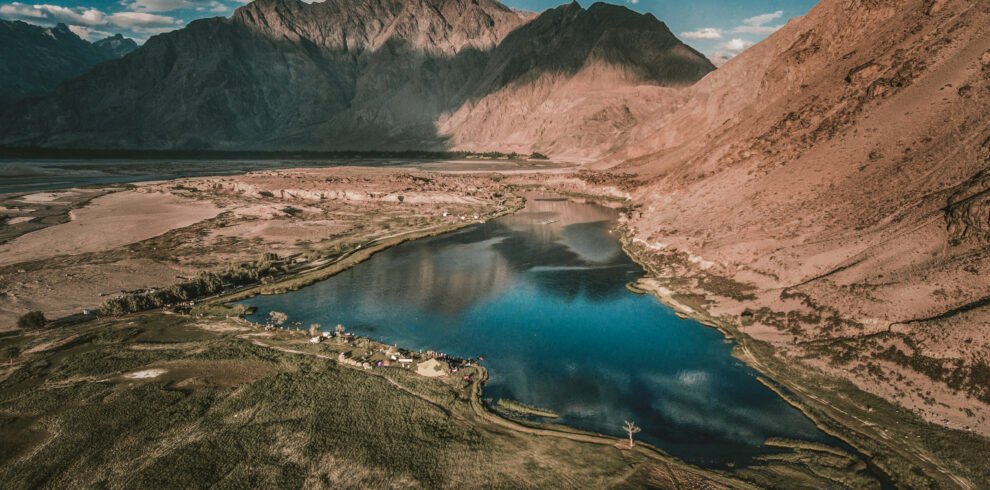
The story is in the name. As a result, in the Balti language, “jarba” means blind and “zho” means lake. In fact, the lake earned it honestly: it has no visible stream flowing in and none flowing out. It sits between two great rivers, the Indus on one side and the Shigar on the other. It is fed quietly, by seepage, so its level rises and falls almost mysteriously. Standing on its shore, watching a lake that seems to exist on its own terms, is a small lesson in how strange and subtle mountain hydrology can be.
The Freshest Trout in Baltistan
It is also a working lake. Also, Blind Lake serves as a water reservoir for the people of the Shigar Valley. A small government-supported fish farm raises trout in its waters. These means visitors can fish and eat some of the freshest trout in Baltistan. The lake is ringed by a grassy, stony shore that is ideal for picnics and camping, and in summer boats drift across water so clear you can see the bottom near the edges. In winter the whole surface freezes into a vast natural ice rink where locals skate and play.
And the setting is unbeatable. If you are asking where is Blind Lake in Pakistan, picture this: you drive out of Skardu past the dunes of the Sarfaranga Cold Desert, the highest cold desert in the world, and there, between sand and river, lies the lake. Also, it sits on the historic route toward the K2 region. This gives even a short stop a sense of being on the edge of the great Karakoram. Few lakes in Pakistan combine water, desert, and 8,000-metre mountain country in a single view.
History of Blind Lake
Blind Lake has no recorded founding date and no ancient monument on its shore. Also, its history is the natural and human history of the Shigar Valley around it. The valley was for centuries part of the old Baltistan region, a Tibetan-cultural world of small kingdoms. Shigar town, a short drive beyond the lake, was the seat of local rulers whose restored palace, Shigar Fort, still stands. The lake itself was long known to local herders and farmers simply as Jarba Tso, the blind lake, a landmark on the route between Skardu and Shigar.
The name reflects generations of observation. Also, local people noticed what modern geography confirms: the lake, about 1.4 kilometres long and 260 metres wide, has no inlet channel and no outlet stream. In fact, fed by seepage connected to the great rivers that flank it, the Indus and the Shigar, it became a natural reservoir, and in modern times it has been formally used as a water reservoir for the residents of the Shigar Valley. The small fish farm on its shore is a recent development, established with government support to raise trout and to give the lake a role in the valley’s food and tourism economy.
In the last decade, Blind Lake has moved from a local secret to a recognised stop on the Baltistan tourist circuit. Also, its rise has followed the growth of tourism in Skardu and Shigar, the restoration of Shigar Fort as a heritage hotel. The fame of the neighbouring Sarfaranga Cold Desert, whose annual jeep rally has put the whole area on Pakistan’s adventure map. The lake now has parking, a small entrance fee, food stalls, and toilet facilities, modest infrastructure that has made it accessible without spoiling its calm.
Top Things to Do in Blind Lake
Boating on the Still Water
Boats are available at the lake in summer. Also, a slow ride across the calm water is the classic Blind Lake experience. The water is so still on windless mornings that the boat seems to float on glass, with the mountains reflected perfectly below you. Rides are short and inexpensive, run by local operators. Go early in the day for the smoothest water and the best light.
Trout Fishing
The lake is known for trout, raised in the small fish farm on its shore, and fishing is one of the most popular activities here. Also, you can fish from the shore or arrange it through local operators, and several food stalls near the lake will cook your catch fresh, a memorable Baltistan meal. If you are new to fishing, ask the locals for guidance on spots and technique. They know the lake’s moods.
Camping Under the Stars
The shore beside Blind Lake is a lovely natural campsite. Also, spending a night here, with a barbecue and a bonfire as the sun sets behind the mountains, is a favourite of Pakistani travellers. The night sky is exceptionally clear, and even faint stars are visible to the naked eye. Pack warm layers even in summer, check the weather forecast since mountain weather changes fast, and keep your camp clean.
Swimming
In summer, swimming in the lake’s clear freshwater is a pleasure many visitors enjoy. Parts of the lake are shallow near the shore. Other areas drop off, so swim only where you are comfortable and never alone. The water is cold even in July, so keep swims short. Wear footwear for the stony shore.
Photography
Blind Lake is a photographer’s dream: the still reflections, the contrast of blue water against the pale dunes of Sarfaranga. Also, the ring of Karakoram peaks. Sunrise and sunset give the best colour, and the winter freeze creates a completely different, monochrome landscape. A walk around the accessible parts of the shore reveals constantly changing angles.
Winter on the Frozen Lake
When the lake freezes solid in winter, it becomes a natural playground. Locals and adventurous visitors skate, play ice games, and even ride bikes across the ice. If you visit in deep winter, confirm the ice is thick enough with locals before venturing out, wear warm clothing in layers, and enjoy one of the most unusual winter experiences in Pakistan.
Famous Places In and Around Blind Lake
- Sarfaranga Cold Desert – The world’s highest cold desert, with vast dunes right beside the lake, at around 2,300 m.
- Shigar Fort – The restored 17th-century palace of Shigar’s rulers, now a heritage hotel, a short drive beyond the lake.
- Amburiq Mosque – One of Baltistan’s oldest mosques, a beautiful wooden architectural monument in Shigar.
- Shangrila (Lower Kachura) Lake – The famous resort lake back toward Skardu, easy to combine in one day.
- Upper Kachura Lake – A pristine, deep lake reached on foot, for the more adventurous.
- Skardu City – The gateway town with the Kharpocho Fort, Buddha Rock, and Satpara Lake.
How to Reach Blind Lake
The route to Blind Lake runs through Skardu. From Islamabad, Skardu is reached by the roughly one-hour flight to Skardu Airport, the fastest option, though flights are weather-dependent, or by the long road journey of around 640 kilometres and 18 to 22 hours, usually split over two days. Also, From Lahore, the road distance to Skardu is around 900 kilometres or more, so most travellers go via Islamabad. From Karachi, the practical choice is to fly to Islamabad and onward to Skardu, or to take a multi-day road trip north.
The nearest airport is Skardu Airport, with daily flights from Islamabad in good weather. Also, From Skardu city, Blind Lake lies on the road to Shigar, around 30 to 45 kilometres away, roughly a 30 to 45-minute drive. The route crosses the edge of the Sarfaranga Cold Desert, one of the most scenic short drives in Baltistan. Vehicles can get close to the lake.. Still, the final approach may involve a short walk from the parking area to the best parts of the shore, around 20 to 30 minutes on some routes,
Road conditions on the Skardu-Shigar road are fair in the tourist season, though some stretches are unpaved and rocky. In winter the road can be difficult or closed after heavy snow. Transport options include hiring a 4×4 jeep in Skardu, which is the most common choice and handles the rougher patches easily, private cars, and tour vans arranged through hotels and operators. There is no public transport directly to the lake. A hired vehicle is the practical option. If you are wondering how to reach Blind Lake on a budget, shared jeeps to Shigar can drop you near the turnoff, but confirm the return arrangement in advance.
Route Details
- Travel from Islamabad to Skardu by air (about 1 hour) or by road (18-22 hours).
- From Skardu city, take the Shigar road east out of town.
- Drive 30-45 km (30-45 minutes) across the edge of the Sarfaranga Cold Desert.
- Follow signs to Blind Lake (Jarba Tso); park at the designated parking area and pay the small entrance fee.
- Walk the short distance to the lakeshore; boats, food stalls, and the fish farm are near the main access point.
Where to Stay in Blind Lake
Most visitors stay in Skardu and visit Blind Lake as a half-day or full-day trip, which is the easiest pattern. Skardu has the widest range of accommodation in Baltistan: luxury resorts and high-end hotels, including heritage properties, mid-range hotels throughout the city, and budget guesthouses and hostels. Staying in Skardu also positions you for Shangrila Lake, Upper Kachura, and Deosai.
For a closer stay, Shigar town, beyond the lake, has guesthouses and the famous heritage hotel in Shigar Fort, plus smaller hotels that have opened with the valley’s tourism growth. Also, camping at the lake itself is popular in summer. Bring your own tent and gear, or arrange it through a Skardu tour operator. There are no hotels right at the lakeshore, so do not expect to book a room with a lake view. In the June to September high season, book Skardu and Shigar accommodation in advance.
Where to Eat: Local Foods of Blind Lake
The signature meal at Blind Lake is fresh trout, caught from the lake and cooked at the food stalls near the shore, often fried simply and served with bread and tea. It does not get fresher than this. The stalls also sell drinks, snacks, pakoras, and barbecue items, enough for a picnic-style lunch. Prices are modest, in line with tourist spots in Baltistan.
For fuller meals, Skardu and Shigar offer Balti cuisine: wheat flatbreads, barley and potato dishes, meat curries. Also, the region’s famous dried apricots, which appear in both food and drink. In fact, Skardu’s restaurants serve Pakistani, Chinese, and continental food alongside local dishes. Shigar has a growing number of tourist restaurants. A simple local meal is budget-friendly. Carry drinking water and snacks for the lakeside, and note that the stalls near the lake are seasonal, operating mainly from late spring to autumn.
Weather in Blind Lake
Blind Lake sits at around 2,232 metres in a rain-shadow desert landscape. Also, its climate is dry with big differences between day and night. Summer days are warm and pleasant, with temperatures in the low to mid-20s Celsius, but evenings cool down sharply and nights can be chilly even in July. In fact, this is the comfortable season for boating, swimming, and camping. In addition, autumn brings crisp air and clear skies, and by late October the cold is settling in. Winter is harsh: the lake freezes solid, nights drop far below freezing. The surrounding desert sees winter lows that can plunge toward -17°C or lower.
Spring is a shoulder season of melting ice and returning visitors. Rain is rare at any time. Most precipitation comes as winter snow.
| Season | Temperature Range | Conditions |
|---|---|---|
| Winter (Dec-Feb) | Around -15°C to 5°C | Lake frozen solid; road access difficult; few facilities open |
| Spring (Mar-May) | Around 5°C to 20°C | Ice melting; quiet season; road improving |
| Summer (Jun-Aug) | Around 12°C to 26°C | Best season; boating, fishing, camping all possible |
| Autumn (Sep-Nov) | Around 0°C to 18°C | Clear skies; rally season in October; cold nights |
Language and Culture of Blind Lake
The Shigar Valley speaks Balti, the Tibetic language of Baltistan. Also, you will hear it in the villages around the lake and from the stallholders and boatmen. In fact, urdu is widely understood, and English is spoken by guides and hotel staff. The people are predominantly Muslim and known across Pakistan for their hospitality to travellers.
Cultural norms are conservative. Dress modestly, especially when visiting nearby villages and the historic mosque at Shigar. Ask permission before photographing people. The lake is a community water resource, so keep it clean: do not litter, do not wash vehicles or clothes in the lake, and use the toilet facilities provided. Respect the fish farm’s rules if you fish. A polite greeting and a willingness to drink the offered tea will make every interaction warmer.
Shopping in Blind Lake
Shopping at the lake is limited to snacks, drinks, and small souvenirs at the seasonal stalls. Also, For real shopping, head to Skardu’s bazaar, one of the best markets in the north for dried apricots, apricot oil, mulberries, walnuts, and almonds, traditional Balti caps and woollen shawls, woodwork, and gemstones. In fact, Shigar town has small shops selling local produce and handicrafts.
There are no shopping malls at or near Blind Lake, and travellers should not expect any. Also, the nearest proper markets are in Skardu. Dried apricots from the Shigar Valley are the classic edible souvenir. Bargain politely in the bazaar, and buy fruit and nuts from reputable shops where you can taste before you buy.
Local Events and Festivals
The big event on Blind Lake’s calendar is the Sarfaranga Cold Desert Jeep Rally, held on the dunes right beside the lake. Run by the Gilgit-Baltistan tourism department, the rally has been held every year since 2017, usually over three days in October. Also, it draws 80 to 100 jeep drivers and bikers from across Pakistan and beyond to race across the desert track, alongside freestyle polo matches, horse events, traditional music, food stalls, and local handicrafts.
Blind Lake itself is part of the festival: traditional zakh (inflated-skin raft) competitions have been held on its waters during rally week, a spectacular sight. If you visit in early October, you can combine the lake’s calm with the desert’s carnival atmosphere, but book Skardu accommodation well in advance, since the rally fills the town. Exact dates are announced by the tourism department each year, so check before planning around it.
Travel Tips for Blind Lake
Packing Essentials
Pack for sun and cold in the same day: sunscreen, sunglasses. Also, a hat for the fierce high-altitude sun, plus a warm jacket and layers for the evening chill. Comfortable walking shoes handle the stony shore; swimmers should bring footwear for the rocks. If camping, bring a tent, a warm sleeping bag, and cooking gear or arrange meals through an operator. A camera is essential; a zoom lens captures the reflections beautifully.
Safety Tips
The lake is generally safe, but water demands respect. Swim only in the shallow areas near the shore, never alone, and keep children supervised at all times. The shore is uneven rock in places, so watch your footing, especially on the longer perimeter walk. In winter, never walk on the ice without confirmation from locals that it is thick enough. Drink only bottled or boiled water, and be cautious driving the desert-edge road after dark.
Money & Connectivity
Carry cash in Pakistani rupees. The stalls at the lake do not take cards, and there are no ATMs at the lake itself. Skardu city has ATMs and banks, so withdraw before heading out. Mobile coverage at the lake is reasonable since it is close to Skardu: SCO (Scom), Jazz. Telenor all have signal in the area, though data speeds vary. Coverage is best with the local SCO network.
Best Time to Visit Blind Lake
Summer (June to September)
The prime season. Also, warm days, thawed tracks, all activities running: boating, fishing, swimming, and camping. The lake is at its most vibrant, the stalls are open. The reflections are at their best on calm mornings. This is also the busiest time, so arrive early in the day for the quietest experience.
Autumn (October)
Crisp, clear, and golden, with the added excitement of the Sarfaranga Cold Desert Jeep Rally, usually held in early October. Nights are cold, so camping needs proper gear. Also, the combination of the lake and the rally makes this a special window.
Spring (April to May)
A quiet shoulder season. Also, the ice is gone or going, the desert blooms briefly, and you may have the lake almost to yourself. Some facilities may still be closed early in the season, so carry your own supplies.
Winter (November to March)
The lake freezes into a vast ice sheet, beautiful and eerie. Access is difficult and most facilities are closed, but for the hardy it offers ice skating, photography of a monochrome wonderland, and complete solitude. Check road conditions before attempting.
Final Thoughts
Blind Lake is the kind of place that reminds you why you travel. It is not the biggest lake in Baltistan. The most famous, but it may be the most quietly magical: a sheet of still water with no visible source, lying between a cold desert and two great rivers, on the road to K2. Whether you come for the trout, the camping, the photography, or simply to sit on the shore and watch the mountains double themselves, it gives back more than it asks.
Combine it with the Sarfaranga dunes, Shigar Fort. The Amburiq Mosque for a perfect Shigar Valley day, and time it for the October rally if you want the desert at its liveliest. For more northern journeys, explore the Explore Pakistan collection and the Hunza Valley guide. Also, some lakes you visit; Blind Lake is one you remember.
FAQs
Where is Blind Lake located?
Blind Lake, locally called Jarba Tso or Jarba Zhou, is in Shigar District, Gilgit-Baltistan, on the Skardu to Shigar road, around 30-45 km from Skardu, beside the Sarfaranga Cold Desert.
Why is it called Blind Lake?
In the Balti language “jarba” means blind and “zho” means lake. It earned the name because it has no visible inlet or outlet. Also, it is fed quietly by seepage connected to the Indus and Shigar rivers.
What is the best time to visit Blind Lake?
June to September is best for boating, fishing, swimming, and camping. Also, October is excellent too, coinciding with the Sarfaranga Cold Desert Jeep Rally. In fact, the lake freezes in winter.
How do I reach Blind Lake from Skardu?
Hire a jeep or car in Skardu and drive 30-45 minutes along the Shigar road across the Sarfaranga Cold Desert. Also, park at the lake’s parking area, pay the small entrance fee, and walk to the shore.
Can you fish at Blind Lake?
Yes. Also, the lake is known for trout, raised in a small government-supported fish farm, and local stalls will cook your catch fresh.
Is Blind Lake good for families?
Yes. Also, it is an easy day trip from Skardu with parking, food stalls, toilets, boating, and picnic spots, suitable for all ages.
Where can I stay near Blind Lake?
Most visitors stay in Skardu’s hotels and guesthouses, or in Shigar town. Also, camping at the lakeshore is popular in summer.
What is the Sarfaranga Cold Desert Jeep Rally?
An annual three-day motorsport and cultural festival held since 2017 on the Sarfaranga dunes beside the lake, usually in October, with jeep and bike races, polo, music, and food, organised by the Gilgit-Baltistan tourism department.