Quick Facts
- Location: Shounter Valley, a sub-valley of Neelum Valley, Neelum District, Azad Jammu and Kashmir, Pakistan
- Altitude: Around 13,500 feet (about 4,100 metres) above sea level — widely reported as the highest lake in Azad Kashmir
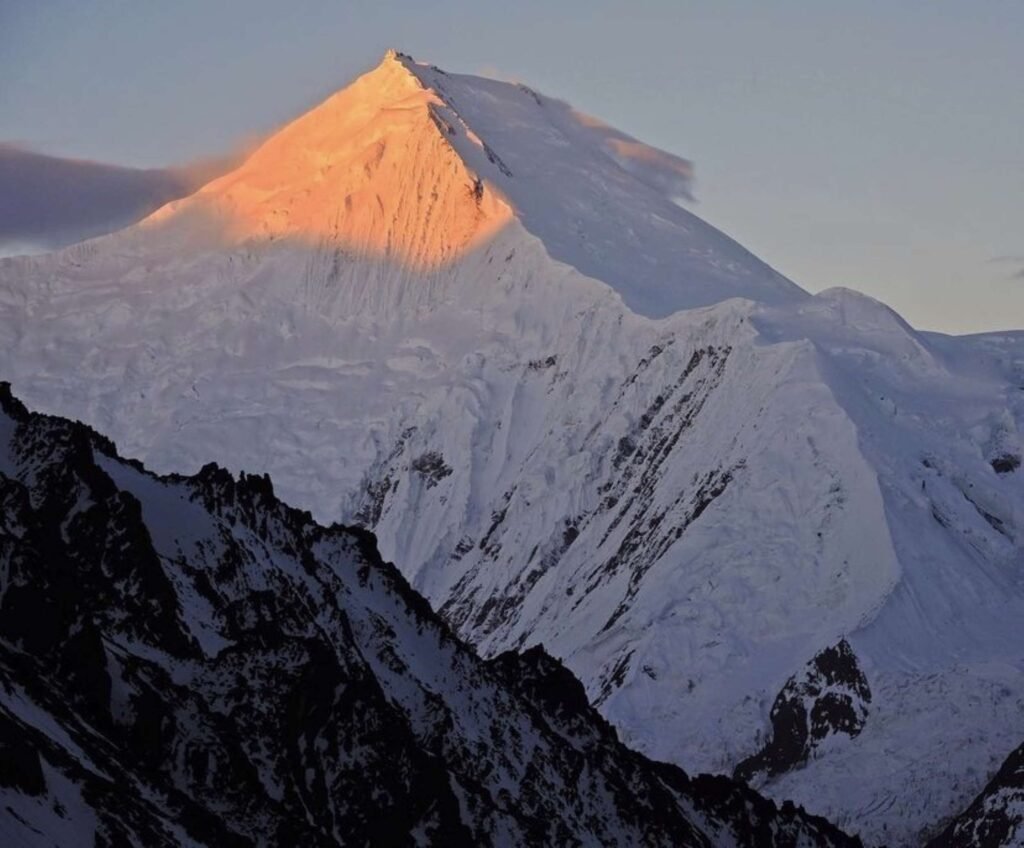
- Famous For: Its milky-white glacial water fed by the Chitta Katha Sar Glacier beneath Mount Hari Parbat; a sacred site in Hindu tradition, regarded as an abode of Lord Shiva
- Nearest City: Kel, the base town for the trek, roughly 155 km from Muzaffarabad
- Accessibility: A 20 km jeep track from Kel to Domail Bala, then a 5 to 18 km hike (about 4 to 8 hours) depending on the route taken
- Known Landmarks: Mount Hari Parbat, Hari Parbat Waterfall, Dek-1 and Dek-2 camping stops, Shounter Lake on the way
- Best For: Serious trekkers, adventure lovers, photographers and nature seekers who want a lake that most travellers never reach
Why Visit Chitta Katha Lake
Chitta Katha Lake is not a place you simply visit — it is a place you earn. While thousands of tourists flock to Ratti Gali and Saif-ul-Malook every summer, only a determined few make it to this milky-white glacial lake sitting at around 13,500 feet in the Shounter Valley. That is exactly the point. If you are the kind of traveller who wants a story worth telling for the rest of your life, Chitta Katha deserves to be your next expedition.
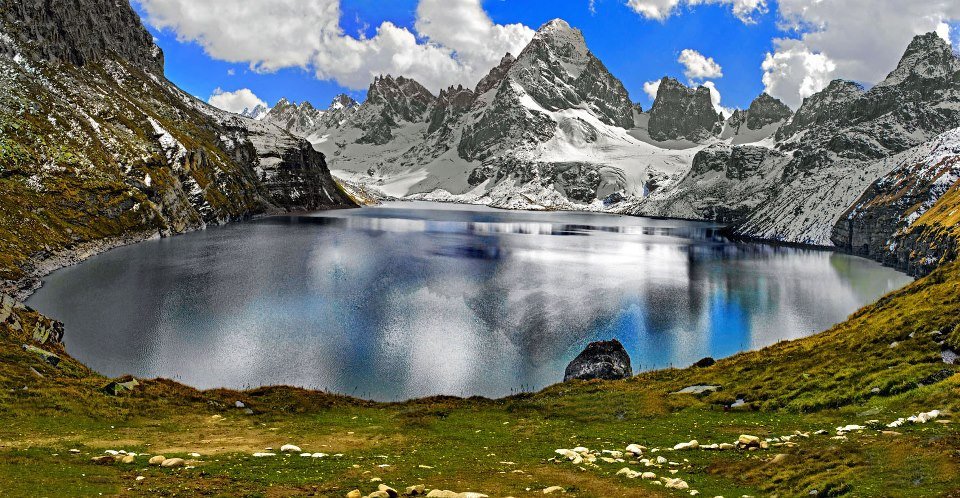
The first thing that strikes you about the lake is its colour. Unlike the deep blue of most Himalayan lakes, Chitta Katha’s water carries a milky white sheen, created by the fine glacial sediment — known as rock flour — ground out of the Chitta Katha Sar Glacier beneath Mount Hari Parbat. On a clear afternoon the water shifts between silver, pale turquoise and bright white, framed by snow-covered ridges that rise straight out of the cirque. Trekkers who have seen both Ratti Gali and Chitta Katha often say the former is prettier in photographs, but the latter feels grander and more sacred when you are standing on its shore.
Then there is the journey itself, which is half the reward. The 20 km jeep track from Kel to Domail Bala is a proper mountain adventure — rough, narrow and unforgettable — followed by a trek through meadows, waterfalls and nomad huts that climbs steadily for hours. By the time the lake appears below a snowy bowl, you have walked through one of the finest stretches of the Neelum Valley, and the silence up there is something you cannot buy. For photographers, the light between 5:00 pm and 6:30 pm turns the whole cirque golden, and for campers, a night under the stars at the lake is about as far from city noise as you can get in Azad Kashmir.
Finally, Chitta Katha is perfect for a very specific traveller: the one who has done the easy lakes and wants the real thing. Families with small children, casual tourists and anyone unfit for long hikes should honestly look elsewhere — the trek is demanding and the altitude is real. But if you are fit, properly equipped and hungry for a genuine Himalayan trekking experience within Pakistan, there are few places that reward effort as richly as this one. This chitta katha lake travel guide will help you plan every step of that journey.
History of Chitta Katha Lake
The name itself tells the first chapter of the lake’s story. In the local Pahari language, “Chitta” means white and “Katha” means a ravine or stream — so Chitta Katha is the “White Stream,” named for the milky glacial torrent that flows from Mount Hari Parbat into the lake. The lake sits beneath the Chitta Katha Sar Glacier, and for centuries it has been one of those places known to shepherds, nomads and local families long before it appeared on any tourist map.
The lake carries deep religious significance in Hindu tradition. Local belief holds the lake and Mount Hari Parbat as an abode of Lord Shiva, linked in regional folklore to the reverence for Mount Kailash. For Hindu pilgrims and history-minded travellers alike, this gives Chitta Katha a spiritual dimension that sets it apart from the purely scenic lakes of northern Pakistan. The mountain and the lake are spoken of together in local legends, and the milky water is said to reflect the purity of the snow from which it melts.
The wider Neelum Valley, of which Shounter Valley is a sub-valley, has a long recorded history as a mountain corridor. For centuries, these valleys sat along remote trade and grazing routes used by herders moving between the Vale of Kashmir, Gilgit-Baltistan and the Astore Valley. The British era brought the first systematic surveys of the region’s mountains and glaciers in the late nineteenth and early twentieth centuries, but the valley remained remote and largely unknown to mainstream travellers for decades.
Chitta Katha became known to Pakistani trekkers and adventure tourists only in recent years, as improved road access to Kel and the rise of trekking culture in the country pushed explorers deeper into Shounter Valley. The lake’s reputation as the highest lake in Azad Kashmir — at around 13,500 feet — and the growing body of trek accounts from the 2010s and 2020s turned it into a badge of honour among serious hikers. Today it sits firmly on the bucket list of Pakistan’s trekking community, though its difficulty keeps visitor numbers small, which is precisely what preserves its wild character.
Top Things to Do in Chitta Katha Lake
Trek from Domail Bala to the Lake
The trek is the main event. Two main routes are used by trekkers: the Domail Bala village to Dek-1 and Dek-2 route, and the Houz village to Dek-1 and Dek-2 route, both converging on the Hari Parbat Waterfall and the lake. Expect a moderately to highly challenging hike of roughly 5 to 18 km depending on how you measure it, taking anywhere from 4 to 8 hours one way. The trail climbs from about 2,900 metres at Domail Bala to around 4,100 metres at the lake, so pacing and acclimatisation matter. Local guides strongly recommend starting early in the morning and hiring a porter or guide from Kel or Domail Bala, since the trail crosses narrow ridges, a steep descent into a bowl-shaped snowy valley, and sections that can be slippery.
Camp at Dek-1 and Dek-2
Most trekkers split the journey with an overnight stop at Dek-1 or Dek-2, the traditional camping meadows along the route. Camping here is part of the experience: the grassy slopes on either side of the Chitta Katha Nullah, the sound of the stream, and nomad huts where families tend their cattle in summer create a setting that no hotel can match. A three-day itinerary is the standard recommendation — Kel to Domail Bala and Dek-1 on day one, Dek-1 to the lake on day two, and the return on day three — which gives your body time to adjust to the altitude.
Photograph the Lake at Golden Hour
Experienced trekkers consistently say the best photography at Chitta Katha is between 5:00 pm and 6:30 pm, when the low sun turns the milky water and the surrounding snow ridges golden. Plan to arrive at the lake by late afternoon and set up camp before the light does its work. The reflections of Hari Parbat in the still water, the glacial sediment patterns and the deep cirque make for some of the most striking high-altitude shots in Azad Kashmir.
Visit the Hari Parbat Waterfall
On the way up, the Hari Parbat Waterfall is a natural rest stop where many trekkers pause for an hour before the final push to the lake. The falls cascade down the mountain’s flank and add to the valley’s soundtrack of falling water. It is also a good landmark to gauge your progress — once you are past the waterfall, the lake is not far.
Stop at Shounter Lake on the Way
About 4 km from Domail Bala lies Shounter Lake, another glacier-fed lake sitting at roughly 3,100 metres. Trekkers arriving at Domail Bala around midday often visit Shounter Lake and its nearby waterfall in the afternoon before starting the Chitta Katha trek. It makes a fine warm-up and a beautiful lake in its own right.
Famous Places In and Around Chitta Katha Lake
- Kel: The base town for the trek, with guesthouses, the jeep stand and the famous Arang Kel chairlift nearby
- Arang Kel: A picturesque village above Kel, often visited on the return journey for sunset views
- Shounter Lake: Glacier-fed lake near Domail Bala, reachable by jeep track from Kel
- Shounter Pass: The high pass connecting Shounter Valley to Astore Valley in Gilgit-Baltistan
- Taobat: The last village of Neelum Valley, a full-day drive beyond Kel, known for its beauty
- Ratti Gali Lake: The famous blue lake of Neelum Valley, reached via Dowarian — the classic comparison point for Chitta Katha
- Muzaffarabad: The capital of Azad Kashmir and the gateway city on the drive up from Islamabad
How to Reach Chitta Katha Lake
Reaching Chitta Katha is a multi-stage journey: a long road trip to Kel, a rough 4×4 jeep ride to Domail Bala, and then a hard trek to the lake. Most travellers need at least three days for the full lake trip, plus the driving days on either end. The standard route starts in Islamabad, runs through Muzaffarabad and up the Neelum Valley to Kel, and continues by jeep into Shounter Valley.
From Islamabad, drive to Muzaffarabad (about 130 km, 3 to 4 hours), then continue up Neelum Valley to Kel (about 155 km, 6 to 7 hours on winding mountain roads). From Lahore, the practical route is Lahore to Islamabad by motorway (around 375 km) and then the same Neelum Valley route — budget a full day to reach Kel. From Karachi, fly to Islamabad and then drive; the road journey alone from Karachi is far too long for a trip like this. The nearest airport is Islamabad International Airport. There are no airports or rail links in Azad Kashmir — Rawalpindi is the nearest rail hub.
The road from Muzaffarabad to Kel is long and often slow, with mountain sections that demand a confident driver and a roadworthy vehicle. Public buses and vans run to Kel from Muzaffarabad, and private vehicles are the most comfortable option. From Kel, hire a 4×4 jeep for the 20 km track to Domail Bala (about 2 to 3 hours) — this track is rough, narrow and not suitable for regular cars. The track and the trail above Domail Bala are closed by snow for most of the year; the reliable window is July to September, with late July to early September the very best.
Route Details
- Day 1 — Islamabad to Kel: Depart Islamabad early in the morning. Drive via Muzaffarabad (3 to 4 hours), then up Neelum Valley through Athmuqam to Kel (6 to 7 hours). Overnight in a guesthouse in Kel and arrange your jeep, guide and porters for the next morning.
- Day 2 — Kel to Domail Bala, then trek to Dek-1: Take a 4×4 jeep from Kel to Domail Bala in Shounter Valley (20 km, 2 to 3 hours). Optionally visit Shounter Lake, 4 km further. Hire a guide and porter at Domail Bala or Houz village, then start the trek in the early afternoon and reach Dek-1 before evening. Camp beside the Chitta Katha Nullah.
- Day 3 — Dek-1 to Chitta Katha Lake: Set off by 9:00 am. Rest briefly at Dek-2, continue past the Hari Parbat Waterfall, and reach the lake by mid-to-late afternoon (4 to 8 hours of hiking). Set up camp and enjoy the golden-hour photography. Camp overnight at the lake.
- Day 4 — Return: Leave the lake by 9:00 am and trek back down to Domail Bala (around 4 hours), jeep back to Kel, and onward to Muzaffarabad or Islamabad depending on time. Many trekkers stop at Arang Kel for the sunset on the way back.
Where to Stay in Chitta Katha Lake
Be clear about one thing from the start: there is no hotel, guesthouse or commercial lodging anywhere near Chitta Katha Lake. Once you leave Kel, camping is the only option — at Dek-1, Dek-2 and beside the lake itself. This is not a disadvantage; camping under the stars at 13,500 feet, with the glacier-fed lake a few steps from your tent, is the whole point of the trip.
You will need a proper tent, a sleeping bag rated for sub-zero temperatures, an insulated sleeping mat and a portable stove or arranged meal support from your guide. Nomad families keep simple stone huts along the route where they shelter their cattle — these are not guest facilities, though in bad weather local herders may offer basic shelter. Book your camping gear in Islamabad or Lahore before you leave, because nothing is available for hire at Domail Bala beyond guide and porter services.
In Kel, a range of budget to mid-range hotels and guesthouses line the bazaar area, offering rooms with hot water, heating and simple meals — perfectly adequate for the nights before and after the trek. Arang Kel, reached by chairlift and a short walk above Kel, has guesthouses with superb views and is a favourite overnight stop on the return. In Muzaffarabad, mid-range hotels are easy to find for the night before the long drive into the valley. Because Kel is the last real town, do your final shopping for snacks, batteries and medicines there.
Where to Eat: Local Foods of Chitta Katha Lake
There are no restaurants or food stalls on the trek, so your meals at the lake are whatever you and your guide carry up — which makes the dhabas and eateries of Kel and Muzaffarabad part of the experience. Plan to carry packed lunches, energy bars, dried fruit and plenty of drinking water for the trail, and let your guide arrange the evening camp meals.
In Kel, the bazaar dhabas serve the honest mountain food of Neelum Valley: daal, mixed sabzi, chicken and mutton curries with hot tandoori roti, makai ki roti (corn flatbread) in season, and endless cups of doodh patti chai. Neelum Valley’s streams are famous for trout, and fresh trout is a highlight whenever it is available in the valley’s eateries. Breakfast typically means omelettes, parathas and chai. Meals are hearty and budget-friendly — a full dhaba meal in Kel costs far less than city prices.
In Muzaffarabad, the Kashmiri food culture is richer: try the local Kashmiri chai (pink tea), rogan josh-style meat dishes, and the walnut and honey sweets sold in the old bazaar. The city’s restaurants also serve standard Pakistani fare — karahi, biryani, barbecue — for travellers who want familiar comfort before the mountain leg. Carry dry fruit and biscuits from Kel for the trek; you will burn serious calories at altitude.
Weather in Chitta Katha Lake
At around 4,100 metres, Chitta Katha’s weather is a world apart from the valleys below. The lake is frozen and buried in snow for most of the year — roughly eight months — and is only genuinely accessible for a short summer window. Even in summer, the weather can turn quickly: sunshine at noon can become sleet by evening, and temperatures drop sharply after sunset. Always check conditions locally in Kel before setting out, and never start the trek in bad weather.
| Season | Temperature Range | Conditions |
|---|---|---|
| Winter (Nov–Mar) | Around -15°C to -5°C | Lake frozen solid, deep snow, trek impossible, valley villages quiet |
| Spring (Apr–Jun) | Around -5°C to 10°C | Snow melting, trails dangerous and slippery, not recommended for trekking |
| Summer (Jul–Sep) | Around 5°C to 15°C in daytime | Best window; lake thawed, meadows blooming, occasional rain and hail |
| Autumn (Oct) | Around -5°C to 8°C | Short window, first snows possible, nights very cold, only for experienced trekkers |
The reliable trekking season is roughly July 20 to September 10, with July to September the commonly cited window. Late July brings wildflowers along the route; August is the most stable month; early September can be beautiful but colder. After mid-September, snow can close the trail with little warning.
Language and Culture of Chitta Katha Lake
The Neelum Valley is home to a mix of languages and communities. Hindko, Kashmiri and Gojri are spoken in different parts of the valley, and most people in the Kel area also understand Urdu, which is what you will use with your guide, jeep driver and guesthouse staff. The local population is known for its hospitality toward travellers — mountain communities here have been hosting trekkers for years and are generally warm, helpful and proud of their valley.
Culturally, the region is conservative and traditional, so dress modestly — long trousers and layers are appropriate for both men and women, which is easy enough when the weather demands it anyway. Always ask before photographing people, especially women and the nomad families along the trek. Respect the sacred character of the lake: local Hindu tradition regards it as holy, and all visitors are expected to keep the water and the shoreline clean. Carry all your rubbish back down — the “leave no trace” principle is not optional in a place this pristine. A short chat with your guide about local customs costs nothing and is always appreciated.
Shopping in Chitta Katha Lake
There is no shopping at the lake or on the trek — whatever you need must be bought in Kel or Muzaffarabad before you set out. That said, the bazaars on the way up are worth a browse. Kel’s bazaar sells dry fruits, walnuts, honey and simple trekking supplies like batteries, rain ponchos and snacks — useful last-minute additions to your pack.
Muzaffarabad’s bazaars offer the better souvenir hunting: Kashmiri shawls, embroidered fabrics, walnut-wood carvings, papier-mâché items and local honey. Dry fruits — walnuts, almonds and apricots — are the classic take-home from the region and travel well. Prices are negotiable, as in most Pakistani bazaars, and bargaining politely is expected. Buy your camping fuel, first-aid supplies and any medicines in Muzaffarabad or Islamabad; beyond Kel there are no pharmacies.
Travel Tips for Chitta Katha Lake
Packing Essentials
This is a serious high-altitude trek, so pack like one. Non-negotiable items: a four-season or sturdy three-season tent, a sleeping bag rated to at least -10°C, an insulated sleeping mat, broken-in trekking boots with ankle support, warm layered clothing including a waterproof outer shell, a down jacket, gloves, a woollen cap and extra socks. Add a headlamp with spare batteries, sunglasses and strong sunscreen (the sun at 4,100 metres is fierce), a basic first-aid kit with altitude-sickness medication after consulting your doctor, water purification tablets, and enough high-energy snacks. A power bank is useful since there is no electricity beyond Kel.
Safety Tips
Always trek with a local guide — the route has sections where a wrong turn or a slip can be dangerous, and guides know the weather signs. Start the trek early in the day and never attempt the trail in rain, fog or high wind. Altitude sickness is a genuine risk: ascend slowly, stay hydrated, and descend immediately if you develop a severe headache, nausea or dizziness. Register your plans with your hotel in Kel or with local authorities where required, and inform someone of your expected return. Foreign visitors should check whether a No Objection Certificate (NOC) is required for Neelum Valley travel, as rules for the area near the Line of Control can change.
Money & Connectivity
Carry all the cash you will need from Muzaffarabad or Islamabad — there are no ATMs beyond the main towns, and none at all on the trek. Budget for jeep hire, guide and porter fees, guesthouses in Kel, food and emergency reserves. Mobile signals are weak to non-existent beyond Kel; some networks have limited coverage in parts of Azad Kashmir, but do not count on it. Download offline maps before you leave Islamabad, and treat the trek as fully disconnected — tell your family in advance that you will be out of contact for a few days.
Best Time to Visit Chitta Katha Lake
Summer (July to September) — The Only Real Window
This is when the lake is thawed, the meadows along the route are green and blooming, and the trek is actually possible. Late July to early September is the sweet spot: the trail is clear of snow, the days are long, and the golden-hour light on the milky water is at its best. August is the most reliable month weather-wise. Book your jeep and guide in Kel a day ahead, as this is the peak — such as it is — trekking season.
Late Autumn (October)
Possible only in early October for very experienced, well-equipped trekkers. The crowds are gone and the air is crystal clear, but nights drop well below freezing and the first heavy snow can arrive without warning. Most guides will not take groups up this late in the season.
Winter (November to March) — Inaccessible
The lake is frozen and buried in snow for roughly eight months of the year. Do not attempt the trek in winter; it is dangerous and no support is available.
Spring (April to June) — Not Recommended
Melting snow makes the trails treacherous and the lake is still partially frozen. Wait for July. If you visit Neelum Valley in spring, enjoy Kel, Arang Kel and Taobat instead — they are lovely at that time of year.
Final Thoughts
Chitta Katha Lake is one of those rare destinations that still demands something from you. It will not come to you — you have to drive the long road, ride the rough jeep track, and walk for hours at high altitude to earn your view. But that is precisely why it stays with you. The milky water under Hari Parbat, the silence of the cirque, the golden light at 5:30 in the evening — these are the moments that make the soreness in your legs feel like a fair price.
If you have been looking for your next real adventure in Pakistan, stop scrolling through the easy lakes and start training for this one. Travel in July to September, go with a local guide, respect the mountain, and carry your memories — and your rubbish — back down with you. For more inspiration across the north, browse our Explore Pakistan collection and our trekking guides like Malam Jabba before you set your dates.
FAQs
Where is Chitta Katha Lake located?
Chitta Katha Lake is in Shounter Valley, a sub-valley of Neelum Valley in Neelum District, Azad Jammu and Kashmir, Pakistan. It is reached via Kel and Domail Bala.
What is the height of Chitta Katha Lake?
The lake sits at around 13,500 feet (about 4,100 metres) above sea level, and is widely reported as the highest lake in Azad Kashmir.
How long is the trek to Chitta Katha Lake?
The jeep track from Kel to Domail Bala is 20 km (2 to 3 hours), followed by a trek of roughly 5 to 18 km taking 4 to 8 hours one way, depending on the route and your pace.
What is the best time to visit Chitta Katha Lake?
July to September is the reliable window, with late July to early September the very best. The lake is frozen and inaccessible for roughly eight months of the year.
Is Chitta Katha Lake trek difficult?
Yes, it is rated moderate to hard. It involves a long high-altitude hike with steep sections, an altitude gain of about 1,200 metres, and unpredictable weather. A local guide is strongly recommended.
Is Chitta Katha Lake safe for families?
It is best suited to fit, experienced trekkers rather than families with small children. The long hike, high altitude and lack of facilities make it unsuitable for casual visitors or elderly travellers.
Where can I stay near Chitta Katha Lake?
Camping is the only option near the lake — at Dek-1, Dek-2 or the lakeshore itself. Hotels and guesthouses are available in Kel, the base town, for the nights before and after the trek.
Why is the water of Chitta Katha Lake white?
The milky-white colour comes from fine glacial sediment (rock flour) carried into the lake by the Chitta Katha Sar Glacier beneath Mount Hari Parbat. “Chitta” means white and “Katha” means stream in the local language.