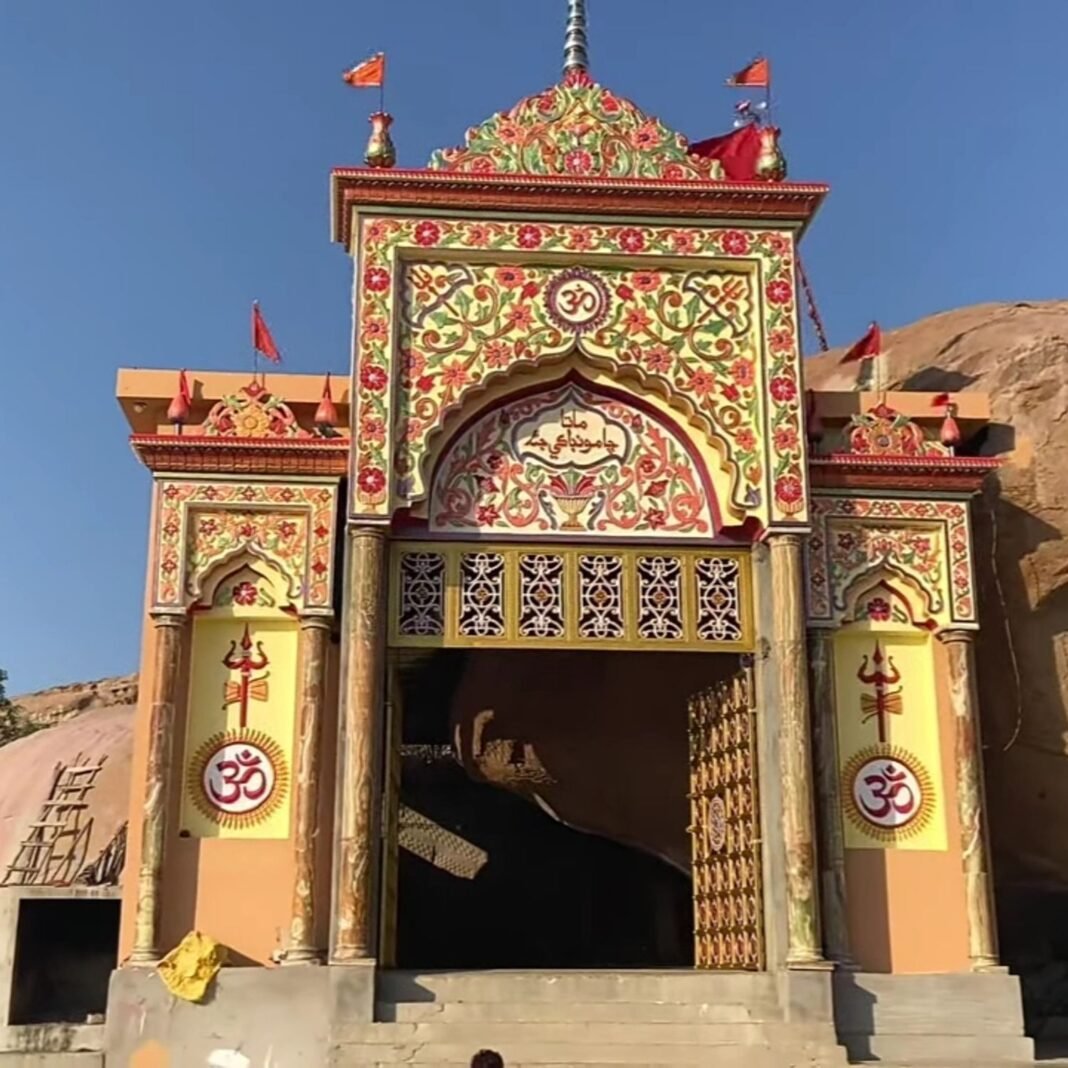
There is a hill in the Thar Desert made of granite so colourful and rare that miners blast it with dynamite — and on top of that hill stands a Hindu temple that up to 200,000 pilgrims climb to every Shivratri. The Churrio Jabal Durga Mata Temple, in Nagarparkar at the far southeastern edge of Sindh, is one of the most spiritually charged and visually striking heritage sites in Pakistan: a house of the goddess Durga set on multicoloured rock, wrapped in desert silence, a short distance from the Indian border. Whether you come as a pilgrim, a heritage lover, or simply a traveler hungry for the Pakistan that few people see, this Churrio Jabal Durga Mata Temple travel guide will show you why the journey through the Thar is worth it — and how to make it.
## Quick Facts
– **Location:** atop Churrio Hill near Nagarparkar town, Tharparkar District, Sindh, Pakistan (coordinates approximately 24°24′N 71°03′E), close to the Pakistan-India border
– **Altitude:** a low desert hill — the significance here is spiritual and geological, not elevation
– **Famous For:** the Durga Mata temple, the annual Shivratri pilgrimage (up to 200,000 visitors), immersion of cremated ashes in holy water, and the rare multicoloured granite of the hill
– **Nearest City:** Nagarparkar town (a short drive away); Mithi, the district capital, is about 129 kilometres to the west
– **Accessibility:** paved road to Nagarparkar, then a desert track to the hill; the final ascent to the temple is on foot
– **Known Landmarks:** the Durga Mata temple complex, the multicoloured granite hill itself, nearby Karoonjhar Mountains
– **Best For:** pilgrims, heritage and architecture lovers, photographers, cultural travelers, and anyone exploring the Thar Desert
## Why Visit Churrio Jabal Durga Mata Temple, Nagarparkar
Most travelers who reach Nagarparkar come for the Jain temples or the Karoonjhar Mountains — and then Churrio Jabal quietly steals the trip. There is nothing else in Pakistan quite like it: a living Hindu pilgrimage site set on a hill of swirling multicoloured granite, in a desert that turns impossibly green after the monsoon, at the very edge of the country. The temple is not a museum piece. It is prayed in daily, sung in during festivals, and wept in by families immersing the ashes of their loved ones. Visiting puts you inside a living tradition, not in front of a display case.
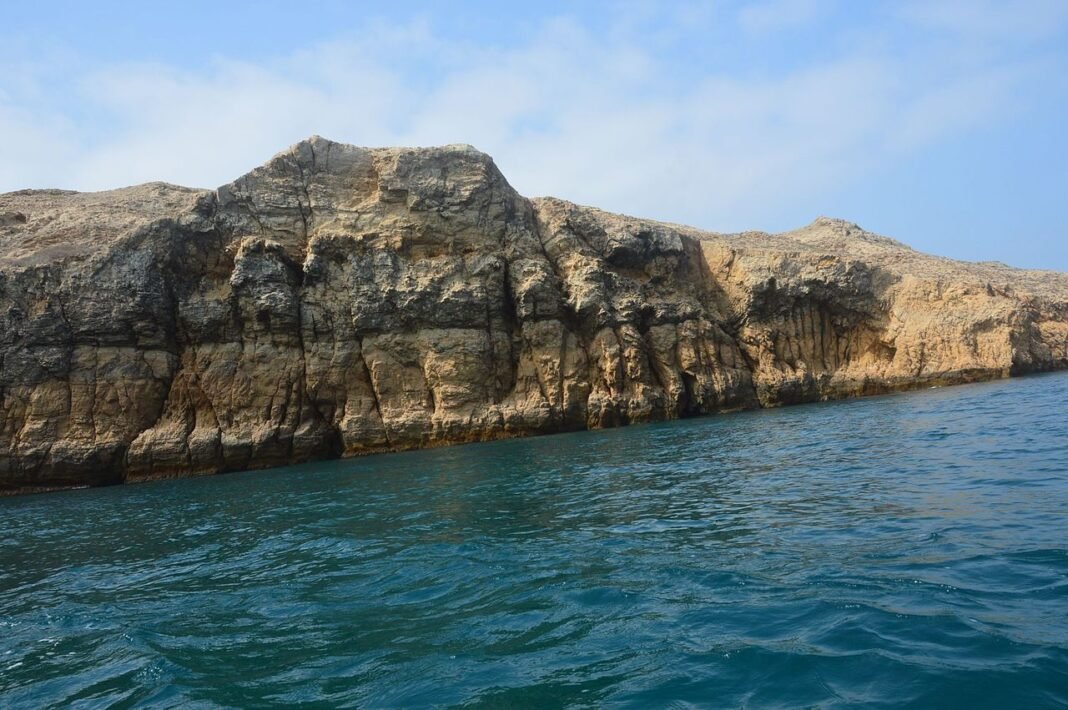
The setting does half the work. The Thar around Nagarparkar is not the empty-sand desert of imagination — it is thorn forest, rocky outcrops, and villages of round thatched huts, with the Karoonjhar range rising pink-grey on the horizon. Churrio Hill’s granite, unlike the grey granite across the border in Rajasthan, runs in colours that geologists and miners both prize, and the contrast of the temple’s structures against that stone, under a huge desert sky, is genuinely arresting at sunrise and sunset.
Then there is the human story, which is the real reason to come. The Thar is one of the few places in Pakistan where Hindu and Muslim communities have lived side by side for centuries, sharing wells, festivals, and a desert that does not care about anyone’s religion. The temple’s pilgrims come from across Sindh, Balochistan, Punjab, Khyber Pakhtunkhwa — and from Nepal and India — and the Shivratri gathering here is among the largest Hindu congregations in the country. To stand on that hill during the festival, or in its quiet on an ordinary winter morning, is to understand something essential about Sindh’s plural soul.
This destination is perfect for travelers who have done the north and want the other Pakistan: the desert, the borderlands, the deep history. It suits heritage enthusiasts, photographers, spiritual seekers of any faith, and families who want their children to see the country’s diversity firsthand. It is not a luxury trip and not a quick one — the road through the Thar is long — but it is the kind of journey people talk about for years.
## History of Churrio Jabal Durga Mata Temple, Nagarparkar
Let us be honest about what is and is not documented. The temple’s exact founding date is not established in the sources available — local legend, retold by temple guides, says a cow would mysteriously offer its milk at a Shiv Lingam on the hill, and the shrine grew from that miracle. What is certain is that the site has served the region’s Hindu community for generations as a temple of Durga — the goddess honoured as destroyer of evil, mother of the universe, and the power behind creation and preservation — and as the place where families bring the cremated ashes of their dead for immersion in the temple’s holy water, a rite second in sanctity for many Pakistani Hindus only to immersion in the Ganges.
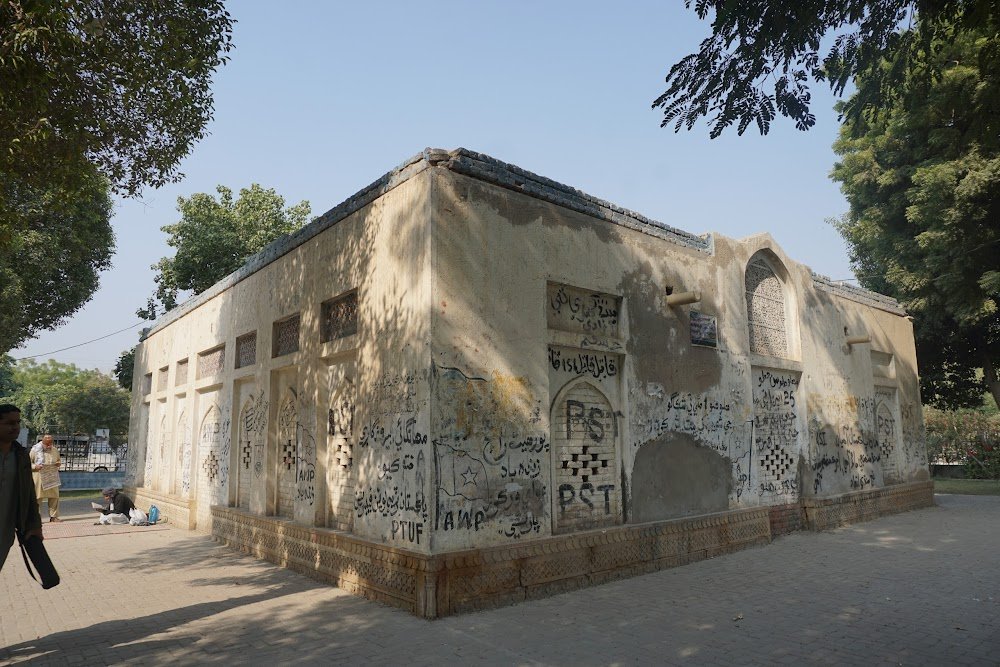
The land around it carries far older history. Nagarparkar sits at the base of the Karoonjhar Mountains, and the name “Parkar” itself is said to mean “to cross over” — because this whole area was once under the sea. The medieval centuries left the region’s most famous monuments: the Jain temples of Nagarparkar, built when a thriving Jain community lived here, their carved stone standing in the desert to this day. A surviving inscription dates the white marble Bhodesar Mosque, by the pond at the Karoonjhar foothills, to the year 880 AH (1505 CE), built under Sultan Mehmood Begra of Gujarat — a reminder that this borderland has always been a crossroads of faiths and empires. Local legend places the tale of Umar and Marvi — the Thar’s great love story of a 13th-century Soomro ruler and the village girl who defied him — at Marvi’s well in nearby Bhalwa village.
The modern threat to the temple is also history in the making, and it is well documented. The hill’s multicoloured granite is rare and expensive, and mining contractors — working under government leases — blast it with dynamite, sending vibrations through the ground the temple stands on. The Hindu community has protested repeatedly against the destruction; the digging has continued despite the opposition. Visiting respectfully, spending in the local economy, and telling the temple’s story accurately are small but real ways travelers can stand with the community trying to protect it.
## Top Things to Do in Churrio Jabal Durga Mata Temple, Nagarparkar
### Climb to the Temple at Sunrise
The ascent of Churrio Hill is the heart of the visit. Go early: the desert dawn paints the multicoloured granite in impossible shades, the air is cool, and you will likely share the path with morning pilgrims rather than crowds. Remove your shoes at the temple entrance, as custom requires, and take time inside — the inner shrine, the lamps, the quiet murmur of prayer. Whether or not you share the faith, the atmosphere asks for and rewards stillness. Photography inside the sanctum may be restricted; ask the temple attendants first.
### Witness the Multicoloured Granite
Take a slow walk around the hill’s base and look at the rock itself. Unlike the grey granite of neighbouring Rajasthan, Churrio’s granite runs in multiple colours — the very quality that makes it valuable to miners and sacred to devotees. It is a geological rarity you can see with the naked eye, and understanding it explains both the temple’s mystique and the mining controversy threatening it. Do not collect or buy stone from the hill; the mining is exactly what the community is fighting.
### Experience Shivratri (If Your Timing Aligns)
If you visit during Shivratri — the great night of Shiva, usually falling in February or March — you will find the temple transformed. Up to 200,000 pilgrims converge on Churrio Jabal: families who have saved the ashes of their dead through the year bring them for immersion in the holy water, prayers continue through the night, and the hill glows with lamps. It is crowded, intense, and profoundly moving. Book any accommodation far in advance, expect basic conditions, and follow the pilgrims’ lead on conduct.
### Explore the Karoonjhar Mountains
The Karoonjhar range, which rings Nagarparkar for miles, is a destination in its own right — pink-grey granite hills sacred in local Hindu tradition, dotted with springs and shrines. A drive or guided walk into the hills pairs naturally with the temple visit, especially in the cooler months. Local guides in Nagarparkar can arrange it.
### Visit the Jain Temples of Nagarparkar
No trip to this corner of Sindh is complete without the medieval Jain temples — most famously the Gori temple with its exquisite carved stonework, standing in the desert like a mirage of devotion. Together with Churrio Jabal, they make Nagarparkar one of Pakistan’s great unsung heritage clusters: Hindu, Jain, and Muslim monuments within a few kilometres of each other.
### See Bhodesar Mosque and Marvi’s Well
By the pond at the Karoonjhar foothills stands the white marble Bhodesar Mosque, its inscription dating it to 1505 — Jain-influenced architecture in a mosque, five centuries old. Then drive to Bhalwa village for Marvi’s well, the cultural landmark of the Umar-Marvi legend, now developed as a heritage spot. The two sites together tell the region’s layered story in an afternoon.
### Famous Places In and Around Churrio Jabal
– **Karoonjhar Mountains** — the sacred granite range encircling Nagarparkar, with springs, shrines, and desert views.
– **Gori Jain Temple** — the most famous of Nagarparkar’s medieval Jain temples, renowned for its carved stonework.
– **Bhodesar Mosque (1505)** — white marble mosque with Jain-influenced architecture, by the foothill pond.
– **Marvi’s Well, Bhalwa village** — landmark of the Umar-Marvi legend, now a cultural complex.
– **Sardharo** — another historic temple site in the Nagarparkar area, sacred to Hindu pilgrims.
– **Nagarparkar town bazaar** — for Thari handicrafts, bangles, and a feel of desert-town life.
– **The border landscape** — the temple sits near the Pakistan-India border; the frontier atmosphere is part of the experience (stay on public roads and follow local guidance).
## How to Reach Churrio Jabal Durga Mata Temple, Nagarparkar
Reaching Churrio Jabal is a genuine expedition — which is precisely why the temple remains unspoiled. The gateway is **Karachi**, the nearest major city and airport. From Karachi, the road runs east into the Thar: the usual route goes via Badin toward Mithi (the Tharparkar district capital, about 129 kilometres west of Nagarparkar), then onward to Nagarparkar town at the base of the Karoonjhar Mountains. This is a full-day drive — long, hot, and utterly unlike the motorway journeys of Punjab. An alternative approach runs from Hyderabad via Mirpur Khas and Umerkot toward Mithi. From **Islamabad** or **Lahore**, fly to Karachi first; nobody drives this in one go from the north.
From Nagarparkar town, the temple is a short drive out into the desert followed by a foot ascent of the hill. The town-to-temple track is a desert road — fine for cars in dry weather, but take a local driver who knows it, especially if you are continuing to the Karoonjhar hills or the border viewpoints. Fuel up in Mithi or Nagarparkar; beyond the towns, fuel and mechanics are scarce. There is no railway station or airport anywhere near the temple — road is the only option, and a sturdy vehicle with good tyres is worth the peace of mind.
This is border country, so carry your national ID card and keep it handy; there are checkpoints on the desert roads, and they are routine if your papers are in order. Foreign visitors should check current permit requirements for the border zone before traveling, as rules can change. Travel in the cooler months, never attempt the desert tracks after dark, and let your hotel know your day’s plan.
### Route Details
1. **Fly or drive to Karachi** — Jinnah International is the nearest airport; from Islamabad/Lahore, flying is the only sensible option.
2. **Drive Karachi → Mithi** — east through Badin into the Thar; a long day’s drive. Stock water, snacks, and fuel.
3. **Mithi → Nagarparkar** — about 129 kilometres further east to the town at the base of the Karoonjhar Mountains. Consider an overnight halt in Mithi or push through to Nagarparkar.
4. **Base yourself in Nagarparkar town** — arrange a local driver/vehicle for the temple and surrounding sites.
5. **Drive to Churrio Hill and climb on foot** — the track from town is short; the ascent to the temple is walked. Start early to beat the heat.
6. **Combine with the Jain temples, Bhodesar Mosque, and Marvi’s well** — all lie within easy reach of Nagarparkar town and fill a satisfying two days.
## Where to Stay in Churrio Jabal Durga Mata Temple, Nagarparkar
There is no accommodation at the temple itself — it is a hilltop shrine, not a resort — so you will sleep in **Nagarparkar town** or **Mithi**. Both have simple guesthouses and small hotels catering to travelers, pilgrims, and government visitors; expect clean basics (bed, fan or air-conditioning, attached bath) rather than luxury. During Shivratri, every bed for miles fills with pilgrims — book as early as you possibly can, and be prepared for very simple conditions.
For most travelers, the comfortable play is one night in Mithi on the way in, two nights in Nagarparkar for the temple and surrounding sites, and realistic expectations throughout. Carry your own toiletries, a torch, and drinking water; power cuts happen. If you are the camping type, winter camping near Nagarparkar with full gear is possible — but do it through a local contact, not solo in the open desert, and never near the border zone.
## Where to Eat: Local Foods of Churrio Jabal Durga Mata Temple, Nagarparkar
Thari food is desert food: simple, hearty, and built around what the arid land provides. The staples are **bajra** (pearl millet) — eaten as thick rotis that are a meal in themselves — along with lentils (**daal**), seasonal vegetables, and buttermilk, which the desert heat makes taste like nectar. In the towns you will find the familiar Sindhi repertoire too: daal chawal, vegetable curries, and fresh tandoori rotis. Much of the local Hindu community eats vegetarian, so vegetarian food is easy to find and very good.
Eat at the small hotels and dhabas of Nagarparkar and Mithi — the food is home-style, the prices are local, and a full meal is generally budget-friendly. Sweets deserve attention: ask for whatever mithai is fresh that day. Carry more water than you think you need whenever you leave town, plus dry snacks for the temple hill — there is nothing to buy at the shrine. And if a local family or temple kitchen offers you food, accept graciously; in the Thar, feeding a traveler is a point of honour. For culinary inspiration from across the country, browse our Explore Pakistan collection.
## Weather in Churrio Jabal Durga Mata Temple, Nagarparkar
Nagarparkar has a tropical desert climate with real extremes. Summer is genuinely brutal — daytime temperatures of 40 to 45°C are normal, and the hill climb becomes dangerous in that heat. Winter, by contrast, is mild and lovely: warm sunny days and cold nights when the desert sky fills with stars. Almost all the rain falls in the July-to-September monsoon, and a good monsoon transforms the Thar — the “green carpet” after the rains, with the Karoonjhar range at its most beautiful, is a sight travelers cross the country for. Plan your temple visit for the cool months, full stop.
| Season | Temperature Range | Conditions |
|—|—|—|
| Winter (Dec-Feb) | 5 to 18°C | Mild days, cold nights; the ideal season for the temple and desert travel |
| Spring (Mar-Apr) | 20 to 35°C | Warming fast; Shivratri usually falls in this window; go early in the day |
| Summer (May-Jun) | 35 to 45°C | Scorching; avoid the hill climb; travel only if you must, with full precautions |
| Monsoon (Jul-Sep) | 28 to 38°C | Humid with monsoon rains; the desert turns green; tracks can get muddy |
| Autumn (Oct-Nov) | 18 to 33°C | Cooling down; excellent for travel as winter approaches |
## Language and Culture of Churrio Jabal Durga Mata Temple, Nagarparkar
The Thar’s everyday languages are **Dhatki** and **Sindhi**, with Urdu widely understood in the towns. The culture here is distinct from the rest of Sindh: Thari Hindu and Muslim communities have shared this desert for centuries, and the region is known across Pakistan for that coexistence — shared wells, shared festivals, and a shared desert pragmatism. You will see it in the women’s dress: heavily embroidered clothes with bangles stacked on their wrists (the “churrio” of the hill’s name comes from the Sindhi word for bangle, honouring the villages that made them).
For visitors, the etiquette is simple and important. Dress modestly — loose clothing covering arms and legs, and women should carry a headscarf for the temple. Remove shoes before entering the shrine, accept prasad if offered, and ask before photographing worshippers. At this border posting, be discreet with cameras near security installations and always follow the guidance of locals and officials. The Thari people are famously hospitable; a greeting, a little patience, and genuine curiosity will open doors that money cannot.
## Shopping in Churrio Jabal Durga Mata Temple, Nagarparkar
The bazaar in Nagarparkar town is small but full of character, and it sells things you will not find in Karachi’s malls. **Bangles** are the signature buy — glass and lac bangles in desert colours, a direct link to the craft that gave Churrio Hill its name. Thari **embroidery and mirror work** — on shawls, cushion covers, and women’s suits — is distinctive and very reasonably priced at source. **Ralli quilts**, the patchwork quilts of Sindh, make extraordinary (if bulky) souvenirs, and **ajrak** cloth is always a good buy.
Buy from the town’s shops and, where possible, directly from artisan families — the money stays in the desert economy that way. Bargaining is expected but keep it friendly; the margins here are thin. There are no shopping malls in Nagarparkar, and that is entirely the point — this is bazaar shopping, personal and unhurried.
## Local Events and Festivals
### Shivratri (February/March)
The one festival that defines Churrio Jabal. Every year, usually in February or March, up to 200,000 Hindu pilgrims converge on the temple for Shivratri — the great night of Shiva. Families bring the cremated ashes of loved ones saved through the year for immersion in the temple’s holy water; prayers, singing, and lamp-lighting continue through the night; the hill becomes a glowing city of devotion. It is among the largest Hindu gatherings in Pakistan. If you attend, book accommodation months ahead, expect crowds and basic facilities, dress and behave with the solemnity the pilgrims bring, and remember you are a guest at someone else’s most sacred night.
## Travel Tips for Churrio Jabal Durga Mata Temple, Nagarparkar
### Packing Essentials
Desert packing: light, loose, full-coverage clothing; a wide-brimmed hat; strong sunscreen; sunglasses; and far more water than feels reasonable. Sturdy walking shoes or sandals with grip handle the hill’s rocky path — the granite can be slippery. Winter nights drop toward 5°C, so bring a warm layer even if the day is mild. A torch, basic medicines, wet wipes, and a power bank complete the kit. If visiting for Shivratri, add patience and a sleeping bag liner.
### Safety Tips
The desert is the main hazard, not people — the Thar is peaceful and its communities welcoming. Never travel the desert tracks after dark; carry ID for the border-zone checkpoints; keep well clear of any active mining or blasting areas on the hills (ask locals where work is happening); and do not wander toward the border fence. Drink water constantly, even when you do not feel thirsty. On the hill, watch your footing on the granite, keep children close at unfenced edges, and descend before the light fails. For a complete change of landscape on your next trip, our Malam Jabba travel guide covers the snowy north.
### Money & Connectivity
Carry all the cash you will need from Karachi or Hyderabad — ATMs are unreliable beyond the bigger towns, and the temple hill has no facilities at all. Mobile signals from the major networks reach Nagarparkar town but fade on the desert tracks; download offline maps and save your hotel’s number. Tell someone your daily plan. In an emergency, the towns have basic health facilities; anything serious means a drive back toward Mithi or beyond, so travel insurance is wise.
## Best Time to Visit Churrio Jabal Durga Mata Temple, Nagarparkar
### Winter (October to March) — The Season
This is when to come. Mild days, cold starry nights, comfortable hill climbing, and the desert at its most hospitable. December to February is the sweet spot for combining the temple with the Karoonjhar hills, the Jain temples, and long desert drives. Shivratri, usually in February or March, falls at the warm edge of this window — worth it for the experience, demanding in logistics.
### Monsoon (July to September) — The Green Desert
If you have seen the Thar only in brown, the post-monsoon green is a revelation — but this is also when tracks turn muddy, humidity soars, and travel gets unpredictable. Come only if you know what you are doing in desert monsoon conditions.
### Summer (April to June) — Avoid
Daytime temperatures of 40 to 45°C make the hill climb genuinely unsafe and the long drive miserable. There is no reason to visit Churrio Jabal in peak summer; the temple will still be there in October.
## Final Thoughts
Churrio Jabal is not an easy destination, and that is exactly why it matters. The long road through the Thar strips away the casual tourist and leaves the traveler — and what waits at the end is a temple that holds centuries of faith on a hill of coloured stone, in a desert where two communities have shared water and festivals for longer than anyone can remember. It is beautiful, it is threatened, and it is alive.
Go in winter. Climb at dawn. Stand quietly while the lamps are lit, look out over the desert toward the border, and remember that Pakistan contains multitudes — the Karakoram and the Thar, the mosque of 1505 and the temple on the granite hill. Places like Churrio Jabal do not just deserve your visit; they deserve your attention, your respect, and your voice.
## FAQs
**Where is Churrio Jabal Durga Mata Temple?**
On Churrio Hill near Nagarparkar town, in Tharparkar District, Sindh, Pakistan — at approximately 24°24′N 71°03′E, close to the Pakistan-India border. Nagarparkar town is about 129 kilometres east of Mithi, the district capital.
**What is the best time to visit Churrio Jabal?**
October to March, when days are mild (5 to 18°C in deep winter) and the hill climb is comfortable. Avoid April to June, when temperatures reach 40 to 45°C. Shivratri (February/March) is the great pilgrimage festival.
**How do I reach the temple?**
Drive from Karachi via Badin and Mithi to Nagarparkar town (a full-day drive), then take a local vehicle to Churrio Hill and climb to the temple on foot. From Islamabad or Lahore, fly to Karachi first. Carry ID for border-zone checkpoints.
**Can non-Hindus visit the temple?**
Yes — respectful visitors of all faiths are welcome. Dress modestly, remove shoes before entering, ask before photographing worshippers, and follow the attendants’ guidance inside the shrine.
**Why is the temple under threat?**
The hill’s rare multicoloured granite is mined with dynamite blasting under government leases, despite protests from the Hindu community. The vibrations endanger the temple’s foundations — a well-documented and ongoing controversy.
**What does “Churrio” mean?**
It comes from the Sindhi word “choorree,” meaning bangle — the hill is named for the nearby villages historically known for making bangles, which are still sold in Nagarparkar’s bazaar.
**Where can I stay near the temple?**
In simple guesthouses and small hotels in Nagarparkar town or Mithi. There is no accommodation at the temple. Book far ahead for Shivratri, when every bed fills with pilgrims.
**What else is worth seeing nearby?**
The Karoonjhar Mountains, the medieval Jain temples (including Gori), the 1505 Bhodesar Mosque, Marvi’s well at Bhalwa village, and the Sardharo temple site — all within reach of Nagarparkar town.