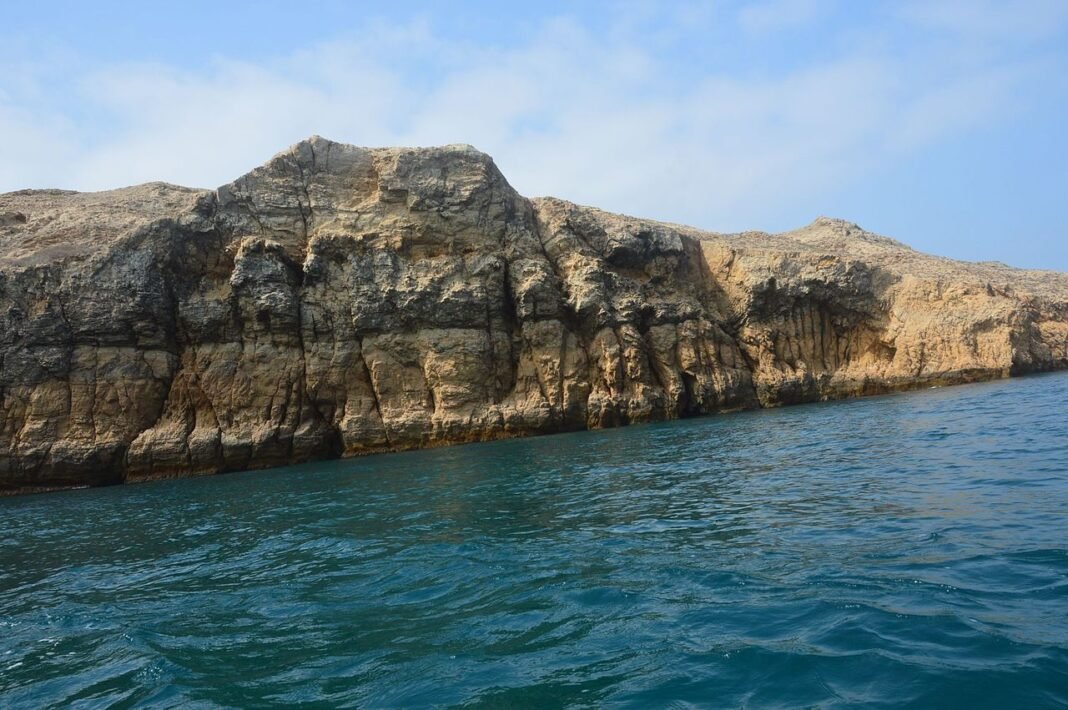
Karachi has beaches, but it also has something far wilder: a rocky, uninhabited island rising out of the Arabian Sea, ringed by coral reefs and patrolled by dolphins, turtles, and the occasional whale shark. Churna Island — also spelled Charna — sits off the coast near Mubarak Village, and in recent years it has quietly become Pakistan’s most exciting day-trip adventure: snorkeling over coral gardens, scuba diving in clear blue water, and cliff jumping into the deep, all within a day’s reach of the country’s biggest city. In September 2024, the government designated it Pakistan’s second-ever marine protected area, after Astola Island — official recognition of what divers have known for years. This Churna Island travel guide covers why it deserves your visit, when to go, how to reach it, and how to enjoy it without harming it.
## Quick Facts
– **Location:** Arabian Sea, off the coast near Mubarak Village (Mubarak Goth), west of Karachi, Sindh — roughly 9 kilometres off the coast and about 40 kilometres from central Karachi
– **Altitude:** a rocky island rising steeply from the sea; the island itself is small (roughly a kilometre long) and completely uninhabited
– **Famous For:** snorkeling and scuba diving over coral reefs, cliff jumping, and rich marine biodiversity — whales, whale sharks, dolphins, turtles, and more than 60 types of coral
– **Nearest City:** Karachi — drive to Mubarak Village (1 to 2 hours), then a 1 to 1.5 hour boat ride to the island
– **Accessibility:** only by boat from Mubarak/Manjhar Village; almost always visited on an organized day trip with a tour operator
– **Known Landmarks:** the island’s rocky cliffs and coral reef sites; Pakistan Navy has historically used the area as a firing range
– **Best For:** adventure seekers, snorkelers and divers, groups of friends, photographers, and marine-life lovers — not a luxury or family-picnic destination
## Why Visit Churna Island
Here is the honest pitch: Pakistan’s coastline is long, but almost none of it offers what Churna does — genuinely clear water, living coral, and big marine life, all on a single day trip from Karachi. Most visitors arrive expecting a fun boat ride and leave slightly stunned. The water around the island shifts between turquoise and deep blue, and once you slip on a mask, the seabed comes alive: coral formations in shapes you did not expect this close to home, schools of small bright fish, and if you are lucky, a turtle gliding past or dolphins racing the boat on the way back.
Churna is also one of the few places in Pakistan where scuba diving is practical for beginners. Local operators run try-dives with certified instructors, full gear, and patient briefings, so you do not need prior experience — just a willingness to breathe underwater and follow instructions. For non-divers, the snorkeling is the star: the reefs sit shallow enough that a mask and fins are all you need, and guides know exactly which coves have the best visibility on any given day.
Then there is the island itself — a bare, dramatic rock rising from the ocean, with cliffs that local jumpers have turned into a (careful, guided) cliff-diving spot. There is something elemental about standing on that rock with nothing around you but sea and sky, forty minutes from one of the world’s largest cities. It feels like an expedition, not an excursion.
A word of honesty, because this matters: Churna is an adventure trip, not a resort day. Facilities are basic, the sea decides the schedule, and the island’s ecosystem is under real pressure — which is exactly why it was declared a marine protected area in 2024. Visit with a responsible operator, touch nothing underwater, take every wrapper home, and you will be part of the reason this place survives. If that sounds like your kind of day, keep reading.
## History of Churna Island
Churna’s recorded history is military before it is touristic. The island and its surrounding waters have long been used by the Pakistan Navy as a firing range, and naval histories cite incidents connected to the island — it carries genuine strategic significance in Pakistan’s maritime story. On 4 August 2020, the island gained a different kind of prominence when the Government of Pakistan released a new political map that, for the first time, showed the offshore islands of Churna and Astola — putting this little rock on the national map in a literal sense.
The conservation chapter is more recent and more urgent. Divers and marine researchers had been documenting the island’s extraordinary biodiversity for years: the founder of the Karachi Scuba Diving Centre has noted more than 60 types of coral in Churna’s waters, with new corals flourishing after the 2004 Indian Ocean tsunami, and researchers have recorded species here never before seen in Pakistan. WWF-Pakistan pushed for protection, pointing out that the island is a basking and feeding ground for whales, whale sharks, mobulid rays, and sunfish, and that its waters support thousands of fishermen from coastal Sindh and Balochistan.
In early September 2024, that campaign succeeded: Churna Island was designated Pakistan’s second marine protected area, after Astola Island. The designation was a milestone — and a warning. Environmentalists were blunt that the island’s ecosystem is eroding under industrial pressure: power plants (including a coal-fired facility) nearby, a single-point oil mooring just a few hundred metres from the island, marine pollution, illegal fishing, and the island’s first-ever recorded coral bleaching event in 2022. The MPA status is a shield, but as WWF-Pakistan’s technical adviser Muhammad Moazzam Khan told the press, declaration alone is not enough. Every visitor who treats the reef gently helps prove the protection worthwhile.
Tourism itself is the newest layer. Over the past decade, Karachi-based adventure clubs and dive operators have turned Churna into a weekend institution, running Saturday and Sunday day trips through the October-to-March season. What was once known mainly to fishermen and the Navy is now one of the most talked-about adventure destinations in Sindh.
## Top Things to Do in Churna Island
### Snorkeling Over the Coral Reefs
This is the reason most people come, and it rarely disappoints. After the boat anchors in a sheltered cove, guides hand out masks, snorkels, fins, and life jackets, then lead you over reefs where coral formations rise from the seabed and fish move through them in shimmering schools. Visibility is best in the October-to-March season, when the sea is calm. Even first-timers do well here — the water is shallow near the reef edges, guides stay close, and ropes are often set up for non-swimmers. The one rule that matters: look, float, photograph — but never stand on, touch, or take anything from the reef. Coral grows slowly and breaks easily.
### Scuba Diving (Including Try-Dives)
For a deeper look, operators offer scuba diving, usually at an additional charge over the standard snorkeling package. Certified divers can do proper reef dives; complete beginners can do supervised try-dives with an instructor literally holding your hand through the first breaths underwater. Gear — wetsuits, tanks, regulators — is provided, and reputable operators use PADI-certified divers. If you have ever been curious about scuba, Churna is one of the most accessible places in Pakistan to find out whether you love it.
### Cliff Jumping
The island’s rocky cliffs have a natural jumping spot that has become a rite of passage for Karachi’s adventure crowd. This is strictly a guided, conditions-dependent activity — guides check the tide and the landing zone first, and you should never jump without their explicit go-ahead. Done right, with a guide’s supervision and a life jacket nearby, it is an unforgettable few seconds. Done casually, it is how people get hurt. Respect the difference.
### Boat Ride and Dolphin Watching
Do not sleep on the journey itself. The 1 to 1.5 hour boat ride from Mubarak Village follows a beautiful stretch of coastline, and dolphins frequently ride the bow wake — keep your camera ready. The return trip in the late afternoon, with the sun low over the water, is often visitors’ favourite part of the day. Some operators also offer speed boating, jet skiing, and banana tubing near the island for an extra thrill.
### Underwater Photography
The combination of clear water, coral, and curious fish makes Churna excellent for underwater photography. Many operators include a photographer or provide waterproof camera options; if you bring your own, make sure it is in a proper waterproof housing, not just “splash-proof.” Early in the day, when the sun is high and the water is calmest, gives the best colours.
### Deep-Sea Fishing (With Local Fishermen)
The waters around Churna have fed fishing families from Mubarak Village and the Balochistan coast for generations. Some trips incorporate a fishing stop, and even if yours does not, you will see the local fishing boats working the same waters — a reminder that this island is a workplace as well as a playground. Buy fresh fish at the village on your way back if the boats are in; it does not get fresher.
### Famous Places In and Around Churna Island
– **Mubarak Village (Mubarak Goth)** — the fishing village where every Churna trip begins; colourful boats, fresh seafood, and a glimpse of coastal life.
– **Manjhar Village** — the alternate boat departure point used by several operators.
– **Sonari Beach** — a quiet beach near the departure villages, good for a pre- or post-trip stroll.
– **Astola Island** — Pakistan’s first marine protected area and Churna’s wilder, more remote sibling; read our Astola Island travel guide if island-hopping appeals to you.
– **Kund Malir and Hingol National Park** — further west along the Makran Coastal Highway, for travelers making a longer coastal trip.
– **Karachi’s Clifton and DHA waterfront** — for dinner after your return; the city has Pakistan’s best seafood restaurants.
## How to Reach Churna Island
There is exactly one way to reach Churna Island: by boat from the fishing villages on the coast west of Karachi. Every trip — organized or private — starts with a drive to **Mubarak Village** (also called Mubarak Goth) or nearby **Manjhar Village**, followed by a boat ride of about 1 to 1.5 hours depending on the boat and sea conditions.
The overwhelmingly popular option is an **organized day trip**. Karachi’s adventure clubs and dive operators run Churna trips every Saturday and Sunday through the season (October to March), with pickups from central Karachi (commonly Shahra-e-Faisal area) around 7:30 in the morning. A standard package typically includes air-conditioned transport to the village, the return boat ride, snorkeling gear and life jackets, lunch served on the boat, drinking water, lifeguards, guides, and basic first aid — scuba diving is usually an add-on. Prices are set per person and vary by operator and season; expect a budget-friendly day-trip rate, and book a few days ahead for weekends, which fill fast.
Going independently is possible but harder: you would drive to Mubarak Village yourself (about 1 to 2 hours from central Karachi depending on traffic) and negotiate directly with local boat owners. This can work for groups, but you lose the safety net of lifeguards, proper gear, and an experienced trip leader — for most visitors, especially first-timers and non-swimmers, the organized trip is the wiser choice.
From **Islamabad**, fly to Karachi (about 2 hours) and join a weekend trip — many travelers do exactly this, arriving Friday night and diving Saturday. From **Lahore**, the same applies: fly or take the train/motorway to Karachi first. There is no airport anywhere near the island, and no, you cannot swim or kayak there on your own — the open-sea crossing is a serious undertaking for proper boats only.
### Route Details
1. **Book a trip** with a reputable Karachi operator 2-4 days ahead (essential for weekends in season). Confirm pickup point, inclusions, and the scuba add-on price if you want it.
2. **Meet at the pickup point** in Karachi around 7:30 AM. Eat a light breakfast and use the washroom — facilities at the village are basic.
3. **Drive to Mubarak/Manjhar Village** — roughly 1 to 2 hours along the coastal road. Enjoy the changing landscape as the city falls behind.
4. **Board the boat** — gear up, listen carefully to the safety briefing, and settle in for the 1 to 1.5 hour sea crossing.
5. **Snorkel, dive, and explore** at the island until early afternoon; lunch is typically served on the boat around 2 PM.
6. **Return crossing and drive back** — boats usually depart the island mid-afternoon, reaching Karachi by early evening.
## Where to Stay in Churna Island
Let us be clear: there is nowhere to stay on Churna Island. It is uninhabited, has no buildings, no water, no electricity, and no facilities of any kind — and as a marine protected area, overnight camping on the island is not something to assume is allowed or appropriate. Churna is a day trip, full stop.
Your base is **Karachi**, which has accommodation at every level, from budget guesthouses to five-star hotels. If you are joining a Saturday trip, stay somewhere with easy access to the pickup point — most operators collect from the Shahra-e-Faisal corridor, so hotels in Gulshan, PECHS, or near the airport work well. Book for Friday night if your trip is Saturday morning, because the 7:30 AM pickup will not wait. For groups, renting an apartment for the weekend can be economical. After a full day of salt water and sun, you will appreciate a proper shower and a real bed — plan for both.
## Where to Eat: Local Foods of Churna Island
Lunch on a Churna day trip is usually included in the package and served on the boat — typically simple, filling Pakistani fare like chicken biryani or daal with roti, plus cold drinks and water. It tastes better than it has any right to, eaten with sea wind in your face. Confirm what is included when you book, and mention any dietary needs in advance.
Before or after the boat, **Mubarak Village** is the place for seafood. The village’s small eateries and dhabas serve the day’s catch — fried fish, prawns, and grilled specialities — at local prices, and this is genuinely some of the freshest seafood you will eat in Pakistan. Keep expectations appropriately rustic: these are working fishing-village kitchens, not restaurants, and that is the point.
Back in **Karachi**, you have the country’s best dining scene at your disposal. For a post-trip dinner, the seafood restaurants along the Clifton and DHA waterfront are the natural choice — grilled fish, masala crab, and prawn karahi with the sea in view. Karachi is also famous for its Burns Road food street (nihari, kebabs, falooda) if you have an extra evening. A full day’s food, from village fish fry to city dinner, is one of the trip’s underrated pleasures. For more ideas across the country, explore our Explore Pakistan collection.
## Weather in Churna Island
Churna sits in the open Arabian Sea, so its weather is Karachi’s coastal climate with extra wind and no shade. The island has a tropical semi-arid climate: hot, humid summers with rough seas, and mild, dry winters with calm water. The sea, not the calendar alone, decides whether trips run — the October-to-March window exists because that is when the Arabian Sea off Karachi lies down flat and clear. Summer brings heat, humidity, and swell that make the crossing unpleasant and sometimes unsafe, which is why operators pause. October deserves a special note: the water is beautiful, but jellyfish arrive in large numbers that month, so swim with a guide and consider a protective rash guard.
| Season | Temperature Range | Conditions |
|—|—|—|
| Winter (Dec-Feb) | 18 to 27°C | Cool, dry, calm seas; the prime diving and snorkeling season |
| Spring (Mar-Apr) | 22 to 32°C | Warming up; still good visibility early in the season; trips wind down by late April |
| Summer (May-Sep) | 27 to 35°C | Hot and humid; rough seas; monsoon swell; operators generally do not run trips |
| Autumn (Oct-Nov) | 24 to 32°C | Season opens; excellent visibility; jellyfish common in October — take precautions |
## Language and Culture of Churna Island
The island itself is uninhabited, so the culture you encounter belongs to the coast: the fishing communities of Mubarak Village and the surrounding Goths, where **Sindhi** and **Balochi** are the everyday languages and Urdu works everywhere. Fishing here is not a hobby but a livelihood stretching back generations, and the waters around Churna feed families across coastal Sindh and Balochistan — remember that when you see working boats near the reef.
A few courtesies go a long way. Dress modestly at the village (cover up over swimwear when not in the water), ask before photographing fishermen and their families, and buy fish or snacks from village vendors rather than bringing everything from the city — your money lands directly in the community that hosts you. On the island, the culture to respect is ecological: this is now a marine protected area. Do not take shells, coral, or “souvenirs” from the sea, do not feed the fish, and carry out every bit of trash, including cigarette butts. The reef you snorkel over today needs to be there for the next boat.
## Shopping in Churna Island
There is nothing to buy on Churna Island — no shops, no stalls, no vendors — so bring everything you need from Karachi: sunscreen, towels, swimwear, a dry bag for valuables, and any snacks beyond the provided lunch. If you want souvenirs, do it in Karachi before or after the trip. The classic buys are dried fish and prawns from the coastal markets, traditional Sindhi ajrak and topi from the old city bazaars, and seashell handicrafts sold near Clifton. As always with seaside souvenirs, skip anything that looks like it was pried off a living reef — buy crafts, not coral.
## Travel Tips for Churna Island
### Packing Essentials
Pack like you are spending a full day on open water with no shops: reef-safe sunscreen (reapply often), a hat and sunglasses with a strap, swimwear plus a modest cover-up for the village, a quick-dry towel, a dry bag or waterproof pouch for your phone and cash, and motion-sickness tablets if you are prone to seasickness — the 1.5-hour crossing can be choppy even in season. Bring your own water bottle; operators provide water, but extra never hurts. If you own a mask and snorkel that fit well, bring them; rental gear works, but your own is always more comfortable. Leave valuables at the hotel.
### Safety Tips
The sea is the boss here, so take safety seriously. Book only with operators who provide lifeguards, proper life jackets, a safety briefing, and first aid — and actually wear the life jacket, even if you swim well. Non-swimmers can absolutely enjoy Churna (guides set up ropes and stay close), but tell the crew honestly about your swimming ability. Never swim alone, never dive headfirst from the boat, and attempt cliff jumping only with a guide’s explicit approval after they have checked conditions. There are no proper rescue boats or medical facilities at the island, so prevention is everything. In October, ask about jellyfish before getting in. And check the weather the night before: if the operator cancels for rough seas, thank them — that is a good operator.
### Money & Connectivity
Pay for your trip in advance or carry cash — there are no ATMs at Mubarak Village and no card machines on boats. Mobile signals from Pakistani networks generally reach the island (you are not that far offshore), but do not count on data; download anything you need beforehand and tell someone your plan. For a second island adventure once you have caught the bug, our Malam Jabba travel guide covers a very different kind of thrill in the mountains.
## Best Time to Visit Churna Island
### Winter (October to March) — The Season
This is when Churna happens. The sea is calm, the water is warm enough to swim comfortably, and visibility is at its best for snorkeling and diving. Operators run their full weekend schedules, and the island sees its deserved crowds. October and November offer the clearest water of the year (with the jellyfish caveat in October); December to February brings cooler air and the calmest seas. If you can choose, aim for November to February.
### Spring Shoulder (April) — Last Call
Early April can still be lovely, but heat builds fast and operators begin winding down as sea conditions turn. Late April trips are a gamble — ask the operator honestly about the forecast.
### Summer (May to September) — Stay Away
Rough seas, high humidity, and land temperatures crossing 40°C make this the closed season. Reputable operators do not run trips, and you should not try to arrange a private boat. The island will be there in October.
## Final Thoughts
Churna Island is the rare adventure that over-delivers on its promise. It asks for one early morning, a boat ride, and a willingness to get in the water — and gives back coral gardens, dolphins, cliffs, and the strange joy of finding wilderness an hour off the coast of Karachi. It is also a place with a fragile future, caught between industry and ecology, and every visitor casts a small vote: for the reef, or against it. Go in season, go with a responsible operator, touch nothing, take your trash, and you will have done the island a favour just by showing up the right way.
If you have ever said “Pakistan has nothing like that,” Churna is your correction. Pack the sunscreen, book the Saturday trip, and go see what the Arabian Sea has been hiding.
## FAQs
**Where is Churna Island?**
Churna Island is a small uninhabited rocky island in the Arabian Sea, about 9 kilometres off the coast near Mubarak Village and roughly 40 kilometres from central Karachi, Sindh. It sits between the coasts of Sindh and Balochistan at approximately 24°54′N 66°36′E.
**What is the best time to visit Churna Island?**
October to March, when the sea is calm and visibility is best for snorkeling and diving. November to February is the sweet spot. Avoid May to September, when rough seas shut down trips. Note that jellyfish are common in October.
**How do I reach Churna Island?**
Drive from Karachi to Mubarak Village (1 to 2 hours), then take a boat for 1 to 1.5 hours. The easiest option is an organized day trip with a Karachi operator — typically Saturday/Sunday departures with transport, gear, lunch, and guides included.
**Is Churna Island safe for non-swimmers?**
Yes, with the right operator. Reputable trips provide life jackets, lifeguards, and guides who set up ropes for non-swimmers, and beginner scuba try-dives are supervised one-on-one. Be honest about your swimming ability and never swim alone.
**What is there to do at Churna Island?**
Snorkeling over coral reefs, scuba diving (including beginner try-dives), cliff jumping with guides, jet skiing and banana tubing, underwater photography, dolphin watching on the boat ride, and deep-sea fishing.
**Is Churna Island a marine protected area?**
Yes — in September 2024 it was designated Pakistan’s second marine protected area, after Astola Island, to protect its coral reefs and marine life, which include whales, whale sharks, dolphins, turtles, and more than 60 types of coral.
**Can I stay overnight on Churna Island?**
No. The island is uninhabited with zero facilities — no water, shelter, or electricity. It is strictly a day trip; base yourself in Karachi.
**What should I pack for a Churna Island trip?**
Sunscreen, hat, sunglasses, swimwear with a cover-up, quick-dry towel, dry bag for valuables, motion-sickness tablets if needed, and cash. Operators provide snorkeling gear, life jackets, lunch, and water. Leave valuables at your hotel.