Quick Facts
- Location: Confluence of the Baltoro Glacier and Godwin-Austen Glacier, Karakoram range, Baltistan, Gilgit-Baltistan
- Altitude: Around 4,691 meters (15,390 feet) above sea level
- Famous For: The “Throne Room of the Mountain Gods”, the highest concentration of 8,000-meter peaks on Earth, and front-row views of K2
- Nearest City: Skardu, about a week of trekking away via Askole
- Accessibility: Expedition trek only; no roads, no villages beyond Askole, camping throughout
- Known Landmarks: K2 (8,611 m), Broad Peak, Gasherbrum I and II, Mitre Peak, the Baltoro Glacier
- Best For: Serious trekkers, mountaineers, photographers, and adventurers chasing the ultimate mountain panorama
Why Visit Concordia
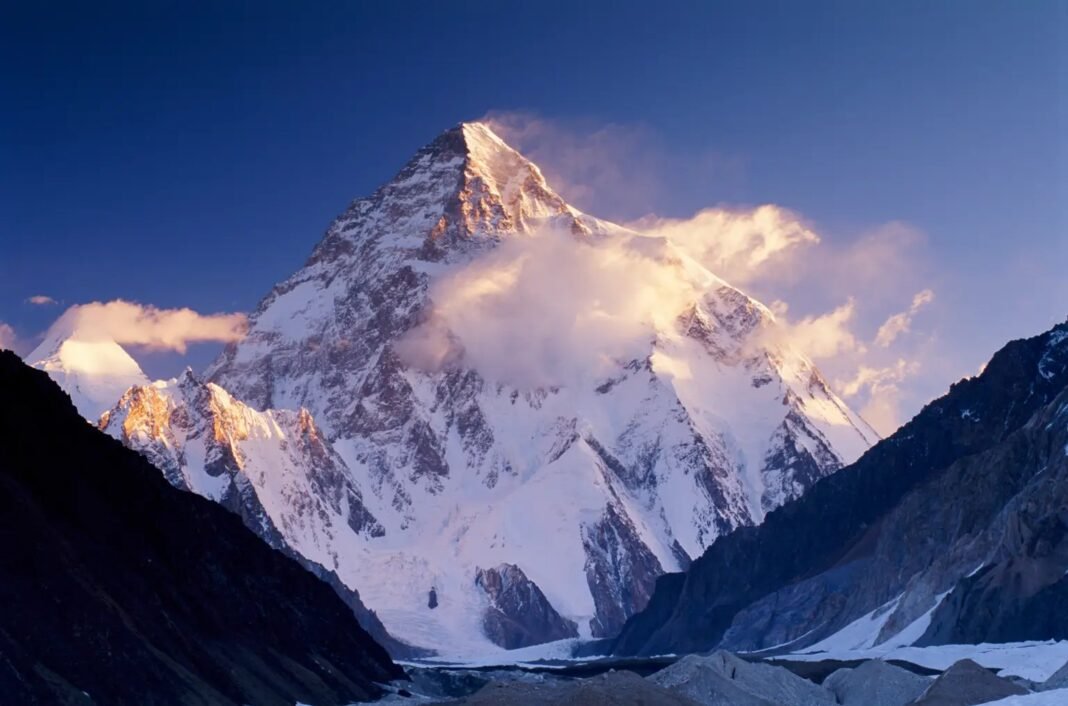
There are mountain views, and then there is Concordia. Stand on the moraine ridge at 4,691 meters, turn slowly in a full circle, and you will understand why this place is called the Throne Room of the Mountain Gods. K2 rises in front of you, its perfect black pyramid climbing nearly 4,000 meters straight from the glacier to the sky. Around it stand Broad Peak, Gasherbrum I, and Gasherbrum II, four of the world’s fourteen 8,000-meter giants visible from a single campsite, plus a court of 7,000-meter peaks: Gasherbrum IV, Chogolisa, Masherbrum, and the great granite spires of the Trango Towers. No other viewpoint on the planet packs this much vertical majesty into one panorama.
Concordia is not a destination you stumble upon. It is earned, over roughly two weeks of trekking up the Baltoro Glacier, one of the longest glaciers outside the polar regions at over 63 kilometers. Every day of the approach builds the drama: the green orchards of Askole, the towering Trango spires at Paiju, the cathedral-like granite walls at Urdukas, the deepening ice world of Goro. And then, on the day you crest the final moraine, K2 reveals itself all at once, the moment every trekker describes as the single most staggering sight of their lives.
This is also one of the last true wilderness expeditions left in the trekking world. Beyond Askole there are no roads, no villages, no teahouses, no commercial development, just glaciers, granite, and sky. You sleep in tents on the ice, cross glacial streams, and share the trail with some of the finest mountain porters on Earth, the legendary Balti porters of the Karakoram. It is demanding, remote, and utterly unforgettable.
Concordia is not for everyone, and that is its glory. If you have dreamed of standing beneath the Savage Mountain, if you want to test yourself against the greatest mountain scenery on Earth, this is the pilgrimage. Plan it well, train for it honestly, and go. For the classic approach through the Karakoram, also see our Baltoro Glacier travel guide, and browse the Explore Pakistan collection for more adventures.
History of Concordia
Concordia’s recorded history begins with the great age of Karakoram exploration in the late 19th century. The first person reported to have reached this glacial confluence was Robert Lerco in 1890, followed by the British explorer William Martin Conway in 1892, whose expeditions mapped and named much of the Karakoram. But the name “Concordia” itself came a decade later, applied by the English mountaineer Aleister Crowley during the 1902 Eckenstein-Crowley attempt on K2. Crowley named it for its resemblance to another famous glacial confluence also called Concordia, in the Bernese Oberland of the Swiss Alps.
The name stuck, and Concordia became the staging ground for the assaults on K2 that defined 20th-century mountaineering. Italian, American, British, and Pakistani expeditions all funneled through this campsite on their way to the Godwin-Austen Glacier and K2 Base Camp. The mountain’s fearsome reputation, it is the second-highest peak on Earth at 8,611 meters and among the deadliest, made every expedition here a chapter of climbing history. The Gilkey Memorial, a short trek from Concordia toward K2 Base Camp, honors climbers lost on the mountain, including the American Art Gilkey, and has become a solemn landmark of the trek.
In recent decades Concordia has opened to trekkers as well as climbers. What was once the exclusive domain of national expeditions is now reachable by fit, well-prepared hikers on organized treks, though it remains a serious high-altitude undertaking. The Central Karakoram National Park, established to protect this extraordinary landscape, now manages the region, and the trail from Askole to Concordia is one of the world’s classic long treks. The Balti porters who carry expedition loads here, many from Askole and the Shigar valley, are themselves part of the living history, heirs to generations of Karakoram mountain craft.
Top Things to Do in Concordia
Witness the 360-Degree Mountain Panorama
The essential Concordia experience is simply to stand at camp and look around. From one spot you can see four 8,000-meter peaks: K2 (8,611 m), Broad Peak (8,047 m), Gasherbrum I (8,080 m), and Gasherbrum II (8,035 m), along with Mitre Peak, Crystal Peak, Marble Peak, Chogolisa, and the sublime wall of Gasherbrum IV. Sunrise and sunset paint the peaks gold and pink; photographers should plan at least one full rest day here just for the light.
Trek to K2 Base Camp
From Concordia, a long day trek up the Godwin-Austen Glacier leads to K2 Base Camp at around 5,150 meters, the staging point for expeditions on the world’s second-highest mountain. Standing at the foot of K2’s towering pyramid, with the glacier stretching away below, is the emotional climax of the journey. Most itineraries include this as a day trip from Concordia.
Visit the Gilkey Memorial
Near K2 Base Camp, the Gilkey Memorial is a moving tribute to climbers who lost their lives on K2, marked by plaques and memorials left by expeditions over the decades. It is a quiet, humbling place that reminds every visitor of the mountain’s power and the courage of those who climb it.
Explore the Baltoro Glacier
Concordia sits at the meeting of two great glaciers, and the ice world around camp rewards exploration. Walk the moraine ridges, peer into crevasses (with a guide), and watch seracs shift and groan. The Baltoro is over 63 kilometers long, one of the longest glaciers outside the polar regions, and its scale is impossible to grasp until you are walking on it.
Photograph the Golden Throne and Cathedral Spires
On the approach to Concordia you pass some of the Karakoram’s most photogenic formations: the Cathedral group near Urdukas, with its soaring granite spires, and the great cirque of peaks that frames the final days. These are the images that define Karakoram photography, and the trek gives you days to capture them in changing light.
Cross the Gondogoro La (For the Bold)
Strong teams can return from Concordia via the Gondogoro La pass at around 5,585 meters, a spectacular high crossing that descends into the Hushe valley. This requires ropes, crampons, and a very early alpine start, and it turns the trek into one of the world’s great high-mountain traverses. Only attempt it with an experienced operator.
Famous Places In and Around Concordia
- K2 (8,611 m): The world’s second-highest mountain, revealed in full glory only when you reach Concordia.
- Broad Peak (8,047 m): The massive 8,000-meter giant rising above the ridge west of Concordia.
- Gasherbrum I (8,080 m) and Gasherbrum II (8,035 m): The “Hidden Peak” and its neighbor, dominating the eastern horizon.
- Gasherbrum IV (7,925 m): The sublime wall that acts as a beacon on the approach up the Baltoro.
- Mitre Peak, Crystal Peak, Marble Peak: The jagged court of 6,000 and 7,000-meter peaks ringing the campsite.
- Trango Towers: The legendary granite big walls, seen from Paiju and Urdukas on the approach.
- Masherbrum (7,821 m) and Muztagh Tower: The great peaks guarding the middle Baltoro.
- K2 Base Camp (5,150 m): The expedition staging ground at the foot of the Savage Mountain.
- Askole: The last village before the wilderness, where the trek begins.
- Skardu: The expedition gateway city, with its fort, bazaar, and mountain views.
How to Reach Concordia
Reaching Concordia is a full expedition, not a day trip. The journey begins in Islamabad. From there, fly to Skardu, a spectacular 45 to 60 minute flight over the Himalaya and Karakoram, weather permitting. If flights are canceled, and they often are, the road alternative follows the Karakoram Highway and the Skardu road, a grueling 12 to 16 hour journey, so build buffer days into your schedule.
From Skardu, a 6 to 10 hour jeep ride on rough mountain roads takes you to Askole, the last permanent settlement before the wilderness and the traditional trek start. The trek itself typically takes 7 to 9 days to reach Concordia: Askole to Jhula, Jhula to Paiju (with a rest day for acclimatization), Paiju to Khoburtse, Khoburtse to Urdukas, Urdukas to Goro II, and Goro II to Concordia. Daily stages run 10 to 18 kilometers and take 4 to 8 hours over moraine and glacier terrain. The return follows the same route, or crosses the Gondogoro La for strong teams. The complete trip, including travel, trekking, rest days, and buffers, runs 18 to 22 days.
You cannot do this trek independently in any practical sense: permits for the Central Karakoram National Park, licensed guides, porters, and full expedition logistics are essential. Book through a reputable Pakistani trekking operator, and confirm that permits, insurance, and emergency plans are in place before you commit.
Route Details
- Islamabad to Skardu: Fly (45-60 min, weather permitting) or drive the Karakoram Highway route (12-16 hours plus an overnight).
- Skardu to Askole: Jeep on rough mountain track, 6 to 10 hours. Last supplies and porter hiring happen here.
- Askole to Concordia: 7 to 9 trekking days via Jhula, Paiju, Khoburtse, Urdukas, and Goro II, all camping, with a rest day at Paiju for acclimatization.
- Concordia to K2 Base Camp: Day excursion up the Godwin-Austen Glacier and back.
- Return: 4 to 7 days back down the Baltoro, or the Gondogoro La crossing to Hushe for experienced teams.
Where to Stay in Concordia
There is exactly one kind of accommodation at Concordia: a tent. The entire trek from Askole onward is full-service camping, with operators providing twin-sharing dome tents, dining tents, and sleeping arrangements on the glacier moraine. There are no hotels, guesthouses, teahouses, or permanent structures anywhere on the route, which is precisely what makes this one of the world’s great wilderness treks.
Before and after the trek, Skardu offers the full range of stays: comfortable mid-range hotels, guest houses, and a few upscale resorts with mountain views. Most operators include Skardu hotel nights at both ends of the itinerary. In Islamabad, stay near the trek briefing point your operator designates. Bring a high-quality sleeping bag rated for well below freezing; even in summer, nights at Concordia drop far below zero.
Where to Eat: Local Foods of Concordia
On the trek, your operator’s kitchen team cooks everything: hearty expedition fare of lentils (dal), rice, chapatis, pasta, soups, porridge, and plenty of tea, designed to keep trekkers fueled at altitude. Porters and guides eat the same food, and mealtimes in the dining tent are among the warmest moments of the day. Carry personal snacks like dry fruits, chocolate, and energy bars for the long stages; there is nowhere to buy anything beyond Askole.
In Skardu before and after the trek, try Balti cuisine: the region’s Tibetan-influenced dishes, including hearty noodle soups and apricot-based desserts, are a delicious reward after weeks of expedition food. Skardu’s bazaar also has restaurants serving Pakistani and Chinese dishes. Drink only treated or boiled water on the trek, and avoid alcohol entirely at altitude.
Weather in Concordia
At nearly 4,700 meters, Concordia has a severe high-mountain climate. Even in the trekking season, expect freezing nights, intense daytime sun, and sudden weather changes, including snow above 4,500 meters at any time. Winters are impossibly harsh and the route is completely inaccessible.
| Season | Temperature Range | Conditions |
|---|---|---|
| Winter (Nov-Mar) | -30 to -10 C | Extreme cold, deep snow, impassable. No trekking. |
| Spring (Apr-May) | -15 to 0 C | Melting snow, unstable glaciers, high avalanche risk. Not a trekking season. |
| Summer (Jun-Sep) | -8 to 10 C | The trekking season. Cold nights, strong sun by day, possible afternoon snow. July to early August offers the clearest skies. |
| Autumn (Oct) | -20 to -5 C | Rapidly deteriorating; early winter storms can close the route. Only for late-season expeditions with full winter kit. |
Language and Culture of Concordia
The trek passes through Baltistan, where Balti, a Tibetan dialect written in its own historic script, is the mother tongue. Your porters and many guides will be Balti speakers from Askole, Shigar, and the surrounding valleys; Urdu works as the common language with most crew, and expedition leaders usually speak English. Learning a few Balti greetings will earn you genuine warmth.
Balti mountain communities are conservative and deeply hospitable. Dress modestly even on the trail, ask permission before photographing people, and respect local customs in Askole and Skardu. The porters of the Karakoram are justly famous for their strength and mountain craft; treat them with the respect they deserve, tip fairly through your operator, and never ask anyone to carry loads beyond reasonable limits. Leave no trace: everything you carry in, you carry out.
Shopping in Concordia
There is no shopping beyond Askole, so buy everything in Skardu or Islamabad before the trek: souvenirs, handicrafts, and any personal gear. Skardu’s bazaar is excellent for Balti handicrafts, woolen caps and shawls, dried apricots, and apricot oil, all authentic products of the region. Askole villagers sometimes sell small items, but do not count on it. Your money on the trek goes to tips for your crew, so carry cash in rupees; there are no ATMs beyond Skardu and no card facilities anywhere on the route.
Travel Tips for Concordia
Packing Essentials
This is a serious high-altitude expedition. Essential gear includes a four-season sleeping bag, insulated jacket, waterproof shell, sturdy broken-in trekking boots, crampons for the Gondogoro La option, trekking poles, glacier sunglasses, high-SPF sunscreen, a headlamp, and a comprehensive first-aid kit including altitude medication (consult your doctor). Pack in duffels, not hard suitcases, as porters carry loads in stages. Bring a satellite communicator or confirm your operator provides one.
Safety Tips
Altitude is the main danger: ascend gradually, respect the rest day at Paiju, stay hydrated, and descend immediately if symptoms of acute mountain sickness worsen. Never trek on the glacier without your guide; crevasses are real and often hidden. Weather changes fast, so carry warm layers even on sunny mornings. Ensure your travel insurance covers high-altitude trekking and helicopter evacuation, and register your itinerary with your operator and embassy contacts.
Money & Connectivity
Carry all the cash you will need in Pakistani rupees; there are no ATMs or banks beyond Skardu. Mobile signals fade within a day of leaving Askole and are absent for the entire trek, so arrange a satellite device or go through your operator’s communication plan. Inform family of your exact itinerary and expected return date before you lose signal.
Best Time to Visit Concordia
Summer (Mid-June to Late September) – The Only Season
This is the trekking window. Mid-June brings the route to life as snow melts; July to early August offers the longest days and generally the most stable weather, though afternoon snow is always possible above 4,500 meters. Late August into September brings clearer air and fewer crowds, with colder nights. Every reputable operator runs departures in this window.
Spring (April to May) – Not Viable
Melting snow, swollen glacial streams, and avalanche danger make the route unsafe. No commercial treks operate.
Autumn (October) – Closing Window
Early October can work for fast, experienced teams, but winter storms can arrive suddenly and strand trekkers. Not recommended for a first Concordia attempt.
Winter (November to March) – Impossible
Extreme cold and deep snow close the entire region. The mountains wait for summer.
Final Thoughts
Concordia is the ultimate answer to the question of why people climb mountains and cross glaciers. It demands two weeks of effort, rewards you with the single greatest mountain panorama on Earth, and changes something in everyone who stands there. The memory of K2’s pyramid catching the first light of dawn, with the whole court of giants around it, does not fade.
Train well, choose your operator carefully, respect the altitude, and give this journey the time it deserves. Few places on Earth ask so much or give so much in return. Concordia, the Throne Room of the Mountain Gods, is waiting.
FAQs
Where is Concordia located?
Concordia is the confluence of the Baltoro Glacier and the Godwin-Austen Glacier in the Karakoram range of Baltistan, Gilgit-Baltistan, at about 4,691 meters above sea level.
Why is Concordia famous?
It offers the highest concentration of 8,000-meter peaks visible from one place on Earth: K2, Broad Peak, Gasherbrum I and II, earning it the name “Throne Room of the Mountain Gods.”
How do I reach Concordia?
Fly or drive from Islamabad to Skardu, take a jeep to Askole, then trek 7 to 9 days up the Baltoro Glacier via Jhula, Paiju, Urdukas, and Goro II. The full trip takes 18 to 22 days.
What is the best time to visit Concordia?
Mid-June to late September is the only viable season, with July to early August offering the most stable weather.
Is the Concordia trek difficult?
Yes, it is challenging to strenuous: high altitude, long days on glacier moraine, freezing nights, and total remoteness. Good fitness and prior multi-day trekking experience are strongly recommended.
Where do you stay on the Concordia trek?
It is camping throughout: operators provide tents and full expedition catering. There are no hotels or teahouses beyond Askole.
Do I need permits for Concordia?
Yes. Trekking permits for the Central Karakoram National Park and related formalities are required; reputable operators arrange these as part of the package.
Can beginners trek to Concordia?
It is not a beginner trek. The altitude, remoteness, and physical demands mean it suits experienced trekkers. Build up with high-altitude treks elsewhere first, train seriously, and go with a licensed operator.