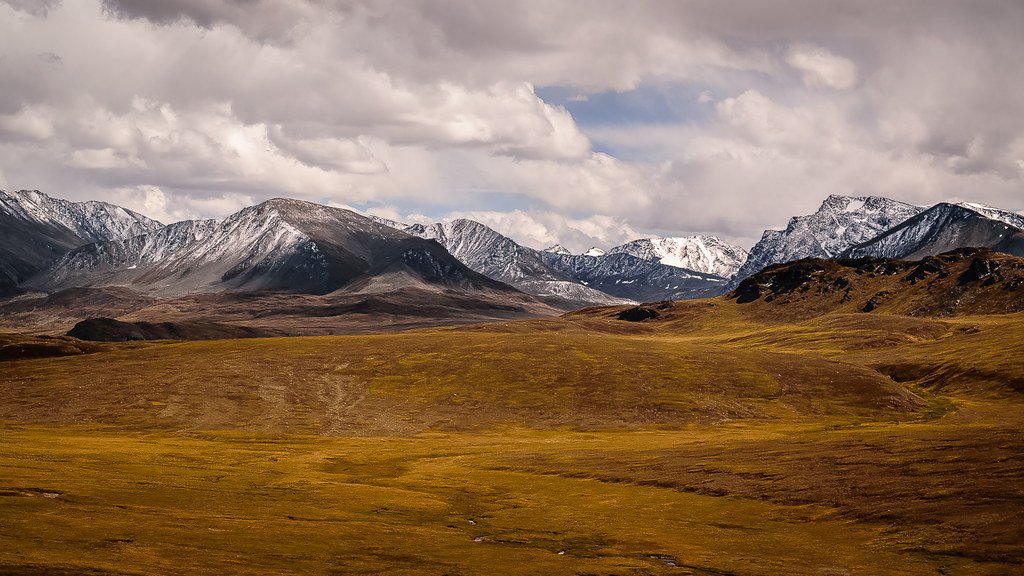
There are places you visit, and there are places that rearrange something inside you. Deosai National Park is the second kind. Imagine a rolling plateau higher than most of the world’s mountains — an ocean of wildflowers at 4,114 meters, golden marmots whistling from the grass, brown bears ambling across meadows, and the great white wall of Nanga Parbat rising on the horizon. In the local Balti language, “Deosai” means the Land of Giants, and the moment the jeep track crests the plateau, you understand why. If you are choosing one great wilderness adventure in Pakistan, this Deosai National Park travel guide will help you say yes.
Deosai is the second-highest plateau on Earth, after Tibet’s Changtang — a vast alpine plain sprawling across some 3,000 square kilometers between Skardu and Astore in Gilgit-Baltistan. It was declared a national park in 1993 to save the Himalayan brown bear, whose numbers have climbed from just 19 then to around 78 today. In summer the plateau explodes with more than 120 species of wildflowers, Sheosar Lake mirrors the sky at 4,142 meters, and the whole place feels like the roof of the world with the door left open. This is the trip for wildlife lovers, photographers, campers, and anyone who has ever wanted to stand somewhere truly wild.
This guide covers why Deosai deserves your trip, its real history, the top things to do, how to reach Deosai National Park from Islamabad, Lahore, and Karachi, where to stay (and camp), what to eat, weather, language and culture, and essential high-altitude travel tips.
Quick Facts
- Location: Between Skardu and Astore districts, Gilgit-Baltistan, Pakistan
- Altitude: Around 4,114 meters (13,497 feet) average — the second-highest plateau in the world
- Famous For: Himalayan brown bears, summer wildflower meadows, Sheosar Lake, and views of Nanga Parbat
- Nearest City: Skardu (about 30 km to the park entrance); Skardu Airport is the nearest airport
- Accessibility: 4×4 jeep only, via Skardu (2–3 hours) or Astore via Chilam (3–5 hours); open roughly June to September
- Known Landmarks: Sheosar Lake, Bara Pani, Kala Pani, Deosai Top
- Best For: Wildlife lovers, photographers, campers, trekkers, and adventure travelers
Why Visit Deosai National Park
Visit Deosai because almost nothing else on Earth looks like it. Most high mountains are all rock and ice; Deosai is a high place that is soft — mile after mile of rolling green-gold meadow under a huge sky, threaded with streams and dotted with lakes. In July and August the plateau becomes one of the great flower shows of the planet, with wildflowers in every color sweeping to the horizon. Standing in the middle of it, with marmots calling and the snow peaks of the western Himalaya ringing the distance, you feel wonderfully, thrillingly small.
Then there is the wildlife. Deosai is one of the last strongholds of the Himalayan brown bear, a magnificent animal that was sliding toward extinction when the park was created. Today, with patient early-morning or late-evening watching (and a respectful distance), visitors genuinely can see bears, along with golden marmots, red foxes, ibex, and raptors like the golden eagle and lammergeier circling overhead. For Pakistani travelers, this is our Serengeti — a chance to see big wildlife in the wild, not in a zoo.
Finally, Deosai is an adventure with a real sense of journey. Getting there means a bouncing 4×4 track from Skardu past Sadpara Lake, or the wilder western route from Astore through Chilam. You camp under some of the clearest night skies in the country, wake to frost on the tent even in August, and eat breakfast looking at Nanga Parbat, the world’s ninth-highest mountain. It is not a casual day out — and that is exactly the point. If Deosai calls to you, also look at our Astore travel guide for the western approach, and browse more northern adventures in Explore Pakistan.
History of Deosai National Park
Deosai’s human history is written lightly on the land, which is part of its magic. The name itself comes from the Balti language and means “Land of Giants” — local legend says giants once lived on the plateau before being banished by the people, and the name also captures the sheer vastness of the place. For centuries the plateau was summer grazing ground for the herders of the surrounding valleys, part of the old Baltistan region whose Tibetan Buddhist heritage still shapes the culture of Skardu and its villages.
The modern history of Deosai begins with a crisis. By the late 20th century, the Himalayan brown bear — the plateau’s most famous resident — had been hunted and squeezed to the edge of extinction, with only about 19 bears believed to remain. In 1993, the government declared Deosai a national park specifically to protect the bear and its habitat, banning hunting and restricting grazing across the plateau. It was one of Pakistan’s most important conservation decisions.
The gamble worked. Under protection, the bear population recovered to around 78 animals in recent counts, and the park became a sanctuary for an extraordinary community of high-altitude wildlife: snow leopards, Tibetan wolves, ibex, golden marmots, red foxes, and scores of bird species. For travelers, the park’s recent history is the story of a wilderness brought back from the brink — and every entry fee paid at the checkposts helps keep it that way.
Top Things to Do in Deosai National Park
Drive the Plateau on a Jeep Safari
The classic Deosai experience is the jeep crossing itself: from Skardu, the track climbs past Sadpara Lake and up onto the plateau, 2–3 hours of ever-expanding views until the world flattens into meadow. The adventurous alternative is the western route from Astore via Chilam (3–5 hours), rougher and wilder. Either way, hire a local 4×4 with a driver who knows the plateau — the tracks are unmarked in places and the weather changes fast.
See Sheosar Lake
At 4,142 meters, Sheosar is one of the highest lakes in the world — a sheet of deep blue set in green meadows, with the snowy massif of Nanga Parbat (8,126 m) towering beyond it on clear days. Walk its shoreline, photograph the reflections in the morning calm, and just sit with it for a while. It is the single most beautiful spot in the park.
Watch for the Himalayan Brown Bear
Dawn and dusk are bear time. Scan the meadows with binoculars from the jeep track, especially in the flower-rich central plateau. Never approach a bear, never feed any animal, and keep food sealed at camp. Sightings are never guaranteed — these are wild animals — but Deosai offers Pakistan’s best chance of seeing one.
Camp at Bara Pani
There are no hotels inside the park, which is precisely its charm. Camp at designated spots such as Bara Pani, where a stream runs cold and clear and the night sky is staggering. Bring a warm sleeping bag — nights drop near freezing even in August — or book a glamping setup through a Skardu tour operator. Wake early: the plateau at dawn, mist in the hollows and peaks turning pink, is unforgettable.
Walk the Wildflower Meadows
In late July and August the plateau blooms with more than 120 species of wildflowers and medicinal plants. Take short walks from the track (with a local guide — the plateau is disorienting in mist), photograph the flower carpets, and look for golden marmots standing sentinel on their mounds, whistling alarms at your approach.
Try Trout Fishing
Deosai’s cold streams hold trout, and fishing with a permit is a traditional pleasure of the plateau. Arrange permits and local guidance through your tour operator in Skardu, and practice catch-and-release to protect the fragile stocks.
Famous Places In and Around Deosai National Park
- Sheosar Lake — 4,142 m alpine lake with Nanga Parbat views
- Bara Pani — main camping area on a rushing stream
- Kala Pani — dark-water pools on the plateau, a classic photo stop
- Deosai Top — the high point of the jeep track with panoramic views
- Sadpara Lake — turquoise lake on the Skardu approach road
- Skardu — the gateway town: Shangrila Resort, Upper Kachura Lake, Kharpocho Fort
- Astore Valley — the wild western gateway to the park (see our Astore travel guide)
How to Reach Deosai National Park
Deosai is a genuine expedition destination — there is no casual way in, which keeps it special. All routes require a 4×4 jeep and the park is only open roughly June to September, when the snow clears.
From Skardu (main route): The park entrance is about 30 km from Skardu city. Hire a 4×4 jeep in Skardu (your hotel or any tour operator can arrange one) and drive past Sadpara Lake up the jeep track — 1.5 to 3 hours to the plateau depending on conditions. This is the route most visitors use.
From Astore (western route): Enter via the Chilam checkpost on the park’s western side, about 70 km from Astore town (3–5 hours, 4×4 only). Rougher and more adventurous, and it puts you close to Sheosar Lake.
From Islamabad: Fly Islamabad to Skardu (about 1 hour, but flights are frequently cancelled in bad weather — keep buffer days) or drive the Karakoram Highway, roughly 630 km and 16–20 hours via Mansehra, Naran, and Chilas. Most travelers fly in and acclimatize in Skardu.
From Lahore and Karachi: Fly to Islamabad, then connect to Skardu (or take the road journey north). There are no direct commercial flights from Lahore or Karachi to Skardu; plan the trip as Islamabad → Skardu → Deosai.
Nearest airport: Skardu Airport (KDU), about 50 km from the park.
Road conditions: The Deosai tracks are rough, unpaved jeep trails — high-clearance 4×4 only, no exceptions. They are snowbound roughly October to May; even in season, check locally that the passes are open before setting out. Carry fuel, food, water, and warm clothing: there are no shops, fuel stations, or restaurants on the plateau.
Route Details
- Get to Skardu: Fly Islamabad → Skardu (1 hour, weather-dependent) or drive the KKH (16–20 hours).
- Acclimatize: Spend at least a day in Skardu (2,228 m) before ascending to 4,100 m+.
- Hire a jeep: Book a 4×4 with driver through your Skardu hotel or a local tour operator; agree the route (day trip vs. overnight camping) and price in advance.
- Drive to the plateau: Skardu → Sadpara Lake → Deosai Top → Bara Pani → Sheosar Lake (2–3 hours up).
- Pay entry: Entry fees are collected at park checkposts (foreign nationals pay a higher rate); confirm current rates locally.
- Alternative: Astore → Chilam checkpost → Sheosar Lake → across the plateau to Skardu (full crossing, 3–5 hours).
Where to Stay in Deosai National Park
There are no hotels, guesthouses, or permanent buildings for tourists inside the park — accommodation here means camping under the stars, and that is exactly as it should be.
Camping: The standard option. Bring your own tent and a genuinely warm sleeping bag (rated well below freezing), or rent camping gear from vendors and operators in Skardu. Camp only at designated spots such as Bara Pani, keep food sealed away from wildlife, and carry out every scrap of rubbish.
Glamping: Several Skardu-based tour operators now offer serviced camping on the plateau — large tents, beds, meals, and staff — for travelers who want the Deosai nights without the full expedition hassle. Book ahead in July–August.
Hotels in Skardu: For nights before and after the plateau, Skardu has the full range: luxury resorts around Shangrila and Upper Kachura, mid-range hotels in the city, and budget guesthouses. Most Deosai trips are run as day trips or one-night camping excursions from a Skardu base.
Tips: Even in August, plateau nights are near freezing — pack thermals, a down jacket, wool socks, and a warm hat. There is no electricity on the plateau, so bring power banks and headlamps.
Where to Eat: Local Foods of Deosai National Park
There are no restaurants on the plateau — meals here are packed lunches, camp cooking, and the hearty food of Skardu before and after.
On the plateau: Bring all food and water from Skardu: bread, eggs, rice, lentils, biscuits, dry fruits, and plenty of drinking water. If camping with an operator, they will cook for you. Keep it simple, keep it sealed, and never leave food scraps — the bears will find them.
In Skardu: The town’s bazaars serve the staples of Baltistan: wheat breads baked in clay ovens, apricot-based dishes and dried apricots (the valley’s famous crop), walnuts and almonds, trout from the cold streams, and warming lentil-and-meat stews. Skardu’s main bazaar also has Pakistani-Chinese restaurants and bakeries for familiar comfort food.
Costs: Budget in general terms: Skardu restaurant meals are moderately priced, while a full jeep-plus-camping package is the main expense of the trip — agree the total with your operator in advance. Carry cash; there are no ATMs beyond Skardu.
Weather in Deosai National Park
Deosai’s weather is the boss of every trip here. At over 4,100 meters, the plateau is cold year-round, snowbound for roughly eight months, and famous for sudden changes — sunshine, hail, and snow flurries can all visit the same August afternoon. The park is effectively a summer-only destination.
| Season | Temperature Range | Conditions |
|---|---|---|
| Winter (Dec–Feb) | -5 to -15°C | Deep snow; park closed and inaccessible |
| Spring (Mar–May) | -9 to 15°C | Snow melting; tracks still closed; park not yet open |
| Summer (Jun–Aug) | 7 to 22°C | Open season; wildflowers peak late July–August; cold nights; sudden weather shifts |
| Autumn (Sep–Nov) | -6 to 18°C | Early September still visitable; snow returns by October; park closes |
Even in July, expect daytime highs around 20°C, nights near 5–9°C, and the occasional snow patch surviving in the hollows. Pack for winter no matter the month: down jacket, thermals, waterproof shell, warm hat, and gloves. And give the plateau a full day — rushing Deosai in a half-day jeep dash misses its soul.
Language and Culture of Deosai National Park
The plateau itself is uninhabited, but it sits in the heart of Baltistan, and the gateway towns speak Balti — a Tibetic language that is a living echo of the region’s Buddhist past — alongside Shina and Urdu. Your jeep drivers and guides will typically speak Balti and Urdu, with basic English in the tourism trade.
Balti culture blends Tibetan heritage with Islamic tradition: you will see it in the architecture of Skardu’s old town, the apricot orchards terraced up the valleys, the polo grounds, and the warm, unhurried hospitality. Visitors should respect the conservative mountain culture — dress modestly, ask before photographing people, and never disturb wildlife or grazing areas. The plateau is also ecologically fragile: stay on tracks, take all litter back to Skardu, and leave the flowers for the next traveler. Deosai survived because people chose to protect it; travel like you are part of that choice.
Shopping in Deosai National Park
There is nothing to buy on the plateau — and that is the point. Do your shopping in Skardu’s bazaars before you ascend.
Skardu bazaar finds: Dried apricots and apricot oil (the valley’s signature products), walnuts and almonds, Balti handicrafts, woolen shawls and caps, and gemstones from the surrounding mountains. Prices are generally fair; polite bargaining is fine in the craft shops.
Supplies: Stock up in Skardu on everything the plateau lacks: drinking water, snacks, sunscreen (the high-altitude sun is fierce), batteries, and any medication including altitude-sickness remedies.
Note: There are no shopping malls anywhere near Deosai — Skardu’s bazaars are traditional market streets. Buy the dried apricots; your future self will thank you.
Travel Tips for Deosai National Park
Packing Essentials
Down jacket, thermal base layers, waterproof shell, warm hat, gloves, and wool socks (even in August); sturdy hiking boots; sunglasses and strong sunscreen; headlamp; power bank; binoculars for wildlife; a basic first-aid kit with altitude-sickness medication; and all food and water for the plateau.
Safety Tips
Altitude is the main risk: at 4,100 m+ headaches, nausea, and breathlessness are common. Acclimatize a day or two in Skardu, ascend slowly, hydrate constantly, and descend if symptoms worsen. Never approach or feed bears or any wildlife. Travel only with an experienced local driver, check that tracks are open before departing, and carry a satellite communicator or inform your hotel of your plans — there is no mobile signal on much of the plateau.
Money & Connectivity
Carry all the cash you need from Skardu — there are no ATMs, shops, or card facilities anywhere near the park. Mobile signals (SCO, and patchy Jazz/Telenor) fade soon after leaving Skardu; expect to be offline on the plateau. Download offline maps in advance.
Best Time to Visit Deosai National Park
Late July to August — Peak Season
The plateau at its most glorious: wildflowers in full bloom, brown bears active, Sheosar Lake at its bluest, and the most reliable weather. This is the window to aim for — but book jeeps and camping ahead, as it is also the busiest.
June to Early July — Opening Weeks
The snow has just cleared and the meadows are turning green. Fewer visitors, dramatic snow-patched landscapes, and a real sense of the season beginning. Confirm the tracks are open before you travel.
September — The Quiet Farewell
Early September can still be beautiful, with golden autumn tones creeping into the meadows and far fewer travelers. But the weather turns fast — snow can close the tracks with little warning, so keep plans flexible and check conditions daily.
October to May — Closed
The park is snowbound and inaccessible. Plan for summer, or not at all.
Final Thoughts
Deosai is not the easiest trip you will take in Pakistan, and it is not supposed to be. The rough tracks, the thin air, the freezing nights — they are the price of admission to one of the last truly wild places in the country, a plateau where bears still roam flower meadows under the gaze of Nanga Parbat. Travelers who make the journey consistently call it the highlight of their northern Pakistan travels.
Go in August if you can, give the plateau at least one night, travel with local guides who know and love it, and leave it cleaner than you found it. The giants of Deosai — the bears, the peaks, the endless sky — will do the rest. Continue your northern journey with our Hunza Valley guide and the full Explore Pakistan collection.
FAQs
Where is Deosai National Park located?
Deosai lies between the Skardu and Astore districts of Gilgit-Baltistan, northern Pakistan, at an average elevation of about 4,114 meters.
What is the best time to visit Deosai National Park?
June to September, when the snow has cleared. Late July to August is peak season for wildflowers and wildlife; the park is snowbound roughly October to May.
How do I reach Deosai National Park?
Hire a 4×4 jeep from Skardu (about 30 km, 2–3 hours via Sadpara Lake) or from Astore via Chilam (about 70 km, 3–5 hours). Get to Skardu by air from Islamabad (1 hour, weather-dependent) or by road via the Karakoram Highway (16–20 hours).
Is Deosai National Park safe for tourists?
Yes, with preparation. The main risks are altitude sickness and rapidly changing weather. Acclimatize in Skardu, travel with an experienced local driver, carry warm clothing and supplies, and never approach wildlife.
Can families visit Deosai?
Older children and teenagers generally handle the trip well if acclimatized, but the altitude, cold nights, and rough tracks make it unsuitable for very young children or anyone with serious heart or respiratory conditions — consult a doctor first.
Where can I stay in Deosai?
There are no hotels inside the park. Visitors camp at designated spots like Bara Pani (bring your own gear or book through a Skardu operator), use glamping services, or stay in Skardu’s hotels and visit on a day trip.
What wildlife can I see in Deosai?
The Himalayan brown bear is the star, alongside golden marmots, red foxes, ibex, Tibetan wolves, snow leopards (very rare to spot), and birds including golden eagles and Himalayan snowcocks. Sightings are never guaranteed.
What does “Deosai” mean?
In the local Balti language, Deosai means “Land of Giants” — a reference both to an old legend of giants banished from the plateau and to the vastness of the landscape itself.