Quick Facts
- Location: Cholistan Desert, Ahmadpur East tehsil, Bahawalpur District, Punjab, Pakistan
- Altitude: Around 100 metres above sea level (desert plain)
- Famous For: Forty 30-metre-high bastions rising from the desert, Abbasi-era architecture, the Cholistan Desert Jeep Rally
- Nearest City: Bahawalpur, around 95 kilometres away (about a 1.5-hour drive); Ahmedpur East is closer, around 45 kilometres
- Accessibility: Paved road from Bahawalpur via Ahmedpur East, then desert track; 4WD recommended; the fort is privately owned by the Bahawalpur royal family and entry requires prior permission
- Known Landmarks: The 40 bastions and 1.5-kilometre wall, Abbasi Mosque (1849), the royal graveyard of the Nawabs
- Best For: History lovers, photographers, adventure seekers, families on a desert day trip, motorsport fans
Why Visit Derawar Fort
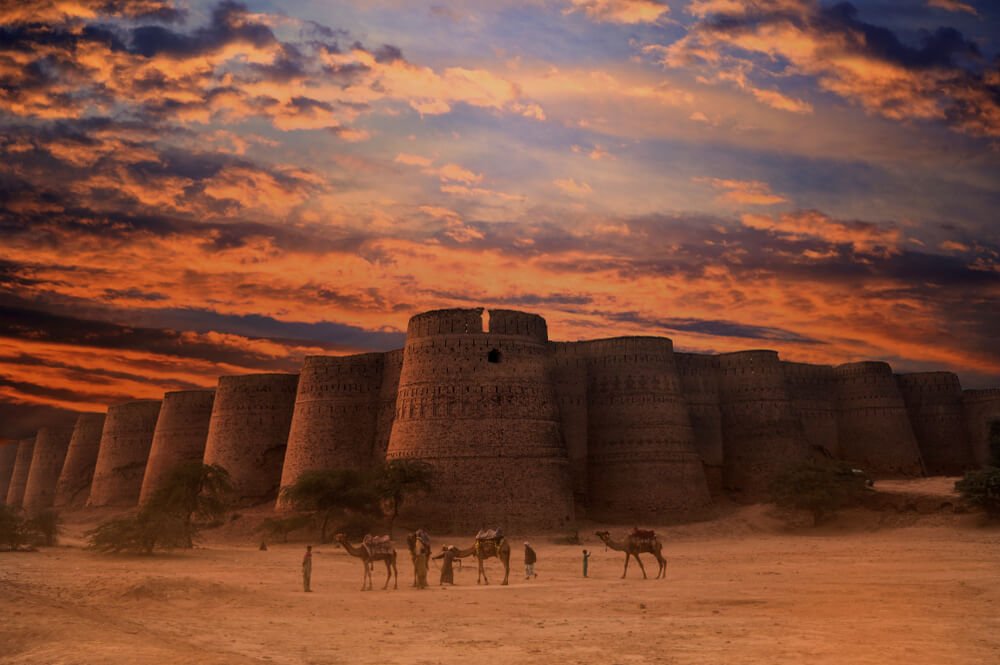
There are few sights in Pakistan that stop you in your tracks the way Derawar Fort does. You drive for over an hour through empty Cholistan scrubland, past camels and the odd mud-brick hamlet, and then suddenly it is there: a perfect square of forty massive towers rising 30 metres into the sky, glowing the colour of the desert itself. It looks less like a building and more like something the earth decided to grow. No photograph prepares you for the scale. Each side of the square runs about 200 metres, the walls circle a kilometre and a half, and every bastion is wrapped in delicate geometric brickwork that catches the light at sunrise and sunset.
This is not a ruin you admire from a rope line. Derawar is the kind of place you walk around slowly, touching the brick, climbing what you can, listening to a guide explain how this fortress once guarded the caravans crossing the desert between Central Asia and India. Standing there, with the wind moving the sand and no city sound anywhere, you understand what a fort really was: not a museum, but a living promise of safety in a place that offered none.
Derawar is perfect for travellers who have already seen Lahore’s Mughal forts and want something rawer. It suits families who want a genuine desert adventure without trekking into deep wilderness, photographers chasing golden-hour light, and history lovers who enjoy their stories with real dates, real rulers, and real consequences. It is also the setting of the annual Cholistan Desert Jeep Rally, when the quiet desert explodes with roaring engines and tens of thousands of spectators. Plan your visit for the rally weekend and you get history and spectacle in one trip.
The honest part of the story is that Derawar is fragile. The walls are crumbling in places, restoration moves slowly, and the fort sits on the tentative list for UNESCO recognition precisely because it needs protection. Visiting now means seeing it in a raw, unpolished state that will not last forever. Come respectfully, bring your water and your curiosity, and you will leave with one of the strongest travel memories Pakistan can offer.
History of Derawar Fort
The history of Derawar Fort begins in the 9th century, when the desert still had a river. Around 858 CE, Rai Jajja Bhatti, a Hindu ruler of the Bhatti clan, raised a fort here in honour of Rawal Deoraj Bhati, the king of Jaisalmer. The name was Dera Rawal, which over the centuries softened into Dera Rawar and finally Derawar. At that time the fort stood beside the Hakra River, and its purpose was brutally practical: to guard the scarce water and shelter on the caravan and pilgrim routes that crossed the desert. Forts like this were the service stations of the ancient world, and Derawar was one of a whole chain of them strung across the Cholistan.
The fort remained in Rajput hands for centuries, changing hands among local powers until the 18th century, when the Muslim Nawabs of Bahawalpur took it from the Shahotra tribe. In 1732 the Abbasi ruler Nawab Sadeq Muhammad rebuilt it in the form we see today: the great square, the forty bastions, the intricate brick patterns. The Abbasis held it only briefly at first; in 1747 it slipped from their control because Bahawal Khan was occupied with affairs at Shikarpur. Nawab Mubarak Khan recaptured it in 1804, and from then on Derawar was firmly a Bahawalpur state stronghold.
The Nawabs used Derawar as both fortress and royal residence. Tradition holds that Nawab Sadeq Muhammad Khan I held an open court here every Thursday, settling every kind of legal matter, even capital cases, in an open-air assembly inside the fort. In 1904, the last ruler of Bahawalpur state, Nawab Sadeq Muhammad Khan Abbasi V, was born within these walls. Archaeologists have found 1,000-year-old catapult shells in the debris near a decaying wall, a reminder that this fortress saw real sieges long before the Abbasi period.
Today the fort is owned by the Bahawalpur royal family and is on the tentative list of sites nominated for the UNESCO World Heritage List. Its red clay-brick walls, 1.5 kilometres in perimeter and up to 30 metres high, are visibly deteriorating, and the Bahawalpur archaeology department has carried out partial repairs, but much more work is needed. That is part of why this Derawar Fort travel guide matters: the fort’s future depends on visitors who care enough to come, see, and keep talking about it.
Top Things to Do in Derawar Fort
Walk the Perimeter and Photograph the Bastions
The single best activity at Derawar is also the simplest: walk slowly around the outside of the fort and study the brickwork. Each of the forty circular bastions is decorated with cut-brick geometric patterns, and the colour of the walls shifts through the day from pale gold to deep copper. Photographers should arrive for the last two hours of daylight, when the low sun rakes across the patterned brick. Drones give the most spectacular views of the perfect square layout, but check local rules before flying.
See the Abbasi Mosque
Just outside the fort stands the Abbasi Mosque, built in 1849 by Nawab Bahawal Khan on the model of Delhi’s Moti Masjid. Its white marble domes and carved facade create a stunning contrast with the red-brick fort behind it. The mosque can hold around 10,000 worshippers and remains an active place of worship, so dress modestly and time your visit around prayer hours.
Visit the Royal Graveyard
Near the fort lies the burial ground of the Nawabs of Bahawalpur, an elegant cluster of marble tombs. Visiting the graveyard usually requires the same prior permission from the royal family as the fort interior, so arrange it in advance through the same contact. It is a quiet, dignified place and an important part of the Bahawalpur story.
Ride a Camel Across the Cholistan
Local handlers near the fort offer camel rides into the surrounding desert, especially in the cooler months and during the jeep rally season. It is a short, easy ride, ideal for children, and the photos with the fort looming behind you are worth the small cost. Bargain politely and agree on the price before mounting.
Attend the Cholistan Desert Jeep Rally
If you time your trip to the annual Cholistan Desert Jeep Rally, usually held in February, you will see the desert come alive. Tens of thousands of spectators gather near the fort to watch hundreds of off-road vehicles roar across the sand. The fort makes an unforgettable backdrop for the race, and the event village adds music, food stalls, and a festival atmosphere to the trip.
Famous Places In and Around Derawar Fort
- Abbasi Mosque: The 1849 white-marble mosque beside the fort, modelled on Delhi’s Moti Masjid.
- Royal Graveyard: The marble tombs of the Nawabs of Bahawalpur, a short distance from the fort walls.
- Noor Mahal: The Italian-style palace of the Nawabs in Bahawalpur city, built in the late 19th century, with a small museum inside.
- Bahawalpur Museum: Artefacts from the Cholistan, including coins, pottery, and manuscripts from the region’s long history.
- Lal Suhanra National Park: South of Bahawalpur, a protected park with desert, wetland, and plantation forest zones, home to blackbuck and many bird species.
- Uch Sharif: The historic town of shrines a drive from Bahawalpur, famous for its blue-tiled Sufi tombs.
How to Reach Derawar Fort
Derawar Fort sits about 95 kilometres from Bahawalpur city and about 45 kilometres from Ahmedpur East (Dera Nawab Sahib), and almost every visitor reaches it by road. The route from Bahawalpur takes the National Highway N-5 towards Ahmedpur East, then turns onto the Ahmedpur-Derawar road that runs straight into the desert. The first stretch is paved and ordinary; the last section can be rough, which is why a 4WD vehicle is recommended. The drive from Bahawalpur takes roughly 1.5 hours, and the full round trip, including sightseeing time, needs about 3 to 4 hours.
There is no public bus to the fort itself. The practical options are a hired car or taxi from Bahawalpur, a 4×4 hired in Bahawalpur or Ahmedpur East for around PKR 5,000-8,000 per day, or a guided day tour from Bahawalpur, which typically costs around PKR 3,000-6,000 per person and bundles transport, a guide, and sometimes a meal. Travellers on a tight budget can take a bus from Bahawalpur to Ahmedpur East for around PKR 100-200, then hire a local taxi onward, but agree on the fare and the waiting time before you set off.
The nearest airport is Bahawalpur Airport, with flights from Karachi, Lahore, and Islamabad. From Islamabad the road journey to Bahawalpur is around 850 kilometres, roughly 11 to 12 hours of driving; from Lahore it is around 400 kilometres, about 6 hours; from Karachi it is around 870 kilometres, about 12 to 13 hours. Most travellers break the journey with a night in Bahawalpur and visit the fort as a day trip.
Two practical notes matter more than anything else. First, the fort and the royal graveyard are private property of the Bahawalpur royal family, and entering them requires prior permission from the current Amir of Bahawalpur. Arrange this in advance through a tour operator or a local contact; do not assume you can walk in. Second, fill your fuel tank and buy water in Bahawalpur or Ahmedpur East, because there are almost no fuel stations or shops near the fort. There is a small entry fee at the fort, usually around PKR 50 per person, which can change.
Route Details
- Start in Bahawalpur city with a full tank of fuel and drinking water.
- Take the N-5 National Highway south towards Ahmedpur East (Dera Nawab Sahib), about 50 kilometres.
- Turn onto the Ahmedpur-Derawar road and follow it about 45 kilometres into the Cholistan Desert.
- Park at the visitor area near the fort walls; the Abbasi Mosque is visible from the road before you arrive.
- Return the same way; allow 2 to 3 hours at the site for the fort, the mosque, and photography.
Where to Stay in Derawar Fort
There are no hotels at the fort itself, so nearly everyone stays in Bahawalpur, which has a solid range of accommodation for a city of its size. Mid-range hotels cluster around the city centre and near the airport road, with clean rooms, air conditioning, and breakfast for budget-friendly rates. A few higher-end properties offer the kind of comfort international travellers expect, including restaurants and reliable Wi-Fi. For the truly budget-conscious, guesthouses and rest houses in Bahawalpur are available for modest nightly rates.
During the Cholistan Desert Jeep Rally, adventurous travellers sometimes camp near the fort in tents arranged by tour operators or the rally organisers. Desert camping in February is pleasant, with cool nights and star-filled skies, but it is only sensible through an organised camp with proper facilities and permissions. Book Bahawalpur hotels early if you visit during the rally, because the city fills up.
Where to Eat: Local Foods of Derawar Fort
Food near the fort is basic, so eat a proper meal in Bahawalpur or Ahmedpur East before heading into the desert and carry snacks and water. There are a few tea stalls near the fort that serve chai and biscuits, but plan on these as refreshments rather than meals.
Bahawalpur’s food is classic Saraiki country cooking: slow-cooked mutton dishes, sajji (whole lamb roasted over open coals), daal and roti cooked in desi ghee, and sweet halwa puri breakfasts. The city’s bazaars and food streets serve all of these at budget-friendly prices, with a full meal for one person typically costing a few hundred rupees. During the jeep rally, food stalls set up near the fort sell barbecue, karahi, and tea to the crowds. Carry dates and water for the fort itself, and if you are invited to share a meal with Cholistani locals, accept: desert hospitality is generous and memorable.
Weather in Derawar Fort
The Cholistan Desert has a harsh desert climate, and timing your visit around it is the single most important decision in any Derawar Fort travel guide. Summer is genuinely punishing, with temperatures pushing toward 48 degrees Celsius and hot winds. Winter days are pleasant but nights turn cold. The comfortable window runs from October to March, which is when most visitors come.
| Season | Temperature Range | Conditions |
|---|---|---|
| Winter (Dec-Feb) | 5 to 22 C | Cool, pleasant days; cold desert nights; best season for visiting |
| Spring (Mar-Apr) | 15 to 35 C | Warming up; still comfortable for morning and evening visits |
| Summer (May-Aug) | 35 to 48 C | Extremely hot with dust-laden winds; avoid midday; not recommended |
| Autumn (Sep-Nov) | 20 to 38 C | Cooling gradually; late autumn is excellent for the fort |
Language and Culture of Derawar Fort
The Cholistan region is Saraiki country. Saraiki is the language you will hear in the bazaars of Bahawalpur and Ahmedpur East and among the desert communities around the fort, with Punjabi and Urdu also widely understood. Learning a few Saraiki greetings earns warm smiles, but Urdu is perfectly adequate for the whole trip.
The desert people of the Cholistan have a culture built around hospitality, livestock, and resilience. If you meet nomadic families near the fort, treat them with the same respect you would show any host: greet first, ask before photographing people, and accept offered tea when you can. Dress modestly, especially women, who should carry a scarf for the mosque visit. The Abbasi Mosque is an active place of worship, so remove shoes, keep your voice low, and avoid visiting during prayer times unless you intend to join.
Shopping in Derawar Fort
The fort area itself has only a few small shops selling drinks, snacks, and basic souvenirs. Real shopping happens in Bahawalpur city. The region is known for Cholistani crafts: khaddar (handwoven cloth), rilli (colourful patchwork quilts), camel-wool shawls, and embroidered items made by desert communities. Bahawalpur’s bazaars also sell dates and dry fruits, traditional choori bangles, and blue pottery in the Multan style. Buy crafts directly from artisans when you can; the money goes straight to the families who make them.
Local Events and Festivals
The Cholistan Desert Jeep Rally is the landmark event of this region and the main reason thousands of travellers time their visit to Derawar. Organised annually, usually in February, it is one of Pakistan’s biggest motorsport festivals, with hundreds of off-road vehicles racing across desert tracks near the fort. Tens of thousands of spectators attend, and the event includes music, food stalls, and cultural performances alongside the racing. Bahawalpur city also hosts cultural events in winter, but the jeep rally is the one to plan around: book hotels and transport well in advance for rally weekend.
Travel Tips for Derawar Fort
Packing Essentials
Sun protection is non-negotiable: a wide-brimmed hat, sunglasses, and strong sunscreen, even in winter, because the desert sun reflects off the sand. Carry at least two litres of drinking water per person; there is no reliable water at the fort. Wear sturdy closed shoes for the rough ground around the walls, and bring a light jacket from November to February because desert nights are cold. A camera with a zoom lens rewards you; binoculars are useful for spotting desert birds.
Safety Tips
The trip is safe with normal precautions. Travel with a hired driver who knows the desert route rather than self-driving on your first visit. Stay on the marked tracks; desert sand hides soft patches and thorn scrub. Do not climb unstable or visibly crumbling sections of the wall. Keep children close near the fort’s edges and old stairways. If you visit during the jeep rally, follow the spectator barriers and marshals: rally vehicles move fast and the desert is their track.
Money & Connectivity
Carry cash. There are no ATMs and no card-accepting shops anywhere near the fort; the last reliable ATMs are in Bahawalpur and Ahmedpur East. Mobile signals reach the fort area but can be weak and drop out in the surrounding desert. Download offline maps before leaving Bahawalpur, and let your hotel know your expected return time.
Best Time to Visit Derawar Fort
Winter (December to February) — the peak season
This is the best time to visit Derawar Fort. Days are comfortably cool, the desert light is at its clearest, and camel rides and long walks are pleasant. The jeep rally usually falls in this window, so February brings both perfect weather and the biggest event of the year.
Spring (March to April) — still good
Temperatures climb but mornings and late afternoons remain fine for sightseeing. The crowds thin out, so you may have the fort almost to yourself, especially on weekdays.
Summer (May to August) — avoid
The Cholistan summer is one of the harshest in Pakistan. Daytime temperatures can approach 48 degrees Celsius, the wind carries fine sand, and walking around the fort becomes genuinely uncomfortable. Skip this season unless you have no choice, and if you must go, visit at dawn and leave by mid-morning.
Autumn (September to November) — the smart season
As the heat breaks, October and November offer near-winter comfort with fewer visitors than the rally months. For travellers who want good light, easy walking, and quiet, this is arguably the finest time of all.
Final Thoughts
Derawar Fort rewards the traveller who goes beyond Pakistan’s famous mountain circuit. It is not polished, it is not crowded, and it does not apologise for the desert around it. What it offers instead is one of the most powerful historical landscapes in South Asia: a 1,200-year-old fortress standing guard over an empty ocean of sand, built for kings and caravans, still watching the same horizon.
Go between October and March, arrange your permission and transport in Bahawalpur, carry water, and give the fort the slow afternoon it deserves. If you can, stay for sunset, when the red bricks seem to hold the day’s last fire. And if your visit falls on jeep rally weekend, enjoy the roar: it is the desert’s modern caravan, passing the same fort the old ones did. For more heritage inspiration in the region, see our guide to the Abbasi Mosque at Derawar, the Bahawalpur Museum, and browse all our destinations in Explore Pakistan.
FAQs
Where is Derawar Fort located?
Derawar Fort is in the Cholistan Desert, in Ahmadpur East tehsil of Bahawalpur District, Punjab, Pakistan, about 95 kilometres from Bahawalpur city.
What is the best time to visit Derawar Fort?
October to March, when desert temperatures are pleasant. February is especially lively because of the annual Cholistan Desert Jeep Rally.
How do I reach Derawar Fort from Bahawalpur?
Drive via the N-5 to Ahmedpur East, then take the Ahmedpur-Derawar road into the desert. The trip is about 95 kilometres and takes roughly 1.5 hours; a 4WD is recommended.
Do I need permission to enter Derawar Fort?
Yes. The fort is privately owned by the Bahawalpur royal family, and you need prior permission from the current Amir to enter the fort and the royal graveyard. Arrange it in advance.
Is Derawar Fort safe for families?
Yes, with normal care. Visit in the cooler months, carry water, stay with your group near old walls, and travel with a driver who knows the desert route.
Is there an entry fee for Derawar Fort?
There is a small entry fee, usually around PKR 50 per person, though it can change. Bring cash, as there are no card facilities at the fort.
What is near Derawar Fort?
The Abbasi Mosque (1849) and the royal graveyard are right beside it. In Bahawalpur city, visit Noor Mahal, the Bahawalpur Museum, and Sadiq Palace; Lal Suhanra National Park is south of the city.
What food should I try near Derawar Fort?
Eat in Bahawalpur before your trip: sajji, slow-cooked mutton dishes, daal with desi ghee, and halwa puri for breakfast are the regional signatures. Near the fort, expect only tea stalls and snacks.