Quick Facts
- Location: Nasirabad tehsil, Neelum Valley, Muzaffarabad District, Azad Jammu and Kashmir, Pakistan
- Altitude: Around 1,092 metres (3,583 feet) above sea level
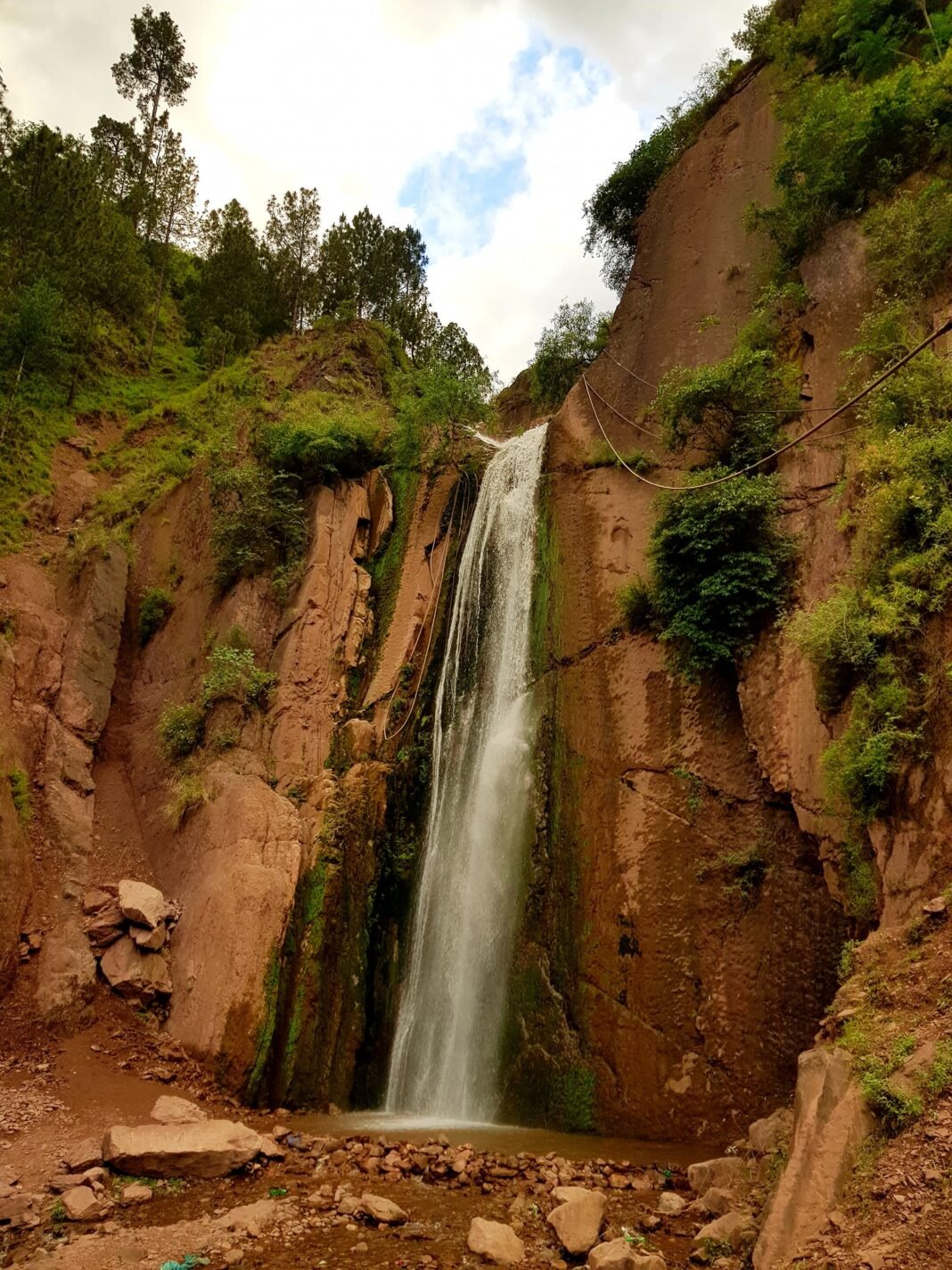
- Famous For: The highest waterfall in Neelum Valley, dropping about 15 metres (50 feet) right beside the main valley road
- Nearest City: Muzaffarabad, around 38 kilometres away (about a 40-minute drive)
- Accessibility: Directly on the Muzaffarabad-Athmuqam road; most vehicles simply pull over. No trekking required
- Known Landmarks: The cascade itself, roadside tea stalls, the valley gateway views up the Neelum
- Best For: Road-trippers, families, photographers, first-time Neelum Valley travellers
Why Visit Dhani Waterfall
Every great valley has a gate, and in the Neelum Valley that gate is a waterfall. Dhani Waterfall is the first genuinely dramatic sight after Muzaffarabad, tumbling about 15 metres off a green mountainside straight onto the valley road. You hear it before you see it, and then it fills your windscreen: white water, moss-dark rock, pine slopes behind, and a mist that drifts across the tarmac. It is the moment the trip stops being a drive and starts being an adventure.
What makes Dhani special is not just its height — though at around 50 feet it is regarded as the highest waterfall in the Neelum Valley — but its generosity. This is a waterfall that asks nothing of you. No steep hike, no entry gate, no long queue. You pull over, step out, take the photo, drink tea at one of the roadside stalls, and stand in the spray for a minute. Fifteen or thirty minutes here resets the whole journey, which is exactly why seasoned Neelum travellers call it the valley’s natural first stop.
Dhani is perfect for travellers doing the classic Muzaffarabad-to-Kel road trip, and it fits every kind of group. Families love it because children can enjoy it without a trek; photographers love it because the roadside vantage gives clean, uncluttered shots; and first-time northern travellers love it because it is their first taste of what the valley does best. If you are short on time and can only make one stop between Muzaffarabad and Keran, this is the one.
Come in summer and the waterfall runs at its fullest, fed by snowmelt from the peaks above. Come in spring and you get it framed by fresh green. Come in autumn and the surrounding slopes turn gold. There is no bad angle on Dhani, only better light — and the light is always worth waiting a few minutes for.
History of Dhani Waterfall
Waterfalls do not have founding dates, and Dhani’s history is the history of the Neelum Valley itself. The cascade has flowed off these slopes for far longer than any road, and for generations it served local people as a landmark on the old track up the valley — the first big falling water you met after leaving Muzaffarabad. Its name, Dhani Noseri, comes from the nearby locality of Noseri in Nasirabad tehsil, and older travellers of the valley knew it as the gateway fall long before tourism arrived.
The valley’s recorded history shapes how travellers experience Dhani today. Neelum Valley sits in Azad Jammu and Kashmir, a region shaped by the 1947 partition, the wars that followed, and the long quiet rebuilding of the tourist road up the valley. The Muzaffarabad-Athmuqam road that now runs past the falls was developed and improved over decades, turning what was once a hard mountain track into the well-travelled route it is today. Each improvement made Dhani more visible, and by the 2010s it had become one of the most photographed roadside stops in Azad Kashmir.
Locally, the waterfall has always been woven into the social life of the valley. Families from Muzaffarabad drive out here on warm weekends, tuck shops and tea stalls grew up to serve the passing trade, and the falls became the customary place where a Neelum road trip pauses. The 2005 earthquake devastated Muzaffarabad and the surrounding districts, and the valley’s recovery over the years since has included the very road infrastructure that brings travellers to Dhani’s roadside pool today. Visiting now, you are seeing a place that has meant rest and refreshment to travellers for generations — it simply has a better road and better tea stalls than before.
Top Things to Do in Dhani Waterfall
Stand in the Spray and Take the Classic Photo
The essential Dhani experience takes five minutes: walk to the base of the falls, feel the mist, and take the shot with the full cascade behind you. Early morning gives the softest light and the fewest crowds; late afternoon gives the warmest colour on the rock. A rain cover for your camera bag is worth carrying, because the spray drifts further than you expect.
Picnic and Tea at the Roadside Stalls
The tea stalls beside the falls are part of the experience. Order a hot cup of chai, sit on a stone or a stall bench, and watch the water come down. The stalls also sell biscuits, crisps, and light snacks — enough for a relaxed break. Locals say the combination of cold mist and hot tea is the valley’s best free therapy.
Short Walks on the Slopes
The hillside around the waterfall offers short scrambles and nature walks through shrubs and pines. The views back down the valley from even a small height are excellent. Stick to the obvious paths, wear shoes with grip, and avoid the wet rock directly beside the falls, which is slippery.
Bathing and Paddling at the Base
The natural pool at the base is a favourite for a cold paddle or a quick dip in summer, and many visitors bathe in the shallows. The water is glacier-cold even in July, so enter slowly, and do not attempt to climb into the main flow or swim without being confident in cold, fast water.
Build Dhani Into a Neelum Valley Day Trip
Dhani works best as the opening chapter of a longer day. Continue up the valley to the Red Fort in Muzaffarabad’s old quarter on the way back, stop at Tetwal viewpoint further along, or push on to Keran for a riverside overnight. Travellers with more days use Dhani as day one’s first stop on the classic route to Kutton, Sharda, Kel, and Arang Kel.
Famous Places In and Around Dhani Waterfall
- Kutton Waterfall: Another famous valley waterfall, around 73 kilometres from Muzaffarabad towards Neelum, near the Kutton resort cottages.
- Red Fort, Muzaffarabad: The 16th-century fort of the Chak rulers, locally called Rutta Qila, on the Neelum riverbank in Muzaffarabad.
- Kohala Bridge: The graceful bridge over the Jhelum at Kohala on the Murree road, a classic photo stop entering Azad Kashmir.
- Keran: A riverside town up the valley with guesthouses facing the Neelum River and views across the Line of Control.
- Sharda: The valley’s historic centre, with the ancient Sharda Peeth ruins nearby, reached by the road beyond Keran.
- Arang Kel: The famous meadow village above Kel, reachable by chairlift and a short hike — the classic Neelum finale.
How to Reach Dhani Waterfall
Dhani Waterfall could hardly be easier to reach: it sits directly on the Muzaffarabad-Athmuqam road, about 38 kilometres from Muzaffarabad, and the drive takes around 40 minutes. From Muzaffarabad, head out of the city on the Neelum Valley road (also called the Neelum road), and you will find the waterfall spilling across the roadside near Noseri. There is no turn-off to miss and no trek at the end; most travellers simply pull over.
From Islamabad, the standard route is the Murree Expressway and Kohala road to Muzaffarabad, about 138 kilometres and roughly 3.5 to 4 hours of driving. From Lahore, the journey to Muzaffarabad is around 380 kilometres, about 7 to 8 hours; from Karachi it is a long haul of over 1,500 kilometres, best broken with an overnight stop in Islamabad or Rawalpindi. Muzaffarabad’s bus stations run public vans and coasters up the Neelum road, and hiring a private car or jeep with a driver from Muzaffarabad is the most comfortable option for a family.
The nearest airport is Islamabad International Airport. There is no commercial airport in Muzaffarabad, so all air travellers connect through Islamabad. The road from Muzaffarabad to Dhani is paved and well developed, though it is a mountain road with curves and blind corners, so mountain driving experience matters. In winter the upper valley road beyond the falls can be affected by snow and landslides; check local conditions before heading past Keran in December to February. Refuel in Muzaffarabad, because fuel stations thin out as you climb the valley.
Route Details
- Reach Muzaffarabad from Islamabad via the Murree Expressway and Kohala road (about 138 km, 3.5-4 hours).
- Leave Muzaffarabad on the Neelum Valley road (Muzaffarabad-Athmuqam road) heading north-east.
- Drive about 38 kilometres (roughly 40 minutes) to the falls at Noseri; the cascade is visible from the road.
- Park at the roadside pull-off, keeping clear of traffic and the waterfall’s wet zone.
- Allow 15 to 30 minutes for photos, tea, and a paddle; continue up the valley to Keran or return to Muzaffarabad.
Where to Stay in Dhani Waterfall
Nobody sleeps at the waterfall itself — it is a roadside stop, not a village. Accommodation sits at both ends of the short drive. Muzaffarabad, 40 minutes back down the road, has the widest choice: mid-range hotels in the city centre, budget guesthouses, and a few well-kept properties near the river with views. Rooms are generally budget-friendly by northern-area standards.
If you want to wake up in the valley rather than the city, continue past Dhani to Keran, where riverside guesthouses and small hotels line the road with the Neelum River running below. Further up, Kutton has resort cottages in a pine setting that many travellers rate as the most comfortable stay in the lower valley. Book ahead in the June-to-August peak season, when the whole valley fills up; in spring and autumn you can usually find rooms on arrival. Name a hotel only from a current booking platform listing, because properties change fast in this valley.
Where to Eat: Local Foods of Dhani Waterfall
Eating at Dhani means the roadside tea stalls: hot chai, pakoras, biscuits, and boiled eggs, eaten with the waterfall as your view. For real meals, Muzaffarabad and the valley towns are the answer. Kashmiri cuisine is the local star: try Kashmiri chai (the pink salt tea), dum aloo, rajma (red kidney beans) with rice, and river trout where it is offered. Dhabas along the Neelum road serve fresh roti, daal, and chicken or mutton karahi at very budget-friendly prices.
Carry snacks and at least a litre of water per person for the roadside stop, because the stalls near the falls sell light refreshments rather than full meals. A meal at a valley dhaba typically costs a few hundred rupees per person. If you are offered kahwa (green tea) by a local family, accept it — valley hospitality is warm and genuine.
Weather in Dhani Waterfall
At around 1,092 metres, Dhani sits in the valley’s temperate zone: cool enough to be refreshing in summer, cold enough to be brisk in winter. The waterfall flows year-round, fed by mountain springs, but snowmelt makes it strongest from June to September. Monsoon rains can swell the flow and make the surrounding rock slippery, so take care in July and August.
| Season | Temperature Range | Conditions |
|---|---|---|
| Winter (Dec-Feb) | 0 to 12 C | Cold and crisp; flow reduced; possible snow on the slopes; upper road may be blocked |
| Spring (Mar-May) | 10 to 22 C | Fresh green slopes; good flow; very pleasant for the road trip |
| Summer (Jun-Aug) | 18 to 30 C | Strongest waterfall flow from snowmelt; best weather; peak tourist season |
| Autumn (Sep-Nov) | 8 to 20 C | Golden slopes; steady flow; fewer crowds; excellent photography |
Language and Culture of Dhani Waterfall
The Neelum Valley is a meeting point of languages. Pahari is the everyday tongue of much of the valley, with Hindko spoken around Muzaffarabad, and Urdu understood everywhere along the tourist road. You will also hear Kashmiri and Gojri in places. A greeting in Urdu gets you everywhere; a smile gets you the rest.
Valley culture is mountain culture: conservative, hospitable, and community-minded. Dress modestly, especially women, and ask before photographing people — most locals are happy to pose once asked. The stalls and dhabas run on trust and conversation; unhurried friendliness is the local currency. Respect prayer times at the small mosques along the road, and keep the waterfall area clean, because this is a place local families also come to enjoy.
Shopping in Dhani Waterfall
There is no bazaar at the waterfall, only the tuck shops selling drinks and snacks. For souvenirs, shop in Muzaffarabad before heading up the valley or in Keran on your way back. The valley’s specialities are walnuts and dried fruits, honey from mountain hives, woollen shawls and caps, and carved walnut-wood items. Buy walnuts and honey from roadside vendors where you can see the produce; prices are fair and bargaining is gentle rather than fierce.
Travel Tips for Dhani Waterfall
Packing Essentials
A light rain jacket or windbreaker is essential at the falls even in summer, because the spray soaks you faster than you expect. Wear shoes with good grip for the wet rocks; flip-flops are a bad idea here. Carry drinking water, sun protection, and a dry bag or plastic cover for phones and cameras. In winter, add warm layers and check whether the upper valley road is open before you set out.
Safety Tips
Mountain roads demand respect. Drive slowly on the curves, use your horn on blind bends, and never stop in the middle of the road for a photo — use the pull-offs. Keep children well back from the wet rock at the base of the falls, which is extremely slippery. The water is cold and the flow is strong; do not climb into the main cascade. Travel in daylight; the valley road has no street lighting.
Money & Connectivity
Carry cash from Muzaffarabad or Islamabad. ATMs are scarce in the valley and the stalls at the falls take cash only. Mobile signals from the major networks reach the falls area, though coverage gets patchy further up the valley. Download offline maps before leaving Muzaffarabad and let someone know your day’s plan.
Best Time to Visit Dhani Waterfall
Summer (June to September) — the classic season
This is the best time to visit Dhani Waterfall. Snowmelt keeps the flow at its strongest, the weather is warm and comfortable, and the whole valley is green. It is also peak season, so expect company at the roadside — arrive early for the quietest photos.
Spring (March to May) — the fresh season
The slopes are at their greenest, the flow is good, and the crowds have not arrived yet. A lovely time for travellers who prefer their waterfalls with space to breathe.
Autumn (October to November) — the golden season
The surrounding forest turns gold and the light is superb for photography. The flow is steady and the road is usually still clear. One of the finest times for the drive up the valley.
Winter (December to February) — the quiet season
Cold and dramatic, with possible ice formations at the falls and snow on the slopes. The flow is at its lowest and the upper valley road can be blocked by snow, so check conditions and travel only in a suitable vehicle.
Final Thoughts
Dhani Waterfall is proof that the best travel moments are often the unplanned ones: a pull-off on a mountain road, a wall of falling water, a cup of tea in the mist. It asks for thirty minutes of your day and pays you back with the single image that defines the whole Neelum Valley drive. Whether it is your first waterfall or your fiftieth, there is something about Dhani’s position — right at the valley’s door, greeting every traveller — that makes it feel personal.
Build it into day one of your Neelum itinerary, arrive with your camera ready, and let it set the tone for everything upstream: the deeper valleys, the higher meadows, the bigger adventures. For more northern inspiration, see our guides to Hunza Valley and Malam Jabba, and if you continue up the valley, our Arang Kel travel guide covers the valley’s famous meadow village.
FAQs
Where is Dhani Waterfall located?
Dhani Waterfall, also called Dhani Noseri Waterfall, is in Nasirabad tehsil of Neelum Valley, Muzaffarabad District, Azad Jammu and Kashmir, about 38 kilometres from Muzaffarabad.
What is the best time to visit Dhani Waterfall?
June to September, when snowmelt keeps the flow at its strongest. Spring and autumn are also lovely, with fewer crowds.
How do I reach Dhani Waterfall from Muzaffarabad?
Drive the Neelum Valley road (Muzaffarabad-Athmuqam road) about 38 kilometres, roughly 40 minutes. The waterfall is right beside the road — no trekking needed.
Is Dhani Waterfall safe for families?
Yes. It is a roadside stop with easy access, though you should keep children back from the slippery wet rocks and supervise them near the water.
Can I swim at Dhani Waterfall?
Many visitors paddle and bathe in the shallows at the base in summer. The water is cold and the flow strong, so stay out of the main cascade.
How much time do I need at Dhani Waterfall?
Allow 15 to 30 minutes for photos, tea, and a short walk. It is best combined with a longer Neelum Valley day trip or multi-day itinerary.
What is near Dhani Waterfall?
Kutton Waterfall further up the valley, the Red Fort and Kohala Bridge near Muzaffarabad, and the valley towns of Keran, Sharda, Kel, and Arang Kel upstream.
What food is available at Dhani Waterfall?
Roadside tea stalls serve chai and light snacks. For full meals, eat in Muzaffarabad or at dhabas along the valley road — try Kashmiri chai, dum aloo, and rajma with rice.