Quick Facts
- Location: Taxila, Punjab, Pakistan — about 30 to 35 kilometres west of Islamabad on the historic Grand Trunk Road (N-5)
- Altitude: around 550 metres (the Taxila plain)
- Famous For: Living Gandhara-style stone carving — master artisans hand-carving the famous Taxila black stone into Buddha busts, reliefs and decorative pieces
- Nearest City: Rawalpindi / Islamabad (Islamabad International Airport is the nearest airport)
- Accessibility: Easy day trip by road — fully paved Grand Trunk Road, roughly 45 minutes to an hour from Islamabad by car
- Known Landmarks: Gandhara Art Village (Punjab Small Industries Corporation craft village), Taxila Museum, Dharmarajika Stupa, Julian Monastery, Bhir Mound, Sirkap
- Best For: Art lovers, history buffs, photographers, families on a cultural day trip, and anyone shopping for an authentic hand-carved souvenir of Pakistan
Why Visit Gandhara Art Village, Taxila
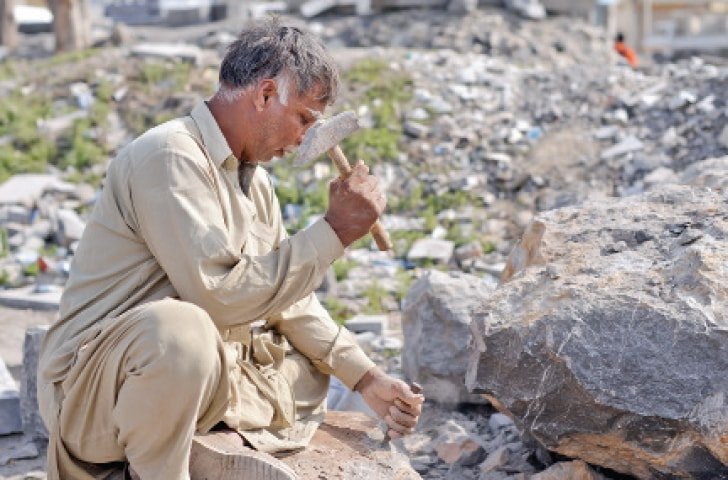
Most people come to Taxila for its ruins — the ancient stupas and monasteries scattered across the valley that have sat silent for over a thousand years. But there is one place in Taxila where Gandhara art is not a relic behind museum glass. It is alive. Hammers tap, chisels ring, and fine black-stone dust hangs in the air as master artisans carve serene Buddha faces out of hard Taxila black stone, exactly the way their ancestors did when this city was the beating heart of the Gandhara civilization. That place is the Gandhara Art Village, and if you care about art, craft, or the living heritage of Pakistan, it deserves a place on your travel list.
This is one of the rare stops in Pakistan where you can watch a centuries-old craft being practiced in real time, talk to the craftsmen about their work, and then buy a piece directly from the hands that made it. The village was set up by the Punjab Small Industries Corporation (PSIC) precisely to keep the stone-carving tradition of Taxila alive and give its artisans a market-facing home. You can watch an artisan rough out a Buddha bust from a block of black stone, then walk over to the display areas and see finished pieces — from small mortar-and-pestle sets (langris) to intricate relief panels that echo the famous Gandhara friezes now sitting in museums around the world. It is the closest thing Pakistan has to a living Gandhara workshop.
The village also makes the perfect companion stop on a Taxila day trip. Pair it with the Taxila Museum, the Dharmarajika Stupa and the Julian Monastery, and you get the full arc of Gandhara: the ancient masterpieces in the morning, and the living tradition in the afternoon. Photographers will find the workshops wonderfully atmospheric, families will find the hands-on demonstrations far more engaging for kids than silent ruins, and art buyers will find prices far kinder than gallery shops in Islamabad. Come curious, leave with a carved memory of one of humanity’s great artistic traditions — still breathing, still carving, still here.
History of Gandhara Art Village, Taxila
To understand the Art Village, you first have to understand Taxila itself. Taxila is one of the oldest continuously inhabited urban sites in South Asia, with a recorded history stretching back over 3,000 years. The 3,000-year-old city was long known as the “city of artisans” because of the craftsmen who produced the rich, glorious and distinct Gandhara art. The Gandhara civilization itself flourished from around the 1st century BC to the 7th century AD, reaching its artistic peak under the Kushan kings — particularly King Kanishka in the 1st and 2nd centuries CE. It was here, in this valley, that sculptors created the first anthropomorphic (human-form) images of the Buddha, blending Greek, Roman, Central Asian and Indian influences into a hybrid style carved mostly in schist, often painted or gilded. That artistic revolution in Taxila went on to influence Buddhist art across Central Asia, China, Korea and Japan.
Even in modern times, Taxila’s artisans never fully stopped carving. For generations, the carvers of Dhabian village — set along the historic Dharma nullah (nullah means stream; Dharma relates to religion) that flows through the ancient land — have been hewing the hard black stone found in the area into Buddha busts, replicas and artefacts of the Gandhara period. Visitors to Dhabian have long been astonished to see local artisans working entirely from memory, their small hammers and chisels producing faithful replicas of centuries-old creations without a single drawing to copy from. Their clientele extended beyond domestic tourists to the Islamabad-based diplomatic community, and their work was even exported abroad.
But the craft has been under pressure for decades. A lack of patronage, militant attacks that scared off foreign buyers and tanked exports, and the slow drift of younger generations toward other work meant the ancient art of Taxila stonecraft was, by many accounts, dying. The Gandhara Art Village is the organized response to that decline. The Gandhara Stone Art Village Association, working with the Punjab Small Industries Corporation (PSIC), the Trade Development Authority of Pakistan (TDAP) and COMSATS University, set out to mainstream the centuries-old skills of Taxila’s artisans using modern computer-based design technologies to produce market-oriented products. The idea, as the association’s chairman Syed Zaheer Hussain Shah explained, was to give artisans the capacity to produce better-quality artefacts — especially Gandhara art products — with proper design, value addition and product development, creating employment and economic activity in the area. TDAP officials have described it as a revival of the dying craft featuring the world-famous Taxila black stone, a craft for which Taxila is recognized globally.
Today the village stands as an active cultural-preservation initiative: training workshops, artisan studios and display spaces where the Gandhara carving tradition is taught to a new generation and sold to the world. It is not an archaeological site itself, but it plays a critical role in safeguarding the intangible heritage of Gandhara — the hands, the memory, and the black stone.
Top Things to Do in Gandhara Art Village, Taxila
Watch Master Artisans at Work
The single best reason to come is to watch the carvers. In the open workshops you can stand a few feet from artisans as they shape black stone with hammer and chisel — no power tools doing the delicate work, just hands, memory and decades of practice. Ask them about a piece in progress; most are happy to explain what they are carving and how long a Buddha bust takes from rough block to polished finish. Photography is generally welcomed — a polite ask first is always good manners.
Try Your Hand at Carving
The village periodically hosts workshops where visitors can observe artisans and even participate in creating their own small pieces. If a hands-on session is running on the day of your visit, take it. Carving even a simple motif gives you a completely different respect for the precision of the masters, and you leave with a personal souvenir no shop can sell you.
Shop the Stone Craft Market
The display and market areas are full of handcrafted stone products: serene Buddha busts and heads, Gandhara-style relief panels, carved friezes, flower pots, decorative pieces, gravestones and everyday items like langris (mortar and pestle sets). Because you are buying at the source, prices are typically far below what the same work fetches in Islamabad galleries. Look for fine detail in the drapery folds and facial expressions — the hallmarks of genuine Gandhara-style workmanship.
Learn the Story of Taxila Black Stone
Ask about the stone itself. The hard black stone of the Taxila area is what made this craft possible and what gives Taxila carvings their distinctive dark, polished finish. Artisans will tell you how the stone is quarried, how its hardness demands a particular technique, and why replicas carved from it have been prized from Taxila to export markets for generations.
Combine It With Taxila’s Ancient Sites
The Art Village pairs naturally with the archaeological circuit. Spend the morning at the Taxila Museum — home to one of the world’s finest Gandhara collections — then see the craft being kept alive in the afternoon. The contrast between 2,000-year-old masterpieces and living workshops is the whole story of Gandhara in a single day.
Famous Places In and Around Gandhara Art Village, Taxila
- Taxila Museum — one of the finest Gandhara art collections in the world, excavated from the surrounding sites
- Dharmarajika Stupa — one of the oldest and largest Buddhist stupas in the region, dating to the Mauryan era
- Julian Monastery — a hilltop monastic complex with some of the best-preserved Gandhara stucco sculpture
- Mohra Moradu — another major monastery site with a beautifully preserved stupa
- Bhir Mound — the earliest city site of Taxila, going back to the 6th century BC — see our Bhir Mound travel guide for the full story
- Sirkap — the planned Indo-Greek city with its grid streets and the famous double-headed eagle stupa
- Dhabian village — the traditional artisan settlement along the Dharma nullah, where carvers have worked for generations
- Khanpur Dam — a popular picnic and watersports spot a short drive from Taxila
How to Reach Gandhara Art Village, Taxila
Reaching the Gandhara Art Village is one of the easiest heritage day trips in Pakistan. Taxila sits right on the Grand Trunk Road (N-5), about 30 to 35 kilometres west of Islamabad — a straight, fully paved drive of roughly 45 minutes to an hour from the capital. The Art Village lies within the Taxila area and is well signposted locally; once you are in Taxila town, ask for the Gandhara Art Village (also referred to as the Gandhara Stone Art Village) and any local driver will know it.
From Islamabad: Take the Grand Trunk Road (N-5) west from Rawalpindi/Islamabad toward Peshawar. Taxila is about 30–35 km, roughly 45–60 minutes by car depending on traffic at the Rawalpindi end. Daewoo and other intercity buses, plus local wagons, run the route constantly if you are not driving yourself.
From Lahore: About 400 km via the M-2 motorway to Islamabad and then the N-5 to Taxila — roughly 4.5 to 5.5 hours of driving. Most visitors from Lahore make it a day trip from Islamabad or an overnight stay in the capital.
From Karachi: Fly to Islamabad International Airport (about a 2-hour flight), then drive 45–60 minutes to Taxila. By road it is a very long journey (over 1,400 km), so flying is the sensible option.
Nearest airport: Islamabad International Airport (ISB), roughly 40–50 km from Taxila. Ride-hailing cars, airport taxis and rental cars are all available at the terminal.
Road conditions: The Grand Trunk Road to Taxila is a major national highway and stays open year-round in all seasons. Summer heat makes midday visits uncomfortable, so plan an early start. Local transport within Taxila — rickshaws, Qingqis and taxis — can take you between the Art Village, the museum and the stupa sites.
Route Details
- Start from Islamabad (Faizabad / IJP Road side) and join the Grand Trunk Road (N-5) heading west toward Peshawar.
- Drive approximately 30–35 km through Rawalpindi’s outskirts and Wah Cantt — Taxila town is clearly signposted.
- On reaching Taxila, follow local signs (or ask any shopkeeper) for the Gandhara Art Village / Gandhara Stone Art Village.
- Park at the village and plan 2–3 hours for the workshops and market; pair it with the Taxila Museum (a few minutes’ drive) for a full day.
Where to Stay in Gandhara Art Village, Taxila
The Art Village is a day-trip destination — nobody needs to sleep in Taxila itself, though a couple of modest options exist in town. Nearly all visitors base themselves in Islamabad or Rawalpindi, which offer every tier of accommodation.
Luxury: Islamabad’s five-star hotels (Serena, Marriott and similar) are 45–60 minutes away and make a comfortable base for a Taxila day trip combined with the capital’s other sights.
Mid-range: Business hotels and boutique guesthouses cluster along Jinnah Avenue, Blue Area and in sectors F-6/F-7 of Islamabad, as well as on Murree Road in Rawalpindi. Expect comfortable rooms with breakfast, typically bookable online.
Budget and guesthouses: Rawalpindi’s older quarters and Islamabad’s budget hotels near Faizabad offer simple, clean rooms at very reasonable rates — ideal if you are touring Punjab’s heritage belt on a budget.
Camping: Not a camping destination. The Art Village is a working craft centre visited in daylight hours.
Where to Eat: Local Foods of Gandhara Art Village, Taxila
Taxila sits in Punjab’s food heartland, and the eating is hearty Punjabi fare. Around the Art Village and Taxila town you will find dhabas and small restaurants serving daal fry, saag with makai ki roti (in winter), chicken karahi, BBQ seekh kebabs and tikkas, and fresh tandoori naan. A filling dhaba meal is budget-friendly — expect a full meal for one to cost roughly PKR 300–600 at a local eatery.
Wah Cantt, just next door, has a well-known food street culture with BBQ shops that locals swear by. If you are combining the trip with Islamabad, the capital’s restaurants — from Burns Road-style desi food outlets to modern cafes — are under an hour away. Do try the seasonal sugarcane juice from roadside vendors in winter and fresh lassi in summer. Carry water in the hot months; Taxila’s summer afternoons are fierce.
Weather in Gandhara Art Village, Taxila
Taxila shares the Potohar plateau’s climate — hot summers, pleasant winters, and a monsoon spell in July and August. The Art Village is partly outdoors, so winter and spring are the most comfortable seasons for lingering in the workshops.
| Season | Temperature Range | Conditions |
|---|---|---|
| Winter (Dec–Feb) | 3–18°C | Cool, sunny days; chilly mornings and evenings. Best season for unhurried workshop visits. |
| Spring (Mar–Apr) | 15–30°C | Pleasant and green. Ideal for combining the village with the outdoor stupa sites. |
| Summer (May–Jun) | 25–42°C | Very hot afternoons. Visit early morning or late afternoon; carry water and sun protection. |
| Autumn (Sep–Nov) | 20–35°C | Warm days cooling off nicely. A good second-best season after winter. |
Monsoon (July–August) brings humid spells and occasional heavy rain; the Grand Trunk Road stays open but outdoor site-hopping gets soggy.
Language and Culture of Gandhara Art Village, Taxila
The everyday language of Taxila is Punjabi (with the Potohari flavour of the region), and Urdu is universally understood. Many artisans also speak some English, especially those who deal with foreign buyers and the diplomatic community.
Culturally, this is a working craft community, not a tourist show. A few courtesies go a long way: ask before photographing an artisan up close, don’t touch unfinished pieces without permission, and bargain politely in the market — gentle haggling is expected, aggressive lowballing is not. Dress is casual Pakistan — modest clothing is appreciated, as at any heritage site. If you are offered tea in a workshop, accept it; hospitality is part of the experience.
Shopping in Gandhara Art Village, Taxila
Shopping is half the point of coming here. The village market is the best place in Pakistan to buy authentic Gandhara-style stone craft at source prices: Buddha busts and heads, carved relief panels, friezes, decorative vases, flower pots, langris (mortar and pestle) and small carved souvenirs. The famous Taxila black stone pieces — polished to a deep sheen — are the signature buy.
Beyond the village, Taxila town’s bazaars sell everyday goods, and Islamabad’s handicraft shops (about an hour away) carry curated Gandhara replicas at higher prices. There is no shopping mall at the Art Village itself — this is an artisan market, which is exactly its charm. Inspect pieces carefully for fine detailing and ask whether a piece is hand-carved or machine-assisted; the hand-carved work commands a premium and is worth it.
Travel Tips for Gandhara Art Village, Taxila
Packing Essentials
Sun protection (cap, sunscreen) for summer visits, a light jacket for winter mornings, comfortable walking shoes, drinking water, and cash in small notes for market purchases. A camera is a must — the workshops are wonderfully photogenic.
Safety Tips
Taxila is a peaceful, well-trafficked heritage area on a major highway. Standard travel sense applies: keep valuables discreet in markets, agree rickshaw/taxi fares before the ride, and drink bottled or filtered water.
Money & Connectivity
ATMs are available in Taxila town and Wah Cantt, but the artisan market runs on cash — bring enough for the pieces you hope to buy, as card machines are rare in the workshops. Mobile signals from all major networks (Jazz, Telenor, Zong, Ufone) are strong throughout Taxila.
Best Time to Visit Gandhara Art Village, Taxila
Winter (December–February) — Best Overall
Cool, clear days made for wandering between workshops and the outdoor archaeological sites. The carvers work year-round, so the craft is always on display — winter just makes everything more pleasant.
Spring (March–April) — Excellent
Mild temperatures and green surroundings. The best season for photographers combining the Art Village with Julian Monastery and the stupas.
Summer (May–June) — Visit Early
The craft doesn’t stop, but the heat is intense. Arrive by 9 AM, retreat to the Taxila Museum’s cool galleries at midday, and return to the workshops in the late afternoon.
Monsoon & Autumn (July–November) — Good
Humid monsoon spells in July–August, then lovely autumn weather from September. A fine time for a combined heritage day trip.
Final Thoughts
The Gandhara Art Village is proof that Taxila’s greatest treasure was never just its ruins — it is the hands that never stopped carving. Standing in a workshop as an artisan coaxes a serene Buddha face from a block of black stone, you are watching a direct, unbroken line back to the sculptors of Kanishka’s age. Few heritage experiences in Pakistan feel this alive.
Pair it with the Taxila Museum and the ancient stupas, come in the cool of winter or spring, bring cash and curiosity, and leave with a piece of carved black stone that carries 2,000 years of artistry home with you. For more heritage journeys across the country, browse our Explore Pakistan collection — and if the mountains are calling next, our Malam Jabba travel guide is a good place to start.
FAQs
Where is the Gandhara Art Village located?
It is in Taxila, Punjab, about 30–35 km west of Islamabad on the Grand Trunk Road (N-5) — roughly a 45-minute to one-hour drive from the capital.
What is the Gandhara Art Village famous for?
It is a craft village set up by the Punjab Small Industries Corporation where master artisans hand-carve the famous Taxila black stone into Gandhara-style Buddha busts, reliefs and decorative pieces — a living continuation of a 2,000-year-old art tradition.
What is the best time to visit the Gandhara Art Village?
Winter (December–February) and spring (March–April) offer the most comfortable weather for exploring the workshops and nearby archaeological sites. Summer visits are best done early in the morning.
How do I reach the Gandhara Art Village from Islamabad?
Drive west on the Grand Trunk Road (N-5) toward Peshawar for about 30–35 km to Taxila town, then follow local signs for the Gandhara Art Village. Buses and wagons also run the route from Rawalpindi/Islamabad.
Is the Gandhara Art Village safe for families?
Yes. It is a peaceful working craft centre on a major highway, well suited to family day trips — children usually love the live carving demonstrations.
Can I buy stone carvings at the Gandhara Art Village?
Yes — the village has display and market areas selling Buddha busts, relief panels, decorative pieces and everyday stone items at source prices, generally well below Islamabad gallery rates. Bring cash.
What local food should I try in Taxila?
Hearty Punjabi dhaba food: daal fry, chicken karahi, BBQ seekh kebabs and tikkas with tandoori naan. Wah Cantt nearby is known for its BBQ shops.
What makes Taxila black stone special?
It is a hard, dark stone quarried in the Taxila area that polishes to a deep sheen. Its hardness demands great skill to carve, and Taxila is recognized globally for its creative black-stone craftsmanship — a tradition stretching back to the Gandhara civilization.