Pakistan’s northern areas are full of famous lakes — Saif-ul-Malook, Attabad, Sheosar — but the Karakoram still hides lakes that most travelers have never heard of. Ghanche Lake is one of them. Sitting at 4,600 metres above sea level in Ghanche Nalah, roughly a seven-hour walk from Khaplu town, this high alpine lake was only properly introduced to the wider world when two local adventurers documented it in the summer of 2014. Dawn’s report on the discovery called it a place offering “fascinating view points of 8,000-metre peaks” — and that is exactly what it is: a crystal-clear mountain lake with K2, Broad Peak and the Gasherbrums on the horizon. If you are the kind of traveler who collects the places other people have not been yet, this ghanche lake travel guide is for you.
What makes Ghanche Lake worth the trek is the combination of altitude, solitude and scale. The lake — locally called Khenpi Tso, “the right-hand-side lake” — sits amid lush green pastures scattered with mountain flowers, fed by glacier streams, ringed by hills that open onto views of the greatest concentration of 8,000-metre peaks on Earth. There are no crowds, no food stalls, no selfie queues. There is just you, thin clean air, and some of the biggest mountains in the world. This is a destination for trekkers, photographers and genuine adventure seekers — and this guide covers everything you need to plan it: why to go, the route from Khaplu, the best season, and what to combine it with.
Quick Facts
- Location: Ghanche Nalah, Ghanche District, Gilgit-Baltistan — about a 7-hour walk from Khaplu town
- Altitude: around 4,600 metres above sea level
- Famous For: A pristine high-altitude lake (locally “Khenpi Tso”) with panoramic views of 8,000-metre Karakoram peaks including K2, Broad Peak and Gasherbrum I & II
- Nearest City: Khaplu (headquarters of Ghanche District), about 103 km east of Skardu
- Accessibility: Trekking only — a full-day strenuous walk from Khaplu through Ghanche Nalah; no road to the lake. Local guide strongly recommended.
- Known Landmarks: The twin lakes of Ghanche Nalah, surrounding glaciers and pastures; nearby Khaplu Palace, Chaqchan Mosque and Hushe Valley
- Best For: Serious trekkers, adventure photographers, mountaineering enthusiasts, and travelers seeking untouched wilderness
Why Visit Ghanche Lake
The first reason to visit Ghanche Lake is the view. Very few lakes in Pakistan sit at 4,600 metres with a sightline to four 8,000-metre giants — K2, Broad Peak, Gasherbrum I and Gasherbrum II. From the pastures around the lake, the Karakoram’s highest peaks rise in a single panorama that mountaineers travel across the world to see. Most people see those peaks from Concordia after a two-week expedition; from Ghanche Lake, a fit trekker can earn a version of that view in a day’s walk from Khaplu. That alone makes it one of the great viewpoint treks in Baltistan.
The second reason is the lake’s untouched character. Because it was only brought to wider attention in 2014, Ghanche Lake has none of the commercial buildup of Pakistan’s famous lakes. The Dawn report that announced its discovery described it surrounded by “lush green pastures with a variety of mountain flowers, glacier, crystal clear stream water and hills, all presenting a breathtaking atmosphere.” A decade later, that description still holds. The water is famously clear, the meadows burst with alpine flowers in summer, and you are likely to share the place with grazing livestock and perhaps an ibex on the ridges — the nalah was historically the ibex hunting ground of the Yabgo rulers of Khaplu.
The third reason is Khaplu itself. Ghanche Lake is not a standalone destination; it is the crown of a journey through one of Baltistan’s most beautiful and culturally rich valleys. Khaplu was the seat of the Yabgo dynasty, and the town holds the magnificent Khaplu Palace (now a Serena heritage hotel, restored by the Aga Khan Trust for Culture), the 14th-century Chaqchan Mosque — Baltistan’s oldest mosque — and a living Balti culture shaped by Tibetan roots and Sufi Islam. A Ghanche Lake trek naturally becomes a Khaplu journey: palace one day, lake the next, Hushe Valley or the Shyok River after. For travelers who want their adventure wrapped in culture, this valley delivers both.
History of Ghanche Lake
Ghanche Lake has no ancient chronicle of its own — it is a natural lake in a high nalah, and its “history” is really the story of when the outside world learned about it. For the people of Khaplu, of course, the lake was never lost. The nalah and its twin lakes were known to local herders and hunters for generations; the area served as the ibex hunting ground of the Yabgo dynasty that ruled Khaplu as one of the two great kingdoms of old Baltistan (the other being Skardu under the Maqpon dynasty). “Khenpi Tso” — the local name meaning “the right-hand-side lake” — records the fact that there are two lakes in the nalah, a detail only people who actually walk the valley would know.
The wider world met Ghanche Lake in the summer of 2014, when two local adventure lovers trekked into Ghanche Nalah and documented what they found. Dawn’s feature on the discovery introduced the lake to Pakistani readers as a place “located at 4,600 metres above the sea level… surrounded by lush green pastures with a variety of mountain flowers, glacier, crystal clear stream water and hills.” The report noted the lake’s unique feature among the nalah’s twin lakes and its views of the 8,000-metre peaks — and framed it as exactly the kind of undiscovered spot that Baltistan needed to promote.
Since then, the lake has entered Baltistan’s adventure-tourism circuit quietly. Local tour operators now offer a Ghanche Lake trek — typically a 7-day itinerary from Islamabad/Rawalpindi, graded moderate, with the lake at 4,600 metres as the high point — and the best season is firmly established as June to October, when the nalah is snow-free and the pastures are at their greenest. Unlike the famous lakes of the north, Ghanche Lake has not been developed with roads or facilities, which is precisely its appeal. Its history is still being written by the trekkers who walk up Ghanche Nalah each summer.
The deeper history belongs to Khaplu, the lake’s gateway. Khaplu was established in the late 14th century and became the capital of a Yabgo kingdom; the town’s Chaqchan Mosque dates to the 1300s and was built on the site of an earlier Buddhist place of worship, while the great Khaplu Palace was built in the 1840s by Raja Daulat Ali Khan. Walking from this layered, storied town up into the silent high nalah is a journey from human history into geological time — and that contrast is part of what makes the trek memorable.
Top Things to Do in Ghanche Lake
Trek to Khenpi Tso
The trek itself is the experience. From Khaplu, the trail climbs through Ghanche Nalah — past terraced fields, then alpine pastures, then the high summer grazing grounds — for roughly seven hours of walking to reach the lake at 4,600 metres. Tour operators grade the trek moderate, but the altitude is serious: ascend gradually, stay hydrated, and give yourself an acclimatization day in Khaplu (itself at about 2,600 metres) before the big walk. Hire a local guide — the trail is not heavily marked, and a Khaplu guide knows the water stops, the weather signs and the grazing-ground etiquette.
Photograph the 8,000-Metre Panorama
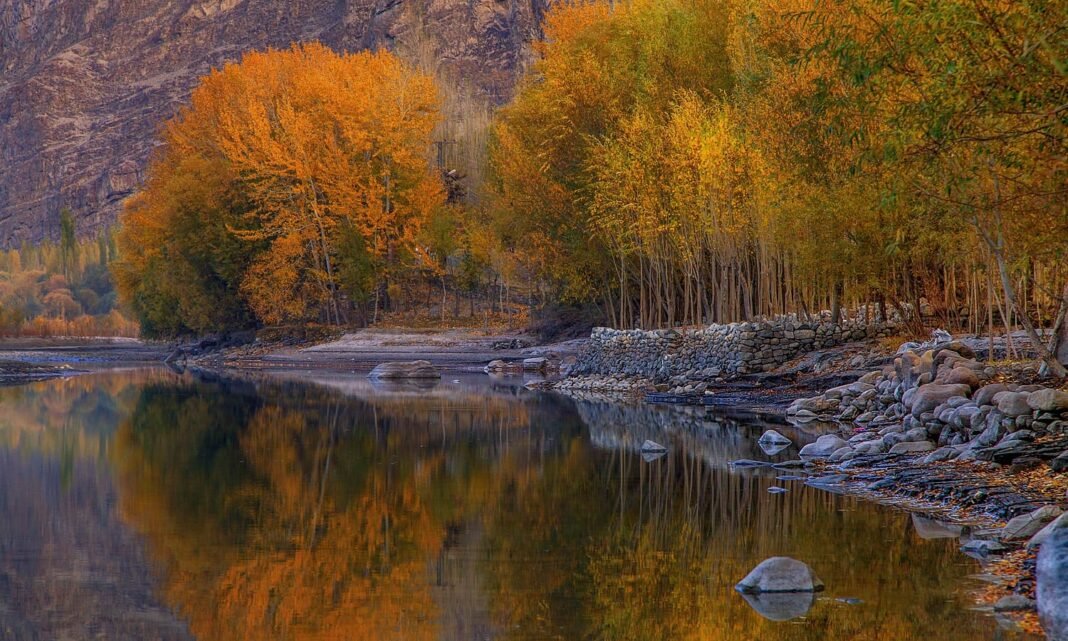
The lake’s signature view is the Karakoram skyline: K2, Broad Peak, Gasherbrum I and Gasherbrum II rising beyond the nalah. Early morning gives the clearest air and the best light on the peaks; late afternoon turns the lake itself golden. Bring a tripod if you are serious about photography, and protect your gear from dust on the trail. The reflections of the surrounding ridges in the lake’s clear water make for exceptional wide shots.
Walk Between the Twin Lakes
Ghanche Nalah holds two lakes a short distance apart — Khenpi Tso, the “right-hand-side lake,” and its quieter twin. Walk between them across the flower-strewn pastures. The second lake gets fewer visitors still, and the short traverse between the two is one of the most peaceful walks in Baltistan. Look for ibex on the upper slopes; the nalah was their historic refuge.
Camp Under Karakoram Stars
There are no hotels at 4,600 metres, so camping is the way to experience the lake fully. A night beside Khenpi Tso — with the Milky Way overhead and the peaks ghostly in moonlight — is the kind of memory that justifies the whole trek. Bring a four-season tent, a warm sleeping bag (nights drop below freezing even in summer), and a stove: there is no firewood at this altitude, and the fragile alpine environment should not be burned for warmth. Carry all waste back down.
Explore Khaplu Town
Build at least a day in Khaplu around the trek. Tour the Khaplu Palace — the last and finest Tibetan-style palace in Pakistan, built in the 1840s and beautifully restored — and the 14th-century Chaqchan Mosque, Baltistan’s oldest. Walk the old town’s lanes, visit the Khanqah built in 1712, and stand on the polo ground where the valley’s favorite sport is played. Khaplu, once called perhaps the loveliest oasis in the region by the explorer Filippo de Filippi in 1913, rewards slow exploration.
Famous Places In and Around Ghanche Lake
- Khaplu Palace (Yabgo Palace) — 1840s Tibetan-style royal palace, restored by the Aga Khan Trust; now a heritage hotel
- Chaqchan Mosque — 14th-century mosque, the oldest in Baltistan, on a former Buddhist site
- Hushe Valley — gateway to Masherbrum, K6, K7 and the Gondogoro La trek
- Thalle Valley & Bara Lake — another high valley with its own alpine lake
- Shyok River — rafting and riverside scenery on the Skardu–Khaplu road
- Saling — trout fish farms and orchards on the Khaplu route
- Barah Valley — a neighboring valley of crystal-clear lakes near Khaplu
How to Reach Ghanche Lake
Ghanche Lake is reached on foot from Khaplu, and Khaplu is reached by road from Skardu. The nearest airport is Skardu International Airport, which has daily flights from Islamabad (about an hour in the air, weather permitting). From Skardu, the drive east to Khaplu covers about 103 km along the Shyok River and takes roughly 2.5–3.5 hours by car or van. Public vans and shared taxis run from Skardu to Khaplu in the morning. From Khaplu town, the trek to the lake follows Ghanche Nalah and takes about seven hours of walking — start before dawn, carry a full day’s water and food, and go with a local guide. There is no road, no jeep track and no public transport to the lake: your feet are the only option, which is exactly why it stays pristine.
Route Details
From Islamabad: Fly Islamabad to Skardu (about 1 hour; book early in summer as flights fill fast and are weather-dependent), then drive 103 km to Khaplu (2.5–3.5 hours). By road, the Islamabad–Skardu journey via the Karakoram Highway and the Skardu road takes 16–20 hours — most travelers split it with a night in Chilas or Gilgit. Tour operators typically run the full Ghanche Lake trek as a 7-day package starting from Islamabad/Rawalpindi.
From Lahore: Fly or drive to Islamabad first, then follow the Islamabad route. Lahore–Islamabad is about 4–5 hours by motorway; add the Skardu leg on top. There are no direct practical road routes from Lahore to Khaplu that do not pass through Islamabad.
From Karachi: Fly Karachi to Islamabad, then connect to the Skardu flight (or begin the road journey). Karachi–Skardu by road is a multi-day expedition; flying is the sensible choice. Allow buffer days — mountain flights are frequently delayed by weather.
Nearest airport: Skardu International Airport (domestic flights from Islamabad, Lahore and Karachi, plus seasonal international connections). Khaplu itself has no airport.
Road conditions by season: The Skardu–Khaplu road is paved and generally open year-round, though winter snow and occasional landslides can cause delays. The trek to the lake is only feasible from June to October; outside these months the nalah is snowbound and the lake frozen. July–August can bring rain and swollen streams on the trail.
Transport options: Flights to Skardu; private car or hired van Skardu–Khaplu; public vans/shared taxis Skardu–Khaplu (morning departures); local guides and porters in Khaplu for the trek (arrange through your hotel or a tour operator); organized 7-day trek packages from Islamabad for the full supported experience.
Where to Stay in Ghanche Lake
You will sleep in Khaplu before and after the trek — there is no accommodation at the lake itself, only camping. Khaplu has genuinely good options. The standout is the Serena Khaplu Palace, the restored 1840s Yabgo royal palace run as a heritage hotel — staying inside a piece of Balti royal history, with carved wooden balconies and mountain views, is an experience in its own right. Mid-range hotels and guesthouses, such as the well-known local hotels in Khaplu town, offer comfortable rooms at reasonable rates; several cater specifically to trekkers and can arrange guides, porters and packed lunches for the lake. Budget travelers will find economy guesthouses and family-run lodges around the bazaar. Book ahead in July–August, when Khaplu fills with domestic tourists. At the lake, you camp: bring a four-season tent and a sleeping bag rated well below freezing, because even summer nights at 4,600 metres are bitterly cold. Your guide can usually arrange tents and cooking gear if you do not carry your own.
Where to Eat: Local Foods of Ghanche Lake
Eat in Khaplu, where Balti cuisine is one of the underrated food cultures of Pakistan. The signature dishes reflect the valley’s Tibetan heritage: balay, a hearty hand-pulled noodle soup; kisir, buckwheat pancakes served with apricot oil; marzan, a rich festive dish; and prapoo/chan, a buckwheat-and-apricot preparation. Apricots are everywhere — fresh in summer, dried in winter, pressed into oil — and Khaplu’s apricot products make excellent trail snacks for the trek. Trout from the valley’s fish farms appears on many menus. Meals in Khaplu are very budget-friendly: a filling local meal typically costs a few hundred rupees, and even the nicer hotel restaurants are modest by city standards. For the trek itself, carry your own food — energy bars, dried fruit, nuts and packed lunches from your Khaplu hotel — because there are no shops or dhabas on the trail to Ghanche Nalah.
Weather in Ghanche Lake
At 4,600 metres, Ghanche Lake lives in a different climate from Khaplu town below it. The lake is snowbound and frozen roughly from November to May; the trekking window is June to October, when the nalah thaws, the pastures green up and the flowers bloom. Even in summer, weather at the lake changes fast — sunshine, wind, hail and snow flurries can all visit in a single afternoon. Khaplu town, at about 2,600 metres, is far milder and makes a comfortable base.
| Season | Temperature Range | Conditions |
|---|---|---|
| Winter (Dec–Feb) | -15 to 0°C at the lake; -5 to 8°C in Khaplu | Lake frozen and buried in snow; trek impossible. Khaplu cold but accessible; few tourists. |
| Spring (Mar–May) | -5 to 10°C at the lake; 8–22°C in Khaplu | Nalah still snowbound early; Khaplu in blossom — apricot and cherry blossoms in March–April. Lake trek not yet open. |
| Summer (Jun–Aug) | 0–15°C at the lake; 18–30°C in Khaplu | The trekking season. Pastures green, flowers blooming, longest days. Afternoon clouds and occasional rain possible. |
| Autumn (Sep–Oct) | -5 to 10°C at the lake; 10–25°C in Khaplu | Excellent trekking — stable clear skies, golden autumn colors in the valley, thinning crowds. Nights at the lake turn freezing by October. |
Language and Culture of Ghanche Lake
The Khaplu valley is Balti, and Balti — a Tibetic language written in the Perso-Arabic script today — is what you will hear on the trail and in the bazaar. The culture carries a fascinating double heritage: Tibetan Buddhist roots overlaid with centuries of Islam, particularly the Nurbakhshi Sufi tradition that shaped Khaplu’s mosques and khanqahs. You see it in the architecture — the Chaqchan Mosque’s wooden, pagoda-like form — and in the warmth of the people. Baltis are famously hospitable, and the valley has a well-earned reputation for peace and safety for travelers.
As a visitor, dress modestly and ask before photographing people. If you are offered tea or food in a village home or by herders on the trail, accept graciously — refusal can offend. On the trek, respect grazing lands: do not disturb livestock, do not pick large quantities of wildflowers, and carry out all litter. The high pastures are both a fragile ecosystem and someone’s livelihood. Urdu is understood in Khaplu town, but on the trail a local guide bridges any language gap.
Shopping in Ghanche Lake
There is no shopping at the lake — buy everything in Khaplu bazaar before the trek. Khaplu is famous for its apricots: dried apricots, apricot oil and apricot jam are the classic souvenirs, sold in the bazaar at very reasonable prices. Look for yak-wool products, handwoven Balti textiles and traditional caps, plus local honey. The bazaar is small and authentic — a working market for the valley, not a tourist strip — which makes browsing it a cultural experience in itself. Stock up on trek snacks here: dried apricots, nuts and energy foods for the seven-hour walk.
Travel Tips for Ghanche Lake
Packing Essentials
This is a high-altitude trek, so pack like one: broken-in trekking boots, layered clothing (base layer, fleece, windproof/waterproof shell), a warm down jacket, sun hat and sunscreen (UV is fierce at 4,600 m), sunglasses, at least 2–3 litres of water capacity, high-energy snacks, a first-aid kit, and altitude-sickness medication after consulting your doctor. If camping: four-season tent, sub-zero sleeping bag, stove and fuel. A portable charger is useful; there is no electricity on the trail.
Safety Tips
Altitude is the main risk: at 4,600 metres, acute mountain sickness is a real possibility. Spend at least a day acclimatizing in Khaplu, ascend slowly, stay hydrated, and descend if you develop headaches, nausea or dizziness. Never trek alone — go with a local guide who knows the nalah’s weather and water crossings. Start early to be off exposed sections before afternoon weather builds. Tell your hotel your expected return time. Baltistan is peaceful and the people helpful, but mountain weather deserves full respect.
Money & Connectivity
Bring all the cash you need from Skardu or Khaplu town — there are ATMs in Skardu and limited banking in Khaplu, and nothing on the trail. Mobile signals are patchy: you will have coverage in Khaplu town on the major networks, but expect little to no signal once you climb into Ghanche Nalah. Download offline maps before you go.
Best Time to Visit Ghanche Lake
Summer (June–August) — Peak Trekking Season
The nalah is snow-free, the pastures are at their greenest, wildflowers carpet the meadows, and the days are longest. This is when tour operators run the lake trek and when the 8,000-metre views are most reliably clear in the mornings. Expect the most fellow trekkers (still very few by any standard) and book Khaplu hotels ahead.
Autumn (September–October) — Clear and Golden
Arguably the finest window: stable high-pressure weather, crystalline visibility for the Karakoram panorama, and the valley below turning gold. Nights at the lake are freezing, so your sleeping system must be serious — but the daytime trekking is superb and the crowds have gone.
Spring (March–May) — For Khaplu, Not the Lake
The lake trek is not open — the nalah is still snowbound. But spring is magical in Khaplu itself, with apricot, cherry and almond blossoms covering the valley. Come for blossom season and plan the lake for a summer return.
Winter (November–February) — Closed
The lake is frozen and buried; only experienced winter mountaineers with full expedition support should even consider the nalah. Khaplu town remains visitable for those who want a quiet winter valley experience.
Final Thoughts
Ghanche Lake is not an easy destination, and that is precisely its gift. In an age when Pakistan’s famous lakes draw crowds by the thousand, Khenpi Tso still asks something of you — a dawn start, seven hours of walking, a night at 4,600 metres — and repays it with a view of K2 and the Gasherbrums that most people never earn. It is the Karakoram as it was before the tour buses: silent, enormous, and entirely yours.
If you are building a Baltistan itinerary with real adventure in it, put Ghanche Lake at its heart and Khaplu around it — palace, mosque, bazaar, and then the long walk up the nalah. Few treks in Pakistan deliver so much wonder for a single day’s effort. For more northern journeys, explore our Explore Pakistan collection.
FAQs
Where is Ghanche Lake located?
Ghanche Lake (locally Khenpi Tso) is in Ghanche Nalah, Ghanche District, Gilgit-Baltistan, about a seven-hour walk from Khaplu town, at around 4,600 metres above sea level.
How do I reach Ghanche Lake?
Fly or drive to Skardu, drive 103 km to Khaplu (2.5–3.5 hours), then trek about seven hours up Ghanche Nalah with a local guide. There is no road to the lake.
What is the best time to visit Ghanche Lake?
June to October. Summer (June–August) offers green pastures and flowers; September–October offers the clearest mountain views. The lake is snowbound in winter.
Can you see K2 from Ghanche Lake?
Yes — on clear days the panorama from the lake includes K2, Broad Peak, Gasherbrum I and Gasherbrum II, among the world’s highest peaks.
Is the Ghanche Lake trek difficult?
It is graded moderate by tour operators, but the 4,600-metre altitude makes it demanding. Acclimatize in Khaplu, go with a guide, and be fit for a full day’s walk.
Can families visit Ghanche Lake?
The trek is best suited to fit adults and older teenagers. Families can enjoy Khaplu town — the palace, mosque and bazaar — while experienced members attempt the lake.
Where can I stay near Ghanche Lake?
In Khaplu: the Serena Khaplu Palace heritage hotel, mid-range hotels and budget guesthouses. At the lake itself, camping is the only option.
What does “Khenpi Tso” mean?
It is the lake’s local Balti name, meaning “the right-hand-side lake” — because there are two lakes in Ghanche Nalah, a short distance apart.