Swat Valley is famous for its green valleys, fast rivers and snow-capped peaks — but the valley also carries thirteen hundred years of Buddhist history written directly into its cliffs. The Ghalegay Buddha is one of the finest examples of that history. It is a colossal seated Buddha carved into a great boulder right beside the main Swat road, 14 kilometres south of Mingora, and it is a stop that every Swat itinerary should include. If you are putting together a ghalegay buddha swat travel guide for your own trip, this feature covers everything: why the carving matters, its dramatic history of destruction and restoration, and exactly how to reach it.
What makes this spot special is how easy it is. Unlike most archaeological sites in Swat, which demand long jeep tracks or steep treks, the Ghalegay Buddha sits almost on the roadside. You can stand in front of a 7th–8th century masterpiece, watch the Swat River flow past, and be back on your way to Mingora or Barikot within an hour. It is heritage tourism at its most effortless — and one of the most moving heritage stops in Pakistan.
Quick Facts
- Location: Ghalegay village, Swat District, Khyber Pakhtunkhwa — 14 km south of Mingora on the main Swat road (left bank of the Swat River)
- Altitude: around 900–950 metres (valley floor)
- Famous For: A colossal rock-carved seated Buddha (7th–8th century CE), carved face measuring about 6.8 x 3.2 metres; damaged by militants in 2007 and restored with Italian assistance
- Nearest City: Mingora (about 14 km; 25–30 minutes by road)
- Accessibility: Very easy — the carving is visible almost from the main road; short walk to the base of the boulder. Reachable year-round by car, taxi or local van.
- Known Landmarks: The Buddha boulder itself, the small cave beside it, Shingardar stupa (between Ghalegay and Barikot)
- Best For: History lovers, Buddhist-heritage pilgrims, photographers, families, and anyone driving through Swat who wants a meaningful stop
Why Visit Ghalegay Buddha, Swat
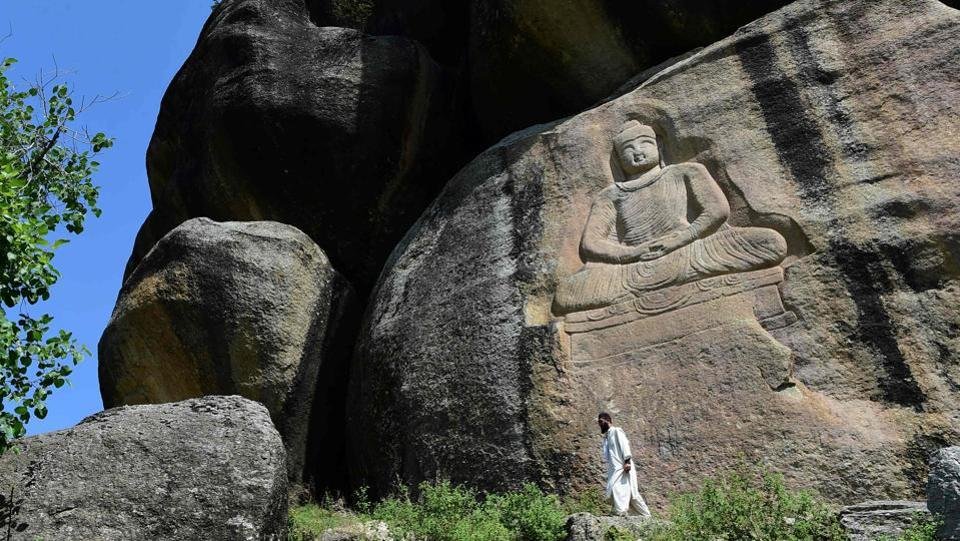
Few sights in Pakistan combine raw scale, deep history and recent survival the way the Ghalegay Buddha does. The figure sits in meditation — hands in the dhyana mudra — carved straight into a boulder that towers over the road. At over five metres tall, with a carved face roughly 6.8 metres wide, it is one of the largest rock sculptures in South Asia. You feel small standing beneath it, and that is exactly the point. The sculptors of the Gandhara period wanted the traveler on the road to stop, look up, and feel something. Thirteen centuries later, it still works.
Then there is the story of what happened to it. In 2007, militants drilled into the face and shoulders of the Buddha and dynamited it — an attack that destroyed half the face and drew outrage around the world. What followed is almost as remarkable as the carving itself: starting in 2012, Italian archaeologists led by Luca Maria Olivieri, with a 2.5-million-euro investment from the Italian government, restored the Buddha in phases over four years, finishing in 2016. They deliberately left the scars of the damage visible — a quiet statement that history, including painful history, should be remembered, not erased. Visiting today means seeing both the 7th-century artistry and the 21st-century rescue.
Finally, the Ghalegay Buddha is the perfect anchor for a half-day of Buddhist heritage in lower Swat. The great Shingardar stupa stands just down the road towards Barikot, and the excavations at Barikot — one of the most important archaeological digs in Pakistan — are a short drive further. In one morning you can walk through more than two thousand years of Swat’s story, from Gandhara stupas to the modern valley, and still be back in Mingora for lunch. For travelers who want Swat to be more than green mountains, this is where the valley’s soul is.
History of Ghalegay Buddha, Swat
Swat was one of the great centres of Buddhism in the ancient world. Known to the ancients as Uddiyana, the valley was a thriving part of the Gandhara civilization, where Greek artistic traditions — brought by the successors of Alexander the Great — fused with Indian Buddhist devotion to create the Gandhara school of art. Chinese pilgrims such as Faxian (5th century) and Xuanzang (7th century) traveled through these valleys and wrote of hundreds of stupas and monasteries. The Ghalegay Buddha belongs to this world.
The Department of Archaeology and Museums dates the carving to the 7th–8th century CE, the late phase of the Gandhara period. It was not a free-standing statue but a relief carved directly into a great boulder facing the main route through the valley — a position chosen so that every traveler on the road would see it. Beside the Buddha are the remains of a small cave, the kind of monastic cell that once dotted this valley by the hundreds. The style of the carving — the serene meditating figure, the framing etched into the rock around it — is classic late Gandhara, a civilization that had already been producing masterpieces for nearly a thousand years by the time this boulder was shaped.
Ghalegay village itself occupies a notable place in Swat’s later history. During the Pashtun era, when the first legal government of Swat was formed in 1849, Ghalegay was chosen as the first seat of government because of its strategic location between Mingora and Barikot. Syed Akbar Shah, from the family of Pir Baba and a close associate of Syed Ahmed Shaheed, was nominated to head that government. Then in 1915, after a long period of civil war, Miangul Abdul Wadood — known as Bacha Sahib — was announced as the head of the newly formed Swat State, and the jirga of Ghalegay village crowned him here. So the ground beneath the Buddha has witnessed both Buddhist kings and the birth of modern Swat.
The darkest chapter came in 2007. On August 12 of that year, militants made their first attempt to destroy the statue, drilling holes around its face and shoulders. They returned on the evening of September 29, 2007, ordered villagers to stay indoors, and detonated explosives that destroyed much of the Buddha’s face — an attack compared at the time to the destruction of the Bamiyan Buddhas of Afghanistan in 2001. The defaced cliff was a global symbol of heritage under attack.
Restoration began in 2012 with Italian assistance. In the first phase, a protective coating was applied to the damaged stone; then, using laser surveys and old photographs, the face was reconstructed virtually in 3D in a laboratory before the actual stonework was carried out. The final phase ended in 2016. The Italian archaeologist overseeing the work, Luca Maria Olivieri, explained that the reconstruction was deliberately not made identical to the original — “the idea of damage should remain visible.” Today the site is protected under the Khyber Pakhtunkhwa Antiquities Act of 2016, and the authorities hope the Buddha’s recovered smile will draw religious and heritage tourists from Buddhist countries such as China and Thailand.
Top Things to Do in Ghalegay Buddha, Swat
Stand Before the Buddha Boulder
This is the main event, and it deserves unhurried time. Walk up to the base of the boulder and look up at the meditating figure. Notice the dhyana mudra — the hands folded in meditation — and the frame etched into the rock around the figure, a feature that once marked the carving as a complete, deliberate composition. Morning light shows the carving best, so plan your stop before noon if photography matters to you. Stand quietly for a few minutes; the statue was designed for contemplation, and the setting — the Swat River glinting below, poplar trees along the road — invites it.
Trace the Scars of 2007
Because the Italian restoration deliberately left the damage visible, the Buddha’s face carries a visible record of what happened in September 2007. A local guide can point out which portions are original 7th-century stone and which were reconstructed after the dynamiting. It is a rare chance to read a monument’s biography directly from its surface — ancient artistry and modern violence and modern rescue, all in one rock. Visitors often say this is the most moving part of the visit.
Visit the Shingardar Stupa
A short drive towards Barikot brings you to the Shingardar stupa, one of the great ancient stupas of the Swat Valley and a remnant of the Buddhist era. Tradition holds that it was built to enshrine relics of the Buddha. Pair it with the Ghalegay Buddha for a complete picture of Gandhara Swat: the monumental stupa and the monumental rock carving, both within a few kilometres of each other. This pairing is exactly what heritage guides recommend for a morning of Swat’s Buddhist history.
Explore the Barikot Excavations
Continuing down the road to Barikot, you reach one of the most significant archaeological excavation sites in Pakistan. Barikot has yielded layers of settlement going back thousands of years, and Italian and Pakistani archaeologists have worked here for decades. Even if the active dig is not open to casual visitors, the town and its surroundings carry the layered history of Swat in a way few places do.
Photograph the Swat River Corridor
The stretch of road between Ghalegay and Barikot runs along the Swat River with the hills rising on both sides. Pull over at safe spots and photograph the river, the terraced fields, and the Buddha boulder framed against the valley. Late afternoon light turns the river golden and gives the carved face a warm glow.
Famous Places In and Around Ghalegay Buddha, Swat
- Shingardar Stupa — ancient Buddhist stupa between Ghalegay and Barikot
- Barikot excavations — one of Pakistan’s most important archaeological sites
- Mingora Bazaar — Swat’s main market, 14 km north, for handicrafts and dry fruits
- Saidu Sharif — the old capital of Swat State, with the White Palace (Marghazar) nearby
- Butkara stupas — ancient stupas on the outskirts of Mingora
- Amluk-Dara stupa — another major Gandhara stupa in the valley
- Fizagat Park — riverside family park near Mingora
- Bahrain, Swat — upper Swat’s riverside town, further up the valley for the full mountain experience
How to Reach Ghalegay Buddha, Swat
Reaching the Ghalegay Buddha is straightforward because the carving sits beside the main Swat road. Your base will be Mingora, the valley’s main city, about 14 km to the north — a 25–30 minute drive. From Mingora, take the main road south towards Barikot (the N-95 towards Saidu Sharif and onward). Ghalegay village lies on the left bank of the Swat River between Mingora and Barikot; the Buddha boulder is on the right side of the road as you head towards Mingora, facing the road, and is signposted. Local vans, taxis and rickshaws in Mingora all know the spot — just ask for the Ghalegay Buddha. If you are driving yourself, look for the large boulder on the roadside; you cannot miss it once you are in the village. Parking is available nearby, and the site is open daily from sunrise to sunset.
Route Details
From Islamabad: Take the M-1 motorway towards Peshawar, then the M-16 Swat Motorway to Chakdara, and continue on the N-45/N-95 into Swat to Mingora. The total distance is roughly 230–240 km and the drive takes about 3.5–4.5 hours depending on traffic. From Mingora, continue south 14 km to Ghalegay. Public transport: air-conditioned coaches and vans run from Islamabad (Pirwadhai and other terminals) to Mingora in about 4–5 hours; from Mingora take a local taxi or van to Ghalegay.
From Lahore: Drive via the M-2 to Islamabad and then follow the Islamabad route above — roughly 520–550 km, about 7–8 hours of driving. Alternatively, take the M-11 and connect through the motorway network. Coaches from Lahore to Mingora are available but the journey is long (9–11 hours); most travelers break the trip in Islamabad.
From Karachi: The road journey is very long (over 1,400 km, 20+ hours), so flying is strongly recommended. Fly from Karachi to Islamabad, then drive or take a coach to Mingora as above. There are also limited flights to Saidu Sharif airport near Mingora when operational — check schedules before planning, as services are seasonal.
Nearest airport: Saidu Sharif airport (near Mingora) has limited/seasonal flights; Islamabad International Airport is the reliable gateway, 3.5–4.5 hours away by road.
Road conditions by season: The Swat road to Ghalegay is a paved main road and stays open year-round, including winter. Upper Swat roads (Kalam, Malam Jabba) can be affected by snow in December–February, but Ghalegay on the valley floor is accessible in all seasons. Monsoon rains (July–August) can slow traffic but rarely close this stretch.
Transport options: Private car or rented car with driver (most flexible); local taxis and rickshaws from Mingora (30–40 minutes, agree the fare first); public vans from Mingora bus station towards Barikot that pass Ghalegay (cheapest option); tour vans and hotel-arranged day trips from Mingora or Saidu Sharif.
Where to Stay in Ghalegay Buddha, Swat
Ghalegay itself is a village, so you will stay in nearby Mingora or Saidu Sharif, where the full range of Swat accommodation is available — and that is actually an advantage, because the Buddha is only 25–30 minutes away and you get the valley’s best hotels, food streets and bazaars at your doorstep. Mingora and Saidu Sharif have options across every budget. Mid-range hotels and guesthouses cluster along the main roads and near Fizagat Park, offering clean rooms, hot water and valley views at reasonable rates. For a more upscale stay, the Serena-style luxury hotels and well-known chains in Saidu Sharif offer comfortable rooms, gardens and restaurants — book ahead in the summer season (June–August) when Swat fills up. Budget travelers will find plenty of economy hotels and family guesthouses in Mingora’s bazaar area. If you want the full upper-Swat experience as well, split your trip: a night or two in Mingora for the Buddha and heritage sites, then head up to Kalam or Malam Jabba for the high mountains. Camping is not needed or practical at Ghalegay itself — this is a day-visit site, not an overnight trek.
Where to Eat: Local Foods of Ghalegay Buddha, Swat
Eat in Mingora or Saidu Sharif before or after your visit, where Swat’s food scene is at its best. The valley’s signature dish is trout — fresh river trout from the cold streams of upper Swat, usually fried or grilled, served in the restaurants of Madyan, Bahrain and Kalam (and available in Mingora too). Swati lamb karahi and chicken karahi cooked in desi ghee are local favorites, and chapli kebabs from the bazaar stalls are a must-try. For breakfast, try the local parathas with kehwa (green tea) — Swat’s kehwa, sometimes brewed with local herbs, is famous across Pakistan. Maize bread (makai ki roti) with saag appears in village homes in winter. Meals are budget-friendly by Pakistani standards: a hearty local meal in a Mingora restaurant typically costs a few hundred rupees per person, with trout dishes costing more as a specialty item. The food streets around Mingora bazaar and the restaurants near Fizagat Park are the most convenient places to eat after visiting the Buddha.
Weather in Ghalegay Buddha, Swat
Ghalegay sits on the Swat Valley floor at around 900–950 metres, so its weather is milder than the high mountains upstream. Summers are warm but pleasant compared to the plains, winters are cool with occasional frost, and the spring and autumn months are close to perfect. Because the Buddha is a roadside stop, weather rarely blocks a visit — but light and comfort matter, so here is what to expect through the year.
| Season | Temperature Range | Conditions |
|---|---|---|
| Winter (Dec–Feb) | 0–12°C | Cool and crisp; frosty mornings, occasional rain; upper Swat gets snow but Ghalegay stays accessible. Clear views, few crowds. |
| Spring (Mar–May) | 12–28°C | The best season — blossoming orchards, green fields, comfortable days. April–May is ideal for photography with soft light. |
| Summer (Jun–Aug) | 22–35°C | Warm days, cooler evenings; monsoon showers possible in July–August. Peak tourist season in Swat — visit the Buddha early morning. |
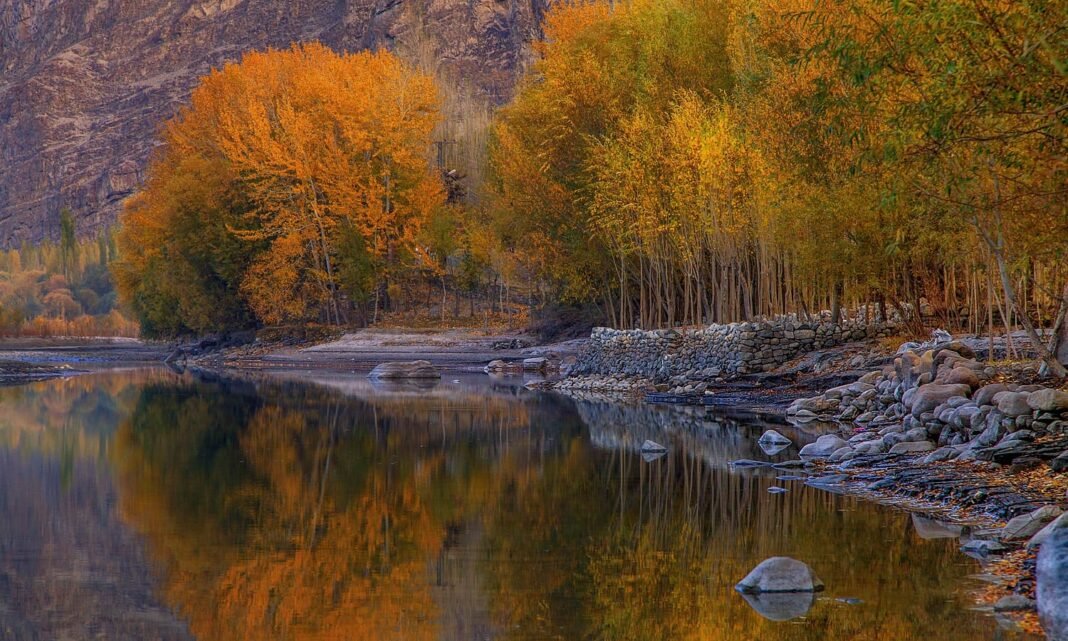
| Autumn (Sep–Nov) | 10–28°C | Another excellent window — late September to November brings clear skies, golden poplars and comfortable temperatures. |
Language and Culture of Ghalegay Buddha, Swat
The people of Swat are predominantly Pashtun, and Pashto is the language you will hear everywhere in Ghalegay and Mingora. (In the upper valleys you will also hear Kohistani and Gujari.) Swati culture is built around Pashtunwali — the code of hospitality, honour and community — and visitors consistently remark on how warmly they are received. Melmastia (hospitality to guests) is taken seriously here; do not be surprised if a shopkeeper or a family near the site offers you tea.
For visitors, a few cultural notes go a long way. Dress modestly — for both men and women, covered shoulders and knees are the respectful norm, especially around villages and religious sites. Ask before photographing people, particularly women. The Buddha site itself is a protected archaeological monument: do not climb on the carving, do not deface the rock (the 2014 Dawn reports noted damage by visitors even before the restoration), and carry your litter out. Friday is the weekly holiday rhythm in the bazaars, and during Ramadan, eating and drinking in public during fasting hours should be avoided out of respect. Urdu is widely understood in Mingora, so communication is rarely a problem.
Shopping in Ghalegay Buddha, Swat
Do your shopping in Mingora Bazaar, 14 km north of the Buddha. Swat is famous for its hand-embroidered shawls and woolen textiles — the Swati shawl, with its intricate needlework, is the classic souvenir. You will also find honey (Swat’s honey has a strong reputation), dried fruits and nuts, walnuts, and locally woven fabrics. Wooden handicrafts and traditional caps (topi) are sold in the bazaar lanes. Prices are generally lower than in Islamabad’s tourist shops, and bargaining is expected and friendly. There are no shopping malls at Ghalegay itself — this is a village heritage stop, and the bazaar experience belongs to Mingora. For a wider selection, Saidu Sharif’s markets are also worth a walk.
Local Events and Festivals
Swat’s festival calendar gives you good reasons to time your visit. The Kalam Summer Festival, usually held in July, is the valley’s biggest tourism event — music, traditional sports, paragliding and cultural shows in the upper valley, easily combined with a heritage day around Ghalegay. In winter, Malam Jabba hosts snow sports and a winter festival with skiing and cultural nights. Religious festivals — Eid-ul-Fitr, Eid-ul-Adha and Eid Milad-un-Nabi — are celebrated warmly across the valley with bazaar decorations and family gatherings; the Buddha site and Mingora bazaars are lively at these times. Spring brings the valley’s blossom season, celebrated informally by locals and increasingly by tourism operators with blossom tours in March–April. Check dates locally before traveling, as festival schedules are announced each year.
Travel Tips for Ghalegay Buddha, Swat
Packing Essentials
For a heritage day around Ghalegay: comfortable walking shoes (the ground around the boulder is uneven), a hat and sunscreen (the site is exposed), a water bottle, and your camera — morning light flatters the carving. In winter add a warm jacket; in summer, light clothes plus a layer for cool evenings. If you are combining the visit with upper Swat, pack for mountain weather too.
Safety Tips
Swat is a well-traveled tourist destination with a strong tourism infrastructure, and the Ghalegay area on the main road is busy and safe during the day. Standard precautions apply: keep valuables out of sight, use registered taxis or hotel-arranged transport, and avoid driving the mountain roads after dark if you are unfamiliar with them. The site is a protected monument — respect barriers and signage, and do not attempt to climb the boulder.
Money & Connectivity
Mingora has ATMs and banks, so withdraw cash there before heading out — Ghalegay village has limited banking. Carry cash for small purchases, local transport and guide fees. Mobile signals (Jazz, Telenor, Zong, Ufone) work well in Ghalegay and Mingora; signals weaken as you climb into upper Swat. 4G data is generally available on the main road.
Best Time to Visit Ghalegay Buddha, Swat
Spring (April–May) — The Sweet Spot
This is the finest time to see the Buddha. Orchards are in blossom, the valley is green, temperatures sit in the comfortable teens and twenties, and the soft spring light shows the carving at its best. Crowds are moderate before the summer rush.
Autumn (Late September–November) — The Photographer’s Season
Clear skies, golden poplars, crisp air and thinning crowds make autumn the second-best window. The low autumn sun rakes across the carved face and brings out every detail of the stonework.
Summer (June–August) — Lively but Warm
Summer is Swat’s peak tourist season. The Buddha is visitable in all weathers, but go early in the morning to beat both the heat and the day-tripper crowds heading up the valley. Combine the stop with Kalam or Malam Jabba for the full Swat experience.
Winter (December–February) — Quiet and Clear
Winters are quiet at the Buddha — few tourists, clear mountain air, and the site entirely to yourself. Days are cool but the road stays open. If you dislike crowds and do not mind a jacket, winter has its own stark beauty here.
Final Thoughts
The Ghalegay Buddha is not the biggest tourist attraction in Swat — Kalam’s lakes and Malam Jabba’s slopes draw bigger crowds. But it may be the most meaningful. In a single boulder you get thirteen centuries of Gandhara artistry, the scars of 2007, and a restoration story that brought Italian and Pakistani archaeologists together to give a wounded Buddha back its smile. It takes an hour of your day and gives you a story you will tell for years.
So when you plan your Swat trip, put Ghalegay on the route — not as an afterthought, but as the soul of the valley. Stand before the meditating figure, walk down to the Shingardar stupa, and let Swat show you that it is not only the Switzerland of the East. It is also one of the oldest sacred landscapes in Asia, and it is waiting right beside the road. For more ideas on building your northern itinerary, browse our Explore Pakistan collection.
FAQs
Where is the Ghalegay Buddha located?
The Ghalegay Buddha is carved on a boulder beside the main Swat road at Ghalegay village, 14 km south of Mingora, on the left bank of the Swat River in Khyber Pakhtunkhwa, Pakistan.
How old is the Ghalegay Buddha?
The Department of Archaeology and Museums dates the carving to the 7th–8th century CE, the late phase of the Gandhara period — making it roughly 1,300 years old.
How big is the Ghalegay Buddha?
The figure is over five metres tall, and the carved face of the rock measures about 6.8 by 3.2 metres, making it one of the largest rock sculptures in South Asia.
What happened to the Buddha in 2007?
Militants attacked it twice — a first attempt on August 12, 2007, and a second on September 29, 2007, when explosives destroyed much of the face. It was restored with Italian assistance between 2012 and 2016, with the damage deliberately left visible.
How do I reach the Ghalegay Buddha from Mingora?
Take the main road south towards Barikot (25–30 minutes, 14 km) by car, taxi, rickshaw or local van. The carving faces the road and is signposted at Ghalegay village.
Is the Ghalegay Buddha suitable for families?
Yes — it is one of the easiest heritage sites in Swat to visit. The carving is near the road with only a short walk, no trekking required, so it suits children and older travelers.
What is the best time to visit the Ghalegay Buddha?
April–May and late September–November offer the best light, weather and smaller crowds. Mornings are best for photography.
What else can I see near the Ghalegay Buddha?
The Shingardar stupa (towards Barikot), the Barikot excavations, Mingora Bazaar, Saidu Sharif and the White Palace, and the Butkara stupas — all within a short drive.