Quick Facts
- Location: The Mall, Lahore — at the junction of The Mall and Lower Mall, next to Anarkali Bazaar, in the heart of the city
- Famous For: One of the oldest seats of learning in the subcontinent (founded 1864); a stunning neo-Gothic main building with a 176-foot clock tower; alumni including two Nobel laureates and four prime ministers
- Nearest City: It is in Lahore itself — the city’s old centre
- Accessibility: Easy to reach by road from anywhere in Lahore; Allama Iqbal International Airport is about 15 km away; a short walk or rickshaw ride from Anarkali, the Walled City and Mall Road attractions
- Known Landmarks: The Main Building, the clock tower, the Leitner Oval ground, the Abdus Salam Hall, the Kala Shah Kaku campus
- Best For: History buffs, architecture lovers, students and parents, photographers, and anyone who wants to feel the intellectual soul of Lahore
Why Visit Government College University, Lahore
Every great city has a place where its mind lives. For Lahore, that place is Government College University. Walk through its gates off The Mall and you step into 162 years of South Asian history: the Gothic arches of the main building, the tall clock tower watching over the Leitner Oval, corridors where Allama Iqbal studied, where Faiz Ahmed Faiz wrote, and where two future Nobel laureates once sat as students. This is not just a university — it is a living museum of ideas.
You should visit GCU because few places in Pakistan let you touch history this directly. The main building, completed in 1877, is one of the finest pieces of colonial-era architecture in the country, and unlike a museum, it is alive — students hurry across the Oval between lectures, debates echo in the halls, and the whole campus hums with the same energy that produced prime ministers, poets, cricketers and scientists. Even if you never studied here, standing under the clock tower makes you feel part of something bigger.
It is also perfectly placed for travellers. The campus sits at the junction of The Mall and Lower Mall, a short walk from Anarkali Bazaar — one of the oldest surviving markets in South Asia — and minutes from the Walled City’s great monuments. A morning at GCU pairs beautifully with an afternoon at the Badshahi Mosque or a stroll through Bagh-e-Jinnah. And for parents with college-age children, there is no better way to inspire them than showing them where Pakistan’s greatest minds were made.
Whether you are an Old Ravian returning with old friends, a tourist hunting for Lahore’s most photogenic heritage, or simply someone who believes that the best travel feeds the mind as well as the eyes — GCU deserves a few hours of your Lahore trip.
History of Government College University, Lahore
The story begins in 1856, when the British administration sanctioned the establishment of a central college in Lahore, with teachers drawn from Oxford, Cambridge, Dublin and Durham universities. Under the leadership of Gottlieb Wilhelm Leitner — a Hungarian-born British orientalist who was then a professor of Arabic and Islamic Law at King’s College London — the college opened its doors on 1 January 1864, in the palace (haveli) of Raja Dhyan Singh, the Dogra prime minister of Maharaja Ranjit Singh, inside Lahore’s Walled City. In those days there was no university in this part of the subcontinent, so the new college was affiliated with the University of Calcutta. It began with just nine students and three teachers.
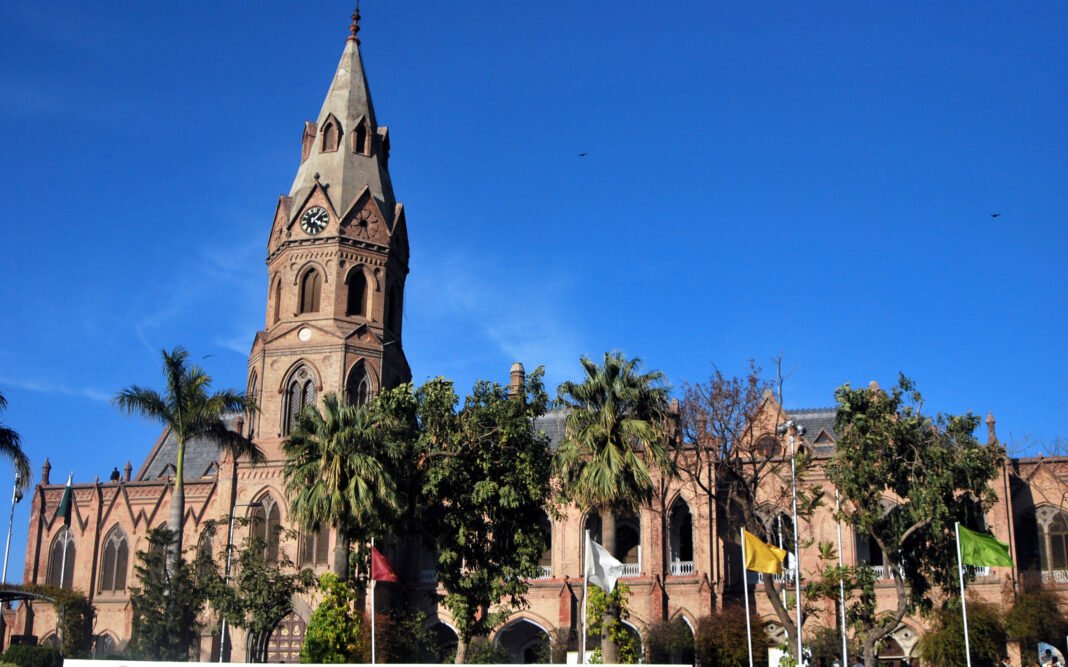
The college outgrew its first home quickly. In April 1871 it moved to a large bungalow near Anarkali Bazaar; in 1873 it shifted again to a house called Rahim Khan’s Kothi as student numbers kept rising. Finally it moved to its present site, where the grand main building — designed by W. Purdon of the Punjab Public Works Department — was completed in 1877 at a cost of Rs 320,000. Its neo-Gothic design, broad verandahs and 176-foot central clock tower made it an instant landmark of colonial Lahore.
Leitner’s influence went beyond the college: in 1882 he was instrumental in founding the University of the Punjab, and Government College became one of its standout affiliated colleges — a relationship that would last 115 years. In 1997, the Government of Punjab granted the college autonomy in all affairs along with degree-awarding status, and in 2002 it was raised to full university status. The word “college” was kept in its title to preserve its historical roots — and to this day, Lahoris simply call it “GC”.
Its roll of honour is unmatched in Pakistan. Among its alumni — proudly called Ravians, after the student magazine The Ravi — are four former prime ministers of Pakistan (including the country’s longest-serving, Nawaz Sharif) and one caretaker prime minister; two Nobel laureates, physicist Abdus Salam (1979) and chemist Har Gobind Khorana (1968); the Poet of the East Allama Muhammad Iqbal; literary giants Faiz Ahmed Faiz, N. M. Rashid, Patras Bukhari, Ashfaq Ahmed and Bano Qudsia; Bollywood legend Dev Anand; and cricketers including Inzamam-ul-Haq, Ramiz Raja, Amir Sohail and Abdul Qadir. The Abdus Salam School of Mathematical Sciences is named for its most famous son, who graduated in mathematics in 1946 and later returned as a professor.
Top Things to Do in Government College University, Lahore
Admire the Main Building and Clock Tower
Start at the Main Building, the heart of GCU. Completed in 1877, this neo-Gothic masterpiece — all pointed arches, broad verandahs and soaring ceilings — is one of the most photographed buildings in Lahore. At its centre rises the 176-foot clock tower, the campus’s defining silhouette, visible from much of the surrounding city. Walk the verandahs slowly, look up at the vaulted ceilings, and imagine the generations of students who have passed under these arches since the 19th century. Early morning light makes the stonework glow and the campus is at its most peaceful.
Walk the Leitner Oval
The large ground in front of the main building — long known simply as the Oval, and renamed the Leitner Oval in 2019 in honour of the college’s first principal — is the social heart of campus. Students play cricket here, friends gather under the trees, and on a weekday the whole place buzzes with youthful energy. Take a slow walk around it; it is the best way to feel the campus’s living pulse rather than just its stones.
Visit the Abdus Salam Hall
Named after GCU’s Nobel laureate in physics, the Abdus Salam Hall hosts the university’s major academic ceremonies — including the celebrations marking the college’s birthdays. Even from the outside, the hall is a reminder of the institution’s scientific legacy: Abdus Salam graduated here in mathematics in 1946 before going on to win the 1979 Nobel Prize in Physics, becoming the first Pakistani to win a Nobel in the sciences.
Explore the Kala Shah Kaku Campus
If you have a full day, consider a trip to GCU’s new campus at Kala Shah Kaku, inaugurated in August 2019 and formally opened to students in September 2020. Spread over 370 acres — vastly larger than the 56-acre old campus — it represents the university’s future, with modern academic blocks and hostels. A shuttle bus service connects the two campuses. The contrast between the 1877 Gothic main building and the new campus tells the whole story of GCU in a single day.
Photograph the Gothic Details
Architecture photographers, bring your wide-angle lens. The main building’s arched colonnades, the clock tower against a monsoon sky, the long corridors with their play of light and shadow — GCU rewards patient photography. The golden hour just before sunset is magical, when the warm light rakes across the stone and the tower casts a long shadow over the Oval.
Famous Places In and Around Government College University, Lahore
- Anarkali Bazaar — One of the oldest surviving markets in South Asia, right beside the campus; perfect for food and shopping after your visit.
- Badshahi Mosque — Lahore’s great Mughal mosque, a short drive into the Walled City.
- Lahore Fort — The Mughal citadel adjoining the Badshahi Mosque, a UNESCO World Heritage site.
- Bagh-e-Jinnah — The historic Lawrence Gardens, a green escape a few minutes from campus.
- Chauburji — The elegant 17th-century Mughal gateway monument, a short drive away.
- Alhamra Arts Council — Lahore’s cultural heart on The Mall, hosting exhibitions and performances.
- Lahore Museum — One of the subcontinent’s great museums, on The Mall near the university.
How to Reach Government College University, Lahore
GCU sits in the middle of Lahore, so reaching it is straightforward. The campus is at the junction of The Mall and Lower Mall, on Government College University Road near Anarkali Bazaar.
Within Lahore: From anywhere in the city, take a rickshaw, taxi or ride-hailing car to “GC University, The Mall” — every driver knows it. The Lahore Metrobus has stations along the nearby corridors, and local buses and wagons run along The Mall and Circular Road. Visitor parking on campus is limited, so public transport or a drop-off is the smart choice.
From Islamabad: Drive the M-2 motorway to Lahore — about 375 km, roughly 4 hours. Enter Lahore via the Ring Road or Thokar Niaz Beg and head for The Mall in the city centre. Daewoo and other coach services run constantly between Islamabad and Lahore.
From Karachi: The practical option is to fly to Allama Iqbal International Airport (about 1 hour 45 minutes), then drive into the city — the airport is roughly 15 km from GCU, about a 30–45 minute drive depending on traffic. Driving from Karachi is over 1,200 km and takes the better part of two days.
Nearest airport: Allama Iqbal International Airport, Lahore (LHE), about 15 km from campus. The nearest railway station is Lahore Junction, roughly 3–4 km away.
Route Details
- From Allama Iqbal Airport: Take Airport Road to the Ring Road, exit toward the city centre, and follow Canal Road or Ferozepur Road to The Mall. GCU is on The Mall near Anarkali — look for the clock tower.
- From Lahore Railway Station: Head southwest on Circular Road, then turn onto Lower Mall — the campus entrance is at the junction with The Mall, about 10–15 minutes by rickshaw.
- From Thokar Niaz Beg (M-2 entry): Take Canal Road east, then turn onto The Mall heading toward the old city. GCU appears on your right as you approach Anarkali.
Roads around the campus are busy on weekdays during office and college hours (8 am–4 pm); plan your visit for mid-morning or early afternoon to avoid the worst traffic. The campus itself is best explored on foot.
Where to Stay in Government College University, Lahore
GCU is in central Lahore, so you have the city’s full range of accommodation within a short drive. You do not stay at the university as a tourist — you stay nearby and walk or ride over.
Luxury: The Mall and Gulberg corridors have Lahore’s top five-star hotels, all within 15–25 minutes of campus. These offer the full comfort package — pools, fine dining and business centres — and make a good base for a heritage weekend.
Mid-range: The areas around The Mall, Jail Road and Gulberg are full of well-run mid-range hotels and serviced apartments at comfortable prices, many bookable online. Look for properties near The Mall to keep GCU, Anarkali and the Walled City within easy reach.
Budget and guesthouses: The old city and Anarkali area have simple, budget-friendly guesthouses — basic but characterful, and unbeatable for location. Hostels aimed at young travellers have also opened in central Lahore in recent years.
If you are visiting a student, note that the university has hostels for its own students (including two at the Kala Shah Kaku campus), but these are not open to tourists. Book your hotel in advance during the winter wedding and festival season (November–February), when Lahore’s hotels fill up.
Where to Eat: Local Foods of Government College University, Lahore
One of the great joys of visiting GCU is that you are steps away from some of the best eating in Pakistan. The campus borders Anarkali, whose food street and old bazaar eateries have fed generations of hungry Ravians.
Anarkali Food Street: Just outside the campus gates, this is where students celebrate exam results and where visitors should start. Try the classics: nihari (slow-cooked beef stew), paya, haleem, channay with hot naan, and tall glasses of lassi — sweet or salty. For the brave, Anarkali’s siri paye breakfast is a Lahori rite of passage.
Around The Mall: The Mall corridor has old-school restaurants and cafes that have served Lahore’s intellectuals for decades — the kind of places where professors and poets argued over chai. Modern cafes and fast-food outlets cluster around nearby Liberty and Gulberg for those who want familiar comforts.
Student-budget bites: The dhabas and small eateries along Lower Mall and around Anarkali serve filling meals — daal, sabzi, chicken karahi, biryani — at student-friendly prices. A full dhaba meal near campus typically costs a few hundred rupees; a sit-down dinner at a mid-range restaurant will be more, but still very reasonable by international standards.
Do not leave Lahore without trying its kulfi and falooda for dessert — the old city’s sweet shops near Anarkali are legendary.
Weather in Government College University, Lahore
Lahore has a classic Punjab climate: pleasant winters, a short glorious spring, a fierce summer, and a humid monsoon. The campus is at its most beautiful in winter and spring, when the old trees are green and the Gothic stonework looks its best.
| Season | Temperature Range | Conditions |
|---|---|---|
| Winter (Dec–Feb) | 5°C – 20°C | Cool, often foggy mornings; sunny afternoons. The best season for walking the campus. |
| Spring (Mar–Apr) | 15°C – 30°C | Pleasant and green; jacaranda and amaltas bloom. Lovely for photography. |
| Summer (May–Jun) | 30°C – 45°C | Hot and dry; the infamous Lahore heat. Visit early morning or skip. |
| Monsoon (Jul–Sep) | 28°C – 38°C | Humid with heavy downpours; the campus turns lush but paths can flood and drainage near the old buildings is poor. |
| Autumn (Oct–Nov) | 15°C – 30°C | Cooling down; clear skies return. An excellent second-best season. |
Language and Culture of Government College University, Lahore
The language of the campus is a mix of Urdu, Punjabi and English — lectures in English, corridor gossip in Punjabi, and debates that switch between all three mid-sentence. Visitors will have no trouble communicating; most students and staff speak English.
The culture is what old Ravians call the “GC spirit”: fierce pride in the institution, a legendary debating and dramatics tradition, and the belief — summed up in the college motto “Courage to Know” — that ideas matter. The student magazine The Ravi, named for the river that flows past Lahore, has published student writing for generations and gave Ravians their name. Co-curricular life — debates, mushairas, theatre, sports on the Oval — is taken as seriously as academics.
Etiquette for visitors: This is a working university, not a tourist attraction. Dress modestly, keep your voice down near lecture halls, and do not disturb classes or examinations. The clock tower’s interior is generally restricted to staff, but its exterior is free to admire. Ask at the gate or the administration office if you want to see a specific hall — permission is often granted politely to genuine visitors. Avoid visiting during examination periods if you can.
Shopping in Government College University, Lahore
You could hardly ask for a better shopping location. Anarkali Bazaar, one of the oldest surviving markets in South Asia, is right next to campus — a maze of lanes selling everything from traditional khussay (embroidered shoes) and lawn suits to books, spices and street food. The old bookshops of Anarkali and nearby Urdu Bazaar are a treasure hunt for readers: second-hand academic books, classic Urdu literature and rare finds at bargain prices.
For modern shopping, Liberty Market and Ichhra Bazaar are a short drive away, and the malls of Gulberg offer brands and food courts. Souvenir hunters should look for blue Multani pottery, camel-skin lamps, Punjabi phulkari embroidery and, of course, books — a fitting souvenir from a university visit. Bargaining is expected in the bazaars; start at about two-thirds of the quoted price and meet in the middle with a smile.
Travel Tips for Government College University, Lahore
Packing Essentials
Comfortable walking shoes — the campus is best explored on foot and the old stone paths are uneven. In winter (December–January), bring a warm jacket for foggy mornings; in summer, sun protection and water are essential. A camera is a must for the architecture. Carry a valid ID; security at the gates may ask to see it.
Safety Tips
The campus and its surroundings are generally safe during the day, but this is a busy part of central Lahore — keep valuables secure, use registered ride-hailing services rather than hailing random transport, and avoid the area very late at night. Inside the campus, stick to public areas and respect any restricted zones. If you are travelling with children, keep an eye on them near the roads — The Mall traffic is fast.
Money & Connectivity
ATMs are plentiful on The Mall and around Anarkali, and most restaurants and shops accept cards and mobile payments. Mobile signals from all major networks (Jazz, Telenor, Zong, Ufone) are strong across campus, and most cafes and hotels offer Wi-Fi. Keep some cash for the bazaars and dhabas, where cash is still king.
Best Time to Visit Government College University, Lahore
Winter (December–February) — The Classic Season
This is Lahore at its best and GCU at its most atmospheric: crisp mornings, golden afternoon light on the Gothic stonework, and the campus in full academic swing. December can be foggy — atmospheric for photography, but allow extra travel time. This is also when Lahore’s cultural calendar is busiest, so you can pair your campus visit with festivals and food.
Spring (March–April) — The Beautiful Season
Arguably the prettiest time: flowering trees, mild temperatures and clear skies. The campus gardens are at their greenest, and walking the Oval in March is a genuine pleasure. A wonderful time for a first visit.
Autumn (October–November) — The Smart Season
The heat breaks, the skies clear, and the crowds thin out. Fewer tourists, comfortable weather, and the academic year in full flow — an underrated time to visit.
Summer and Monsoon (May–September) — Visit With Care
May and June bring brutal heat (up to 45°C) — if you must visit, go at 8 am and be done by 10. The monsoon (July–September) cools things slightly but brings humidity, sudden downpours and waterlogged paths around the old buildings. The university also has summer breaks when the campus feels quieter.
Final Thoughts
Government College University is proof that a destination does not need mountains or beaches to be unforgettable. It needs stories — and GCU has 162 years of them, written in Gothic stone, in the names on its honours boards, and in the lives of the prime ministers, poets and Nobel laureates who walked its corridors. A couple of hours here will change the way you see Lahore: not just as a city of Mughal monuments, but as a city of minds.
So add it to your Lahore itinerary, between the Badshahi Mosque and Anarkali’s food street — and if this government college university lahore travel guide has done its job, you will leave the campus the way generations of Ravians have: already planning your return. For more ideas across the country, browse our Explore Pakistan series, from the peaks of Hunza to the slopes of Malam Jabba.
FAQs
Where is Government College University, Lahore located?
On The Mall at the junction with Lower Mall, next to Anarkali Bazaar in central Lahore. Its main campus covers 56 acres, and it also has a newer 370-acre campus at Kala Shah Kaku.
What is the best time to visit Government College University, Lahore?
December to February for classic winter weather, or March–April for spring blooms. October–November is also excellent. Avoid May–June’s extreme heat.
How do I reach Government College University, Lahore?
It is in central Lahore — take a taxi, rickshaw or ride-hailing car to “GC University, The Mall”. From Islamabad it is about 375 km via the M-2 motorway; from Karachi, fly to Allama Iqbal International Airport (about 15 km from campus).
Can tourists visit the GCU campus?
Yes — visitors are generally welcome during working hours (roughly 8 am–4 pm on weekdays) to see the campus exterior, the main building and the clock tower. It is a working university, so dress modestly, respect the academic environment, and ask permission before entering specific buildings. The clock tower’s interior is usually restricted.
Is Government College University, Lahore safe for families?
Yes. It is a well-managed campus in a busy central area. Visit during the day, keep to public areas, and use registered transport. It is an inspiring stop for families with school or college-age children.
Where can I stay near Government College University, Lahore?
Central Lahore offers everything from five-star hotels on The Mall and in Gulberg to mid-range hotels and budget guesthouses near Anarkali. The university’s own hostels are for students only.
What food is available near GCU?
Anarkali Food Street, right beside the campus, serves Lahori classics — nihari, paya, haleem, lassi, kulfi and falooda. Student-budget dhabas on Lower Mall offer cheap, filling meals.
Why is GCU historically important?
Founded on 1 January 1864, it is one of the oldest seats of learning in the subcontinent. Its alumni include two Nobel laureates (Abdus Salam and Har Gobind Khorana), four prime ministers of Pakistan, Allama Iqbal, Faiz Ahmed Faiz and Dev Anand. Its 1877 neo-Gothic main building with a 176-foot clock tower is an architectural landmark.