Quick Facts
- Location: Bahria Town, Lahore, Punjab — in the town’s central Sector C area
- Famous For: Pakistan’s third-largest mosque (70,000 capacity); 4 million handmade Multani tiles; a grand dome ringed by 20 smaller domes; an Islamic heritage museum with centuries-old Quran manuscripts; inaugurated on Eid al-Adha 2014
- Nearest City: Lahore — roughly 20 km (about 30–45 minutes by road) from the city centre
- Accessibility: Easy drive from central Lahore via Canal Road and the Ring Road; ride-hailing cars serve Bahria Town; ample parking at the mosque
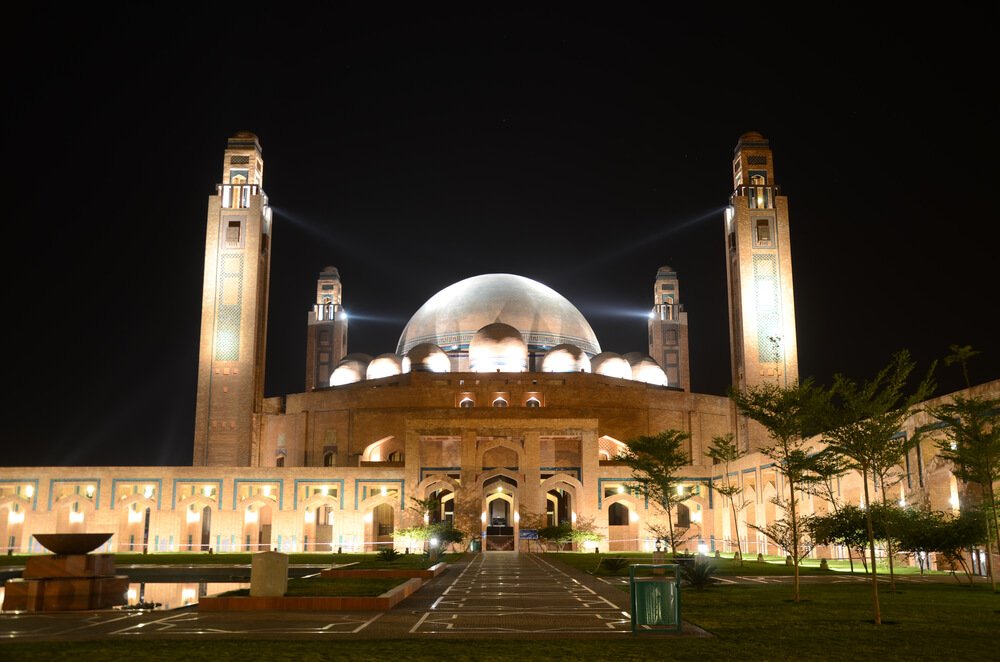
- Known Landmarks: The grand central dome, four 165-foot minarets, the Quran library and heritage museum, the tile-clad exterior in Multani orange
- Best For: Architecture admirers, spiritual travellers, photographers, families on a Bahria Town day out, and visitors who want Mughal grandeur without the Walled City crowds
Why Visit Grand Jamia Mosque, Lahore
If Lahore is the city of Mughal mosques, the Grand Jamia Mosque in Bahria Town is its modern heir — a building that asked a bold question: what would the Badshahi Masjid look like if it were built today, with today’s craftsmen, for today’s worshippers? The answer rises over Bahria Town in glowing Multani orange: four minarets, 21 domes, four million handmade tiles, and room for 70,000 people. It is, by most measures, the third-largest mosque in Pakistan and one of the largest in the world.
You should visit because this is heritage you can touch. Unlike the 350-year-old Badshahi Mosque — magnificent, but roped off and museum-like — the Grand Jamia is a living, working mosque where the tiles were laid by craftsmen trained for this very project, where the carpets were woven in Turkey for these floors, and where the chandeliers were made in Iran for this dome. Walking in feels like stepping inside a building that is still warm from its making.
It is also one of the most visitor-friendly great mosques in Pakistan. The complex includes an Islamic heritage museum with Quran manuscripts up to 700 years old, an art gallery, a library and a dedicated women’s prayer area — it was designed from the start to welcome the curious as well as the devout. And its location in Bahria Town means you can pair it with the town’s Eiffel Tower replica, theme park and food streets for a full, easy family day.
Come in the late afternoon, when the low sun sets the Multani tiles on fire and the call to prayer echoes off the dome. Whether this is your first mosque in Pakistan or your fiftieth, the Grand Jamia Mosque earns its place on your Lahore list.
History of Grand Jamia Mosque, Lahore
The Grand Jamia Mosque was the vision of Bahria Town founder Malik Riaz, who wanted his flagship township to have a mosque worthy of Lahore’s Mughal legacy. He commissioned Nayyar Ali Dada, Pakistan’s most renowned architect, who set out to capture the historical essence of Lahore and its surrounding cities — drawing directly on the Badshahi Masjid, the Wazir Khan Mosque and even Abu Dhabi’s Sheikh Zayed Grand Mosque.
Construction began around 2011 and ran for roughly three years, with about 1,000 labourers working continuously on the site. It was a project of extraordinary craft: artisans shaped four million handmade mosaic tiles from Multan’s orange-hued clay — some old master craftsmen were found for the work, and new ones were trained in the traditional geometric and floral patterns. The exterior brickwork used Lahore’s traditional red gutka brick made from Multani mitti, while the interior was dressed with custom-made carpets imported from Turkey and more than 50 chandeliers imported from Iran. The total cost exceeded Rs 4 billion.
The mosque was inaugurated on Eid al-Adha, 6 October 2014, opening as Pakistan’s third-largest mosque after the Badshahi and Faisal mosques. Its fame spread quickly: renowned scholar Maulana Tariq Jamil delivered a Friday sermon here that drew more than 100,000 people, and in 2021 the Archbishop of Canterbury, Justin Welby, toured the mosque during an official visit to Pakistan, praising its architecture and visiting its Quran library. With a capacity of 70,000 worshippers — 25,000 indoors and the rest in the courtyard and corridors — it remains the largest mosque in Pakistan by covered area, according to its architect.
Top Things to Do in Grand Jamia Mosque, Lahore
Marvel at the Tile Exterior
Before you even enter, walk the perimeter. The entire exterior is surfaced with four million handmade Multani tiles in geometric and floral patterns, glowing in the distinctive orange of Multan’s clay. Artisans spent years installing them by hand, using skills passed down through generations. It is the largest expanse of traditional tilework on any modern building in Pakistan — and it photographs beautifully in morning and evening light.
Stand Beneath the Grand Dome
The whole structure sits on a base elevated 20 feet above the ground, with the roofline at 80 feet. At the centre rises the grand dome — a three-dimensional arched dome 150 feet high, embossed with floral inlays and Mughal-era calligraphy. The dome’s crown jewel is its centre: rising 40 feet and spreading 50 feet, ringed by 20 smaller domes. Inside, eight chandeliers are synchronised to form one mammoth chandelier at the dome’s heart. Look up and you will understand why the architect called this the largest mosque in Pakistan by covered area.
Visit the Islamic Heritage Museum
One entire floor of the complex is given over to heritage: an Islamic museum displaying rare Quranic collections — including manuscripts 300 to 700 years old in 17 languages — alongside an Islamic library and an art gallery of antique artefacts. For history lovers, this is the hidden gem of the visit: centuries of Islamic calligraphy and craftsmanship under one roof, in a building that is itself a craft revival project.
Admire the Four Minarets
Four minarets, each 165 feet tall, mark the corners of the complex. They frame every photograph of the mosque and are visible across Bahria Town. Walk between them at dusk, when they silhouette against the sky and the mosque’s lights come on — the classic shot that has made this one of the most photographed modern buildings in Punjab.
Experience a Friday or Eid Congregation
If your visit coincides with Friday prayers, stay for the sermon and congregation — the sight of tens of thousands praying in unison under the great dome is profoundly moving, whatever your faith. The mosque’s Eid congregations are among the largest in Lahore. (Arrive early; the crowds are enormous and the women’s section on the second floor fills fast.)
Famous Places In and Around Grand Jamia Mosque, Lahore
- Bahria Town Eiffel Tower Replica — The town’s landmark tower, a short drive from the mosque.
- Bahria Adventure Land — Theme park with rides and attractions for a family day out.
- Taj Mahal Replica — Bahria Town’s marble tribute, popular for evening photos.
- Badshahi Mosque — The Mughal original that inspired the Grand Jamia’s design, in the Walled City.
- Wazir Khan Mosque — The tile-work masterpiece whose interior art echoes in the Grand Jamia.
- Chauburji — The elegant Mughal gateway, on the way back toward central Lahore.
- Lahore Fort — The Mughal citadel, for those making a full heritage day of it.
How to Reach Grand Jamia Mosque, Lahore
The mosque is in Bahria Town, Lahore, in the southern part of the metropolitan area — roughly 20 km from central Lahore, about a 30–45 minute drive depending on traffic.
From central Lahore (Gulberg/Liberty/Model Town): Take Canal Road west, then follow the signs for Bahria Town via the Ring Road or Multan Road. Ride-hailing cars go to Bahria Town routinely — just set the destination as “Grand Jamia Masjid, Bahria Town”. Every driver in Lahore knows it.
From Allama Iqbal International Airport: About a 45-minute to 1-hour drive via the Ring Road. If you are landing in Lahore for a short trip, the mosque is an easy first or last stop.
From Islamabad: Drive the M-2 motorway to Lahore (about 375 km, roughly 4 hours), then continue through the city to Bahria Town. Coaches run constantly between Islamabad and Lahore; from the Lahore terminals, take a ride-hailing car onward.
From Karachi: Fly to Lahore (about 1 hour 45 minutes), then drive as above.
Parking at the mosque is ample, and Bahria Town’s roads are wide and well signposted. Friday afternoons bring heavy Jummah traffic — visit on a weekday morning for the calmest experience.
Route Details
- Central Lahore → Bahria Town: From Kalma Chowk or Liberty, take Canal Road toward Thokar Niaz Beg, join the Lahore Ring Road (southern loop), and exit for Bahria Town.
- Bahria Town entrance → Grand Jamia Mosque: Follow the town’s main boulevard to Sector C — the mosque’s minarets are visible from far off; simply drive toward them.
- Alternative via Multan Road: From Thokar Niaz Beg, take Multan Road south and follow the Bahria Town signs.
Roads are good year-round. In the monsoon (July–September), allow extra time for rain-related slowdowns on the Ring Road.
Where to Stay in Grand Jamia Mosque, Lahore
Bahria Town has its own hotels and guesthouses, so you can stay within minutes of the mosque — ideal for catching it at sunrise or for wedding parties and events at the complex.
Near the mosque: Bahria Town hosts several hotels and serviced apartment buildings catering to visitors; the Grand Bahria Hotel is among the established names in the town. Furnished short-stay apartments in the surrounding sectors are plentiful and good value for families.
Central Lahore: If you are combining the mosque with the Walled City, Anarkali and The Mall, stay in Gulberg or on The Mall — Lahore’s main hotel belt, 30–45 minutes from Bahria Town. Options range from five-star properties to comfortable mid-range hotels and budget guesthouses.
Budget: Guesthouses in Model Town, Johar Town and along Multan Road offer simple, affordable rooms closer to Bahria Town than the city-centre hotels.
Book ahead during the winter wedding season (November–February) and on Eid holidays, when Bahria Town fills up.
Where to Eat: Local Foods of Grand Jamia Mosque, Lahore
Bahria Town’s commercial areas are full of restaurants, and you are still in Lahore — Pakistan’s food capital — so expectations should be high.
Around the mosque: The sectors near the mosque have desi restaurants serving chicken karahi, mutton karahi, barbecue platters, daal and fresh naan, plus fast-food outlets, Chinese restaurants and cafes. Family restaurants with outdoor seating are popular on weekend evenings.
Malls and food courts: Bahria Town’s shopping malls have large food courts — handy for groups — and bakeries and sweet shops for mithai and kulfi.
Worth the drive into Lahore: No food trip here is complete without the city’s classics — nihari, paya, haleem, channay, lassi and falooda at Anarkali Food Street or Fort Road Food Street near the Badshahi Mosque. Many visitors pair a morning at the Grand Jamia with lunch in the old city.
A dhaba-style meal near Bahria Town costs a few hundred rupees per person; a comfortable restaurant dinner for two is very reasonable. As with any mosque visit, eat before or after rather than during prayer times.
Weather in Grand Jamia Mosque, Lahore
Lahore’s Punjab climate applies here: pleasant winters, a short glorious spring, a fierce summer and a humid monsoon. The mosque’s marble courtyard is best enjoyed when the sun is gentle.
| Season | Temperature Range | Conditions |
|---|---|---|
| Winter (Dec–Feb) | 5°C – 20°C | Cool with foggy mornings; sunny afternoons. The best season for visiting. |
| Spring (Mar–Apr) | 15°C – 30°C | Pleasant and green; flowering trees. Lovely for photography. |
| Summer (May–Jun) | 30°C – 45°C | Hot and dry. Visit early morning or after sunset; the marble courtyard burns at midday. |
| Monsoon (Jul–Sep) | 28°C – 38°C | Humid with heavy downpours; dramatic skies for photography but allow extra travel time. |
| Autumn (Oct–Nov) | 15°C – 30°C | Cooling and clear; an excellent second-best season. |
Language and Culture of Grand Jamia Mosque, Lahore
Urdu, Punjabi and English are all in daily use — you will have no trouble communicating. Bahria Town is a modern, planned community, and the mosque reflects that: organised, welcoming and set up for visitors.
The mosque welcomes respectful visitors of all faiths outside the five daily prayer times. Etiquette: dress modestly — men in long trousers, women covering head, arms and legs (a scarf and abaya are ideal; the mosque’s culture is traditional). Remove shoes before entering carpeted areas. Keep voices low, do not walk in front of worshippers, and ask before photographing people. The women’s prayer area is on the second floor — a thoughtful feature worth knowing about. During Jummah and the daily prayers, the halls are for worship; explore the exterior, courtyard and museum at those times.
One thing that strikes every visitor is the pride of place: guides, staff and worshippers alike will tell you about the tiles, the dome and the craftsmen. Ask questions — people here love sharing the story of how their mosque was built.
Shopping in Grand Jamia Mosque, Lahore
Bahria Town’s commercial markets and malls offer all the standard retail — clothing brands, electronics, home goods and food courts — within a few minutes of the mosque. For souvenirs with a spiritual touch, look for prayer mats, tasbih, attar (perfume oils), Islamic calligraphy art and books from shops in the town’s commercial areas.
For a more traditional shopping experience, drive into Lahore: Anarkali Bazaar (one of South Asia’s oldest markets) for khussay, fabrics and books; Ichhra and Liberty Market for clothes and wedding shopping; and the old city’s Shah Alam Market for wholesale bargains. Blue Multani pottery — echoing the mosque’s own tiles — makes a fitting souvenir. Bargaining is expected in the bazaars.
Local Events and Festivals
The mosque’s year follows the Islamic calendar. Eid al-Fitr and Eid al-Adha (dates move each year with the lunar calendar — the mosque itself was inaugurated on Eid al-Adha 2014) bring its biggest congregations, with tens of thousands filling the halls, courtyard and corridors. Arrive very early and expect celebratory traffic across Bahria Town.
Ramadan brings taraweeh prayers every night and a deeply spiritual atmosphere, especially in the last ten nights. Shab-e-Barat and Shab-e-Meraj draw large night gatherings as well. Beyond the religious calendar, Bahria Town hosts fairs, food festivals and national-day celebrations through the year — and Lahore’s own festival season (winter food festivals, Basant-era kite culture in spirit, Urs celebrations) is an easy add-on to the trip.
Travel Tips for Grand Jamia Mosque, Lahore
Packing Essentials
Modest dress is a must — women should bring a headscarf and long coat or abaya; men should wear long trousers. Slip-on shoes (removed frequently), sunglasses and sunscreen for the bright courtyard, and a water bottle in summer. A camera is essential: the tilework, dome and minarets are among the most photogenic sights in Punjab.
Safety Tips
Bahria Town is a private, gated community with its own security and is considered very safe for visitors, including families and foreign tourists. Standard big-city sense applies on the drive in. Inside the complex, follow staff directions, stay in visitor areas during prayers, and keep children close in the large crowds of Friday and Eid.
Money & Connectivity
ATMs are plentiful in Bahria Town’s commercial areas; cards and mobile payments are widely accepted. All major mobile networks have strong signals, and restaurants and hotels offer Wi-Fi. Keep some cash for small vendors, parking and the old-city bazaars, where cash is still king.
Best Time to Visit Grand Jamia Mosque, Lahore
Winter (December–February) — The Perfect Season
Crisp air, golden light on the Multani tiles, and comfortable courtyard walks at any hour. This is peak season — weekends are busy, so prefer a weekday morning. Pair the visit with Lahore’s winter food and cultural calendar.
Spring and Autumn (March–April, October–November) — Excellent Alternatives
Mild temperatures, clear skies and thinner crowds. Spring brings flowering trees to Bahria Town’s avenues; autumn brings the year’s clearest light for photography.
Summer (May–June) — Visit at the Edges of the Day
Lahore’s heat is fierce — up to 45°C — and the marble courtyard is punishing at midday. Go at sunrise or after Asr; the sunset views with the minarets silhouetted are worth the timing. The museum and library offer air-conditioned refuge.
Monsoon (July–September) — Dramatic but Damp
Sudden downpours and humid air; the mosque looks stunning against monsoon clouds, but check the weather before driving out and allow extra time on the Ring Road.
Final Thoughts
The Grand Jamia Mosque in Bahria Town Lahore is what happens when a city that perfected mosque architecture 350 years ago decides to do it again. Four million handmade tiles, a dome embossed with Mughal calligraphy, chandeliers from Iran, carpets from Turkey, and a museum guarding Quran manuscripts older than the building by centuries — it is a love letter to Islamic art, written in the present tense.
It also makes a fascinating pair with its younger, larger sibling in Karachi — if this grand jamia mosque lahore travel guide has inspired you, read our Grand Jamia Mosque, Karachi travel guide to compare the two. And for the Mughal originals that inspired them both, see our Badshahi Mosque travel guide — or browse the full Explore Pakistan series, from the peaks of Malam Jabba to the valleys of Hunza.
FAQs
Where is Grand Jamia Mosque, Lahore located?
In Bahria Town, Lahore, Punjab (Sector C area) — roughly 20 km south of central Lahore, about a 30–45 minute drive via Canal Road and the Ring Road.
What is the best time to visit Grand Jamia Mosque, Lahore?
December to February for the best weather. March–April and October–November are also excellent. In summer, visit early morning or late afternoon.
How do I reach Grand Jamia Mosque, Lahore?
Drive or take a ride-hailing car from central Lahore (30–45 minutes). From Islamabad, drive the M-2 to Lahore (about 375 km); from Karachi, fly to Allama Iqbal International Airport and drive onward.
Is Grand Jamia Mosque, Lahore open to tourists and non-Muslims?
Yes — respectful visitors of all faiths are welcome outside prayer times. Dress modestly (women should cover their heads), remove shoes in prayer areas, and explore the museum, gallery and courtyard.
Is Grand Jamia Mosque, Lahore suitable for families?
Very. The complex is spacious and safe, the museum and art gallery interest all ages, and Bahria Town’s theme park, Eiffel Tower replica and restaurants make a full family day out.
Where can I stay near Grand Jamia Mosque, Lahore?
Hotels, serviced apartments and guesthouses inside Bahria Town (including the Grand Bahria Hotel), or Lahore’s main hotel belt in Gulberg and on The Mall, 30–45 minutes away.
What food is available near the mosque?
Desi restaurants (karahi, barbecue), fast food and cafes in Bahria Town’s commercial areas, plus mall food courts. For Lahore’s legendary nihari, paya and lassi, drive to Anarkali or Fort Road Food Street.
Why is Grand Jamia Mosque, Lahore historically important?
Designed by Nayyar Ali Dada and inaugurated on Eid al-Adha 2014, it is Pakistan’s third-largest mosque (70,000 capacity), famed for four million handmade Multani tiles, 21 domes, four 165-foot minarets, Turkish carpets, Iranian chandeliers and an Islamic heritage museum with centuries-old Quran manuscripts.