There is a village on the Gujrat–Bhimber road where three gurdwaras once stood, and today you would walk straight past all three without knowing. That village is Buzurgwal — sometimes written Bazurgwal — and its story is one of the most haunting in Punjab’s Sikh heritage. Guru Hargobind, the sixth Sikh Guru, stayed here while travelling to Gujrat from Kashmir, and the village honoured his visit with not one but three shrines. Two have been wiped out completely; of the third, only faint marks remain, so obscure that you cannot tell it was a gurdwara unless a villager points it out. If you are drawn to the fragile, the forgotten, and the urgently-in-need-of-saving corners of history, this Gurdwara Chhevin Patshahi, Buzurgwal travel guide is for you.
Quick Facts
- Location: Buzurgwal (Bazurgwal) village, on the Gujrat–Bhimber road, about 24 km from Gujrat, district Gujrat, Punjab, Pakistan
- Altitude: around 230 metres above sea level (typical of the Gujrat plain near the foothills)
- Famous For: Guru Hargobind’s stay while coming to Gujrat from Kashmir; once home to three gurdwaras, now reduced to faint traces
- Nearest City: Gujrat (24 km); Lala Musa is the railway station and tehsil headquarters
- Accessibility: straightforward by road from Gujrat or Lala Musa; around 165 km from Lahore and roughly 230 km from Islamabad
- Known Landmarks: the faint architectural traces of the surviving gurdwara site, the Gujrat–Bhimber road itself, the surrounding farmland
- Best For: Sikh pilgrims, heritage researchers, photographers of lost places, and travellers exploring the Gujrat region
Why Visit Gurdwara Chhevin Patshahi, Buzurgwal
Visit Buzurgwal because it is a race against time. Of the three gurdwaras that once commemorated Guru Hargobind’s visit, two are gone without a trace and the third survives only as faint marks that even locals struggle to identify without guidance. Heritage workers describe the site as unmarked, deteriorating, and suffering from complete neglect, with no official conservation effort underway. Every year that passes, a little more of it disappears. Visiting now — documenting, photographing, and telling its story — is a genuine act of preservation.
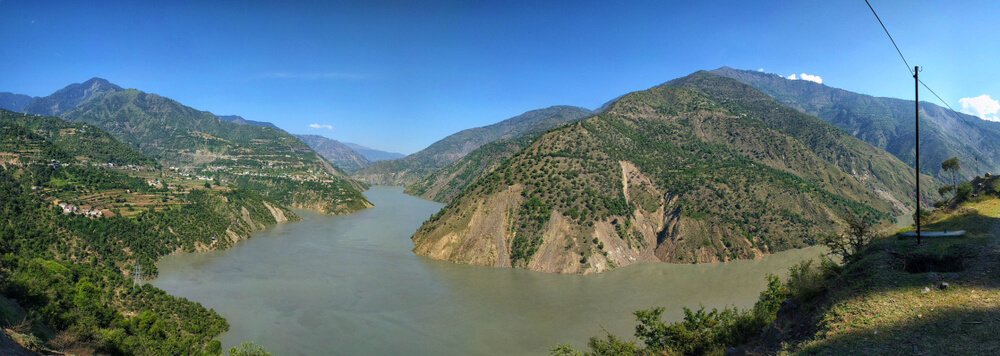
The setting rewards the journey too. The Gujrat–Bhimber road is one of Punjab’s classic cross-country routes, running from the plains toward the hills of Azad Kashmir. Buzurgwal sits in green, well-watered farmland with the faint blue line of the foothills on the horizon. It is the Punjab of wheat fields and mango orchards, of roadside dhabas and slow village afternoons — a world away from the motorway, and all the more memorable for it.
Buzurgwal also completes a bigger picture. Guru Hargobind’s early-1600s journey from Kashmir threaded through this entire region — Gujrat city itself holds the site of “Haveli Chhenvi Patshahi” inside Kabuli Gate, where the Guru stayed on his way back from Kashmir, and the nearby shrine of Shah Daula. Pair Buzurgwal with Gujrat city’s surviving Sikh heritage and with the reopened shrine at Amar Sidhu near Lahore, and you begin to trace the Guru’s actual route across the land. Few heritage trails in Pakistan are this tangible.
Finally, come for the people. In a village where the gurdwara has faded to near-invisibility, the memory lives in the villagers who can still point to the spot. Ask, listen, and you will hear how the past survives — not in monuments, but in neighbours.
History of Gurdwara Chhevin Patshahi, Buzurgwal
The history of Buzurgwal’s gurdwaras begins, like so many in this region, with the sixth Sikh Guru, Guru Hargobind (1595–1644) — the “Chhevin Patshahi,” the Sixth Mastership. Historical accounts record that the Guru stayed in this village while he was coming to Gujrat from Kashmir in the early 1600s. The village, then called Bazurgwal, lay on the natural route between the Kashmir valley and the Punjab plains, and the Guru’s halt here was remembered long after.
What makes Buzurgwal unusual is the scale of what followed: not one but three gurdwaras were eventually raised in the village to commemorate the Guru’s visit. Three shrines in a single village speaks volumes about the size and devotion of the Sikh community that once lived here. During the Sikh Empire and into the early 20th century, the village’s gurdwaras would have been centres of worship, gathering, and langar — the beating heart of local Sikh life.
Partition in 1947 changed everything. With the Sikh population gone, the shrines lost their caretakers. Over the decades, two of the three gurdwaras were wiped out completely — erased so thoroughly that no visible trace survives. The third fared only marginally better: some marks of the historic structure remain, but they are so faint and altered that, as the old surveys honestly put it, you cannot say it is a gurdwara until someone specifically points it out. The site today is unmarked and deteriorating, with no conservation effort to arrest the decay.
The wider Gujrat region keeps its own related memories. Inside Gujrat city’s Kabuli Gate stands the site chroniclers called “Haveli Chhenvi Patshahi” — the Mansion of the Sixth King — where Guru Hargobind stayed on his way back from Kashmir; the building, elegantly built, was later occupied by refugees and altered, with rent collected by the Auqaf board. Close by is the shrine of Shah Daula, the saint who is recorded to have met the Guru and listened to the recitation of Sukhmani Sahib. Together, Gujrat city and Buzurgwal village preserve the two ends of the Guru’s passage through this district — one remembered in stone, the other fading from it.
Top Things to Do in Gurdwara Chhevin Patshahi, Buzurgwal
Find the surviving traces with a local guide
This is the essential Buzurgwal experience — and you cannot do it alone. The remaining marks of the gurdwara are so obscure that only a villager familiar with the location can identify them. Ask in the village for the old gurdwara site, and someone will walk you to it. Treat the visit as a conversation, not just a sighting: the story of how three shrines faded to one faint trace is best heard from the people who watched it happen.
Reflect at the lost shrines
Two of Buzurgwal’s three gurdwaras have vanished entirely. Standing on ground where a shrine once stood and now nothing does is a strange, solemn experience — a reminder that heritage is not permanent unless someone chooses to keep it. For Sikh visitors, a quiet ardas here carries special weight.
Drive the Gujrat–Bhimber road
The 24-kilometre stretch from Gujrat to Buzurgwal is a pleasure in itself: flat green fields giving way to glimpses of the foothills toward Bhimber. Continue on to Bhimber in Azad Kashmir if you have time — the road is the same historic route the Guru’s party would have travelled in reverse.
Explore Gujrat city’s Sikh heritage
In Gujrat, seek out the Kabuli Gate area and the site of the old Haveli Chhenvi Patshahi, plus the nearby shrine of Shah Daula. The contrast is instructive: the city’s Sikh sites survive as altered buildings, while the village’s have nearly vanished. Together they tell the full story of the district’s Sikh past.
Photograph rural Punjab at its most authentic
Buzurgwal’s lanes, fields, and old village architecture are a photographer’s delight — especially in the golden light of late afternoon. The faint gurdwara traces themselves are difficult to photograph meaningfully, so focus on the village life that continues around them.
Famous Places In and Around Gurdwara Chhevin Patshahi, Buzurgwal
- Gujrat city — the district capital, with the Kabuli Gate gurdwara site and the shrine of Shah Daula
- Head Marala — the great headworks on the River Chenab, a well-known picnic and engineering landmark of the region
- Bhimber — the historic town at the end of the Gujrat–Bhimber road, gateway to Azad Kashmir
- Sialkot — the famous city of sports goods and the historic Sialkot Fort, a reasonable drive away
- Gurdwara Chhevin Patshahi, Amar Sidhu — the restored Lahore shrine of the same Guru: Gurdwara Chhevin Patshahi, Amar Sidhu
- Gurdwara Chhevin Patshahi, Baache — the Hafizabad shrine with its standing samadh: Gurdwara Chhevin Patshahi, Baache
How to Reach Gurdwara Chhevin Patshahi, Buzurgwal
Buzurgwal lies about 24 kilometres from Gujrat on the Gujrat–Bhimber road. Lala Musa — a major railway junction — is the nearest railway station and the tehsil headquarters, and the village is easily approached by road from there. The nearest international airports are at Lahore and Sialkot, each a few hours’ drive away.
From Lahore (around 165 km): take the Grand Trunk Road through Gujranwala and Wazirabad to Gujrat (about 3–3.5 hours), then turn onto the Gujrat–Bhimber road for 24 km to Buzurgwal.
From Islamabad (roughly 230 km): take the Grand Trunk Road south through Jhelum and Kharian to Gujrat, then the Bhimber road. Allow 4–5 hours.
From Karachi: fly to Lahore or Sialkot and continue by road; the overland route is very long.
Route Details
- Reach Gujrat city via the Grand Trunk Road from Lahore or Islamabad.
- From Gujrat, take the Gujrat–Bhimber road east toward Bhimber.
- After about 24 km you reach Buzurgwal village (signposted; confirm with locals as spellings vary between Buzurgwal and Bazurgwal).
- Park in the village and ask residents to point out the old gurdwara site — do not attempt to find the traces on your own.
Where to Stay in Gurdwara Chhevin Patshahi, Buzurgwal
Buzurgwal is a village with no hotels, so base yourself in Gujrat city, 24 km away. Gujrat has a solid range of mid-range hotels and guesthouses catering to business travellers and wedding parties — clean, comfortable, and reasonably priced. Lala Musa, the tehsil headquarters and railway town, has simpler lodgings. For more choice, Sialkot and Gujranwala are both within comfortable driving distance and offer fuller hotel ranges. Most visitors combine Buzurgwal with a wider Gujrat–Sialkot itinerary and sleep in the city.
Where to Eat: Local Foods of Gurdwara Chhevin Patshahi, Buzurgwal
The Gujrat region serves classic Punjabi fare with its own local touches. In Gujrat city, look for the district’s famous sweets and bakery items, hearty desi breakfasts of halwa puri and lassi, and the standard dhaba spread of daal, chicken karahi, and fresh tandoori roti. Roadside dhabas along the Gujrat–Bhimber road serve simple, fresh, and very budget-friendly meals — the kind of places where truck drivers eat, which is always a good sign. In the village itself, carry water and snacks; a village shop may offer tea and biscuits if you ask politely.
Weather in Gurdwara Chhevin Patshahi, Buzurgwal
Buzurgwal sits on the Gujrat plain with the foothills not far off, giving it the standard Punjab climate with slightly cooler winter nights than Lahore. The shrine traces are outdoors, so heat is the main factor to plan around.
| Season | Temperature Range | Conditions |
|---|---|---|
| Winter (Dec–Feb) | around 3–17°C | Cool, sometimes foggy; crisp clear days. Best season. |
| Spring (Mar–Apr) | around 14–31°C | Pleasant and green; ideal for the drive and village walks. |
| Summer (May–Jun) | around 29–44°C | Very hot; travel early in the day only. |
| Monsoon (Jul–Aug) | around 27–37°C | Humid with strong showers; fields lush and green. |
| Autumn (Sep–Nov) | around 16–34°C | Comfortable and clear; good for photography. |
Language and Culture of Gurdwara Chhevin Patshahi, Buzurgwal
Punjabi is the language of daily life here, with Urdu understood by all. The culture is that of the Gujrat countryside — hardworking, hospitable, and proud of its land. Because the gurdwara site is essentially unmarked and sits within village living space, extra sensitivity is needed: always ask before entering any compound, explain respectfully why you have come, and accept that some areas may be private homes now. Do not disturb walls or dig around the traces. A small gift of thanks or a shared cup of tea with the family who shows you the site is a gracious gesture.
Shopping in Gurdwara Chhevin Patshahi, Buzurgwal
Buzurgwal itself has only village shops, so do your shopping in Gujrat city. Gujrat is well known for its pottery and ceramics — the district’s clay work has a long tradition — and its bazaars sell everything from traditional khussas to modern household goods. Sialkot, a short drive away, is world-famous for sports goods and surgical instruments; factory outlets sell quality items at good prices. There is no shopping mall in Buzurgwal or its immediate surroundings — city malls in Gujrat cover that need.
Travel Tips for Gurdwara Chhevin Patshahi, Buzurgwal
Packing Essentials
A headscarf for the shrine site, sun protection, drinking water, and sturdy shoes. Bring a camera — your photographs may become part of the historical record of this fading site. A notebook for recording what villagers tell you is invaluable.
Safety Tips
The area is rural and generally safe, but travel in daylight and keep fuel topped up. The gurdwara traces may be within private property — never enter uninvited. Drive carefully on the Gujrat–Bhimber road, which carries mixed local traffic including slow tractor-trolleys.
Money & Connectivity
Carry cash; the village has no ATMs (Gujrat city does). Mobile coverage from major networks is generally available along the road and in the village, though data speeds vary. Download offline maps before leaving Gujrat.
Best Time to Visit Gurdwara Chhevin Patshahi, Buzurgwal
Winter (November to February) — the sweet spot
Cool, clear days are perfect for the drive from Gujrat and for walking the village with your local guide. This is the most comfortable season by far.
Spring (March–April) — beautiful
Green fields, mild temperatures, and long daylight hours make spring the prettiest time to see the Gujrat countryside.
Summer and Monsoon (May–August) — difficult
Intense heat then heavy, humid monsoon rains make the trip uncomfortable. If you must travel, go at dawn.
Autumn (September–October) — good
Pleasant and clear; harvest season brings the fields to life and the light is excellent for photography.
Final Thoughts
Buzurgwal is not an easy destination, and that is exactly why it matters. Three gurdwaras became faint marks; faint marks will become nothing unless people keep coming, asking, photographing, and remembering. Your visit will not restore the shrines — but it keeps the story alive, and stories are what save places in the end.
Pair it with Gujrat city’s surviving Sikh sites, drive the old Bhimber road slowly, and take time to listen to the villagers. For more heritage trails across Punjab, browse our Explore Pakistan collection, or head for the hills next with our Hunza Valley guide. Buzurgwal’s chapter is fading — go and read it while you still can.
FAQs
Where is Gurdwara Chhevin Patshahi, Buzurgwal located?
In Buzurgwal (Bazurgwal) village, about 24 km from Gujrat on the Gujrat–Bhimber road, district Gujrat, Punjab. Lala Musa is the nearest railway station.
What is the best time to visit?
November to February for cool, clear weather; March–April is also beautiful.
How do I reach Buzurgwal?
Drive from Gujrat city (24 km) or Lala Musa on the Gujrat–Bhimber road. From Lahore it is around 165 km via the Grand Trunk Road.
Can I still see the gurdwara?
Only faint traces of one of the three gurdwaras remain, identifiable only with a villager’s help. Two were wiped out completely.
Is it suitable for families?
It suits families with older children interested in history; there are no tourist facilities, so come prepared.
Where can I stay?
Gujrat city (24 km away) has good mid-range hotels; Lala Musa has simpler options.
What food is available?
Village shops are basic — eat in Gujrat city or at roadside dhabas on the Bhimber road; carry water and snacks.
Why were there three gurdwaras in one village?
The village once had a large, devoted Sikh community that raised three separate shrines to commemorate Guru Hargobind’s stay — a measure of how deeply the visit was honoured.