Half a kilometre from the India-Pakistan border, in a farming village most Lahoris have never heard of, one of Punjab’s quietest heritage comebacks has just happened. Gurdwara Chhevin Patshahi in Padhana — the shrine where Guru Hargobind, the sixth Sikh Guru, halted on his journeys between Lahore and Amritsar and held discourses with the village landlord Jalhan — has been restored after decades of neglect, its dome repaired, its corridors revived, and its historic langar hall rebuilt with traditional materials. For years this was a shrine you visited for its story; now you can visit it for the building too. If you want to see what heritage conservation actually looks like on the ground — and to stand where the Guru once stood, in a border village that time forgot — this gurdwara chhevin patshahi padhana travel guide is your invitation.
Quick Facts
- Location: Padhana village, Burki area, Lahore district, Punjab, Pakistan — about half a kilometre from the border with India
- Altitude: Around 217 metres (the Lahore plains level)
- Famous For: Guru Hargobind’s halt here on his Lahore–Amritsar journeys; his discourses with the landlord Jalhan Jat; the 2026 restoration by the Punjab Walled City and Heritage Areas Authority
- Nearest City: Lahore, roughly 25–30 km to the west
- Accessibility: By road via the Lahore–Burki road; a hired car with driver is the easiest option
- Known Landmarks: The restored domed gurdwara, the rebuilt langar hall, the green fields of the border belt
- Best For: Sikh pilgrims, heritage-conservation enthusiasts, photographers, and travelers who want the Guru Hargobind trail at its most current
Why Visit Gurdwara Chhevin Patshahi, Padhana
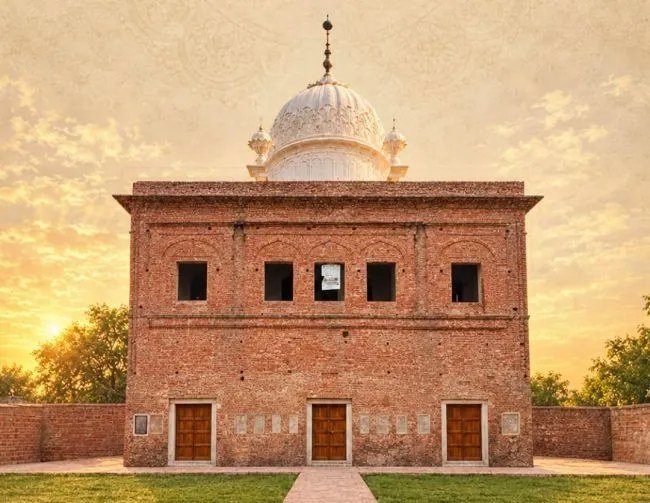
The first reason is the simplest and the most timely: Padhana has just been reborn. In October 2026 the Punjab Walled City and Heritage Areas Authority, working with the provincial Human Rights and Minorities Affairs Department, completed a full conservation of Gurdwara Sri Guru Hargobind Sahib — repairing the exterior dome and the main structure, restoring the interior corridors, and rebuilding the historic langar hall using traditional materials and building techniques. Before-and-after photographs released by the authority show a transformation from slow decay to dignified revival. Visiting now means seeing a heritage project at the proud beginning of its second life, before the crowds — or the guidebooks — catch up.
The second reason is the story, which is one of the most human on the whole Sixth Master trail. Sikh tradition holds that Guru Hargobind came to Padhana from the nearby village of Dhilvan, drawn by the love and affection of the villagers — not by strategy, not by politics, but by devotion. During his stay he held discourses on the True Guru with Jalhan, a prominent landlord of the Sandhu clan. It is a small, intimate episode — a great teacher talking theology with a village elder — and it gives Padhana a warmth that grander shrines sometimes lack. A simple shrine first marked the spot; then the village chief, Sardar Attar Singh, began a proper rebuilding, and the villagers finished it together, with a local committee running the langar. This was always the people’s gurdwara.
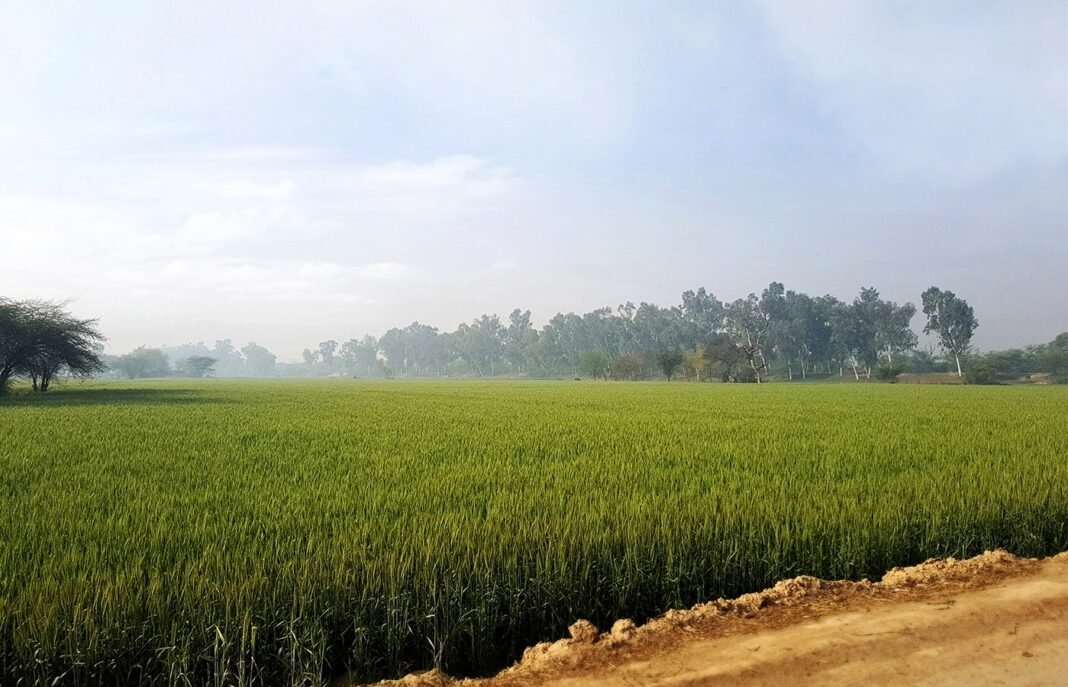
The third reason is the setting. Padhana lies in the Burki sector, in that strange, beautiful strip of Punjab that runs right up to the Radcliffe Line — the village sits about half a kilometre from the international border. The approach takes you through some of the most evocative farmland near Lahore: wheat and rice fields, eucalyptus windbreaks, villages that feel a world away from the city’s sprawl. For photographers, the restored dome rising over the flat green fields is a gift; for pilgrims arriving via the Wagah border just a few kilometres away, Padhana is the most accessible piece of Sikh heritage on the Pakistani side.
Finally, come for the trail logic. Padhana is the middle chapter of the Burki trilogy: the Guru came here from Dhilvan, and from Padhana he went on to Rampur Khurd, where only the traces of a sacred well survive. Pair Padhana with Rampur Khurd and Minhala‘s lone tower, and you have the complete arc — restored, remembered, ruined — in a single day’s drive. Few heritage circuits anywhere in Pakistan tell their story this compactly.
History of Gurdwara Chhevin Patshahi, Padhana
The Guru at the center of Padhana’s story needs little introduction to students of Sikh history. Guru Hargobind (19 June 1595 – 28 February 1644), the sixth Guru, transformed the Sikh community after his father Guru Arjan’s martyrdom in 1606 — donning the two swords of miri and piri, temporal and spiritual authority, building the Akal Takht at Amritsar, and traveling tirelessly across Punjab. His journeys between Lahore and Amritsar took him repeatedly through the villages east of Lahore, and Padhana was one of the halts the local memory refused to forget.
The traditional account, preserved in the Sikh shrine surveys and repeated in the recent restoration reporting, runs like this. The Guru arrived in Padhana from Dhilvan — the neighboring village — drawn by the devotion of the local people. During his stay he spoke at length about the True Guru with Jalhan Jat, a leading landlord of the village from the Sandhu clan. A simple shrine first commemorated the visit. Then Sardar Attar Singh of Padhana, the village chief, began a full reconstruction, and with the efforts of the villagers a beautiful building rose — domed, solid, unmistakably a gurdwara — with a local committee arranging the langar, the free community kitchen that is the beating heart of every Sikh shrine.
Before Partition the gurdwara was affiliated with the Shiromani Gurdwara Parbandhak Committee, the elected body that managed historic Sikh shrines. Then came 1947: the village’s Sikh population migrated east to India, and the shrine — like so many across western Punjab — fell out of religious use. Over the following decades displaced families lived in parts of the premises, and the structure deteriorated slowly: the dome weathered, the corridors darkened, the langar hall sagged toward ruin. The building survived, but only just.
The turnaround is very recent history. The Punjab Walled City and Heritage Areas Authority — the body better known for its work in Lahore’s walled city — took up the conservation of Gurdwara Sri Guru Hargobind Sahib together with the Human Rights and Minorities Affairs Department, as part of a wider provincial push to recover Sikh heritage. The work, completed in October 2026, repaired the exterior dome and the main structure, restored the interior corridors, and rebuilt the historic langar hall, with the authority stressing that every brick, arch and detail was preserved using traditional materials and techniques. It is part of the same wave that saw Lahore’s Gurdwara Patshahi Chhevin at Amar Sidhu — another shrine of the sixth Guru — reopened for worship in July 2026 after 79 years. Padhana’s restoration has not yet been matched by an announced reopening schedule for regular pilgrim services, but the building itself — the thing the village built together a century ago — stands renewed.
Top Things to Do in Gurdwara Chhevin Patshahi, Padhana
See the Restored Dome and Facade
Start with the exterior, because this is what the restoration was all about. The dome — repaired and repointed — crowns a red-brick building whose Sikh-period architecture reads clearly now that the decay has been stripped back: the arched openings, the plastered dome drum, the balanced, symmetrical frontage. Walk the full perimeter and compare what you see with the pre-restoration photographs that circulated before October 2026; the difference is the difference between a building being remembered and a building being used. Early morning light flatters the brickwork, and the dome against a winter-blue sky is the definitive Padhana photograph.
Step Into the Restored Corridors
The interior corridors were among the most deteriorated parts of the complex, and their restoration repays a slow walk. Note the traditional materials — lime plaster, brick, timber — chosen to match the original construction rather than modernize it. The corridors would once have organized the flow of the sangat between the entrance, the darbar hall and the langar; walking them now, you are walking the shrine’s old circulatory system, brought back to life. Keep your head covered and your voice low, as in any gurdwara.
Visit the Rebuilt Langar Hall
The langar — the free community kitchen — is Sikhism’s great social institution, where all sit and eat together regardless of rank, and Padhana’s historic langar hall has been rebuilt as part of the conservation. Even if no meal is being served on the day of your visit, stand in the hall and consider what it meant: a village committee, a century ago, organizing free food for travelers and the poor in a farming village. If a langar is in service when you visit, accept it with both hands and eat seated on the floor — it is both a meal and a lesson.
Trace the Guru’s Route: Dhilvan to Padhana to Rampur Khurd
Padhana rewards the traveler who thinks in routes rather than dots. The tradition says the Guru came here from Dhilvan and went on to Rampur Khurd — so drive the sequence. Dhilvan’s fields, Padhana’s restored dome, Rampur Khurd’s vanished darbar and surviving well-traces: three villages, perhaps fifteen kilometres of country road, and four hundred years of devotion. It is the single best half-day heritage drive in the Lahore countryside.
Walk the Border-Belt Fields
Padhana’s position — about half a kilometre from the border — gives its fields a particular atmosphere. The farmland here is intensely cultivated and, in the winter wheat season, intensely green; egrets follow the ploughs, and the flat horizon is broken only by eucalyptus lines and the occasional shrine dome. Walk the field paths with a village guide, but respect the obvious rule of the border belt: stay on public paths, do not approach the fence or any security installation, and do not photograph them.
Famous Places In and Around Gurdwara Chhevin Patshahi, Padhana
Gurdwara Chhevin Patshahi, Rampur Khurd — the Guru’s next halt after Padhana, where only the sacred well’s traces remain.
Gurdwara Chhevin Patshahi, Minhala — the lone tower and the pond that was once a sacred tank.
Wagah Border flag-lowering ceremony — the famous daily parade, just a few kilometres away; combine it with Padhana for a full border-belt day.
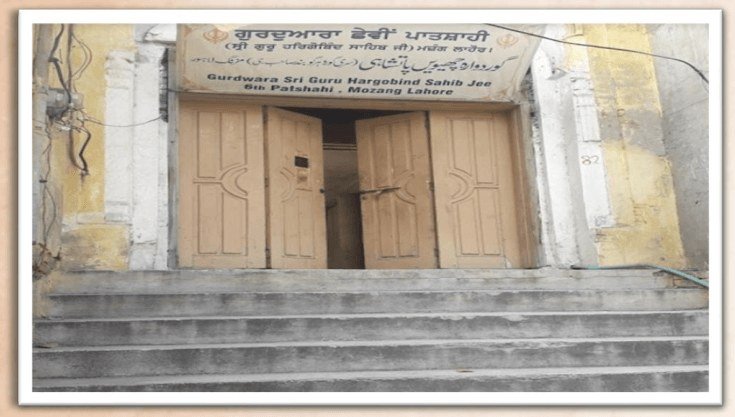
Gurdwara Chhevin Patshahi, Mozang — the living city shrine where the Guru stayed in 1619.
Gurdwara Bal Lila Sahib, Nankana Sahib — Guru Nanak’s birthplace, the great pilgrimage city for the onward journey.
Badshahi Mosque — Lahore’s Mughal masterpiece, the classic bookend to any heritage day.
How to Reach Gurdwara Chhevin Patshahi, Padhana
Padhana lies in the Burki area east of Lahore, about 25–30 km from the city center — roughly 45 minutes to an hour by car. The village sits just off the Lahore–Burki road, and the final approach is on village link roads that are paved but narrow. From Islamabad, take the M-2 to Lahore (about 375 km, four to five hours) and continue east; from Karachi, fly to Lahore and drive out, or take the long ~1,360 km motorway route with an overnight halt. The nearest airport is Allama Iqbal International (LHE), about 30–35 km from the village.
The practical advice is the same as for the whole Burki belt: hire a car with a driver from Lahore who knows these villages. Public wagons run toward Burki from the city, but the last stretch to Padhana needs a local rickshaw or a pre-arranged pickup, and the link roads are unsigned enough that a driver who has done the route before is worth the fare. Because Padhana sits about half a kilometre from the international border, one rule is absolute: stay on public roads and in the village proper, do not wander toward the border fence, and do not photograph any security installations. Road conditions are good on the main Burki road and fair on the village links; after monsoon downpours, expect soft shoulders and drive accordingly.
Route Details
From Lahore: Head east toward the Burki sector on the Lahore–Burki road. Turn off toward Padhana village — ask for the gurdwara; every villager knows the restored dome. Park at the village edge and walk in.
From Islamabad: M-2 to Lahore, then east across the city via the Ring Road toward Burki. This is a full-day commitment: consider overnighting in Lahore and doing Padhana with Rampur Khurd and Minhala the next morning.
From Wagah Border: If you are combining the flag-lowering ceremony with the shrine, Padhana is just a few kilometres from the border crossing — visit the gurdwara in the morning and reach Wagah by mid-afternoon for the parade crowds.
Best transport option: A hired car with driver for the Burki circuit (Padhana + Rampur Khurd + Minhala). Carry drinking water and fill up in Lahore; the villages have no fuel stations.
Where to Stay in Gurdwara Chhevin Patshahi, Padhana
Padhana is a village, not a tourist town — there is no hotel here, and you should plan it as a day trip from Lahore, 45–60 minutes away. The city’s accommodation covers every tier. At the top end, the Pearl-Continental and Avari on Shahrah-e-Quaid-e-Azam are Lahore’s long-standing luxury landmarks, with the gardens, pools and breakfast spreads to justify the rates. The mid-range — business hotels and serviced guesthouses along Main Boulevard Gulberg, in Model Town and DHA — is the sweet spot for heritage travelers: comfortable, well-located for an early eastern exit, and reasonably priced. Budget guesthouses cluster around the railway station and Ichhra; they are simple but honest.
One strategic tip: if your trip centers on the border belt (Padhana, Wagah, the Burki villages), staying on the eastern side of Lahore — DHA, or the guesthouses along the Bedian and Burki roads — shaves meaningful minutes off the morning drive. Tell your hotel you are visiting the restored gurdwara; the restoration was in the news in October 2026, and a good front desk may know a driver who has already done the route.
Where to Eat: Local Foods of Gurdwara Chhevin Patshahi, Padhana
The village itself offers dhaba food at dhaba prices: daal, mixed sabzi, tandoori rotis from the clay oven, and — if you are lucky enough to be invited — the winter glory of sarson da saag with makki di roti and white butter, washed down with a glass of thick lassi. There are no formal restaurants in Padhana, so carry drinking water and snacks, especially with children in tow.
The deeper food story here is the langar tradition itself: Padhana’s historic langar hall has been rebuilt as part of the restoration, and if a community meal is being served during your visit, do not miss it. Langar is served to all, free, eaten seated together on the floor — it is Sikhism’s most radical social institution, and eating it in a hall the village rebuilt twice (once a century ago, once now) is a genuine privilege. For everything else, Lahore waits 45 minutes west: Fort Road Food Street for the full Mughlai spread with the Badshahi Mosque lit behind it, Lakshmi Chowk for late-night grills, Gawalmandi for old-school Lahori breakfasts of nihari, paye and halwa puri. A generous meal at any of these costs very little by international standards.
Weather in Gurdwara Chhevin Patshahi, Padhana
Padhana shares the Lahore plains climate — sharp winter, furnace summer, dramatic monsoon — and since the visit is almost entirely outdoors (the dome, the corridors, the field paths), timing matters. The restoration has made the building photogenic in every season, but your comfort will vary enormously. Winter is the season the village was made for.
Padhana / Burki belt — approximate seasonal weather:
| Season | Temperature Range | Conditions |
|---|---|---|
| Winter (Dec–Feb) | Around 4–20°C | Cool, dry days; morning fog that lifts by late morning; the ideal season |
| Spring (Mar–Apr) | Around 18–32°C | Warm and pleasant; wheat ripening in the fields; superb photography light |
| Summer (May–Jun) | Around 28–45°C | Intensely hot; visit at sunrise, finish by late morning |
| Monsoon (Jul–Sep) | Around 27–38°C | Humid with heavy downpours; the restored dome against storm clouds is dramatic; link roads can be muddy |
| Autumn (Oct–Nov) | Around 18–33°C | Warm, dry, clear; harvest season; an excellent shoulder season |
Language and Culture of Gurdwara Chhevin Patshahi, Padhana
Padhana speaks Punjabi — the Majhi dialect, warm and rapid — with Urdu widely understood and English rare outside the cities. Your Lahore driver will handle any translation you need, but a few words of Punjabi (“Sat Sri Akal” at the gurdwara, “Shukriya” for thanks) will earn you smiles all day.
This is a border village with traditional norms, so the cultural briefing matters more here than in the city. Dress modestly — shoulders and knees covered — and carry a head covering for the shrine; remove your shoes before entering the gurdwara complex. The village lived with this shrine’s decay for decades and has just watched it restored; treat the site, and the people around it, with the respect a homecoming deserves. Ask before photographing people, do not enter private courtyards, and accept tea when offered. And the border rule bears repeating: this is a sensitive area, so keep to public roads and the village, and never photograph the fence or security posts.
Shopping in Gurdwara Chhevin Patshahi, Padhana
Padhana has no tourist shopping — and that is fine, because the village’s economy is wheat and kinship, not souvenirs. What you can buy is the produce of the moment: seasonal fruit from a roadside rehri, fresh lassi or desi ghee if a dairy household is selling, sugarcane in winter to chew as you walk. These small transactions, conducted in Punjabi with much good humor, are among the genuine pleasures of the visit.
Save the serious shopping for Lahore. Anarkali Bazaar remains the essential stop — a Mughal-era market selling khussa shoes, phulkari embroidery, brass and copper work, and fabrics in beautiful chaos — while Ichhra Bazaar and Liberty Market handle everyday clothes at local prices. For Sikh visitors wanting religious books or items, the bazaars around Lahore’s gurdwaras are the knowledgeable places to ask. Edible souvenirs travel best: a box of barfi or gulab jamun from an established mithai shop, or in winter, the Lahori specialty habshi halwa.
Travel Tips for Gurdwara Chhevin Patshahi, Padhana
Packing Essentials
Rural-heritage packing: a scarf or dupatta for the gurdwara, sun protection (cap, sunglasses, sunscreen) outside deep winter, a refillable water bottle, sturdy closed shoes for uneven ground, and a power bank — there are no charging points in the village. A camera is essential; the restored dome, the corridor details and the border-belt fields are all photogenic. If you visit in winter, bring a warm layer for the foggy morning start; if in summer, go at sunrise.
Safety Tips
Padhana is a quiet village and daytime visits are straightforward, but the border location adds one firm rule: stay on public roads and within the village, never approach or photograph the border fence or security installations. Go in daylight and leave before dusk. Hire a local driver who knows the Burki villages — the link roads are unsigned. At the shrine, follow standard gurdwara etiquette and supervise children around the building works’ edges. As ever in rural Punjab, modest dress and a polite manner keep everything warm.
Money & Connectivity
Carry cash from Lahore — Padhana has no ATMs or banks, and village vendors deal in cash. Mobile coverage is solid: Jazz, Zong, Telenor and Ufone all serve the Burki belt with generally reliable 4G on the main roads. Download offline maps before leaving the city, share your live location with someone at your hotel, and keep the phone charged for the day.
Best Time to Visit Gurdwara Chhevin Patshahi, Padhana
November to March — The Best Season
Cool, dry days, green wheat fields, blue skies after the morning fog lifts — this is Padhana at its finest, and the restoration still fresh enough that you will be among the first wave of visitors to see it. The dome photographs beautifully in the low winter sun, and you can walk the village for hours in comfort.
April and October — The Shoulder Months
Warm, clear and pleasant, with harvest activity (April) or post-monsoon freshness (October) in the fields. Fewer atmospheric extremes, good light, and the village going about its business. An underrated window for the heritage circuit.
May to September — Hot and Monsoon
May and June are furnace months: arrive at sunrise, finish by late morning, carry double water. July to September brings the monsoon — dramatic skies over the restored dome, brimming fields, but muddy link roads and humid air. If you go, wear expendable shoes and keep an eye on the track ahead.
Final Thoughts
There is a particular joy in arriving somewhere just after it has been saved. Gurdwara Chhevin Patshahi in Padhana spent decades sliding toward ruin — the dome weathering, the corridors darkening, the langar hall sagging — and then, in October 2026, the conservators arrived with lime plaster and traditional brickwork and gave the village back its shrine. To visit now is to witness the rarest thing in heritage travel: a happy ending, still fresh, with the paint barely dry on the second chance.
Go for the restoration, stay for the story — the Guru drawn by villagers’ love, the discourse with Jalhan, the chief and the villagers raising the dome together a century ago — and complete the circuit with Rampur Khurd and Minhala while you are in the Burki belt. In the Explore Pakistan series, Padhana is the chapter that proves heritage is not only about what survives — it is about what we choose to bring back.
FAQs
Where is Gurdwara Chhevin Patshahi, Padhana?
In Padhana village, Burki area, Lahore district, Punjab, Pakistan — about 25–30 km east of Lahore and roughly half a kilometre from the border with India.
What is the best time to visit Gurdwara Chhevin Patshahi, Padhana?
November to March, when the weather is cool and dry and the fields are green. April and October are fine shoulder months; summer visits should be early-morning only.
How do I reach Padhana from Lahore?
Drive east on the Lahore–Burki road (45–60 minutes), then take the village link road to Padhana — ask any villager for the gurdwara. A hired car with a driver who knows the Burki villages is the easiest option.
Has the Padhana gurdwara really been restored?
Yes. In October 2026 the Punjab Walled City and Heritage Areas Authority, with the Human Rights and Minorities Affairs Department, completed conservation work: the dome and main structure repaired, interior corridors restored, and the historic langar hall rebuilt using traditional materials and techniques.
Is it safe to visit a village so close to the border?
Yes, for a normal daytime visit — with one firm rule: stay on public roads and within the village, and never approach or photograph the border fence or security installations. Go in daylight and leave before dusk.
Is Padhana suitable for families?
Yes. The restored site is easy to walk, the village is welcoming, and children enjoy the open fields. Bring your own water and snacks, supervise children, and combine it with the Wagah border ceremony for a full family day.
Where can I stay near Padhana?
There is no accommodation in the village — base yourself in Lahore (45–60 minutes away), from luxury hotels like the Pearl-Continental and Avari to mid-range hotels in Gulberg and budget guesthouses near the railway station.
Can I combine Padhana with other shrines?
Absolutely — that is the best way to do it. The Guru is traditionally said to have come to Padhana from Dhilvan and gone on to Rampur Khurd, so pair it with Gurdwara Chhevin Patshahi, Rampur Khurd and Gurdwara Chhevin Patshahi, Minhala for the complete Burki heritage circuit in one day.