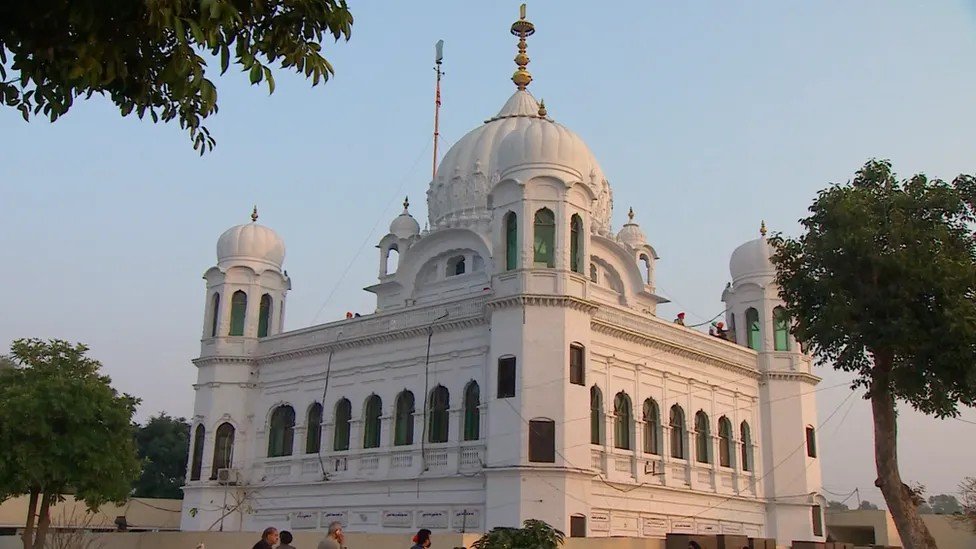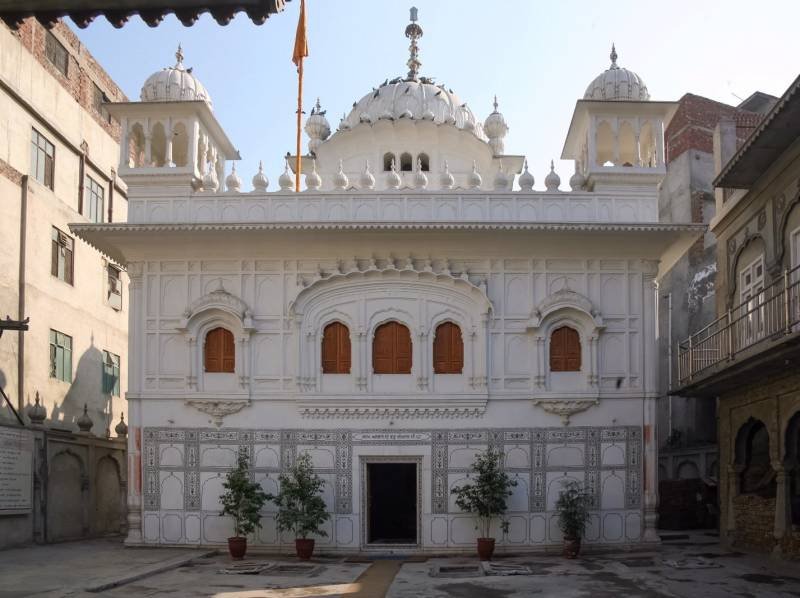
This Gurdwara Guru Kotha, Wazirabad travel guide introduces one of the most evocative Sikh shrines in Pakistani Punjab: the house of Bhai Khem Chand, where Guru Hargobind — the sixth Sikh Guru — stayed on his way back from Kashmir in 1620, and where he himself performed the funeral rites of his devoted host. Inside you will find the full story of the Guru’s visit and the memorial tower raised for Bhai Khem Chand, the shrine’s remarkable three-storey architecture, the great tank that still gives the place its beauty, how to reach Wazirabad from Lahore, Islamabad and Karachi, the best time to visit, where to stay and eat, and why the town’s Muslims still arrange a small Vaisakhi fair here every April.
Quick Facts
- Location: Wazirabad town, Gujranwala district, Punjab, Pakistan
- Altitude: Around 230 metres above sea level (Punjab plain)
- Famous For: The house (kotha) of Bhai Khem Chand, where Guru Hargobind stayed while returning from Kashmir in 1620; the memorial tower the Guru raised for his host; a large, beautiful water tank; the pre-Partition fairs of Basant Panchami and Divali
- Nearest City: Gujranwala, about 25 kilometres south; Sialkot about 45 kilometres north
- Accessibility: Inside Wazirabad town on the Grand Trunk Road corridor; easy by car, bus or rail from Lahore and Gujranwala
- Known Landmarks: The three-storey gurdwara on its high plinth, the memorial tower to Bhai Khem Chand, the large tank (sarovar), the 13 acres of endowed agricultural land
- Best For: Sikh pilgrims tracing Guru Hargobind’s journeys, architecture lovers, heritage travellers exploring the GT Road towns, photographers of Sikh-period brickwork
Why Visit Gurdwara Guru Kotha, Wazirabad
Some shrines draw you with splendour; Guru Kotha draws you with a story that refuses to leave you alone. In 1620, Guru Hargobind — the sixth Sikh Guru, the warrior-saint who wore two swords of miri and piri, temporal and spiritual authority — was travelling back from Kashmir when he halted at Wazirabad. A local Sikh, Bhai Khem Chand, did what devotees do: he placed his own house at the Guru’s disposal. A house, in Punjabi, is a kotha — and the gurdwara that later rose on this spot took its name from that simple act of hospitality: Guru Kotha, the Guru’s house.
What happened next is what makes this place unforgettable. According to local tradition, Bhai Khem Chand died during the Guru’s stay. And the Guru himself — the sovereign of the Sikh faith, the man kings bowed to — performed the funeral rites of his host with his own hands. Then a memorial was raised within the shrine’s premises: a tower for the devotee who gave the Guru his roof. When you walk the grounds of Guru Kotha today, past the collapsed walls and the great tank, you are walking where a guru mourned a friend. Few shrines in Pakistan carry such a tender, human charge.
Then there is the building — or what remains of it. Guru Kotha’s architecture is genuinely peculiar, in the best sense. Three storeys rise from a high plinth, and each storey is designed differently: a windowless rectangular ground floor with a single entrance, a first floor with three windows (the central one three times the width of the others) and a dented cornice, and a top floor of three domed rooms, the central dome much larger and sitting on a tower-like base. Even in its ruined state, with much of the structure collapsed and families living in the premises, the shrine’s bones are magnificent — and the large, beautiful water tank beside it still gives the whole place its serene beauty.
And there is one more reason to come, perhaps the most moving of all. Before 1947, great fairs for Basant Panchami and Divali drew devotees here in large numbers. Those fairs are gone — but every April, at Vaisakhi, the Muslims of Wazirabad arrange a small fair at the shrine themselves. In a town whose Sikh community left nearly eighty years ago, the neighbours kept the tradition alive. Come at Vaisakhi, stand by the tank, and you will understand why heritage travellers speak of Wazirabad with such affection.
History of Gurdwara Guru Kotha, Wazirabad
Wazirabad’s sacred history begins in 1620. Guru Hargobind, who had succeeded his father Guru Arjan as the sixth Sikh Guru in 1606, was returning from a visit to Kashmir — one of the journeys through which the young Guru, barely twenty-five, was extending the Sikh faith’s reach into the hills. On the road back through the Punjab plain, he halted at Wazirabad, then a rising town of the Gujranwala region. Bhai Khem Chand, a local Sikh, offered the Guru his own house — his kotha — and the Guru accepted.
The tradition holds that Bhai Khem Chand died while the Guru was his guest, and that Guru Hargobind personally performed his funeral rites — an extraordinary honour, and a measure of the love between guru and disciple. A memorial to Bhai Khem Chand in the form of a tower was later raised within the gurdwara premises. The house itself, sanctified by the Guru’s stay, was in time converted into a gurdwara: Gurdwara Guru Kotha, formally Gurdwara Guru Kotha Chhevin Patshahi — the shrine of the Sixth Master. Before Partition, it was managed by the Shiromani Gurdwara Parbandhak Committee in Amritsar, the central body of Sikh shrine administration.
Under Sikh rule, Wazirabad itself rose in importance. During the reign of Maharaja Ranjit Singh, the town became the headquarters of a district, administered for a time by General Paolo Avitabile — the French officer in the Maharaja’s service who governed Peshawar and Wazirabad with legendary severity. The gurdwara flourished in this period: at one stage it was endowed with over 100 acres of land, and the great fairs of Basant Panchami (January–February) and Divali (October–November) drew devotees in large numbers. A large and beautiful water tank — the sarovar — was built beside the shrine, and it remains the most picturesque part of the complex today.
The shrine’s architecture, recorded in detail by the town’s own municipal records, is a small masterpiece of Sikh-period design. Three storeys rise on a high plinth, each of similar dimension but different design. The rectangular ground floor has only one entrance and no windows — fortress-like, as befitted the age of the warrior Gurus. The first floor carries three windows on its facade, the central window three times the width of the flanking ones, with a window on each side wall and a dented cornice. The second floor consists of three domed rooms, the central one slightly larger, its dome much bigger and seated on a tower-like base. Once, the sources agree, it was a beautiful building.
Partition in 1947 ended the shrine’s life as a working gurdwara. The Sikh community left, the SGPC’s management came to an end, and the building began its long decline. Today the major portion has collapsed, the premises are occupied by local families, and the shrine faces the familiar threats of encroachment — at one point illegal construction pressed cheek-by-jowl against the old walls, to the distress of heritage lovers everywhere. Thirteen acres of agricultural land remain endowed in the gurdwara’s name. The tank endures, beautiful as ever. And the memory endures too — kept alive, remarkably, by the town’s Muslim residents and their little Vaisakhi fair. Guru Kotha is a ruin, but it is a ruin with a living heart.
Top Things to Do in Gurdwara Guru Kotha, Wazirabad
Stand in Bhai Khem Chand’s House
The core of your visit is the kotha itself — the house that gave the shrine its name. Walk the high plinth, study the three differently designed storeys, and remember: this was a devotee’s home before it was a shrine, and a guru mourned his host here. The ground floor’s single entrance and windowless walls, the first floor’s triple windows, the domed chambers above — read the building like the biography it is. Much has collapsed, so move carefully and respect the families who now live in the premises; a polite greeting and a small courtesy go a long way.
Find the Memorial Tower
Within the premises stands the memorial tower raised for Bhai Khem Chand — the devotee whose funeral rites the Guru himself performed. It is the shrine’s emotional centre: a monument not to a guru or a king but to hospitality, to the man who gave his house. Pause here. The tower is the reason Guru Kotha is not just another old building but a story you will carry home.
Walk the Great Tank
The large water tank beside the gurdwara is, by every account, the finest surviving part of the complex — “a large and beautiful water tank” that “adds to the scenic beauty of the gurdwara.” Walk its edge in the soft light of morning or late afternoon, when the old brickwork reflects in the water. This is the spot for your photographs, and for a quiet moment away from the town’s bustle.
Come at Vaisakhi for the Town Fair
If your dates are flexible, time your visit for Vaisakhi in mid-April, when the town’s Muslims arrange their small fair at the shrine. It is a modest affair — nothing like the great pre-Partition melas — but its meaning is enormous: a community keeping faith with a neighbour’s heritage. The fair is the best possible introduction to Wazirabad’s living relationship with its Sikh past.
Explore Wazirabad Town
Wazirabad rewards a wander. The town is famous across Pakistan for its cutlery and stainless-steel industry — browse the cutlery shops for superb, inexpensive kitchenware. The Dak Chowki, the old Mughal-era postal station, is another heritage stop. And the mausoleum of Molana Zafar Ali Khan, the great poet-journalist of the Pakistan Movement, stands in the town as a literary shrine. The Chenab river flows nearby, its banks a pleasant evening escape.
Famous Places In and Around Gurdwara Guru Kotha, Wazirabad
Dak Chowki, Wazirabad — the historic Mughal-period dak (postal) station, a rare surviving piece of imperial infrastructure. Molana Zafar Ali Khan Mausoleum — the resting place of the legendary poet and journalist, in Wazirabad town. Gujranwala — about 25 km south, the great industrial city of the region, famous for its food (the city’s tandoori and barbecue are legendary). Chenab River banks — the mighty river near Wazirabad, beautiful at sunset. Eminabad — the historic town nearby with its own old shrines and bazaars. Sialkot — about 45 km north, the city of sports goods and surgical instruments.
How to Reach Gurdwara Guru Kotha, Wazirabad
Wazirabad sits on the Grand Trunk Road corridor between Lahore and Gujrat, one of the busiest and best-served road axes in Pakistan — which makes Guru Kotha one of the easiest Sikh heritage sites in the country to reach. The shrine is inside Wazirabad town; any local driver knows the gurdwara, and the municipal corporation itself lists it among the town’s heritage sites.
From Lahore: Around 100 kilometres via the GT Road (N-5) through Gujranwala, roughly 1.5 to 2 hours by car — an easy day trip. Coaches and wagons run constantly from Lahore’s Badami Bagh and other terminals to Wazirabad and Gujranwala.
From Islamabad: Around 210 kilometres via the M-2 motorway to the Gujranwala/Wazirabad interchanges and then the GT Road, roughly 3 to 3.5 hours. Alternatively, come by the main-line train to Wazirabad Junction, which sits on the Lahore–Rawalpindi railway.
From Karachi: Around 1,350 kilometres by road — a two-day drive via the motorway network. Flying to Lahore or Sialkot and driving onward (1.5–2 hours from either) is far more practical.
Nearest airport: Sialkot International Airport (about 45 km) is closest; Lahore’s Allama Iqbal International (about 100 km) has far more flights. Rail: Wazirabad Junction is a proper railway station on the main Lahore–Rawalpindi line, with regular passenger trains. Road conditions: The GT Road and motorways are excellent year-round; town streets are congested but navigable. Winter fog (December–January) can slow early-morning driving across the Punjab plain.
Route Details
Step 1: Reach Wazirabad from Lahore (GT Road, 1.5–2 hours), Islamabad (M-2 + GT Road, 3–3.5 hours) or by train to Wazirabad Junction. Step 2: In town, ask for “Guru Kotha” or “Gurudwara Guru da Kotha” — every driver and shopkeeper knows it. Step 3: Park near the shrine and explore the complex on foot, including the tank and the memorial tower. Step 4: Walk or drive on to the Dak Chowki and the town’s cutlery bazaars. Step 5: Return to Lahore or overnight in Gujranwala for onward travel.
Where to Stay in Gurdwara Guru Kotha, Wazirabad
Wazirabad is a working industrial town rather than a tourist centre, so most visitors treat Guru Kotha as a day trip — and it works beautifully as one from Lahore, only 1.5 to 2 hours away. If you do need to overnight, the town has modest hotels and guesthouses serving its cutlery traders: clean, functional, budget-friendly rooms. Do not expect luxury; do expect a hot meal and an early night.
For more comfort, base yourself in Gujranwala, 25 kilometres south — a major city with proper mid-range hotels, restaurants and shopping — or in Lahore, which puts Guru Kotha within easy reach alongside the city’s own great Sikh shrines (the Samadhi of Ranjit Singh, Gurdwara Dera Sahib, Gurdwara Janam Asthan Guru Ram Das). Sikh heritage groups touring Punjab typically overnight in Lahore and cover Wazirabad as a morning excursion. Book ahead in Gujranwala during wedding season (winter months), when hotels fill with wedding parties.
Where to Eat: Local Foods of Gurdwara Guru Kotha, Wazirabad
Wazirabad sits in the heart of Punjab’s food country, and neighbouring Gujranwala’s reputation as a city of wrestlers and prodigious eaters extends to the whole district. The dhabas along the GT Road serve the classics of the Punjabi highway: tandoori chicken, chicken karahi and mutton karahi bubbling in iron woks, daal fry with tarka, seekh kebabs and malai boti, all mopped up with fresh tandoori naan. In winter, look for sarson da saag with makki di roti and white butter — the season’s great dish — and year-round, the thick sweet lassi that Punjab does better than anywhere on earth.
Wazirabad’s own bazaars have excellent kebab and tikka shops, chana chaat and dahi bhalla stalls in the afternoons, and sweet shops selling barfi, gulab jamun and jalebi. A dhaba meal here is famously inexpensive — hearty, honest food at prices that surprise first-time visitors. As anywhere on the GT Road, eat where the truck drivers eat: a crowded dhaba is the surest sign of good food. Keep to freshly cooked dishes and bottled or boiled water.
Weather in Gurdwara Guru Kotha, Wazirabad
Wazirabad shares the classic climate of the upper Punjab plain: a foggy winter, a brief and beautiful spring, a long hot summer and a monsoon that breaks in July. The shrine visit is outdoors — the tank, the ruined walls, the memorial tower — so the cool, clear months from November to March are the most comfortable. Vaisakhi in mid-April, when the town fair is held, is warm but festive and well worth timing your trip for.
| Season | Temperature Range | Conditions |
|---|---|---|
| Winter (Dec–Feb) | 4–22°C | Cool days, cold nights; dense morning fog common Dec–Jan |
| Spring (Mar–Apr) | 16–34°C | Pleasant turning warm; Vaisakhi fair in mid-April |
| Summer (May–Aug) | 26–41°C | Hot and dry, then monsoon humid; visit early morning |
| Autumn (Sep–Nov) | 17–33°C | Cooling, clear skies; excellent for heritage walks |
Language and Culture of Gurdwara Guru Kotha, Wazirabad
Wazirabad is a Punjabi town through and through: Punjabi is the language of the bazaar, the dhaba and the home, with Urdu as the common tongue for visitors and English understood in hotels and among professionals. The culture is the warm, food-loving, plain-speaking culture of central Punjab — guests are fussed over, strangers are helped, and a shared meal settles everything.
The town’s relationship with its Sikh heritage is genuinely special. The little Vaisakhi fair arranged by local Muslims is not a tourist show; it is a neighbourhood keeping faith with its own history. Visitors — Sikh pilgrims especially — are received with real warmth. Observe the usual courtesies at the shrine: cover your head, remove your shoes at the threshold, dress modestly, and ask before photographing the families who live in the premises. Friday afternoons are quiet for prayers; plan food stops rather than sightseeing then.
Shopping in Gurdwara Guru Kotha, Wazirabad
Wazirabad is famous across Pakistan for one thing above all: cutlery. The town’s stainless-steel industry produces knives, kitchen tools and tableware sold all over the country, and the cutlery shops in the bazaar offer superb quality at factory-town prices — this is the single best souvenir stop of your trip. Browse the kitchenware markets for chef’s knives, carving sets and serving pieces; the shopkeepers will happily demonstrate an edge.
Beyond cutlery, Wazirabad’s bazaars sell the everyday goods of a Punjabi market town: cloth, crockery, sweets and dry fruits. Gujranwala, 25 km away, has larger markets and the region’s famous food streets if you want to combine shopping with eating. Bargaining is expected and friendly — start low, smile often, and settle somewhere in the middle. There are no large modern malls in Wazirabad itself; the authentic shopping here is the bazaar, and the cutlery shops are worth the trip alone.
Local Events and Festivals
Vaisakhi (mid-April): The town’s Muslims arrange a small Vaisakhi fair at Gurdwara Guru Kotha every year — a modest, heartfelt continuation of the shrine’s festive tradition and the best time to experience the site at its liveliest. Basant Panchami (January–February) and Divali (October–November): Before 1947, these were the shrine’s great fairs, drawing devotees in large numbers; they are part of Guru Kotha’s history rather than its present, but every old-timer in Wazirabad knows their names. If you visit in spring, ask around — the memory of the old melas is still vivid in the town.
Travel Tips for Gurdwara Guru Kotha, Wazirabad
Packing Essentials
Comfortable walking shoes for the shrine’s uneven grounds, a headscarf or cap for covering your head at the gurdwara, sunscreen and water in the warmer months, and a warm layer for winter mornings when the fog is thick and the air is sharp. A small daypack for the bazaars; a camera for the tank at golden hour.
Safety Tips
Wazirabad is a busy, working town and generally safe for visitors, but the shrine building is partly ruined — watch your step around collapsed walls and do not climb unstable structures. Keep valuables discreet in crowded bazaars. As with all heritage sites in residential areas, be a considerate guest: the premises are people’s homes as well as a monument.
Money & Connectivity
ATMs are available in Wazirabad town and plentiful in Gujranwala; carry cash for the bazaars and dhabas, which are cash-only. All major mobile networks (Jazz, Telenor, Zong, Ufone) have strong 4G coverage in town. Your hotel or a roadside dhaba will usually have Wi-Fi if you ask.
Best Time to Visit Gurdwara Guru Kotha, Wazirabad
November to March — The Ideal Season
Cool, clear and comfortable — the classic Punjab winter is made for heritage travel. The tank reflects the pale winter sky, the brickwork photographs beautifully, and the dhabas serve their heartiest food. This is the season for unhurried exploring.
Mid-April — Vaisakhi
Come for the small Vaisakhi fair and see Guru Kotha at its most alive: the town gathers, the shrine has visitors, and the continuity of the place — Muslim neighbours honouring a Sikh shrine — is on full display. It is warm by April, so visit the shrine in the morning and spend the hot afternoon in the bazaars.
May to October — The Hot Season
Summer on the Punjab plain is fierce, and the monsoon (July–September) brings humidity and sudden downpours. If you travel in these months, do the shrine at dawn, rest through midday, and resume in the evening. October brings relief and clear skies — a fine shoulder month.
Final Thoughts
Gurdwara Guru Kotha is not a polished monument, and it does not pretend to be. It is a ruin with a tank, a tower, and a story about a guru who performed a devotee’s funeral rites with his own hands — and about a town that never forgot. In an age of restored, ticketed, floodlit heritage, there is something profoundly honest about a shrine kept alive by memory and by neighbours. Come for the architecture, stay for the story, and time it for Vaisakhi if you can.
Wazirabad makes an easy, rewarding day trip from Lahore — pair it with the Dak Chowki, the cutlery bazaars and a proper Punjabi dhaba lunch, and you have one of the finest low-key heritage days in the province. For more journeys through Pakistan’s sacred and historic places, explore our Explore Pakistan collection, from the mountain calm of Malam Jabba to the valleys of Hunza.
FAQs
Where is Gurdwara Guru Kotha located?
In Wazirabad town, Gujranwala district, Punjab — on the Grand Trunk Road corridor, about 100 km from Lahore and 25 km north of Gujranwala.
What is the best time to visit Gurdwara Guru Kotha?
November to March for the most comfortable weather, or mid-April for the small Vaisakhi fair arranged by the town’s residents.
How do I reach Wazirabad from Lahore?
About 100 km via the GT Road (N-5), roughly 1.5 to 2 hours by car; coaches run constantly from Lahore, and Wazirabad Junction is on the main railway line.
Who was Bhai Khem Chand?
A Sikh of Wazirabad who offered his house (kotha) to Guru Hargobind during the Guru’s 1620 halt in the town. He died during the Guru’s stay, and the Guru personally performed his funeral rites; a memorial tower in the shrine honours him.
Is the gurdwara still active?
No — it is a heritage site. Much of the building has collapsed and families live in the premises, but the tank, the memorial tower and the distinctive three-storey structure survive.
Is it suitable for families?
Yes. It is an easy day trip from Lahore with good roads; supervise children around the ruined sections and bring water and sun protection in warm months.
Where should I stay?
Most visitors day-trip from Lahore (1.5–2 hours). For overnights, Gujranwala (25 km) has comfortable mid-range hotels; Wazirabad town has budget guesthouses.
What should I buy in Wazirabad?
Cutlery — the town’s stainless-steel knives and kitchenware are famous across Pakistan and excellent value in the bazaar shops.