Some places you visit for the view. Others you visit for the story. Dak Chowki in Wazirabad belongs firmly to the second kind — a quiet, weathered brick building standing by the Grand Trunk Road that once carried the mail, the orders, and the secrets of an empire. If you have ever driven the old GT Road between Lahore and Jhelum and felt the pull of all that history under your wheels, this is the place to stop, step out of the car, and touch it with your own hands. This Dak Chowki Wazirabad travel guide will show you why this small monument deserves a place on your itinerary, when to go, and how to pair it with the food, bazaars, and river views of one of Punjab’s most underrated historic towns.
Quick Facts
- Location: Beside the Grand Trunk Road (N-5) in Wazirabad, Punjab, on the south bank of the Palkhu Nullah, just opposite Wazirabad Railway Junction
- Altitude: Punjab plains — no climbing required, the site sits at roadside level
- Famous For: A rare surviving Sher Shah Suri-era dak chowki (mail and intelligence station) from the mid-16th century
- Nearest City: Gujranwala (about 25 km south), Lahore (about 95–100 km south)
- Accessibility: Excellent by road — right on the GT Road; reachable by car, bus, or train to Wazirabad Railway Junction
- Known Landmarks: The domed four-sided chowki structure itself, Bab-e-Wazirabad, Head Khanki Barrage on the Chenab, the tomb of Maulana Zafar Ali Khan, Sher Shah Suri Baoli
- Best For: History lovers, Grand Trunk Road road-trippers, photographers, and anyone doing a Punjab heritage circuit
Why Visit Dak Chowki, Wazirabad
Let us be honest: Dak Chowki is not a polished tourist attraction with ticket counters and souvenir shops. It is better than that. It is a survivor. Built in the 1500s as a link in Sher Shah Suri’s revolutionary postal and intelligence network, this little brick station once stood at the beating heart of how an empire communicated. Riders galloped in with sealed dispatches, swapped horses, and thundered on toward Delhi or Lahore. It is the Mughal-era equivalent of a fibre-optic relay station — and you can stand inside its arched frame today.
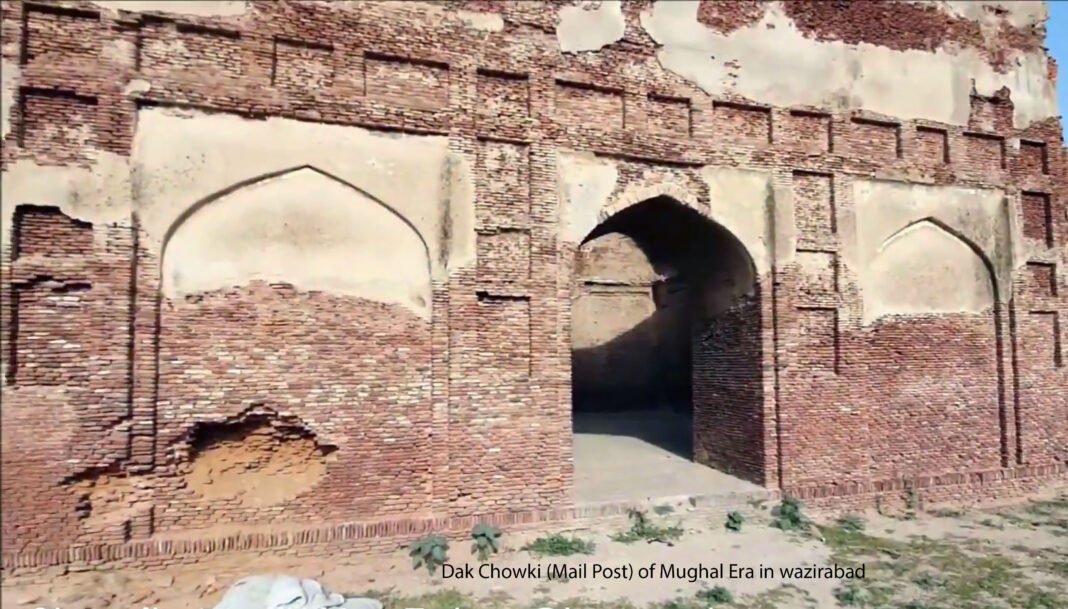
What makes it special is its rarity. Most dak chowkis were absorbed into caravanserais and vanished centuries ago. Wazirabad’s is a standalone structure — a four-cornered building with arched openings facing the four cardinal directions, its dome long collapsed, its ornamental brick turrets still clinging to the east and north faces. There is something deeply moving about a building that has outlived the empire it served, the road it guarded, and nearly five centuries of weather, and is still standing there asking to be noticed.
And then there is Wazirabad itself, the perfect excuse to make a day of it. This is the City of Cutlery, where blades have been forged for generations; a town where the Chenab rolls wide at Head Khanki, where the old railway junction hums, and where a plate of proper Punjabi food costs less than your parking back home. Dak Chowki is the history; Wazirabad is the flavour around it. Together they make one of the finest easy day trips in Punjab — under two hours from Lahore, right on the road you were probably driving anyway.
If you are the kind of traveler who reads the plaques, who slows down for old milestones, who would rather see one real thing than ten reconstructed ones — Dak Chowki is for you. Come for the story of Sher Shah’s postal riders, stay for the cutlery bazaars and the river breeze at Khanki, and leave with a deeper feeling for the Grand Trunk Road than any textbook could give you.
History of Dak Chowki, Wazirabad
The story of Dak Chowki begins with one of the most remarkable administrators in South Asian history: Sher Shah Suri. Though his reign lasted only a few short years in the 1540s, Sher Shah rebuilt the great imperial highway of the subcontinent — the road we now call the Grand Trunk Road — and along it he planted a network of serais (rest houses) and dak chowkis (mail stations) at regular intervals. The dak system was the nervous system of his empire: relays of riders and runners carrying royal orders, intelligence reports, and official mail at speed from one station to the next, day and night.
According to the commemorative board erected at the site by the office of the Assistant Commissioner, Wazirabad, the Dak Chowki here is a relic of the Sher Shah Suri era, established in the mid-16th century. A signpost on site notes that the station was likely established not only to convey mail but also to gather intelligence on activities within the district — a reminder that in the 1500s, information was power and the dak chowki was where that power changed hands.
What makes the Wazirabad chowki unusual is that it stands alone. Mail stations were normally incorporated within caravanserais, given their association with travel — but there is no trace of any serai here. In its heyday, the building would have contained stables and well-rested horses serving as relay points up and down the Grand Trunk Road. The historian and travel writer Salman Rashid, in his book Gujranwala: The Glory That Was, notes that a grove of trees about 200 meters from the building once housed the remains of the horse stables, which are now completely effaced.
Architecturally, the building is a study in Suri-period pragmatism. At first glance its profile resembles the tombs of the period — building typologies of the era were easily adapted to many purposes. In plan it is a four-cornered structure with arched openings facing the four cardinal directions. A dome once towered overhead but collapsed at some indeterminate point in the past. The remains of three ornamental brick turrets survive on the east and north sides, along with heavily degraded traces of the original stucco coating.
The site’s modern history is more bittersweet. It has been declared a special premises under the Punjab Special Premises (Preservation) Ordinance 1982, which makes damaging it or altering its original position a punishable offence. Yet a 2013 report in The Express Tribune described the five-century-old site as falling apart and surrounded by garbage, with restoration funds issued but never properly used. Visiting today, you will find a monument that is weathered and in need of care — which is all the more reason for heritage-minded travelers to come, photograph, and keep its story alive. Every visitor is a small vote for its preservation.
Top Things to Do in Dak Chowki, Wazirabad
Stand Inside a 16th-Century Mail Station
This is the main event. Walk around the four arched faces of the chowki, look up at where the dome once rose, and trace the surviving brick turrets with your eyes. The structure is small — you will not need more than 20–30 minutes — but standing in a relay station that moved imperial mail before the printing press existed in most of the world is a genuine thrill for history lovers. Bring a wide-angle lens: the arches frame beautiful shots, especially in the soft light of early morning or late afternoon.
Read the Commemorative Board
Take a moment with the bilingual board installed by the Assistant Commissioner’s office. It tells the Suri-era story, explains the intelligence-gathering role of the station, and notes the site’s protected status under the 1982 ordinance. It is the fastest history lesson you will get all day, and it grounds everything you are looking at.
Walk the Grand Trunk Road Stretch
The chowki sits right by the N-5, the modern incarnation of Sher Shah’s highway. Stand at the roadside for a moment and think: this exact corridor has carried armies, emperors, traders, and pilgrims for two thousand years. Few roadside stops in Pakistan let you feel that continuity so directly.
Explore Wazirabad’s Cutlery Bazaars
Wazirabad is famous across Pakistan — and far beyond — as the City of Cutlery. Generations of craftsmen here have forged knives, scissors, and blades, and the cutlery industry remains the town’s economic backbone. Wander the main bazaar, watch the workshops if you get the chance, and pick up a genuinely handcrafted knife or kitchen set. It is the most authentic souvenir this town offers, and buying directly supports the artisan families.
Visit Head Khanki Barrage on the Chenab
A short drive from town, Head Khanki spans the mighty Chenab River. The barrage, the wide water, and the green banks make for a lovely late-afternoon outing — families picnic here, and the river views at sunset are superb. It pairs perfectly with a morning at Dak Chowki.
See Bab-e-Wazirabad and the Old Town
The ceremonial Bab-e-Wazirabad gate is the town’s modern landmark and a favourite photo stop. Around it, the old town’s streets, the railway junction area, and the bustling main market give you the living, breathing Wazirabad to set against the silent 16th-century chowki.
Pay Respects at the Tomb of Maulana Zafar Ali Khan
The celebrated poet, journalist, and freedom-movement figure Maulana Zafar Ali Khan rests in Wazirabad. His tomb is a meaningful stop for lovers of Urdu literature and Pakistan’s independence history, and it adds another layer to the town’s heritage trail.
Find the Sher Shah Suri Baoli
History hunters should ask locals about the old Suri-era baoli (stepwell) in the area — another whisper of the same 16th-century building campaign that raised the Dak Chowki. It is the kind of place you find by asking, not by signboard, which makes discovering it all the sweeter.
Visit Gurudwara Guru Kotha
Wazirabad’s Sikh heritage is represented by Gurudwara Guru Kotha, a reminder of the town’s multi-layered past on the old imperial highway. It rounds out a full heritage circuit of the town.
Famous Places In and Around Dak Chowki, Wazirabad
- Head Khanki Barrage — Chenab river views, picnic lawns, and sunset walks a short drive from town.
- Bab-e-Wazirabad — the town’s landmark gate and photo stop.
- Wazirabad Cutlery Market — workshops and shops of the world-famous blade industry.
- Tomb of Maulana Zafar Ali Khan — resting place of the legendary poet-journalist.
- Sher Shah Suri Baoli — a surviving stepwell from the Suri era; ask locals for directions.
- Wazirabad Railway Junction — the historic junction directly across from the chowki.
- Gurudwara Guru Kotha — Sikh heritage site in the old town.
- Gujranwala (25 km) — the nearest big city, with its own food streets and the famous Nishan-e-Manzil.
- Head Marala near Sialkot — another Chenab-side outing if you extend the trip east.
How to Reach Dak Chowki, Wazirabad
Reaching Dak Chowki could hardly be simpler: it stands right beside the Grand Trunk Road (N-5) in Wazirabad, on the south bank of the Palkhu Nullah, directly opposite Wazirabad Railway Junction. If you are driving the GT Road, you will pass within meters of it. Look for the old brick structure with arched openings just off the highway — and if you miss it, any shopkeeper near the railway junction can point you to the “purani dak chowki.”
From Lahore: About 95–100 km north on the N-5 Grand Trunk Road via Gujranwala, roughly 1.5 to 2 hours by car. This is the classic approach and makes Dak Chowki an easy half-day or full-day trip from Lahore. Daewoo and other bus services run frequently to Gujranwala and Wazirabad.
From Islamabad: About 230 km, roughly 3.5 to 4.5 hours. The smoothest route is the M-2 Motorway toward Lahore, exiting toward Gujranwala and continuing on the N-5 to Wazirabad; the more historic option is the old GT Road itself through Jhelum and Gujrat — slower, but you are literally driving Sher Shah’s highway to reach Sher Shah’s mail station, which feels exactly right.
From Karachi: Fly to Lahore (about 2 hours) and drive up the GT Road, or take the train to Wazirabad Junction — the railway station sits almost across the road from the chowki, making rail one of the most charming ways to arrive.
Nearest airport: Allama Iqbal International Airport, Lahore (about 2 hours by road) is the most convenient international gateway; Sialkot International Airport is closer geographically and serves the region as well.
Road conditions: The N-5 and motorways are in good condition year-round. The chowki itself is accessed from the roadside — no off-roading, no hiking, no jeep needed. Any car, rickshaw, or even a bicycle will do.
Route Details
- Lahore → Gujranwala → Wazirabad: Take the N-5 (GT Road) north from Lahore through Shahdara and Muridke to Gujranwala (about 1 hour), then continue north on the N-5 for another 25 km to Wazirabad. As you enter Wazirabad, watch for the railway junction on your right — the Dak Chowki stands on the opposite side of the road near the Palkhu Nullah crossing.
- Islamabad → Wazirabad: M-2 Motorway south toward Lahore, exit for Gujranwala, then N-5 north to Wazirabad. Alternatively, take the historic N-5 GT Road all the way south via Jhelum, Dina, and Gujrat — about 4 to 5 hours of pure heritage highway.
- By train: Book to Wazirabad Junction on the Karachi–Peshawar main line. Step off the platform and the 16th-century mail station is essentially across the road — trains and dak chowkis, two centuries of communication history meeting at one junction.
Where to Stay in Dak Chowki, Wazirabad
Dak Chowki is a roadside monument, not a resort town — most visitors see it as a day trip from Lahore or Gujranwala, and that is honestly the best way to do it. But if you want to linger over Wazirabad’s bazaars and the Chenab at Khanki, you have solid options at every level.
Mid-range hotels in Wazirabad: The town has several decent mid-range hotels and guesthouses along the GT Road catering to business travelers from the cutlery and trading industries. Expect clean, air-conditioned rooms with the basics covered — comfortable without frills.
Gujranwala (25 km south): A much wider choice of hotels, from budget guesthouses to well-appointed mid-range options, plus the city’s legendary food streets for dinner. Many heritage-trippers base themselves here.
Luxury: For a proper luxury stay, Lahore is under two hours away, with the full range of five-star hotels. Sialkot also offers upscale business hotels within easy reach.
Budget: Small guesthouses and roadside hotels along the N-5 offer very affordable rooms — fine for a night if you are doing a multi-day GT Road heritage run toward Jhelum or Gujrat.
Tip: because this is a day-trip destination for most, book your night stay in Lahore or Gujranwala and keep Wazirabad to daylight hours, when the bazaars, the chowki, and Head Khanki are all at their best.
Where to Eat: Local Foods of Dak Chowki, Wazirabad
You are in central Punjab, which means you are in one of the great food regions of Pakistan. Wazirabad’s kitchens run on desi ghee, fresh butter, and recipes that have not changed in generations.
What to eat: Start with the Punjabi classics — sarson ka saag with makhan (white butter) and makki di roti in winter, dal makhani and desi chicken karahi year-round, and the rich, slow-cooked paye (trotter stew) and nihari that Punjabi towns do better than almost anywhere. Breakfast here means halwa puri or fresh tandoori parathas with lassi so thick your spoon stands up in it.
Where to eat: The main bazaar and GT Road frontage are lined with dhabas and restaurants serving all of the above at very local prices. Wazirabad’s food streets come alive in the evening — follow the crowds and the smell of the tandoor. The town is also known for its bakeries and sweet shops; pick up fresh patties, cakes, and mithai for the road.
What it costs: This is one of the most budget-friendly food stops in Punjab. A full, satisfying desi meal at a good local restaurant typically costs a few hundred rupees per person; even a generous family dinner with barbecue and fresh naan stays easy on the wallet. Carry cash — small dhabas may not take cards.
Weather in Dak Chowki, Wazirabad
Wazirabad sits on the Punjab plains, so its weather follows the classic Punjabi rhythm: a fierce summer, a brief but drenching monsoon, and a mild, golden winter that is made for sightseeing. Plan around the heat and you will enjoy every minute.
| Season | Temperature Range | Conditions |
|---|---|---|
| Winter (Dec–Feb) | 4–18°C | Cool, foggy mornings (especially January), sunny afternoons. The best season for visiting — crisp air, clear light for photography, comfortable bazaar walks. |
| Spring (Mar–Apr) | 18–32°C | Pleasant and green; wheat fields around the town turn golden. Excellent for day trips before the heat builds. |
| Summer (May–Jul) | 32–45°C | Hot and dry with dust-laden winds; sightseeing is best limited to early morning and late evening. Stay hydrated. |
| Autumn/Monsoon (Jul–Sep) | 28–38°C | Monsoon rains bring humidity and occasional heavy downpours; the countryside turns lush. Winter follows quickly and pleasantly. |
Language and Culture of Dak Chowki, Wazirabad
Languages: Punjabi — the Majhi dialect of central Punjab — is the mother tongue and the language of the bazaar, the jokes, and the hospitality. Urdu is universally understood and works everywhere, from hotels to the chowki’s commemorative board (which is bilingual). English is understood in hotels and by educated locals.
Culture: This is warm, open-hearted Punjabi culture. Guests are genuinely honoured — do not be surprised if a shopkeeper insists you sit for chai while you ask directions to the baoli. The town is conservative in the gentle Punjabi way: dress modestly (covered shoulders and knees are appreciated, especially for women), ask before photographing people, and remove shoes if you enter any shrine or religious site.
Etiquette tips: Greet with “Assalam-o-Alaikum”; accept offered tea — refusing can feel rude; bargain lightly and cheerfully in the cutlery bazaar (it is expected, but keep it friendly); and at the Dak Chowki itself, treat the old bricks with respect — it is a protected monument, not a climbing frame.
Shopping in Dak Chowki, Wazirabad
Shopping in Wazirabad has one undisputed star: cutlery. The town’s blade industry is world-famous, and the main bazaar is full of workshops and shops selling handcrafted knives, kitchen knife sets, scissors, and traditional daggers. A well-made Wazirabadi knife is a working piece of craftsmanship, not a trinket — ask the shopkeeper about the steel and the forging, and you will get an education along with your purchase. Prices are very reasonable compared to imported equivalents, and bargaining is part of the game.
Beyond blades, the bazaar offers classic Punjabi market goods: khussas (embroidered traditional shoes), phulkari-style textiles, steel and brass household goods, and excellent mithai from the sweet shops. There are no big shopping malls in Wazirabad itself — and that is the charm. This is old-style bazaar shopping: narrow lanes, craftsmen at work, and chai between negotiations. For mall-style shopping, Gujranwala and Lahore are both within easy reach.
Travel Tips for Dak Chowki, Wazirabad
Packing Essentials
Comfortable walking shoes (the ground around the chowki is uneven), a hat and sunscreen for the plains sun, a water bottle, and your camera — the arches photograph beautifully. In winter (December–January), bring a warm jacket for foggy mornings; in summer, light cotton clothes and sunglasses are non-negotiable.
Safety Tips
Wazirabad is a peaceful, working Punjabi town and the chowki sits right by the busy GT Road, so the area is well-trafficked during the day. Visit in daylight hours, keep valuables discreet in the bazaar as you would anywhere, and be careful crossing the N-5 — it is a fast, busy highway. Families will find the town welcoming and safe for a day visit.
Money & Connectivity
ATMs and banks are plentiful in Wazirabad town and Gujranwala; carry some cash for the bazaar, dhabas, and small shops. All major mobile networks (Jazz, Telenor, Zong, Ufone) have strong 4G coverage along the GT Road corridor, so navigation and ride-hailing work fine.
Best Time to Visit Dak Chowki, Wazirabad
Winter (November–February) — The Sweet Spot
This is when Dak Chowki shines. Cool, clear days, golden afternoon light raking across the old brickwork, foggy mornings that burn off by ten — perfect for photography, bazaar wandering, and a relaxed drive up the GT Road. If you can choose, choose winter.
Spring (March–April) — Green and Pleasant
The wheat fields around Wazirabad turn gold, temperatures are comfortable, and the town feels fresh after winter. An excellent second choice, especially for combining the chowki with Head Khanki’s riverside greenery.
Summer (May–July) — Go Early or Skip
The plains bake. If you must come in summer, see the chowki at 7 a.m., retreat to air-conditioning by noon, and do your bazaar and food exploring after 5 p.m. Carry water everywhere.
Monsoon (July–September) — Lush but Humid
Rain transforms the countryside into deep green, but humidity is high and downpours can disrupt plans. The chowki’s old brickwork looks dramatic against monsoon skies — just keep your camera dry and your schedule flexible.
Final Thoughts
Dak Chowki will never be the headline of a glossy tourism brochure, and that is precisely its power. It is a real place with a real story — a 16th-century relay station where the mail of an empire changed horses, standing quietly beside the road that made it matter. In an age of curated experiences, there is something profoundly refreshing about a monument that simply is: no tickets, no queues, no gift shop, just old bricks and five hundred years of wind.
Pair it with Wazirabad’s cutlery bazaars, a sunset at Head Khanki, and a plate of something cooked in desi ghee, and you have one of Punjab’s most rewarding easy day trips. If you are driving the Grand Trunk Road — and sooner or later, every traveler in Pakistan does — give Dak Chowki thirty minutes of your journey. The riders of Sher Shah Suri would approve. For more ideas in the north, browse our Explore Pakistan collection, or plan a mountain escape next with our Malam Jabba travel guide.
FAQs
Where is Dak Chowki located?
Dak Chowki stands beside the Grand Trunk Road (N-5) in Wazirabad, Punjab, on the south bank of the Palkhu Nullah, directly opposite Wazirabad Railway Junction — about 95–100 km north of Lahore.
What is the history of Dak Chowki Wazirabad?
It is a mid-16th-century mail and intelligence station from the era of Sher Shah Suri, part of his revolutionary dak (postal relay) network along the Grand Trunk Road. Unusually, it is a standalone structure rather than part of a caravanserai, and it is protected under the Punjab Special Premises (Preservation) Ordinance 1982.
What is the best time to visit Dak Chowki?
November to February, when Punjab’s winter brings cool, clear days ideal for sightseeing and photography. March–April is also pleasant; avoid the midday heat of May–July.
How do I reach Dak Chowki from Lahore?
Drive north on the N-5 Grand Trunk Road via Gujranwala — about 95–100 km, 1.5 to 2 hours. You can also take a train to Wazirabad Junction; the chowki is essentially across the road from the station.
Is Dak Chowki safe for families?
Yes. It is a roadside monument in a busy, welcoming Punjabi town. Visit during daylight, be careful crossing the highway, and families will have a comfortable, easy outing.
Where can I stay near Dak Chowki?
Most visitors day-trip from Lahore or Gujranwala. Wazirabad has mid-range hotels and guesthouses along the GT Road; Gujranwala (25 km) offers more choice, and Lahore (under 2 hours) has full luxury options.
What food is Wazirabad famous for?
Classic central-Punjabi fare: desi ghee cooking, sarson ka saag with makki di roti, paye, nihari, karahi, halwa puri breakfasts, and thick lassi — all at very budget-friendly prices in the bazaar and GT Road dhabas.
What else can I see around Wazirabad in one day?
Combine the chowki with the cutlery bazaars, Bab-e-Wazirabad, the tomb of Maulana Zafar Ali Khan, the Sher Shah Suri Baoli, Gurudwara Guru Kotha, and a sunset at Head Khanki Barrage on the Chenab.