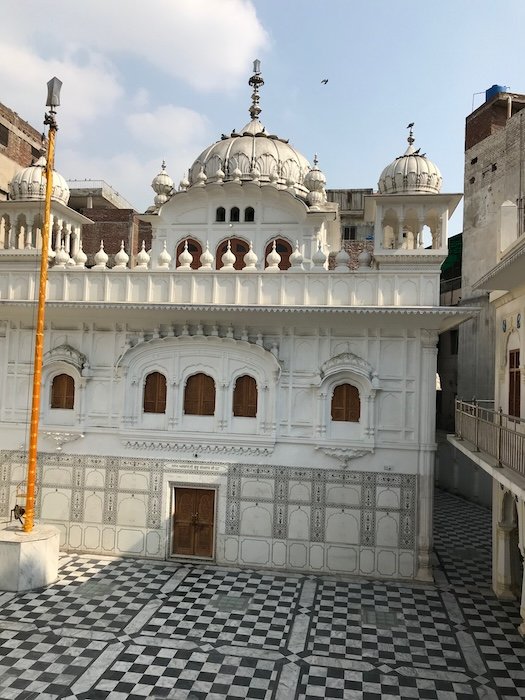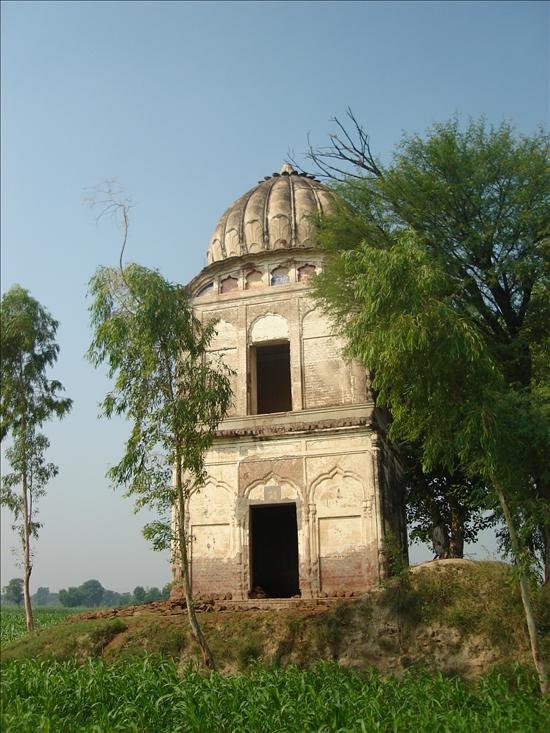
This Gurdwara Jhari Sahib, Tergay travel guide takes you to one of the most quietly moving Sikh heritage sites in Pakistani Punjab: a small village shrine near the Indian border where the third Sikh Guru, Guru Amar Das, is remembered to have stayed at the villagers’ request on his way to Kasur. Inside you will find the real story of the Guru’s visit and the withered trees where he tied his horse, how to reach Tergay from Lahore, Islamabad and Karachi, the best time to visit, the Vaisakhi fair held here each April, where to stay and eat, and practical tips for a respectful heritage trip.
Quick Facts
- Location: Tergay village, on the Kasur-Qadiwind road about one kilometre east of Qadiwind, tehsil and district Kasur, Punjab, Pakistan
- Altitude: Around 200 metres above sea level (Punjab plain)
- Famous For: The shrine of Guru Amar Das, the third Sikh Guru, who stayed here at the villagers’ request while travelling to Kasur; the clump of trees (jhari) where he tied his horse
- Nearest City: Kasur, a short drive away; Lahore is the nearest major city
- Border Proximity: Roughly 1.3 to 1.5 km from the Radcliffe Line (the Pakistan-India border)
- Accessibility: Reached by metalled road from Kasur via Qadiwind; easy day trip from Lahore
- Known Landmarks Nearby: Gurdwara Bhai Bahlol at Qadiwind, the city of Kasur and the shrine of Baba Bulleh Shah
- Best For: Sikh heritage travellers, history lovers, offbeat explorers, and anyone tracing the footsteps of the early Gurus in Pakistan
Why Visit Gurdwara Jhari Sahib, Tergay
Some places earn your visit with grandeur. Gurdwara Jhari Sahib earns it with stillness. This is not a marble monument or a famous pilgrimage complex; it is a small, weathered shrine in a farming village, a kilometre from the border fence, where the only sound most afternoons is the wind in the fields and the occasional call from the village. And that is exactly why it matters. Standing here, you are standing where Guru Amar Das — the third Sikh Guru, the teacher who built the great centre at Goindwal and gave the Sikh tradition its missionary structure — once stopped, at the loving insistence of ordinary villagers, on his way to Kasur.
For Sikh heritage travellers, Tergay is one of only a handful of places in Pakistan associated with Guru Amar Das, which makes it genuinely rare. For everyone else, it is something Pakistan does beautifully and too quietly: living history in an ordinary village. The shrine’s story is not about kings or battles but about hospitality — villagers who welcomed a travelling Guru with such love that he changed his plans and stayed. That spirit of welcome is still the first thing you will notice when you arrive.
Tergay is also a perfect fit for a slow, thoughtful day out from Lahore. Combine it with the shrine of Bhai Bahlol in neighbouring Qadiwind — barely a kilometre away — and the old city of Kasur with its shrine of the great Punjabi Sufi poet Baba Bulleh Shah, and you have one of the most rewarding heritage day trips in Punjab: Sikh and Sufi history within a few kilometres of each other, in the green borderland between Lahore and the Radcliffe Line.
Come at Vaisakhi in mid-April, when the shrine’s annual fair is held, and the quiet village briefly fills with colour and devotion. Or come in the cool months between November and March, when the fields are green, the light is soft, and you can have this small, sacred corner of Punjab almost entirely to yourself.
History of Gurdwara Jhari Sahib, Tergay
The recorded history of this shrine comes from the survey of historical Sikh shrines in Pakistan documented by researcher Iqbal Qaiser, whose work remains the most careful record of these village gurdwaras. According to that record, the village of Tergay sits on the Kasur-Qadiwind road, about one kilometre east of the village of Qadiwind. While Guru Amar Das Ji was travelling to Kasur, the residents of Tergay welcomed him with love and urged him to stay. The Guru conceded to their request and stayed in the village, and a small gurdwara was later built to mark the spot.
The name of the shrine carries the memory of that visit. Near the spot where the Guru stayed there used to be a bunch of trees — a jhari, a clump of bushes and trees — and the Guru tied his horse to those trees. The trees have long since withered away, but the name Jhari Sahib keeps the story alive. Historical accounts note that holy trees dating from the era of Guru Amar Das stood at the shrine right up until 1947, a living link to the Guru’s visit that survived for four centuries.
The shrine was supported by land grants from the local community: Bhai Sulakhan Singh of Qadiwind granted 2.5 ghumaon of land, and the villagers of Tergay granted another 2.5 ghumaon for the shrine’s upkeep. Like so many village gurdwaras in this region, the shrine once hosted an annual fair at Vaisakhi, the harvest festival of mid-April, and that fair is still recorded as being held here.
Partition changed everything for the gurdwaras of this borderland. Tergay sits just about 1.3 to 1.5 kilometres from the Radcliffe Line, the border drawn in 1947 that left so many Sikh shrines on the Pakistani side, close enough to see from India but cut off from the communities that once sustained them. Reporters who have documented the shrine describe it today as a modest structure — a dome on four pillars serving as the reminder of the gurdwara — with no caretaker in residence. It is a fragile, honest kind of heritage: not restored, not signposted, simply still there.
The shrine’s significance has not gone unnoticed. In discussions around the Kartarpur Corridor — the visa-free border crossing opened in 2019 that lets Indian Sikh pilgrims visit Gurdwara Darbar Sahib Kartarpur — voices on both sides have proposed similar corridors to other historic shrines near the border, and Gurdwara Jhari Sahib at Tergay has been named among them, alongside the shrine of Bhai Bahlol at nearby Qadiwind. For now, the shrine waits quietly, a kilometre from the fence, for the travellers who seek it out.
Top Things to Do in Gurdwara Jhari Sahib, Tergay
Pay Your Respects at the Shrine
The heart of any visit is the shrine itself. Walk up to the small domed structure, remove your shoes, cover your head, and spend a few quiet minutes at the spot where Guru Amar Das is remembered to have stayed. There is no granthi, no formal service, no crowd — just you and a four-hundred-year-old story. For many visitors, that simplicity is the most powerful part of the experience. If you are Sikh, you may wish to recite a short prayer; if you are not, quiet respectful presence is welcome. Remember the etiquette of any gurdwara: cover your head, remove your shoes, wash your hands, and do not bring tobacco or alcohol onto the premises.
Find the Spot of the Jhari Trees
Ask the villagers to show you where the clump of trees once stood — the jhari where the Guru tied his horse, and which gave the shrine its name. The trees themselves withered away long ago, but the location is part of the village’s oral memory, and older residents can point it out. It is a small act of pilgrimage in itself: standing where the horse stood, imagining the Guru’s brief rest in this village on his road to Kasur.
Walk the Village and Meet the People
Tergay is a working Punjabi farming village, and its people are famously hospitable — the same quality of welcome that stopped a Guru in his tracks. Take a slow walk through the lanes, watch the rhythms of village life, and accept the tea you will almost certainly be offered. If you speak Punjabi or Urdu, ask the elders about the shrine; their stories add colour no book can give you. Photography is generally fine, but always ask before photographing people.
Visit at Vaisakhi for the Annual Fair
If your dates are flexible, time your visit for Vaisakhi in mid-April, when the shrine’s annual fair is held. The fair is a modest village affair rather than a grand mela, but it is the one day of the year when the shrine comes fully alive with visitors, prayer, and the festive energy of the Punjabi harvest season. It is also the best time to meet Sikh visitors and heritage enthusiasts who make the trip especially for the occasion.
Famous Places In and Around Gurdwara Jhari Sahib, Tergay
- Gurdwara Bhai Bahlol, Qadiwind — barely a kilometre away, one of the only other shrines in Pakistan associated with Guru Amar Das; the shrine of the Guru’s devotee Bhai Bahlol, with the old water tank and his samadh. Read our Gurdwara Bhai Bahlol, Qadiwind travel guide.
- Kasur City — the district headquarters, home to the revered shrine of the Punjabi Sufi poet Baba Bulleh Shah, the old walled city, and Kasur Museum.
- The Radcliffe Line Border Belt — the fields around Tergay run right up to the international border; the landscape itself, with its watchtowers and fenced horizon, is a sobering reminder of Partition’s geography.
- Balloki Headworks — on the Ravi river, a popular picnic and nature spot within reach of Kasur for those who want to add a riverside stop to the day.
- Lahore — under two hours away, with its full wealth of Mughal and Sikh heritage; see our Explore Pakistan guides for the city’s highlights.
How to Reach Gurdwara Jhari Sahib, Tergay
Tergay is an easy day trip from Lahore and straightforward to reach by road. The village lies on the Kasur-Qadiwind road, about one kilometre east of Qadiwind village, in district Kasur. From Lahore, take Ferozepur Road south to Kasur (around 55 km), then continue on the road toward Qadiwind and on to Tergay — the whole journey from central Lahore takes roughly 1.5 to 2 hours depending on traffic. From Kasur city, Tergay is only a short drive away. From Islamabad, the drive is around 400 km (about 5.5 to 6 hours) via the M-2 motorway to Lahore and then Ferozepur Road south. From Karachi, the practical route is to fly to Lahore (about 2 hours) and drive down, or take the train to Lahore and hire a car.
The nearest airport is Allama Iqbal International Airport in Lahore. Roads are metalled all the way to the village and are usable year-round, though the last stretch through village lanes is narrow — drive slowly and watch for tractors, buffalo carts, and children. Public transport options include wagons and buses from Lahore to Kasur, from where you can hire a rickshaw or a private car to Qadiwind and Tergay. For the most comfortable trip, hire a car with a driver from Lahore for the day; it gives you the freedom to combine Tergay with Qadiwind and Kasur city in one relaxed circuit.
Route Details
From Lahore: Start on Ferozepur Road heading south → pass through Gajjumatta and Phool Nagar → reach Kasur (about 55 km) → continue toward Qadiwind → Tergay village is about 1 km east of Qadiwind on the Kasur-Qadiwind road. Ask any local for “Jhari Sahib gurdwara” — the village knows it well. From Islamabad: M-2 motorway south to Lahore → join the Ring Road or Ferozepur Road → follow the Lahore route above. From Karachi: Fly or take the train to Lahore → follow the Lahore route. Total road distance from Karachi is over 1,200 km, so flying is strongly recommended.
Where to Stay in Gurdwara Jhari Sahib, Tergay
Tergay itself is a small village with no hotels or guesthouses, so plan your stay in Kasur or Lahore. Kasur city has a handful of basic and mid-range hotels and guesthouses suitable for an overnight stay — simple, clean, and inexpensive, the kind of places that serve traders and wedding parties. Do not expect luxury; expect a comfortable bed, a hot shower, and a hearty breakfast. For most visitors, the smarter plan is to base yourself in Lahore, which offers everything from five-star hotels on the Mall and in Gulberg to mid-range hotels and budget guesthouses, and do Tergay as a day trip.
If you are travelling in a group of Sikh pilgrims, the larger gurdwaras of Lahore and the region sometimes have sarais (pilgrim rest houses) — enquire through the Evacuee Trust Property Board or local gurdwara committees in advance. Camping is not recommended in the village; the border area is sensitive, and an unannounced tent near the fence will attract the wrong kind of attention. Book Lahore accommodation in advance if you are visiting at Vaisakhi or during the winter tourist season.
Where to Eat: Local Foods of Gurdwara Jhari Sahib, Tergay
The food of this region is classic Punjabi village fare, and it is delicious. In Tergay itself, eat what the village eats: fresh tandoori rotis, saag (mustard greens) with makki di roti in winter, daal simmered in desi ghee, and tall glasses of sweet or salted lassi. There are no restaurants in the village, but roadside dhabas on the Kasur road serve exactly this kind of honest food at very budget-friendly prices — a full dhaba meal of daal, roti, and lassi will cost you very little.
Kasur has its own food identity worth exploring. The city is famous for Kasuri methi (dried fenugreek leaves), which flavours dishes across the subcontinent, and for its sweets — Kasuri mithai shops do a brisk trade, and the city’s falooda and kulfi are local favourites. Try the fish preparations Kasur is known for, and do not leave without buying a packet of Kasuri methi for your kitchen back home. In Lahore, the old city’s food streets near the Fort serve the full Mughlai-Punjabi repertoire: nihari, paye, chargha, and dahi bhallay. If you are offered karah parshad or a simple langar-style meal at any gurdwara along your route, accept it graciously with both hands — it is a blessing, not just food.
Weather in Gurdwara Jhari Sahib, Tergay
Tergay sits on the Punjab plain, so its weather follows the classic plains cycle: foggy, pleasant winters; a short, lovely spring; a long, fierce summer; and a humid monsoon. The most comfortable months for heritage travel are November through March, when the days are mild and the fields are green.
| Season | Temperature Range | Conditions |
|---|---|---|
| Winter (Dec–Feb) | 5°C to 20°C | Cool, pleasant days; dense fog on many December–January mornings that can slow driving — plan a late start |
| Spring (Mar–Apr) | 15°C to 32°C | Warming up; Vaisakhi (mid-April) can already be hot at midday — carry water and a cap |
| Summer (May–Jul) | 30°C to 45°C | Very hot with dry loo winds; avoid midday outdoor visits; not the ideal season for this trip |
| Monsoon (Jul–Sep) | 28°C to 38°C | Humid with heavy showers; village tracks can get muddy after rain |
| Autumn (Oct–Nov) | 15°C to 32°C | Pleasant and clear; one of the best windows for the trip |
Language and Culture of Gurdwara Jhari Sahib, Tergay
The language of Tergay is Punjabi, in its Majhi dialect, with Urdu widely understood. The village is Muslim-majority, as the Sikh community migrated at Partition, but the memory of the gurdwara is kept alive by the village itself — a quiet example of Punjab’s shared heritage. Visitors are received with the traditional warmth of rural Punjab; a greeting of Assalam-o-Alaikum or Sat Sri Akal will both be understood and appreciated.
Cultural etiquette matters here. Dress modestly — covered shoulders and knees for everyone, and women may want a light dupatta or scarf for the head. At the shrine, follow gurdwara etiquette even though no congregation is present: cover your head, remove your shoes before stepping onto the shrine platform, wash your hands, and do not carry tobacco, alcohol, or meat onto the premises. Ask before photographing people, and accept offered tea — refusing hospitality can feel like a slight. Because the village is close to the international border, carry your CNIC or passport, cooperate politely at any checkpoint, and do not fly drones without permission.
Shopping in Gurdwara Jhari Sahib, Tergay
Do not come to Tergay expecting bazaars — come expecting the small, genuine shopping of rural Punjab. The village has basic shops selling daily goods, fresh produce, and snacks. The real shopping happens in Kasur city: its bazaars are known for leather goods (Kasur is a historic centre of leather tanning), and every visitor should buy Kasuri methi, the dried fenugreek the city is named for in kitchens across the world. Sweet shops sell mithai worth carrying home. There are no shopping malls in or near Tergay; for that, Lahore’s malls and Anarkali and Ichhra bazaars are under two hours away. A small, meaningful souvenir from this trip is a packet of Kasuri methi and the memory of a village that once hosted a Guru.
Local Events and Festivals
Vaisakhi (Baisakhi), mid-April: The shrine’s annual fair is held at Vaisakhi, the Punjabi harvest festival that also marks the founding of the Khalsa in 1699. Recorded as still being held at Jhari Sahib, the fair is the one day of the year the quiet shrine fills with visitors and devotion — the best time to experience the living tradition of this place.
Gurpurabs: The birth anniversaries of the Sikh Gurus — most widely, Guru Nanak’s Gurpurab in November — are observed at gurdwaras across Pakistan, including the shrines of the Kasur-Lahore belt, with prayers and community meals. If you are in the region in November, the atmosphere at the larger gurdwaras of Lahore is worth experiencing alongside your Tergay visit.
Travel Tips for Gurdwara Jhari Sahib, Tergay
Packing Essentials
Pack a head covering (a bandana, cap, or dupatta) for the shrine, comfortable walking shoes you can slip off easily, sun protection (cap, sunglasses, sunscreen) for the open fields, and a water bottle. In winter, bring a warm jacket and a shawl — December and January mornings are genuinely cold, and fog can linger. A power bank is useful; village electricity is reliable but outlets may be scarce during a day out.
Safety Tips
Tergay is a peaceful farming village and perfectly safe for respectful visitors. The one special consideration is the border: you are about 1.5 km from the Radcliffe Line, so stay on village roads, do not wander toward the border fence or restricted areas, and cooperate with any security checkpoints. Travel in daylight, let someone know your plan, and keep your ID with you. Standard road safety applies on Ferozepur Road — it is a busy highway, so drive defensively.
Money & Connectivity
Carry cash in Pakistani rupees — there are no ATMs in Tergay, and village shops do not take cards. The nearest ATMs are in Kasur city. Mobile signals from all major networks (Jazz, Telenor, Zong, Ufone) work in the area, though data speeds can dip inside village lanes. Download offline maps before you leave Lahore, since signposts to the village are few.
Best Time to Visit Gurdwara Jhari Sahib, Tergay
November to March — The Ideal Season
Cool, clear, and green: this is the best time for the Gurdwara Jhari Sahib, Tergay travel guide’s recommended window. Daytime temperatures are pleasant, the wheat fields are lush, and the light is perfect for photography. December and January bring morning fog, so start after 10 a.m.
Mid-April — Vaisakhi Fair
Come at Vaisakhi for the shrine’s annual fair — the single most atmospheric day of the year here. It can be hot by afternoon, so arrive early, carry water, and wear a cap.
May to September — Avoid If You Can
The fierce Punjabi summer and the humid monsoon make this the least comfortable season for a village heritage trip. If you must come, plan a very early start and finish by noon.
October and November — The Sweet Spot
Post-monsoon clarity, comfortable temperatures, and harvest activity in the fields make autumn arguably the loveliest time to walk this borderland village.
Final Thoughts
Gurdwara Jhari Sahib, Tergay will not overwhelm you, and that is its gift. In a country where heritage tourism often means grand forts and famous shrines, this small domed shrine in a border village offers something rarer: a direct, quiet encounter with the earliest days of the Sikh tradition, in the exact landscape where it happened. The withered trees, the village that still remembers, the border fence on the horizon — it all tells the story of Punjab in a single frame.
If you are building a Sikh heritage trail through Pakistan — from Malam Jabba in the north to the shrines of the Punjab plains — Tergay deserves its place on the route, paired with Bhai Bahlol’s shrine a kilometre away and the Sufi calm of Kasur. Come with respect, come with curiosity, and come in the cool months or at Vaisakhi. This is the Punjab that guidebooks skip, and it is worth every kilometre of the drive. For more inspiration across the country, browse our Explore Pakistan collection and our Hunza Valley and Islamabad guides.
FAQs
Where is Gurdwara Jhari Sahib, Tergay located?
In Tergay village, on the Kasur-Qadiwind road about one kilometre east of Qadiwind, in district Kasur, Punjab — roughly 1.3 to 1.5 km from the Pakistan-India border.
Which Guru is associated with Gurdwara Jhari Sahib?
Guru Amar Das, the third Sikh Guru, who stayed in Tergay at the villagers’ request while travelling to Kasur and tied his horse to a clump of trees (jhari) here.
What is the best time to visit Gurdwara Jhari Sahib, Tergay?
November to March for the most comfortable weather, or mid-April for the annual Vaisakhi fair held at the shrine.
How do I reach Gurdwara Jhari Sahib, Tergay from Lahore?
Drive south on Ferozepur Road to Kasur (about 55 km), then continue to Qadiwind and Tergay — roughly 1.5 to 2 hours in total. Hiring a car with a driver for the day is the easiest option.
Is Gurdwara Jhari Sahib, Tergay safe to visit?
Yes — it is a peaceful farming village. Because it lies close to the border, carry your ID, stay on village roads, and avoid the border fence and restricted areas.
Is it suitable for families?
Yes. It is a calm, safe, half-day outing — best combined with Qadiwind and Kasur city. There are no facilities at the shrine itself, so carry water and snacks.
Where can I stay near Gurdwara Jhari Sahib, Tergay?
There are no hotels in the village; stay in Kasur city (basic to mid-range hotels) or base yourself in Lahore and visit on a day trip.
What food should I try around Tergay and Kasur?
Village Punjabi fare — saag, makki di roti, daal, and lassi at roadside dhabas — plus Kasur’s famous Kasuri methi, sweets, and falooda in the city.