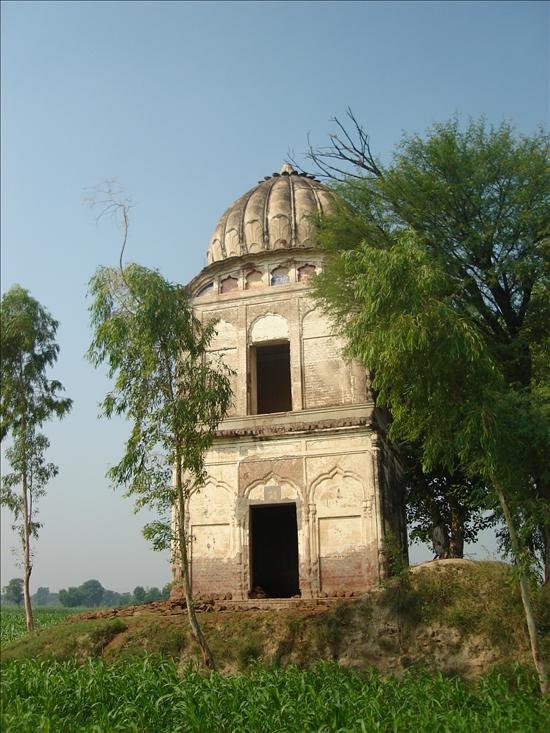
This Gurdwara Janam Asthan Guru Ram Das, Lahore travel guide takes you into the Walled City of Lahore, to the birthplace of the fourth Sikh Guru — the founder of Amritsar, the composer of 679 hymns of the Adi Granth, and the Guru from whom the Singh Sabha movement began. Inside you will find the real history of the shrine from 1534 to Ranjit Singh’s rebuilding in 1801, how to reach Chuna Mandi from Islamabad, Lahore and Karachi, the best time to visit, where to stay and eat in the old city, and practical tips for a respectful heritage trip.
Quick Facts
- Location: Chuna Mandi Bazaar, inside Delhi Gate near Purani Kotwali Chowk, Walled City of Lahore, Punjab, Pakistan
- Famous For: The birthplace and childhood home of Guru Ram Das, the fourth Sikh Guru, born here on 24 September 1534; the birthplace of the Singh Sabha movement
- Built: Current gurdwara built in 1801 by Maharaja Ranjit Singh, in the style of the Harmandir Sahib (Golden Temple), Amritsar; measures 122 feet 6 inches by 97 feet 6 inches
- Nearest City: Right inside Lahore; Lahore Fort and Begum Shahi Mosque are within walking distance
- Accessibility: In the old city — reached on foot through the bazaar lanes, or by rickshaw to Delhi Gate; nearest airport is Allama Iqbal International, Lahore
- Known Landmarks Nearby: Lahore Fort, Begum Shahi Mosque, Delhi Gate, the Shahi Guzargah (Royal Passage), Gurdwara Diwan Khana Sahib
- Best For: Sikh pilgrims, history lovers, photographers of old Lahore, and anyone tracing the roots of the Sikh tradition
Why Visit Gurdwara Janam Asthan Guru Ram Das, Lahore
Every great city has a street where history feels close enough to touch. In Lahore, that street is in Chuna Mandi, inside Delhi Gate, where a white-domed gurdwara stands on the exact spot where a boy named Jetha was born in 1534 — the boy who would become Guru Ram Das, found Amritsar, and shape the Sikh faith forever. This is not a replica or a memorial at a distance. This is the birthplace itself, in the bazaar where his grandfather kept his shop, on the lane the Guru walked as a child.
For Sikh visitors, the pull is obvious and deep: this is one of the most sacred janam asthans (birthplaces) in the tradition, the starting point of the life of the Guru who gave Sikhism its holiest city. For everyone else, the shrine is a doorway into the layered, shared history of old Lahore — a city where Mughal mosques, Sikh gurdwaras, and Hindu havelis stand within minutes of each other, and where every lane has changed hands, faiths, and fortunes a dozen times. The gurdwara sits on the old Shahi Guzargah, the Royal Passage that ran from Delhi Gate to the Lahore Fort; walking here is walking the same route emperors once took.
And then there is the building itself. Rebuilt by Maharaja Ranjit Singh in 1801 in the style of the Golden Temple, with its white marble platform rising above the street and its quiet western courtyard, the shrine is an oasis of calm in the beautiful chaos of the Walled City. Step inside from the roaring bazaar and the noise simply stops. Add the fact that the Singh Sabha movement — the great Sikh reform and revival movement of the late 19th century — began from this very gurdwara, and you are standing at a crossroads of history that shaped millions of lives.
Visit between November and March, when Lahore’s weather is at its kindest, and pair the shrine with the Lahore Fort, the Begum Shahi Mosque, and a walk through Delhi Gate’s bazaars. This is heritage travel at its richest: sacred, storied, and completely unforgettable.
History of Gurdwara Janam Asthan Guru Ram Das, Lahore
The story begins on the morning of 24 September 1534, in a modest house in Chuna Mandi Bazaar. Here a boy was born to Hari Das and Mata Daya (also remembered as Anup Devi), a devout couple of the Sodhi clan of the Khatri caste. The boy’s grandfather, Thakur Das, was a well-known shopkeeper in Chuna Mandi. Because he was the eldest child, the boy was named Jetha — from jayeshth, meaning the first-born. He would later be known to history as Guru Ram Das, the fourth Sikh Guru.
Jetha spent the first seven years of his life in this house and these lanes. Sikh tradition remembers him as a remarkably serene child — fair, handsome, always smiling, happiest in the company of holy and pious people. One beloved episode tells of his mother giving him boiled grams to sell in the market; instead, the boy went to the bank of the Ravi and fed them to gathered holy men, an act of spontaneous charity that echoes Guru Nanak’s own sacha sauda (true bargain). When Jetha was about seven, both his parents died, and he went to live with his maternal grandmother in a village — but the house in Chuna Mandi remained the remembered place of his birth and childhood.
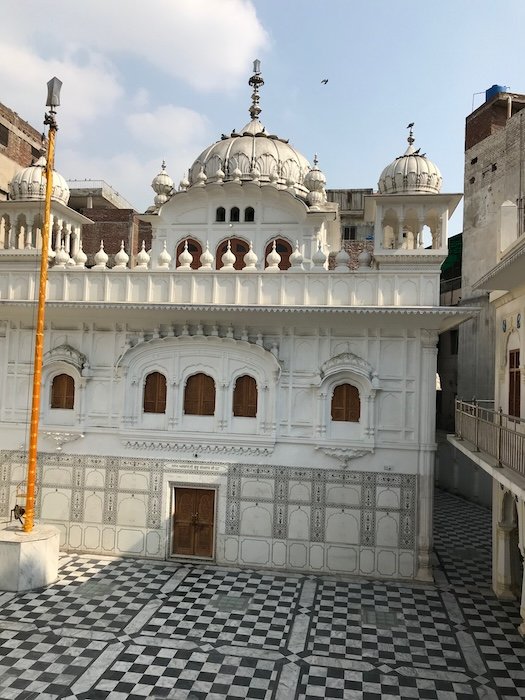
The ancestral home survived for centuries, until the era of Maharaja Ranjit Singh. In 1801, during the celebrations for the birth of Kharak Singh — the son of Ranjit Singh and his wife Maharani Datar Kaur (also called Nakain) — the Maharani asked her husband to rebuild the Guru’s birthplace to mark the joyous occasion. Ranjit Singh agreed, purchased the surrounding buildings and plots from the local qazis, and had a gurdwara constructed on the site, modelled in the style of the Harmandir Sahib at Amritsar. The new shrine measured 122 feet 6 inches by 97 feet 6 inches, raised on a white marble platform several steps above street level, with an open courtyard on its western side where the Nishan Sahib is hoisted.
The gurdwara’s later history mirrors the turbulence of Punjab itself. It was from this shrine that the Singh Sabha movement — the reform movement that would revitalise Sikh religious and educational life in the late 1800s — first began. The gurdwara remained under the control of the Shiromani Gurdwara Parbandhak Committee from 1927 until 1947. At Partition, the shrine witnessed tragedy: eighteen Sikhs were killed in its premises during the communal rioting of 1947. After 1947 the gurdwara passed into the care of Pakistan’s Auqaf Department, and today it is managed by the Evacuee Trust Property Board, with readings from the Guru Granth Sahib carried out daily.
The shrine’s story is still being written. In October 2026, during the ceremony marking Guru Ram Das’s birth anniversary at Chuna Mandi — attended by Sikh pilgrims from Pakistan, the United Kingdom, the United States, and Canada — the Evacuee Trust Property Board announced plans to expand the gurdwara complex, incorporating about 13 marlas (roughly 272 square metres) of adjoining commercial land to create more space for worship and religious ceremonies. Nearly five centuries after a boy named Jetha was born in a small house here, his birthplace continues to grow.
Top Things to Do in Gurdwara Janam Asthan Guru Ram Das, Lahore
Stand at the Guru’s Birthplace
The central experience is simply to be here: on the white marble platform, several steps above the bazaar street, at the spot where Guru Ram Das was born in 1534 and spent his first seven years. Cover your head, remove your shoes, and enter the prayer hall where the Guru Granth Sahib is read daily. The calm inside — after the beautiful noise of Chuna Mandi outside — is striking. Take your time; this is a place for quiet reflection, not a quick photo stop.
Admire the Ranjit Singh-era Architecture
Look closely at the building Maharaja Ranjit Singh raised in 1801. Built deliberately in the style of the Harmandir Sahib, the shrine’s proportions, its marble platform, and its domed profile echo the Golden Temple in miniature. The western courtyard, the two-storey buildings flanking it, and the Nishan Sahib flying in the western corner all reward a slow, observant walk. Old photographs of the shrine from the 1920s, published in Kahn Singh Nabha’s Mahan Kosh (1930), show how little its essential character has changed.
Walk the Shahi Guzargah
The shrine stands on the Shahi Guzargah — the Royal Passage that once ran from Delhi Gate to the Lahore Fort. Walk it. From the gurdwara you can follow the old royal route toward the Fort, passing Masti Gate’s vanished grandeur, the Chuna Mandi Girls College (the haveli of Jamadar Khushal Singh), and centuries of layered Lahore. It is one of the great heritage walks of the Walled City.
Combine with Lahore Fort and Begum Shahi Mosque
Both are within easy walking distance. The Lahore Fort — the great Mughal citadel — and the exquisite Begum Shahi Mosque (the “Mariyam Zamani” mosque, one of Lahore’s earliest Mughal mosques) make a natural half-day circuit with the gurdwara. Together they tell the story of this quarter of the old city: Mughal, Sikh, and British layers in a single afternoon. See our Begum Shahi Mosque travel guide for the mosque next door.
Explore Chuna Mandi and Delhi Gate Bazaars
Give yourself an hour to simply wander. Chuna Mandi is a working bazaar, not a tourist set-piece: spice sellers, cloth merchants, metalworkers, and food stalls, all in lanes that have served this trade for centuries. It is also worth seeking out Gurdwara Diwan Khana Sahib, another historic Sikh shrine in the same bazaar — read our Gurdwara Diwan Khana Sahib, Chuna Mandi travel guide.
Famous Places In and Around Gurdwara Janam Asthan Guru Ram Das, Lahore
- Lahore Fort (Shahi Qila) — the great Mughal citadel at the end of the Shahi Guzargah, a UNESCO World Heritage site.
- Begum Shahi Mosque — the early-Mughal “Mariyam Zamani” mosque, minutes from the gurdwara.
- Delhi Gate — one of the thirteen historic gates of the Walled City, and the start of the Royal Passage.
- Gurdwara Diwan Khana Sahib, Chuna Mandi — another historic shrine in the same bazaar.
- Badshahi Mosque — Lahore’s iconic Mughal mosque, a short walk west; see our Badshahi Mosque travel guide.
- Food Street, Fort Road — the old city’s famous food street, perfect for dinner after a day of heritage walking.
How to Reach Gurdwara Janam Asthan Guru Ram Das, Lahore
The gurdwara is inside Delhi Gate, near Purani Kotwali Chowk in Chuna Mandi, in Lahore’s Walled City — which means the last part of the journey is always on foot. From anywhere in Lahore, take a rickshaw, taxi, or ride-hailing car to Delhi Gate; from there, walk into the bazaar lanes (ask for “Chuna Mandi gurdwara” — everyone knows it). The lanes fill up by midday, so come early in the morning for the easiest walk and the calmest shrine.
From Islamabad, Lahore is about 375 km via the M-2 motorway — roughly 4.5 to 5 hours by car, or a short flight to Allama Iqbal International Airport followed by a 45-minute drive into the old city. From Karachi, fly to Lahore (about 2 hours) — the road journey is over 1,200 km and best avoided unless you are making an overland adventure of it. Trains connect Karachi, Rawalpindi, and other major cities to Lahore Junction, from where the Walled City is a short taxi ride. The nearest airport is Allama Iqbal International, about 20–25 km from Delhi Gate.
Route Details
Within Lahore: Taxi/rickshaw to Delhi Gate → walk through Delhi Gate into the Walled City → follow the bazaar lane to Purani Kotwali Chowk → Chuna Mandi; the gurdwara’s dome and Nishan Sahib are visible above the rooftops. From Islamabad: M-2 motorway south → Lahore Ring Road → exit toward the old city → park near Delhi Gate or Circular Road and walk in. From Karachi: Fly to Lahore → taxi to Delhi Gate (about 45–60 minutes from the airport). The Walled City’s lanes are not car-friendly — embrace the walk; it is part of the experience.
Where to Stay in Gurdwara Janam Asthan Guru Ram Das, Lahore
Lahore offers the full range, and the Walled City rewards those who stay close. For heritage travellers, the most atmospheric choice is a hotel or guesthouse near the old city — the area around Delhi Gate, Bhatti Gate, and the Fort has heritage-style guesthouses and mid-range hotels that put you within walking distance of the shrine at dawn, when the bazaar is quiet and the light is golden. Lahore’s mainstream options cluster on the Mall, in Gulberg, and around DHA: five-star hotels, business hotels, and serviced apartments for every budget.
Mid-range travellers will find plenty of clean, comfortable hotels in the Rs. 5,000–12,000 range across the city (prices vary by season — winter is peak). Budget travellers can choose from numerous guesthouses and hostels, especially around Gulberg and the railway station area. Book ahead in winter (November–February), when Lahore’s tourist season peaks and the old city’s guesthouses fill up. Sikh pilgrim groups sometimes arrange stays through gurdwara-affiliated sarais — enquire via the Evacuee Trust Property Board or your tour operator well in advance.
Where to Eat: Local Foods of Gurdwara Janam Asthan Guru Ram Das, Lahore
You are in the food capital of Pakistan — eat accordingly. The Walled City around Chuna Mandi is one of Lahore’s great eating quarters. Start the day with halwa puri and lassi from an old-city shop, work your way through nihari, paye, hareesa, and daal at the legendary breakfast spots near Delhi Gate and Bhatti Gate, and finish with dinner on Food Street at Fort Road, where chargha, karahi, seekh kebabs, and dahi bhallay are served with the Fort illuminated behind you.
Winter brings Lahore’s beloved seasonal foods: saag with makki di roti, gajar ka halwa, and Kashmiri chai. The old city’s sweet shops — some operating for generations — sell barfi, gulab jamun, and jalebi fried fresh through the day. A full, generous old-city meal at a local eatery is very budget-friendly; the famous-name restaurants on Food Street cost more but are still reasonable by international standards. And if you are offered karah parshad at the gurdwara, accept it with both hands — it is a blessing.
Weather in Gurdwara Janam Asthan Guru Ram Das, Lahore
Lahore’s climate is classic Punjab plains: a short, delightful winter; a brief spring; a long, punishing summer; and a humid monsoon. For old-city walking — which is how you will experience this shrine — November to March is by far the best window.
| Season | Temperature Range | Conditions |
|---|---|---|
| Winter (Dec–Feb) | 5°C to 20°C | Cool and pleasant; dense fog on December–January mornings can delay flights and slow traffic — start sightseeing after 10 a.m. |
| Spring (Mar–Apr) | 15°C to 33°C | Warming quickly; pleasant mornings, hot afternoons by April |
| Summer (May–Jul) | 30°C to 45°C | Extremely hot with dry loo winds; old-city lanes become furnaces by midday — not the season for this trip |
| Monsoon (Jul–Sep) | 28°C to 38°C | Humid with heavy downpours; the Walled City’s lanes can flood briefly after cloudbursts |
| Autumn (Oct–Nov) | 16°C to 32°C | Clear and comfortable; an excellent shoulder season for Lahore |
Language and Culture of Gurdwara Janam Asthan Guru Ram Das, Lahore
The Walled City speaks Punjabi first — the earthy Lahori dialect — with Urdu universal and English widely understood in shops and hotels. The culture of the old city is famously warm, witty, and food-obsessed; Lahoris pride themselves on hospitality, and a visitor showing genuine interest in the city’s history will be adopted within minutes.
At the gurdwara, observe standard Sikh etiquette: cover your head (carry a scarf or bandana; the shrine may have spares), remove your shoes at the entrance, wash your hands, dress modestly, and do not bring tobacco, alcohol, or meat onto the premises. Photography inside the prayer hall should be discreet — ask the attendant first. In the bazaar, dress modestly, bargain good-naturedly (it is expected), and keep valuables secure in the crowds. Friday afternoons are quieter in the bazaar around prayer time; plan accordingly.
Shopping in Gurdwara Janam Asthan Guru Ram Das, Lahore
The bazaars around Delhi Gate and Chuna Mandi are among Lahore’s oldest shopping quarters. Anarkali — a short walk away — is the city’s most famous traditional bazaar: fabrics, shawls, handicrafts, traditional shoes (khussay), and jewellery at prices that reward bargaining. Ichhra Bazaar is another favourite for clothes and household goods. The lanes of the Walled City itself sell everything from spices and brassware to religious items and books.
For Sikh visitors, the shops near the city’s gurdwaras sell rumallas (cloths for the Guru Granth Sahib), khandas, and devotional literature — meaningful souvenirs of the trip. For modern shopping, Lahore’s malls (Emporium, Packages, Fortress Square) are a short drive from the old city. A piece of advice: the old city’s shopkeepers respect a knowledgeable, friendly bargainer far more than a hurried one. Take your time, drink the offered tea, and enjoy the theatre of it.
Local Events and Festivals
Birth anniversary of Guru Ram Das (September/October): The shrine’s most important annual observance marks the Guru’s birth on 24 September 1534. The 2026 ceremony at Chuna Mandi drew Sikh pilgrims from Pakistan, the UK, the US, and Canada, with prayers, kirtan, and community meals — and it was at this gathering that the gurdwara’s expansion was announced. If you can time a Lahore trip for this period, the atmosphere is deeply moving.
Vaisakhi (mid-April): The great Punjabi harvest festival and the anniversary of the Khalsa (1699) is celebrated at gurdwaras across Lahore with processions and prayers — a vibrant time to be in the city, though hot.
Guru Nanak’s Gurpurab (November): The birth anniversary of the first Guru is observed with particular devotion at Lahore’s gurdwaras, and the city’s Sikh heritage sites see their largest congregations of the year.
Basant (February): Lahore’s legendary kite-flying festival has been revived in recent years after a long ban — if it is on during your visit, the Walled City’s rooftops are the place to be.
Travel Tips for Gurdwara Janam Asthan Guru Ram Das, Lahore
Packing Essentials
A head covering for the shrine, slip-on shoes for the shoe-removal areas, sun protection, and a water bottle are the basics. In winter, pack a warm jacket and layers — Lahore’s December mornings are cold, and the old city’s stone lanes hold the chill. A small daypack keeps your hands free in the bazaar crowds. Carry tissues and hand sanitiser for street-food adventures.
Safety Tips
The Walled City is generally safe and welcoming, but it is crowded and chaotic: keep valuables in a front pocket or money belt, agree rickshaw fares before boarding, and stay alert in the densest bazaar lanes. Drink bottled or filtered water. The shrine itself is peaceful and well looked after; follow the attendants’ guidance.
Money & Connectivity
ATMs are plentiful in Lahore, including near the Walled City’s main gates — but carry cash for the bazaar lanes, where cards are rarely accepted. All mobile networks (Jazz, Telenor, Zong, Ufone) have strong 4G coverage in the old city. Many cafes and hotels offer Wi-Fi. Download an offline map of the Walled City; the lanes defeat even good GPS.
Best Time to Visit Gurdwara Janam Asthan Guru Ram Das, Lahore
November to March — The Ideal Season
Lahore at its best: cool mornings, golden afternoons, and bazaar weather made for walking. This is the Gurdwara Janam Asthan Guru Ram Das, Lahore travel guide’s recommended window — and the city’s peak tourist season, so book stays early.
September/October — The Guru’s Birth Anniversary
Time your visit for the birth anniversary celebrations around late September and you will experience the shrine at its most alive, with pilgrims from around the world.
April — Vaisakhi in the Old City
Vibrant but hot; come for the festival energy, plan shrine visits for early morning, and hydrate constantly.
May to August — Avoid
Lahore’s summer is brutal, and the Walled City’s lanes amplify the heat. The shrine is open year-round, but this is the season for air-conditioned museums, not old-city walks.
Final Thoughts
There are birthplaces you visit, and birthplaces that visit you — that stay with you long after you have left. Gurdwara Janam Asthan Guru Ram Das is the second kind. To stand in a quiet marble hall, in a roaring bazaar, in a thousand-year-old city, at the exact spot where a seven-year-old orphan began the journey that would lead to Amritsar and the Adi Granth — that is not tourism. That is time travel.
Pair it with the Fort, the Begum Shahi Mosque, and the lanes of the Shahi Guzargah, and give old Lahore the full day it deserves. Come in winter, come early, come with respect — and come hungry, because the Walled City will feed you like family. For more journeys through Pakistan’s sacred and historic landscapes, explore our Explore Pakistan collection, from Malam Jabba to the Hunza Valley and Islamabad.
FAQs
Where is Gurdwara Janam Asthan Guru Ram Das located?
In Chuna Mandi Bazaar, inside Delhi Gate near Purani Kotwali Chowk, in Lahore’s Walled City — near the Lahore Fort and Begum Shahi Mosque, on the old Shahi Guzargah (Royal Passage).
Why is this gurdwara important?
It stands on the birthplace and childhood home of Guru Ram Das, the fourth Sikh Guru (born 24 September 1534), founder of Amritsar. The Singh Sabha movement also began here, and Maharaja Ranjit Singh rebuilt the shrine in 1801.
What is the best time to visit?
November to March for the best weather; late September/early October for the Guru’s birth anniversary celebrations.
How do I reach the gurdwara from Lahore airport?
Allama Iqbal International Airport is about 20–25 km away — take a taxi or ride-hailing car to Delhi Gate (45–60 minutes), then walk into Chuna Mandi. Come early; the lanes fill by midday.
Is the gurdwara open to non-Sikh visitors?
Yes. Like all gurdwaras, it is open to everyone. Cover your head, remove your shoes, dress modestly, and follow the attendants’ guidance.
Is it suitable for families and elderly visitors?
Yes, though the walk through the bazaar lanes involves crowds and uneven ground — wear comfortable shoes and allow extra time. The shrine’s marble platform has steps.
Where should I stay nearby?
Stay near the Walled City (guesthouses around Delhi/Bhatti Gate) for atmosphere, or in Gulberg/the Mall area for mainstream hotels. Book early in winter.
What else can I see nearby?
Lahore Fort, Begum Shahi Mosque, Delhi Gate, Gurdwara Diwan Khana Sahib (same bazaar), Badshahi Mosque, and Food Street at Fort Road — all within a short walk or drive.