


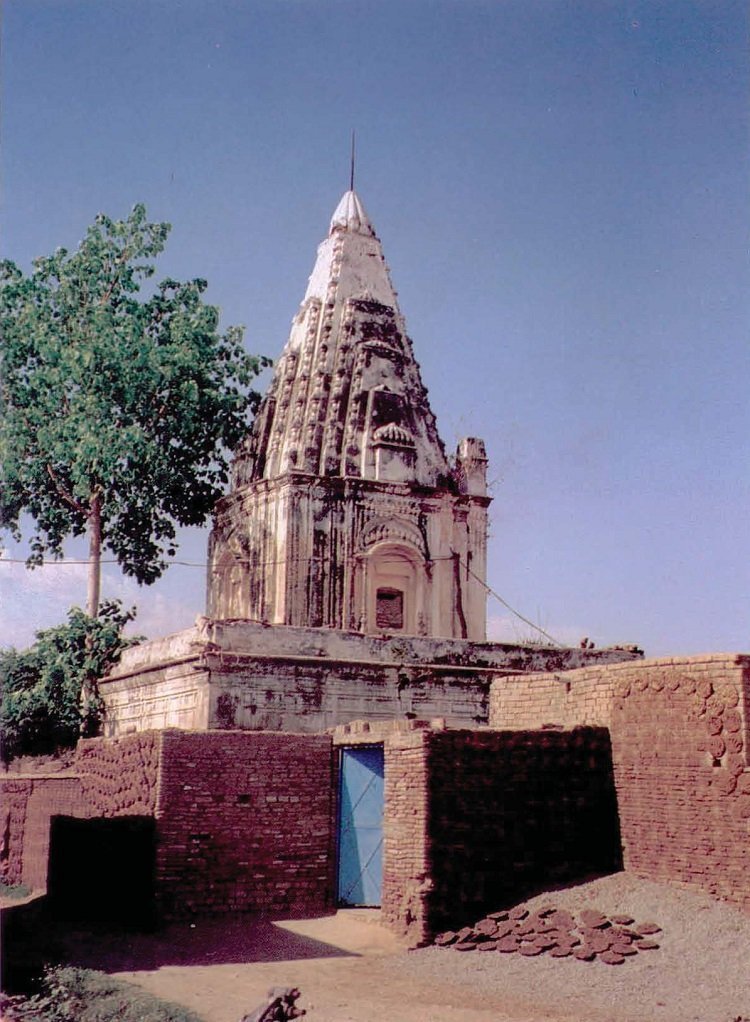
There is a gurdwara in Punjab that does not look like a gurdwara at all. Built like a Hindu temple, crowned with a spire, and known to everyone around it as “Nanak Mandir,” the Gurdwara Nanaksar at Sahowal is one of the most architecturally unusual shrines associated with Guru Nanak in Pakistan. Guru Nanak came here from Sialkot and stayed for seven days — and the building that marks the spot is, remarkably, still standing. This Gurdwara Nanaksar (Nanak Mandir), Sahowal travel guide will show you why this temple-like shrine deserves your visit, when to go, and how to reach it.
Quick Facts
- Location: about half a kilometer inside Sahowal village on its eastern side; Sahowal station (after Uggoki on the Sialkot–Sambrial line) is about 4 km north-east, Sialkot district, Punjab, Pakistan
- Altitude: around 250 meters (Punjab plains)
- Famous For: a gurdwara built like a Hindu temple — hence “Nanak Mandir”; the spired Parkashasthan; the place where Guru Nanak stayed for seven days
- Nearest City: Sialkot, roughly 20 km away; Sambrial is the nearest town on the main road
- Accessibility: easy — Sahowal is both a railway station and a bus stop; the shrine is a short walk inside the village
- Known Landmarks: the spired temple-like main building, the haveli-style residential rooms, the site of the old 25-ghumaon pond
- Best For: architecture lovers, spiritual travelers, photographers, and anyone collecting the unusual shrines of Guru Nanak’s travels
Why Visit Gurdwara Nanaksar (Nanak Mandir), Sahowal
Start with the obvious: how many gurdwaras do you know that look like temples? The Nanaksar at Sahowal breaks every expectation. Its Parkashasthan — the sanctum where the scripture rested — rises inside a temple-like building crowned with a spire, while around it stretches a haveli-style complex of residential rooms. The locals call it Nanak Mandir, the Temple of Nanak, and the name is not a mistake — it is a description. If you travel for the joy of seeing something you have never seen before, Sahowal delivers.
Then there is the story. Guru Nanak came here from Sialkot and stayed for seven days — a full week, not a passing night. In those days, the tradition says, this spot lay inside a vast pond covering 25 ghumaons (a ghumaon being roughly an acre, so picture a sheet of water some 25 acres wide). The gurdwara stood within that tank, an island of prayer in the middle of water. The pond is gone now, but standing in the village and imagining the shrine ringed by water changes how you see the place: this was once a sanctuary in the most literal sense.
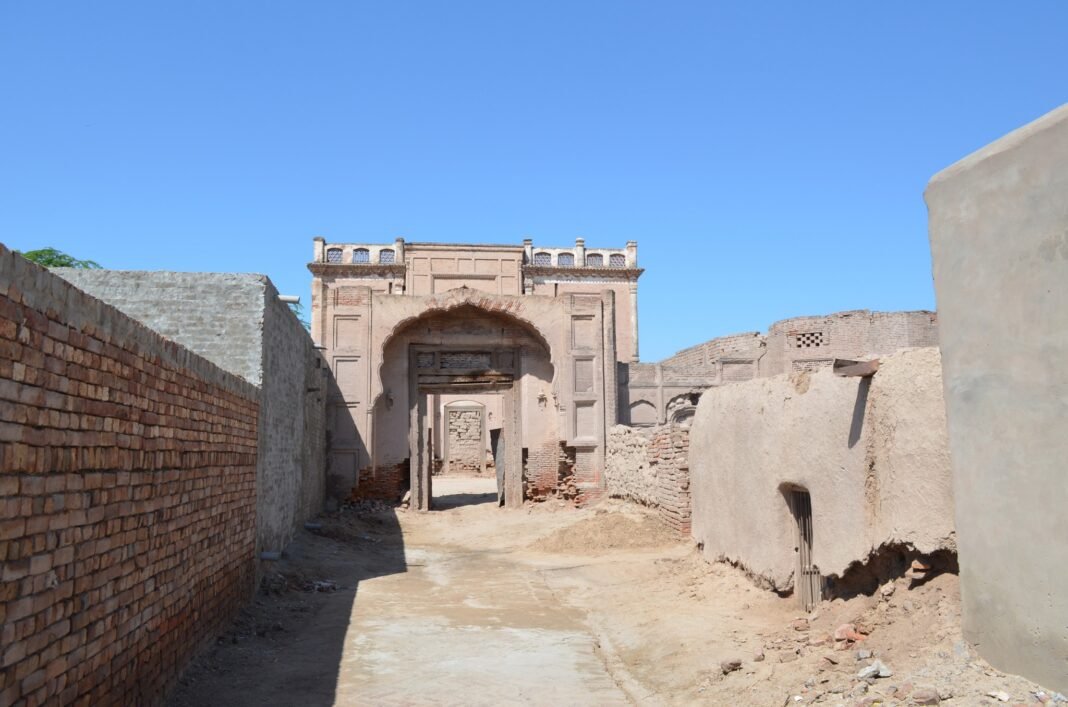
Sahowal is also the survivor of this batch of shrines. Where other small gurdwaras of the Sialkot region lie in ruins, heritage surveys found the Sahowal building in good condition. The residential rooms are now home to refugee families settled there, which means the complex is lived in and watched over rather than abandoned. You will see a heritage building that is still part of daily life — laundry drying in courtyards, children playing where pilgrims once rested. For travelers tired of fenced-off monuments, that living quality is precious.
Finally, this is simply an easy and rewarding trip. Sahowal is on the rail line and the bus route between Sialkot and Sambrial, the shrine is a short walk inside the village, and Sialkot’s hotels and restaurants are a short drive away. Come for the architecture, stay for the story of the seven days and the vanished pond, and leave with photographs of one of the most distinctive shrines in Punjab.
History of Gurdwara Nanaksar (Nanak Mandir), Sahowal
The history of Sahowal’s shrine begins, like so many in this region, with the travels of Guru Nanak (1469–1539), the founder of the Sikh faith. According to the historical tradition documented in surveys of Sikh shrines in Pakistan, Guru Nanak Dev Ji came here from Sialkot and stayed for seven days — one of the longer halts recorded among the small shrines of the district.
The geography of the place has transformed completely since then. In Guru Nanak’s time, there was a pond covering 25 ghumaons at this spot, and the gurdwara stood inside that tank — a shrine rising from the water, reached by those who sought it out. Over the centuries the water receded and the land was settled; today Sahowal is a large village divided into two parts, and the gurdwara stands about half a kilometer inside the village on its eastern side, on dry land where water once stretched.
The building itself is what makes Sahowal famous among heritage researchers. It is built like a Hindu temple — so convincingly that people call it “Nanak Mandir” — with the Parkashasthan (the place of the scripture’s installation) set inside the temple structure beneath a spire. Around it stand many residential rooms in a haveli (mansion) like building. The priests of the shrine were Udasi sadhus, the ascetic order historically associated with many of Guru Nanak’s shrines. Notably, no land or estate was ever endowed to this shrine — it survived on devotion alone.
After 1947, the Sikh community of the area migrated, and the shrine’s rooms were settled by refugee families, who live there to this day. The heritage survey that documented the site found the building in good condition — a remarkable verdict among the small gurdwaras of the region — while honestly noting that nothing could be said about its future. That is why visiting, photographing, and writing about Sahowal matters: attention is the first form of preservation.
To find it, remember the landmarks the old surveys used: Sahowal railway station comes after Uggoki while traveling from Sialkot to Sambrial, and it is also a bus stop. The village itself lies about 4 kilometers south-west of the station — a large, two-part village — and the gurdwara is about half a kilometer inside it on the eastern side.
Top Things to Do in Gurdwara Nanaksar (Nanak Mandir), Sahowal
Study the Temple-Like Architecture
This is the main event. Walk slowly around the main building and take in what makes it extraordinary: a gurdwara in the form of a Hindu temple, complete with a spire over the Parkashasthan. Look at the proportions, the masonry, the way the sanctum sits within the temple frame. Heritage photographers should work the morning light, when the spire casts clean shadows. As always at a sacred site, keep your head covered, your shoes off near the sanctum, and your voice low.
Explore the Haveli-Style Residential Complex
Around the temple building stretch the many residential rooms built like a haveli — a mansion-like complex that once housed pilgrims, priests, and caretakers. Refugee families live in these rooms now, so explore with sensitivity: admire the architecture from the courtyards and passages, greet the residents, and ask before photographing homes or people. The fact that the complex is lived in is exactly what has kept it standing.
Imagine the Vanished 25-Ghumaon Pond
Stand in the open ground around the shrine and picture what was here: a pond covering some 25 ghumaons, with the gurdwara rising inside the tank like an island. There is no water left to see, but the flatness of the land and the old village layout still hint at it. This kind of imaginative reconstruction is one of the great pleasures of heritage travel — the site gives you the facts, and you supply the water.
Walk Sahowal Village
Sahowal is a large village in two parts, and a walk through it is a walk through working rural Punjab: buffaloes at the trough, wheat and rice in the fields by season, the railway line humming at the edge of the settlement. The shrine is about half a kilometer inside the village on the eastern side — the walk in is part of the visit. Stop for tea at a village shop and ask about Nanak Mandir; every local knows it.
Famous Places In and Around Gurdwara Nanaksar (Nanak Mandir), Sahowal
- Sialkot City (roughly 20 km) — Gurdwara Babe di Ber, Gurdwara Baoli Sahib, Sialkot Fort, and the sports-goods bazaars
- Sambrial — the nearest town on the main road, home to Sialkot International Airport
- Uggoki — the station before Sahowal on the Sialkot line, a typical Punjab railway town
- Gurdwara Babe di Ber (Beri Sahib), Sialkot — the great Guru Nanak shrine of Sialkot city
- Head Marala — the Chenab river headworks north of Sialkot, a pleasant drive for an evening excursion
How to Reach Gurdwara Nanaksar (Nanak Mandir), Sahowal
Sahowal is one of the easiest shrines in the region to reach: it has both a railway station and a bus stop on the Sialkot–Sambrial route. From the station, the village is about 4 km south-west, and the gurdwara is about half a kilometer inside the village on the eastern side.
Route Details
From Lahore (roughly 150 km, about 2 to 2.5 hours): Take the M-11 Sialkot Motorway to Sialkot, then drive south toward Sambrial/Uggoki and on to Sahowal — about 20 km from Sialkot city. Alternatively, take a train from Lahore toward Sialkot and get down at Sahowal station (the stop after Uggoki).
From Islamabad (roughly 265 km, about 4.5 hours): Drive the motorway network to Sialkot, then south to Sahowal. The roads are good year-round except in heavy monsoon spells.
From Karachi (roughly 1,310 km): Fly to Sialkot International Airport — conveniently located at Sambrial, very close to Sahowal — and drive or take a rickshaw/taxi the short distance to the village.
By train: Sahowal station lies on the Sialkot–Sambrial section, after Uggoki. It is a small station, so check current stoppages before planning; from the station, a rickshaw covers the 4 km to the village. By road: buses and wagons run frequently between Sialkot and Sambrial; get down at the Sahowal stop.
Where to Stay in Gurdwara Nanaksar (Nanak Mandir), Sahowal
Sahowal village has no hotels, so base yourself in Sialkot (about 20 km away) or Sambrial town nearby. Sialkot offers the full range: mid-range hotels with air conditioning, hot water, and restaurants, plus budget guesthouses near the transport hubs. Expect a mid-range room to cost a few thousand rupees per night and budget options to cost less.
Because the shrine is so close to Sialkot, most travelers visit as a half-day excursion and return to the city for lunch. If you are flying in, note that Sialkot International Airport sits at Sambrial — you could easily visit Sahowal on your way to or from the airport. There is no camping at the shrine; this is a village heritage stop, best enjoyed in daylight.
Where to Eat: Local Foods of Gurdwara Nanaksar (Nanak Mandir), Sahowal
The kitchens of this region cook the Punjabi canon, and they cook it well. In Sialkot, begin the day with halwa puri and a tall glass of lassi; for lunch, order chicken karahi or daal makhani with tandoori naan at any reputable dhaba; in the evening, work through the grill shops’ seekh kebabs, tikka, and malai boti. Winter visitors get the region’s crown jewel: sarson da saag with makki di roti, white butter melting on top.
In Sahowal village, eat simply and happily: fresh tandoori roti, omelets and parathas from the village tandoor, pakoras and samosas from the shops, and endless cups of doodh patti (milky tea). A village meal costs very little — a few hundred rupees feeds you well. Carry bottled water, and if a local family invites you to eat, say yes: village Punjabi hospitality is generous and sincere, and the food is cooked with pride.
Weather in Gurdwara Nanaksar (Nanak Mandir), Sahowal
Sahowal sits on the same Punjab plain as Sialkot, so expect the classic regional pattern: cold foggy winters, a furnace-hot early summer, and heavy monsoon rains. The shrine complex is partly open courtyards, so the cool months are by far the most comfortable for exploring.
| Season | Temperature Range | Conditions |
|---|---|---|
| Winter (Dec–Feb) | 8°C to 23°C | Crisp air, foggy mornings, bright afternoons — perfect for walking the village and photographing the spire |
| Spring (Mar–Apr) | 15°C to 36°C | Pleasant at first, warming quickly; fields around the village are green and photogenic |
| Summer (May–Jun) | 26°C to 41°C | Very hot; explore only in the early morning or late evening |
| Autumn (Oct–Nov) | 15°C to 32°C | Dry, clear, and comfortable — an excellent second choice after winter |
Skip the monsoon (July–September), when the district gets its heaviest rainfall and village paths turn muddy. Winter fog can delay morning trains and road travel, so build some slack into your schedule in December and January.
Language and Culture of Gurdwara Nanaksar (Nanak Mandir), Sahowal
Punjabi is the language of Sahowal village — spoken everywhere, in the fields, the shops, and the courtyards of the shrine complex. Urdu is universally understood, so visitors communicate with ease. The village culture is warm rural Punjab: respectful, hospitable, and quietly proud of the Nanak Mandir in its midst.
Two cultural notes matter for your visit. First, the shrine’s residential rooms are home to refugee families — real households, not a museum. Move through the complex as a respectful guest: greet people, keep noise down, and always ask before taking photographs of residents or their homes. Second, the building is a sacred place despite its temple-like form: cover your head, remove shoes before the sanctum area, and dress modestly. The story of this place — a shrine with no endowed land, kept by Udasi sadhus, surviving on devotion — deserves to be met with the same devotion from its visitors.
Shopping in Gurdwara Nanaksar (Nanak Mandir), Sahowal
Buy nothing at the shrine and everything in Sialkot. The city’s bazaars are famous worldwide for sports goods — footballs, cricket gear, and more at local prices — as well as surgical instruments and leather products. For a heritage trip, the most fitting souvenirs are edible: barfi, gulab jamun, and patisa from Sialkot’s old sweet shops, or a bag of almonds and pistachios from the dry-fruit sellers.
Sahowal village shops sell daily necessities, not souvenirs, though you might find simple steel utensils or cloth in the small market. Bargaining is expected in the city bazaars; keep it friendly. For modern retail and anything the village cannot provide, Sialkot and Sambrial have you covered.
Travel Tips for Gurdwara Nanaksar (Nanak Mandir), Sahowal
Packing Essentials
Pack a head covering for the shrine, comfortable walking shoes for the village lanes, sun protection, drinking water, and a camera — the temple-like spire is genuinely photogenic. In winter, bring a warm layer for foggy mornings; in summer, which you should avoid anyway, a hat is non-negotiable.
Safety Tips
Sahowal is a peaceful village and the area is safe for daytime visits. The key safety note here is social, not criminal: the shrine complex is partly residential, so behave as a guest in someone’s neighborhood. Do not enter private rooms, keep children with you in the courtyards, and visit in daylight when the village is awake and welcoming.
Money & Connectivity
There are no ATMs in Sahowal village — withdraw cash in Sialkot or Sambrial first. Village shops are cash-only. Mobile networks cover the village well, and 4G data is reliable enough for maps on the Sialkot–Sambrial road.
Best Time to Visit Gurdwara Nanaksar (Nanak Mandir), Sahowal
Winter (November to March) — the best season
Cool, clear, and made for slow exploration: this is when the shrine complex, the village walk, and the photography all come together. Heritage surveys of the region’s shrines recommend exactly this window. Allow extra time for foggy mornings on the road from Sialkot.
Spring (March to April) — lovely but short
Green fields, mild weather, and empty lanes. Visit early in the season; by late April the heat is already building.
Summer (May to June) — not recommended
Temperatures cross 40°C and the open courtyards offer little shade. If you must come, restrict yourself to the first hour after sunrise.
Monsoon (July to September) — avoid
Heavy rains, muddy village paths, and flat light. The Nanak Mandir will look far better in October’s clear air.
Final Thoughts
Of all the small shrines of the Sialkot region, Sahowal’s Nanak Mandir is the one that surprises you most. A gurdwara shaped like a temple, a spire over the Parkashasthan, a haveli of rooms kept alive by the families who live in them, and beneath it all the memory of seven days when Guru Nanak stayed beside a 25-ghumaon pond. It is unusual, it is intact, and it is waiting for travelers who appreciate the strange and beautiful corners of heritage.
As you work through the Explore Pakistan series, pair Sahowal with Gurdwara Babe di Ber and Gurdwara Baoli Sahib in Sialkot for a full circuit of Guru Nanak’s Sialkot. Come in winter, come with a covered head and an open mind, and take a long look at that spire — there is nothing else quite like it in Pakistan.
FAQs
Where is Gurdwara Nanaksar (Nanak Mandir), Sahowal?
About half a kilometer inside Sahowal village on its eastern side. Sahowal station (after Uggoki on the Sialkot–Sambrial line) is about 4 km away, in Sialkot district, Punjab, Pakistan.
Why is it called Nanak Mandir?
Because the building is constructed like a Hindu temple — the Parkashasthan sits inside a temple-like structure with a spire — so locals call it the Temple of Nanak.
What is the history of the Sahowal shrine?
Guru Nanak came here from Sialkot and stayed for seven days, when the spot lay inside a 25-ghumaon pond. Udasi sadhus served as priests, no land was ever endowed to the shrine, and refugee families now live in its haveli-like rooms. Surveys found the building in good condition.
What is the best time to visit Sahowal?
November to March for cool, clear weather. Avoid May–June heat and the July–September monsoon.
How do I reach Sahowal from Lahore?
Drive the M-11 to Sialkot (about 2 hours), then about 20 km south to Sahowal; or take the train toward Sialkot and get down at Sahowal station. Sialkot International Airport at Sambrial is very close.
Is the shrine suitable for families?
Yes. It is a peaceful village site, and the building is in good condition. Visit in daylight and remind children that the residential rooms are people’s homes.
Where can I stay near Sahowal?
In Sialkot city (about 20 km) or Sambrial town — mid-range hotels and budget guesthouses. The village itself has no hotels.
What food should I try on the trip?
Punjabi staples in Sialkot — lassi, halwa puri, chicken karahi, kebabs, and in winter sarson da saag with makki di roti — plus simple, delicious village food and doodh patti in Sahowal itself.
, Sahowal, Pakistan? Discover why it deserves a visit, the best time to go, things to do and how to reach.)