Mirpur Khas is the city of mangoes — 252 varieties of them, celebrated every summer at a festival that has run since the 1950s. But tucked into its streets, at the second crossroads on the way into the city from the railway station, stands a very different kind of landmark: a large three-storeyed building marking the spot where Guru Nanak, the founder of Sikhism, once set foot. Gurdwara Pehli Patshahi of Mirpur Khas is one of the few Sikh shrines of lower Sindh, and it tells a story most travellers to the region never hear — of the small pre-Partition Sikh community of this Sindhi city, of a shrine turned office block, and of a heritage that survives in brick, plaque and memory. If your travels take you to Sindh, this quiet corner of Mirpur Khas is worth your time.
This gurdwara pehli patshahi mirpur khas travel guide covers the shrine’s real history, how to reach it, what else to see in the mango capital of Sindh, the weather, food, stays, and the best time to visit.
Quick Facts
- Location: At the second crossroads on the way into Mirpur Khas city from the railway station, Mirpur Khas district, Sindh.
- Altitude: Around 15–20 metres above sea level — the flat irrigated plains of lower Sindh.
- Famous For: Marking Guru Nanak’s visit to Mirpur Khas; a large three-storeyed heritage building; now housing the offices of the Evacuee Waqf Board, with a Gurmukhi-inscribed plaque on its facade.
- Nearest City: Mirpur Khas itself (district headquarter); Hyderabad lies about 65 km to the west.
- Accessibility: Right inside the city — reachable by rickshaw or taxi from the railway station in minutes.
- Known Landmarks: The shrine building; Mirpur Khas railway station; the mango orchards surrounding the city; the ancient Kahu-jo-Daro stupa nearby.
- Best For: Sikh-heritage pilgrims, Sindh explorers, mango-season travellers, and anyone interested in the shared religious history of the region.
Why Visit Gurdwara Pehli Patshahi, Mirpur Khas
Most people come to Mirpur Khas for mangoes, and they should — the city’s orchards produce some of the finest fruit in Pakistan. But the Gurdwara Pehli Patshahi adds a layer of depth that turns a mango run into a heritage journey. This is one of the southernmost shrines associated with Guru Nanak in Pakistan, a reminder that his travels and his message reached deep into Sindh, far from the Punjab heartland where most of the famous gurdwaras stand. For Sikh pilgrims, it is a rare and precious stop; for everyone else, it is a window into a shared past.
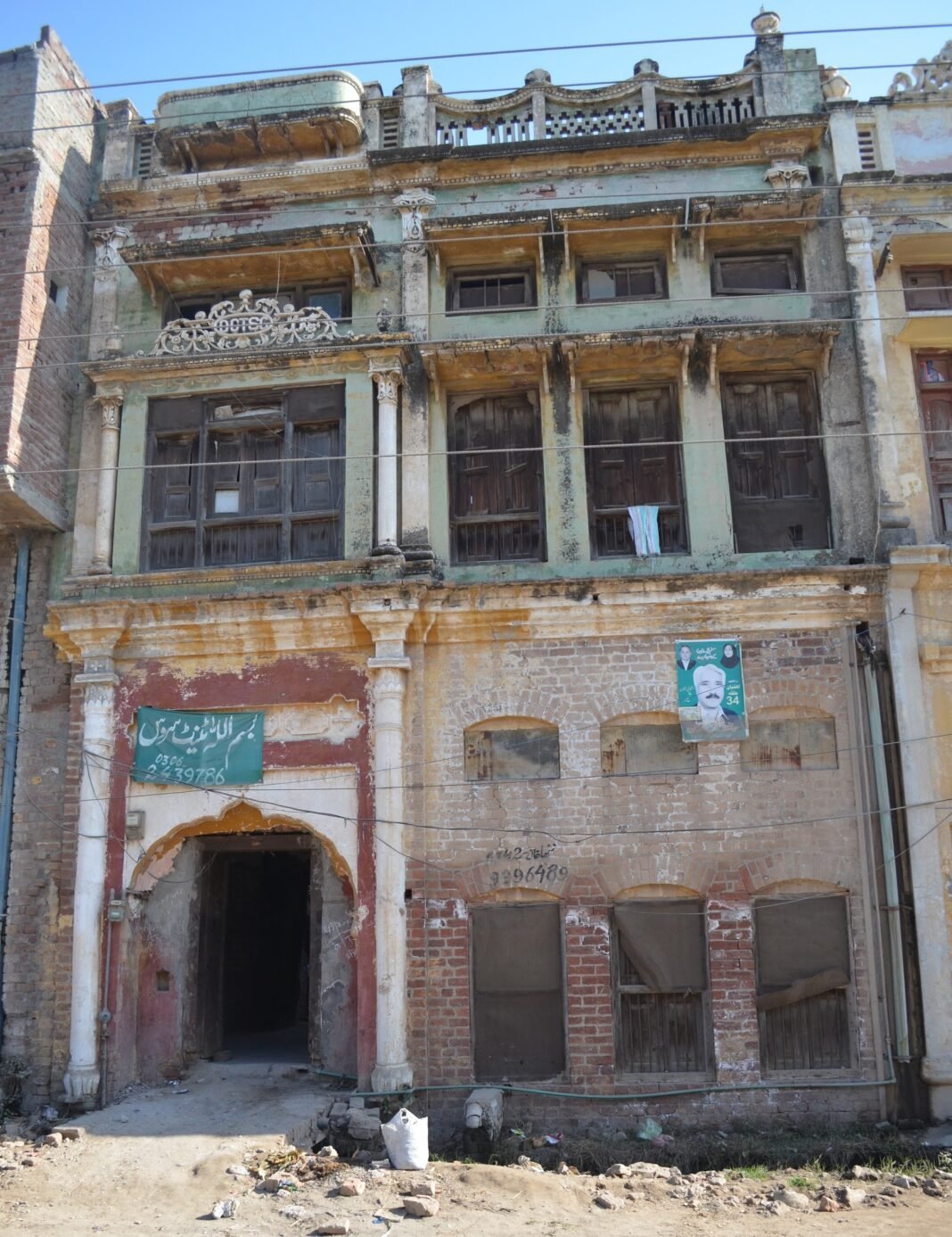
The building itself is worth seeing. Unlike the small village shrines of Punjab, this is a substantial three-storeyed structure — spacious, solid, and clearly built by a community with means. Today it houses the offices of the Evacuee Waqf Board (and, as Dawn’s reporting notes, the local offices of Jamaat-e-Islami as well), so you cannot walk in as a worshipper. But you can stand before it, read the Gurmukhi plaque on its facade, and picture the Mirpur Khas of the early 20th century: a small but established Sikh population, large enough to want its own place of worship in the downtown, living alongside Sindhi Muslims and Hindus in the “special town of the Mirs.”
There is also the Bhan Singh story. Dawn’s beautiful account of pre-Partition Mirpur Khas recalls Bhan Singh, a Sikh resident who built a haveli and a baithak in the city — an estate so extensive that the surrounding quarters came to be called Bhan Singh Abad, “the town of Bhan Singh.” That is the Mirpur Khas this gurdwara belongs to: a city where communities built, traded and lived side by side. Visiting the shrine is a way of honouring that memory.
And then there is the practical case: the gurdwara sits in a city that is genuinely worth visiting on its own. Mango orchards, the ancient Buddhist stupa of Kahu-jo-Daro, the railway-town character, the bazaars — Mirpur Khas rewards a day or two. The shrine gives your trip a soul; the city gives it flavour. Come in winter for comfort, or in early summer if you want the mangoes at their peak and the famous fruit festival in full swing.
History of Gurdwara Pehli Patshahi, Mirpur Khas
Mirpur Khas is a young city by the standards of Sindh. It was founded in 1806 by Mir Ali Murad Talpur, of the Talpur Mirs who ruled Sindh before the British arrived — hence the name, the “special town of the Mirs.” It remained a modest town until the railway and the Jamrao Canal (opened in 1900) transformed it: the municipality was formed in 1901, it became a district headquarter in 1906, and its fertile lands made it a powerhouse of mango, banana, cotton and sugarcane cultivation.
The Sikh presence in the city dates to this period of growth. As Dawn’s historical account records, Mirpur Khas had a very small Sikh population before Partition — but one large enough to want its own place of worship, and so a gurdwara was built in the downtown. Sikh heritage surveys identify this building as the Gurdwara Pehli Patshahi: the spot where Guru Nanak, on his travels through Sindh, set his sacred feet. The present three-storeyed building stands at the second crossroads on the road from the railway station into the city — a prominent, central location that speaks to the community’s standing.
Partition in 1947 changed everything. Across Sindh, Hindu and Sikh families migrated to India — Mirpur Khas, notably, did not see the widespread rioting of Punjab and Bengal, and many families left in fear rather than violence after the Karachi riots of January 1948. The gurdwara lost its sangat. In the decades since, the building has housed the offices of the Evacuee Trust Property Board (Evacuee Waqf Board), which administers the properties of departed communities. The Gurmukhi plaque on the facade remains, a quiet inscription in a script few passers-by can now read, marking what the building once was.
Preservation efforts, heritage writers note, are underway to protect the building’s spiritual significance even as it serves as offices. For the traveller, the shrine’s history is inseparable from the city’s: the railway that brought prosperity, the canal that greened the desert, the mango orchards that made Mirpur Khas famous, and the communities — Sindhi, Urdu-speaking, Hindu, Sikh — that built it together. The gurdwara is one chapter of that larger story, and it deserves to be read.
Top Things to Do in Gurdwara Pehli Patshahi, Mirpur Khas
See the Shrine Building and Its Plaque
Walk or take a rickshaw from the railway station toward the city centre and stop at the second crossroads. The large three-storeyed building is the gurdwara. It now houses offices, so view it from outside with respect — it is a working government building. Look for the Gurmukhi-inscribed plaque on the facade, the one physical text that still declares the building’s original identity. Photography of the exterior is generally fine, but be discreet around office entrances.
Visit Kahu-jo-Daro Stupa
A short distance from the city stands Kahu-jo-Daro (also spelled Kahurjo Daro), an ancient Buddhist stupa — one of the notable archaeological sites of lower Sindh. Pairing the gurdwara with the stupa makes a wonderful “faiths of Sindh” half-day: Sikh heritage in the morning, Buddhist heritage after. The stupa is a reminder that this land has been sacred to many traditions for two thousand years.
Tour the Mango Orchards
Mirpur Khas district grows a staggering 252 varieties of mangoes, and the orchards around the city are the region’s pride. In mango season (May to July), many growers welcome visitors; roadside vendors offer free tastings to draw you in. Even outside the season, a drive through the orchard belt — green, ordered, fragrant — is one of the great rural pleasures of Sindh.
Explore the Old City and Bazaars
Mirpur Khas has the easy, unhurried feel of a district town. Wander the main bazaars for Sindhi textiles, spices and sweets; look for the railway-town architecture around the station; and ask older shopkeepers about Bhan Singh Abad and the old neighbourhoods — the city’s memory is long and generously shared.
Day Trip to Umerkot
About 70 km east lies Umerkot, the historic fort town — birthplace of the Mughal emperor Akbar — with its old fort and a strong Thari cultural character. It pairs well with a two-day Mirpur Khas stay.
Famous Places In and Around Gurdwara Pehli Patshahi, Mirpur Khas
Kahu-jo-Daro Stupa: Ancient Buddhist stupa near the city — the essential archaeological pairing with the gurdwara.
Mirpur Khas Railway Station: The historic junction that made the city; the gurdwara stands on the road leading in from it.
Mango Orchard Belt: The groves surrounding the city, growing 252 mango varieties — unmissable in summer.
Umerkot Fort: The historic fort town to the east, birthplace of Emperor Akbar.
Hyderabad: Sindh’s second city, 65 km west — with the Pacco Qillo fort, shrines and bazaars — an easy extension of the trip.
How to Reach Gurdwara Pehli Patshahi, Mirpur Khas
Mirpur Khas is well connected by road and rail in lower Sindh. The gurdwara itself is inside the city, at the second crossroads from the railway station — once you are in Mirpur Khas, a rickshaw gets you there in minutes.
Route Details
From Karachi (around 220 km, roughly 4–5 hours): Drive northeast via Hyderabad on the highway network. This is the most common route — an easy morning drive that gets you to Mirpur Khas by lunch.
From Hyderabad (around 65 km, roughly 1–1.5 hours): Take the dual-carriageway highway east to Mirpur Khas. Trains also run between Hyderabad and Mirpur Khas.
From Islamabad/Lahore: Fly to Karachi or Hyderabad, then drive. The overland drive from Lahore is very long (over 1,000 km) and not recommended — fly.
By train: Mirpur Khas is a historic railway junction, and trains connect it with Hyderabad, Karachi and other Sindh cities. The railway station is itself a landmark — the gurdwara is on the road leading from it into the city.
Road conditions: The Karachi–Hyderabad–Mirpur Khas highways are generally good. City roads are typical of a district town — fine for cars and rickshaws. In the monsoon, watch for waterlogging on low stretches.
Transport options: Private car, intercity buses and vans from Karachi and Hyderabad, and trains to Mirpur Khas station. Within the city, rickshaws and Qingqi rickshaws are plentiful and cheap.
Where to Stay in Gurdwara Pehli Patshahi, Mirpur Khas
Mirpur Khas has a reasonable range of budget and mid-range hotels suited to business and family travellers — clean, air-conditioned rooms at honest prices. Do not expect luxury resorts; this is a district town, not a tourist hub, and the hotels reflect that. For a more comfortable stay with wider dining options, Hyderabad (65 km west) offers better mid-range and upper-mid-range hotels and works as a base for a day trip. Many Karachi-based travellers do Mirpur Khas as a long day trip — 4 to 5 hours each way — though staying overnight lets you see the orchards and the stupa without rushing. Book ahead during the mango festival season, when the city fills up.
Where to Eat: Local Foods of Gurdwara Pehli Patshahi, Mirpur Khas
Sindhi food is the star here, and Mirpur Khas does it well. Start with the classics: Sindhi biryani (distinct from its Karachi cousin), sai bhaji (spinach with lentils and vegetables), dal pakwan for breakfast, and koki and lola flatbreads. The city’s sweet shops do excellent rabri and Sindhi mithai. And then there are the mangoes — in season (May to July), you have not really visited Mirpur Khas until you have eaten Sindhri, the district’s world-famous variety, bought from a roadside vendor who insisted you taste three kinds before choosing. A full meal at a local restaurant is very budget-friendly. Drink bottled or filtered water, as everywhere in Sindh.
Weather in Gurdwara Pehli Patshahi, Mirpur Khas
Lower Sindh is hot — one of the hottest inhabited regions of Pakistan. Summers are long and fierce, winters are short and mild, and the monsoon brings humidity and some rain. November to February is the comfortable window; early summer is for mango lovers willing to brave the heat.
| Season | Temperature Range | Conditions |
|---|---|---|
| Winter (Dec–Feb) | 8°C to 25°C | Mild and pleasant — the best season for sightseeing. |
| Spring (Mar) | 18°C to 35°C | Warming up fast; still comfortable early in the month. |
| Summer (Apr–Jun) | 28°C to 43°C | Very hot, especially mid-April to late June. Mango season peaks. |
| Monsoon (Jul–Sep) | 28°C to 40°C | Hot and humid with showers; the landscape turns green. |
| Autumn (Oct–Nov) | 18°C to 35°C | Cooling down; pleasant by November. |
Language and Culture of Gurdwara Pehli Patshahi, Mirpur Khas
Sindhi is the soul language of the city, with Urdu widely spoken — Mirpur Khas has a large Urdu-speaking population dating to Partition-era migration — and English understood in offices and hotels. The culture is Sindhi at heart: Sufi-influenced, hospitable, and proud of the land’s fertility. When visiting the gurdwara building, remember it houses government offices — dress modestly, behave respectfully, and view from outside without disrupting the work inside. The Gurmukhi plaque deserves a quiet moment of reading. As in all of Sindh, greet elders warmly, accept offered chai, and dress modestly in town.
Shopping in Gurdwara Pehli Patshahi, Mirpur Khas
The bazaars of Mirpur Khas are classic Sindh: colourful textiles including Sindhi ajrak and ralli quilts, spices, fresh and dried fruit, and excellent sweets. Mango season brings the best shopping of all — crates of Sindhri and other varieties at orchard prices from roadside vendors. The city is also a good place to buy bananas and other local produce in bulk. For handicrafts, look for ajrak shawls and Sindhi embroidery — genuine, handmade, and far cheaper than in Karachi’s boutiques. There are no large malls here; the traditional bazaar is the experience.
Local Events and Festivals
Mirpur Khas hosts the National Mangoes and Summer Fruits Festival, held every year in the summer mango season (typically June). The festival has been running since the mid-1950s — the Express Tribune noted its 47th edition back in 2012 — and it is one of Pakistan’s great food events: growers from across the district display their fruit, judges from the Sindh Agriculture University at Tandojam award prizes for shape, aroma, colour and size, and visitors taste their way through dozens of varieties. If you can time your visit for the festival, the gurdwara and the mango celebrations make a perfect pairing. Apart from this, the city’s religious calendar follows the usual Sindh pattern — Eid, Muharram processions, and the Urs of Sindh’s Sufi saints in the wider region.
Travel Tips for Gurdwara Pehli Patshahi, Mirpur Khas
Packing Essentials
Light cotton clothes for most of the year, a warm layer for December–January nights, and sun protection always — the Sindh sun is serious. Comfortable walking shoes for the bazaars and the stupa site. Carry water, especially in summer. A head covering is useful if you visit any active religious site in the area.
Safety Tips
Mirpur Khas is a calm district town and safe for travellers. Standard precautions apply: travel in daylight on rural roads, keep valuables discreet, and drink bottled water. In summer, the heat is the real hazard — avoid midday outdoor activity, carry water, and watch for signs of heat exhaustion. During the monsoon, be cautious of waterlogged roads.
Money & Connectivity
ATMs are available in the city, but carry cash for the bazaars and orchard vendors. All major mobile networks (Jazz, Telenor, Zong, Ufone) cover the city well, with 4G in town. Fuel stations are plentiful on the highways; fill up before rural detours.
Best Time to Visit Gurdwara Pehli Patshahi, Mirpur Khas
Winter (November to February) — The Best Season
Mild days, cool nights, clear skies — winter is perfect for the gurdwara, the stupa, the bazaars and orchard drives. This is the season heritage travellers should choose.
Spring (March) — Still Pleasant
Early March is comfortable; by late March the heat builds. A good shoulder season for combining the city with Hyderabad.
Summer (May to July) — For Mango Lovers
Brutally hot, but this is mango season and the fruit festival. If you come now, do your sightseeing at dawn and dusk, rest at midday, and eat mangoes in the shade. The experience is unforgettable if you can handle the heat.
Monsoon and Autumn (August to October) — Green and Humid
Showers green the orchards and cool the dust, but humidity is high. By October the weather turns pleasant again.
Final Thoughts
Gurdwara Pehli Patshahi in Mirpur Khas is a shrine you visit with your imagination as much as your eyes. The building is there — solid, three-storeyed, unmistakable — but its life as a gurdwara lives in the plaque on its wall, in Dawn’s account of Bhan Singh Abad, and in the knowledge that Guru Nanak’s feet once touched this ground. It is a quieter, more reflective kind of heritage stop than the grand corridor shrines of Punjab, and for that reason it stays with you longer.
Come for the shrine, stay for the city: the mangoes, the stupa, the unhurried bazaars, the railway-town soul of lower Sindh. Winter for comfort, summer for the fruit festival — either way, Mirpur Khas rewards the traveller who looks beyond the obvious. For more journeys across the country’s sacred and historic places, browse our Explore Pakistan collection.
FAQs
Where is Gurdwara Pehli Patshahi, Mirpur Khas located?
At the second crossroads on the road into Mirpur Khas city from the railway station, in Mirpur Khas district, Sindh.
What is the best time to visit?
November to February for comfortable sightseeing; May to July if you want mango season and the fruit festival.
How do I reach Mirpur Khas?
Drive from Karachi (around 220 km, 4–5 hours) or Hyderabad (around 65 km, 1–1.5 hours); trains also serve Mirpur Khas station. The gurdwara is minutes from the station by rickshaw.
Can I go inside the gurdwara?
The building now houses Evacuee Waqf Board offices, so it is viewed from outside. See the Gurmukhi plaque on the facade and treat the working offices with respect.
Is Mirpur Khas safe for tourists?
Yes — a calm district town. Take normal precautions, drink bottled water, and guard against the summer heat.
Is it suitable for families?
Yes. The city has hotels and restaurants, and the shrine, stupa and orchards make an easy family itinerary.
Where can I stay?
Mirpur Khas has budget and mid-range hotels; Hyderabad (65 km) has more comfortable options and works as a day-trip base.
What is Mirpur Khas famous for besides the gurdwara?
Mangoes — the district grows 252 varieties and hosts the annual National Mangoes and Summer Fruits Festival — plus the ancient Kahu-jo-Daro Buddhist stupa and its railway-town heritage.