Every pilgrimage trail has its quiet chapters — the places where the grand shrine is gone but the story refuses to leave. Mallah, a small village south of Narowal in Punjab, is one of those chapters. This is where Guru Nanak rested under a bair tree on his journey from Kartarpur to Sialkot, where devotees later raised a small gurdwara, and where the River Ravi, in its terrible 1952 floods, washed the shrine away to a heap of dust. What remains is a brick asthan inside the village — the old prakash asthan where the Guru Granth Sahib was once enthroned — and a landscape heavy with memory. If you are tracing Guru Nanak’s footsteps through Pakistani Punjab, Mallah deserves a place on your map.
This gurdwara pehli patshahi mallah travel guide gives you the full picture: the real history of the shrine, how to reach the village, what to see nearby, the weather through the year, and the best time to make the trip.
Quick Facts
- Location: Mallah village, P.S. Shah Gharib, Narowal district, Punjab — about 9 miles (14 km) south of Narowal railway station, roughly 4 km before Eesa on the road from Kanjror to Eesa.
- Altitude: Around 240 metres above sea level — flat plains near the Ravi.
- Famous For: Guru Nanak’s rest under a bair tree on his way from Kartarpur to Sialkot; the riverside gurdwara lost in the 1952 Ravi floods; the surviving brick (pucca) prakash asthan inside the village; 50 ghumaon of land once assigned by Maharaja Ranjit Singh, now with the Evacuee Waqf Board.
- Nearest City: Narowal (about 14 km north).
- Accessibility: Village road from Narowal via Kanjror; best with a private car or hired taxi.
- Known Landmarks: The old asthan inside Mallah village; the Ravi river belt a short distance away.
- Best For: Sikh-heritage pilgrims, history researchers, and travellers building a Guru Nanak trail between Kartarpur and Sialkot.
Why Visit Gurdwara Pehli Patshahi, Mallah
Mallah is not a destination for spectacle — it is a destination for meaning. The story here is spare and powerful: the founder of Sikhism paused under a tree on his travels, a community marked the spot, the river took the building, and the memory endured anyway. For anyone interested in how sacred geography survives — how a place stays holy even after its shrine has crumbled — Mallah is a small masterclass. You come here less to see a monument and more to complete a story, the Kartarpur-to-Sialkot chapter of Guru Nanak’s journeys.
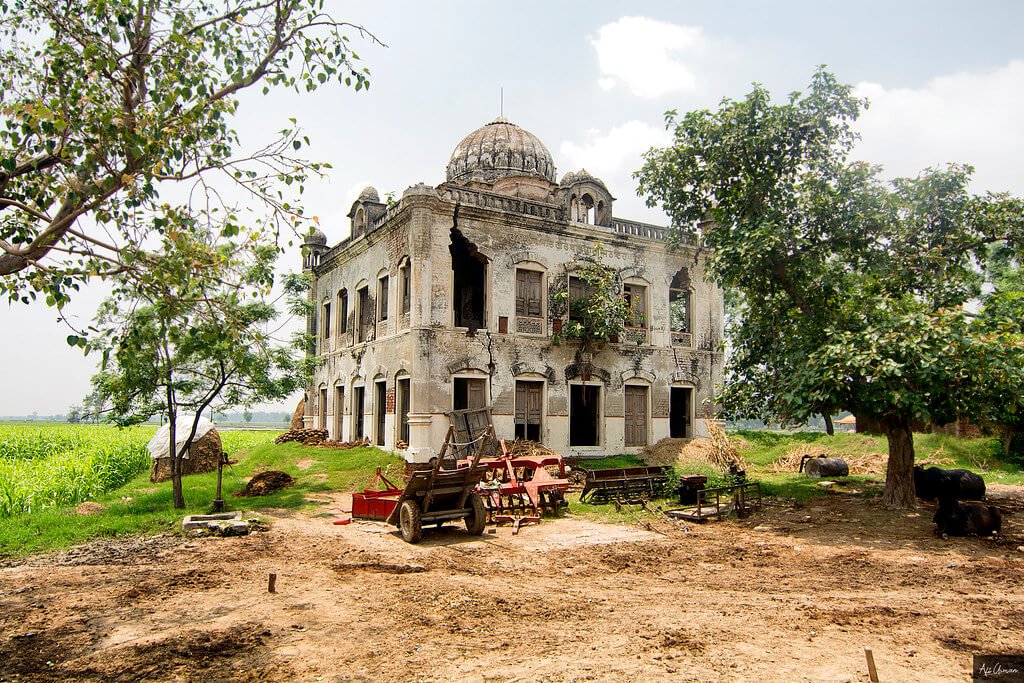
The village asthan gives the visit its anchor. The old gurdwara by the bair tree is gone — heritage surveys record that “neither the tree nor the gurdwara are there, what remains is a heap of dust” — but the pucca gurdwara inside the village, where prakash of the Guru Granth Sahib used to take place, still stands. Standing in that quiet brick building, you are in the one physical space at Mallah that the old Sikh community actually used for worship. There is something deeply moving about that continuity: the riverside shrine belongs to the 1952 floods now, but the village asthan still holds the thread.
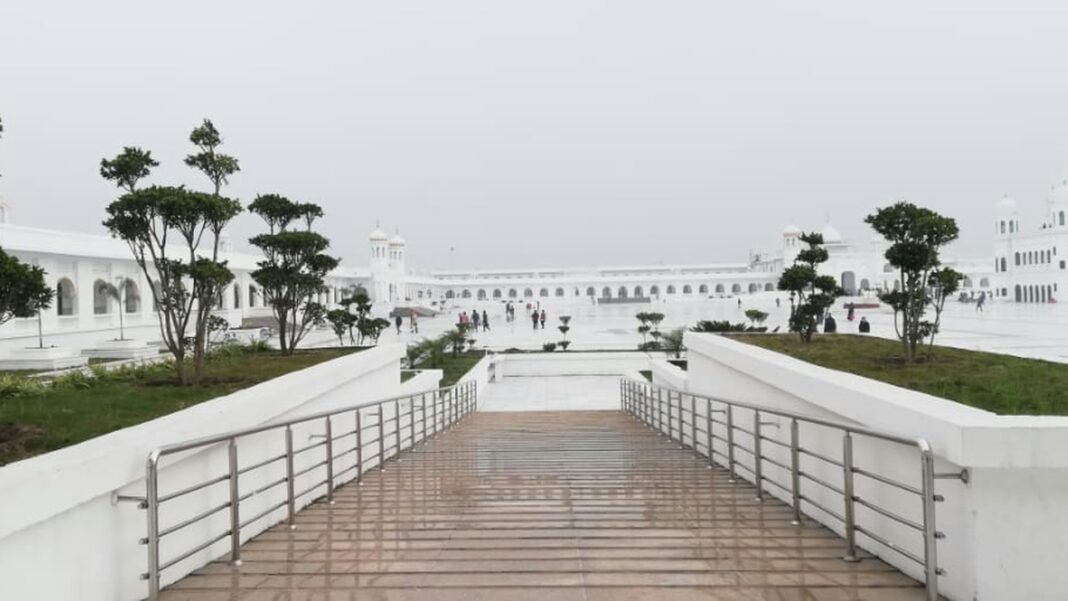
Mallah also sits on one of the most rewarding heritage corridors in Pakistan. Kartarpur Sahib — where Guru Nanak settled and passed away in 1539 — lies to the northwest, and Sialkot’s old shrines lie to the north. Mallah falls naturally between them, the resting place on the road. A single day can link all three, turning a day trip from Lahore or Narowal into a genuine Guru Nanak trail. And because the site is little-known, you will likely have it to yourself — no crowds, no queues, just the village, the asthan, and the story.
Finally, there is the human side. The villages of this belt have lived alongside Sikh heritage for generations, and the elders of Mallah carry the memory of the old shrine and its flood. Ask respectfully, and the story of 1952 — the year the Ravi took the gurdwara — comes alive in a way no plaque could manage. That is the kind of travel that stays with you.
History of Gurdwara Pehli Patshahi, Mallah
The history of Mallah’s shrine begins with Guru Nanak’s travels through the Rachna Doab — the land between the Ravi and Chenab. After his years of journeying, Guru Nanak settled at Kartarpur on the Ravi, the town he founded and where he spent his final years until 1539. The road from Kartarpur to Sialkot was a route he knew well, and on one of his journeys along it he made a brief sojourn at the village of Mallah, resting under the shade of a bair tree on the eastern side outside the village.
The Sikh heritage record, compiled from the pre-Partition surveys of Punjab’s shrines, describes what happened next: a small gurdwara was raised near the tree by devotees, marking the spot of the Guru’s rest. Inside the village itself, a second, sturdier shrine was built of baked brick — the pucca gurdwara — and it was here that prakash, the ceremonial enthronement and reading of the Guru Granth Sahib, took place. The shrine was not a poor one: Maharaja Ranjit Singh, the Sikh ruler of Punjab in the early 19th century, assigned 50 ghumaon of agricultural land to it — a substantial endowment that supported the shrine and its upkeep. That land is now in the possession of the Evacuee Waqf Board, the body that manages the properties of departed communities.
Then came the floods. The Ravi has always been a restless river, and in 1952 it rose in one of its devastating floods and swept through the low-lying eastern side of Mallah. The small gurdwara by the bair tree collapsed in the floodwaters. The tree itself did not survive either. What was left, in the words of the heritage survey, was a heap of dust. It is a stark reminder of how many of Punjab’s riverside shrines were lost not to neglect or conflict but to the river itself — a force the old builders respected and could not defeat.
At Partition in 1947, the Sikh families of the area migrated east, and the shrines of Mallah fell silent like so many others across Pakistani Punjab. The brick asthan inside the village survived both the floods and the decades, and it stands today as the physical trace of the shrine — a quiet, sturdy building holding the memory of the prakash ceremonies once performed there. For heritage travellers, Mallah’s story is inseparable from the larger story of the Ravi belt: Kartarpur’s survival and restoration on one side, and the lost riverside shrines like Mallah on the other.
Top Things to Do in Gurdwara Pehli Patshahi, Mallah
Visit the Old Prakash Asthan in the Village
The heart of the visit is the pucca asthan inside Mallah village — the brick building where the Guru Granth Sahib was once enthroned. Approach it as you would any shrine: cover your head, remove your shoes, and enter quietly. Ask the villagers for directions; the asthan is known locally. Spend a few minutes in reflection here — this is the surviving worship space of Mallah’s Sikh past.
Walk to the Old Riverside Site
On the eastern side outside the village lies the spot where the bair tree stood and the small gurdwara once rose beside it. Nothing remains but the ground itself — the 1952 floods saw to that — but standing there, with the Ravi belt not far off, you can picture the scene: the Guru resting under the tree, the small shrine the devotees raised, the river that eventually claimed both. It is a poignant, contemplative stop.
Trace the Kartarpur–Sialkot Route
Mallah makes the most sense as part of a route. Start at Kartarpur Sahib in the morning, drive the old road toward Sialkot, and stop at Mallah mid-way — the rest stop on the Guru’s own journey. Continue to Sialkot’s shrines, such as Gurdwara Bair Sahib and Gurdwara Baoli Sahib, by afternoon. It is one of the most meaningful day-long heritage drives in Pakistani Punjab.
Talk to the Village Elders
The memory of the 1952 flood lives in the village. Older residents can point out where the tree stood, describe the old gurdwara, and tell you how the river behaved that year. These oral histories are precious — they are the only archive Mallah’s lost shrine has. Bring patience, a little Urdu or Punjabi, and genuine curiosity.
Explore Narowal Town
Narowal, the district headquarter 14 km north, is worth an hour or two. It is an old town with a railway station on the Lahore–Narowal line, busy bazaars, and a strong sense of the borderland — the Indian frontier is not far. It is also your base for food, fuel and any supplies.
Famous Places In and Around Gurdwara Pehli Patshahi, Mallah
Kartarpur Sahib: The great gurdwara where Guru Nanak settled and passed away — the essential anchor of any trip to this region.
Narowal: The district city, 14 km north, with its railway station, bazaars and borderland character.
Sialkot: The historic city to the north, home to Iqbal Manzil, the old fort area, and the Gurdwara Bair Sahib and Baoli Sahib shrines.
Gurdwara Pehli Patshahi, Fateh Bhinder: A sister shrine of the First Guru in the Daska area — pair the two Pehli Patshahi gurdwaras on a two-day Sikh heritage circuit. See our Gurdwara Pehli Patshahi, Fateh Bhinder travel guide.
The Ravi River Belt: The riverine landscape east of the village — green, fertile, and the reason both for the shrine’s location and its loss.
How to Reach Gurdwara Pehli Patshahi, Mallah
Mallah lies south of Narowal on the Kanjror–Eesa road, about 9 miles (14 km) from Narowal railway station and roughly 4 km before Eesa. Narowal is the natural gateway: it sits on the railway line from Lahore and is well connected by road.
Route Details
From Lahore (around 100 km, roughly 2–2.5 hours): Drive northeast toward Narowal on the Narowal Road (via Muridke). From Narowal city, head south on the road toward Kanjror and Eesa; Mallah village lies about 4 km before Eesa. Ask locally for the village — the old asthan is known to residents.
From Narowal (around 14 km, roughly 25 minutes): Take the Kanjror road south out of town and continue toward Eesa. Mallah is a short drive down this road.
From Sialkot (around 60 km, roughly 1.5 hours): Drive south toward Narowal, then continue to Mallah as above. This is the natural direction if you are tracing the Guru’s Kartarpur–Sialkot route in reverse.
From Islamabad (around 280 km, roughly 5 hours): Travel via the motorway to Lahore, then continue to Narowal and Mallah. It is a long day — consider overnighting in Lahore or Narowal.
From Karachi: Fly to Lahore, then drive to Narowal and Mallah (around 2.5 hours from Lahore).
Road conditions: The Lahore–Narowal road is a decent highway; the Kanjror–Eesa village road is narrower but paved. In the monsoon (July–September), the low-lying areas near the Ravi belt can get waterlogged — check conditions locally. Winter fog (December–January) can slow early-morning driving on the plains.
Transport options: A private car or hired taxi from Lahore or Narowal is by far the easiest option. Buses and vans run between Lahore and Narowal; from Narowal you can hire a rickshaw or taxi for the village. Trains run to Narowal station on the Lahore line — a charming option if you want to arrive by rail.
Where to Stay in Gurdwara Pehli Patshahi, Mallah
Mallah is a small village with no hotels, so base yourself in Narowal or plan a day trip from Lahore. Narowal has simple budget hotels and guesthouses suited to an overnight stay — nothing fancy, but clean and adequate for heritage travellers. Most visitors do Mallah as part of a day trip from Lahore, which has the full range from budget guesthouses to five-star hotels, roughly two to two-and-a-half hours away. If you are combining Mallah with Kartarpur Sahib, note that Kartarpur has seen new visitor facilities and rest houses developed around the corridor; check current availability before planning. Sialkot, about an hour and a half north, is another comfortable base with mid-range hotels.
Where to Eat: Local Foods of Gurdwara Pehli Patshahi, Mallah
The Narowal belt eats the hearty food of the Punjab plains. In Narowal town you will find dhabas serving dal, sabzi, tandoori roti and naan, grilled meats, and the ever-present lassi — thick, creamy, and served in tall glasses. Winter brings sarson da saag with makki di roti, the defining dish of the season. In the village itself, expect warm hospitality rather than restaurants: villagers will likely offer chai, and you should accept it graciously. A dhaba meal here is very budget-friendly, typically a few hundred rupees per person. Carry drinking water for the village visit, and eat your main meals in Narowal where the choices are wider. If you are coming from Lahore, you already know the drill — but the dhaba food on the Narowal road has its own loyal following.
Weather in Gurdwara Pehli Patshahi, Mallah
Mallah sits on the plains near the Ravi, so expect the classic upper-Punjab climate: mild winters, a pleasant spring, a fierce early summer, and a humid monsoon. November to March is the comfortable window for heritage travel.
| Season | Temperature Range | Conditions |
|---|---|---|
| Winter (Dec–Jan) | 3°C to 18°C | Cold, foggy mornings; bright afternoons. Best season for the trip. |
| Spring (Feb–Mar) | 12°C to 28°C | Mild and green — excellent for village and riverside walks. |
| Summer (Apr–Jun) | 28°C to 43°C | Very hot, especially May–June. Travel at dawn or dusk. |
| Monsoon (Jul–Sep) | 28°C to 38°C | Humid with heavy showers; low areas near the Ravi can flood. |
| Autumn (Oct–Nov) | 15°C to 30°C | Dry and pleasant; a fine shoulder season. |
Language and Culture of Gurdwara Pehli Patshahi, Mallah
Punjabi — the Majhi dialect of this region — is the first language of Mallah, with Urdu widely spoken and understood. Village culture is the classic hospitality of rural Punjab: visitors are honoured guests, and you will be offered chai and conversation. When visiting the asthan, observe gurdwara etiquette: cover your head, remove your shoes, wash your hands, and keep the space quiet and clean. No tobacco or alcohol near the shrine. Dress modestly — shalwar kameez or long trousers with covered shoulders works everywhere here. If you want to photograph the asthan or the villagers, ask permission first; a smile and a little Punjabi go a long way.
Shopping in Gurdwara Pehli Patshahi, Mallah
Mallah village has only basic shops, so do your shopping in Narowal. The town’s bazaars are good for everyday Punjabi goods — khussas (traditional footwear), phulkari-style textiles, fresh produce, and sweets. Narowal is also known for its rice and grain markets, and you can pick up excellent local rice at good prices. For Sikh-heritage souvenirs — books on Guru Nanak and the shrines of Punjab — the bookshops of Lahore or the shops around Kartarpur are better stocked. There are no malls in this belt; the charm is in the traditional bazaars.
Travel Tips for Gurdwara Pehli Patshahi, Mallah
Packing Essentials
Bring a head covering for the asthan, easy-off walking shoes, and water — there are no shops at the shrine site. Winter demands a warm layer and something against the fog; summer demands a hat, sunscreen and extra water. A power bank and offline maps are wise, since the village tracks have patchy data. If you are documenting the trip, a notebook is as useful as a camera: the elders’ stories are worth writing down.
Safety Tips
Mallah is a quiet, safe village. Travel in daylight, keep to the main village tracks, and be cautious near the riverine areas in monsoon season — the Ravi belt can be unpredictable after heavy rain, which is precisely what the shrine’s history teaches. Do not attempt to cross flooded tracks. As always, keep valuables discreet and let someone know your plans.
Money & Connectivity
Carry cash: the nearest ATMs are in Narowal town. Mobile coverage from Jazz, Telenor, Zong and Ufone is generally available in the village, though data can be slow. Fuel up in Narowal before heading to the village, and download your maps offline.
Best Time to Visit Gurdwara Pehli Patshahi, Mallah
Winter (November to February) — The Best Season
Cool, clear days and green fields make winter ideal. The asthan visit, the walk to the old riverside site, and the drive along the Kartarpur–Sialkot road are all at their most pleasant. Morning fog in December and January means a late-morning start is smart.
Spring (March) — Lovely and Mild
March offers mild temperatures and a photogenic countryside — a wonderful time to pair Mallah with Kartarpur Sahib and the Sialkot shrines in a single heritage run.
Summer (April to June) — Hot, Go Early
May and June are harsh on the plains. If you travel in summer, start at dawn and be done by late morning. The asthan’s brick interior stays relatively cool, which helps.
Monsoon (July to September) — Think Twice
The rains green the landscape, but this is the Ravi belt — the river that took the old gurdwara in 1952. Low-lying tracks can flood, so check local conditions and avoid the area during active heavy rain.
Final Thoughts
Mallah will not give you a grand shrine to photograph. It will give you something better: a story about impermanence and memory. The bair tree is gone, the riverside gurdwara is a heap of dust, and yet the village asthan still stands, the land grant is still on record, and the elders still tell the tale of 1952. For travellers who want to understand Sikh heritage in Pakistan beyond the famous corridor shrines, Mallah is essential — it is where the history feels most human, most fragile, and most real.
Build your trip around it: Kartarpur in the morning, Mallah at midday, Sialkot by evening — a full day on the Guru’s own road. Travel respectfully, listen more than you photograph, and you will leave with a deeper sense of this land than any guidebook alone could give. For more heritage journeys, explore our Explore Pakistan collection, including our guides to Gurdwara Pehli Patshahi, Fateh Bhinder and the shrines of Sialkot.
FAQs
Where is Gurdwara Pehli Patshahi, Mallah located?
In Mallah village, P.S. Shah Gharib, Narowal district, Punjab — about 9 miles south of Narowal railway station, roughly 4 km before Eesa on the Kanjror–Eesa road.
What is the best time to visit Gurdwara Pehli Patshahi, Mallah?
November to March, with winter offering the most comfortable weather for village travel.
How do I reach Gurdwara Pehli Patshahi, Mallah?
Drive from Lahore to Narowal (around 100 km), then south on the Kanjror–Eesa road. A private car or hired taxi is easiest; trains also run to Narowal station.
Does the original gurdwara still exist?
No. The small riverside gurdwara by the bair tree collapsed in the 1952 Ravi floods. The brick (pucca) prakash asthan inside the village still stands.
Is it safe to visit?
Yes — a peaceful village. Avoid riverine tracks during monsoon flooding and travel in daylight.
Is it suitable for families?
Yes, as a day trip from Lahore or Narowal. Bring water, snacks and sun protection; there are no facilities at the village site.
Where can I stay nearby?
Narowal has budget hotels; Lahore (2–2.5 hours away) has the full range. Most visitors do Mallah as a day trip.
Can I combine Mallah with Kartarpur Sahib?
Absolutely — that is the ideal itinerary. Kartarpur lies on the same historic route, and Mallah sits between Kartarpur and Sialkot, exactly where Guru Nanak rested on his journey.